Wooden knife handles preservation

Alex.Y.

Gold Member
Joined
Jan 11, 2021
Messages
1,867
Alright, I feel this really needs to be discussed on a highest authority level - The Porch.

The preamble. I had a handful of small blocks of different exotic wood for some occasional handcraft stored in a box in a not-so-appropriate place that I almost forgot about. Opened it recently and, to my utter horror, found two blocks (one zebrawood, one meranti I think) heavily moulded. Other sorts (ebony, macassar, wenge, rosewood, beech etc.) in the same box were surprisingly fine, thank god. Relocated the box. Cleaned both victims of my negligence, sprayed with fungi antiseptic that was present at the time, placed them separately. Phew... But wait!

The realization. What if one day I pick up one of my beloved pocket knives with wood covers and discover same thing happened to 'em?.. Sure I store knives in an appropriate place, but I don't want to even think of a possibility of such a nightmare happening. So I conducted a search for a preservation agent.

Beeswax? I successfully use it in my amateur leatherworking. But I've read that, being a natural substance - hence one with some randomness in constitution - it might theoretically cause erosion of wood it was applied to over time.

Mineral oil? I heard that neutral mineral oil, such as Victorinox multi tool food-safe oil that I always use, can be applied to wood. But at the same time I was always told to never allow any mineral oil to contact wood for it will cause erosion after some time. I heard that older AK's wooden buttstocks and handguards suffered subsequent erosion and deterioration over time when cleaned inaccurately allowing the oil to drip onto wooden parts.

Museum preservation wax? I thought it must be the best option and got me the Renaissance Wax. But then I discovered that it is based on some kind of solvent with a strong and very familiar smell, like one in the wall paint and such. Whether, apparently, it can be successfully used for stated task, I am not sure that I want my knives to smell like that, both for aesthetic and possible allergy-based intolerance reasons.

The question. What would experienced knife collectors suggest for successful long-term wooden handles preservation?

Maybe there are some alternative preservation agents. Non solvent-based waxes, or something.

Yes, I might be overthinking this, but I really don't want to screw up, say, applying beeswax now, and a couple decades later find my knives' handles deteriorated, falling apart in my hands like some old dead tree stump.
 
Yes, I might be overthinking this, but I really don't want to screw up, say, applying beeswax now, and a couple decades later find my knives' handles deteriorated, falling apart in my hands like some old dead tree stump.

Where in the world do you live, Alex?? I live in the rainforest, but have never found mould on knife handles or stored wood for that matter, as long as it is kept dry, and occasionally oiled with mineral oil (food grade)!! Many older knives are spanning 40-50 years!!!
 
I've heard repeatedly of the gunstocks rotting in firearms treated heavily with mineral oil. But I've also read, some years ago, that a lot of those issues were more likely due to excess moisture being trapped in the wood underneath a heavy application of oil. And the moisture itself, being trapped in the wood, is what causes the rotting issues. I firmly believe if the wood is adequately dried after it's been subjected to harsh, wet weather conditions, then a light application of oil after the fact shouldn't create any issues.

I've never hesitated in lightly applying just a thin sheen of mineral oil to my knife handles occasionally. And by 'occasionally', I'm talking about several weeks or even months between a light application. I've usually done it when I've periodically reset edges on oil stones used to sharpen the blade. And just the residual oil on my fingertips, when I'm finished with that, is all I use to rub into the wood. I then wipe it clean with a rag or towel. I've never had any issues at all with wood, doing it this way. I've got an oak scrap that I dropped into my pan of mineral oil where I store some oil stones, to keep them saturated. I dropped the piece into the pan years ago, just to test my assumptions about whether it would suffer any damage from the oil. To this day, it's still just as hard and strong as it's ever been.
 
Last edited:
Don't production knives usually use stabilized wood?
Since the stabilization process fills the wood cells with resin, it effectively turns the wood into resin blocks and slabs.

From Iowa cold and heat (-30 to +110 (F) is common, to subtropical/tropical conditions of Central and South Florida, and the Florida Keys, to the desert conditions of southern Nevada, my wood handled knives have never given me any issues.

Aside from the Dyna Wood (or whatever Buck called it) I don't know if Imperial and KaBar stabilized their Rosewood, or if Mora, Openel, MAM, and other Euro makes stabilize their beechwood or the other woods they use..
At most, I've put a light coat of Turtle Wax car wax on my wood handled knives ... and that maybe once every 3 to 5 years, at most.

Honestly, the only knife handle that ever failed on me is on a Buck 630(?) "Meritor".
That knife came equipped with a small factory installed edge chip. So, I have never carried that knife. Since new, it hasbeen in a drawer in my travel trailer. The rubber that Buck molded on the tang has turned gummy and sticky over the years ... almost as bad as the Smimano twist grip shifters on my Giant cross bike. (currently in storage in Iowa ... with two more of my bicycles and my first Miami Sun (adult) trike, that is waiting for a rebuild and upgrades, after I put roughly 47,000 miles on it, over the 10 years I used it.
(i r "car free". When not in Florida, I had other bicycles to ride while at that work location. From 1996 to 2013 I averaged around a combined 70,000 miles across that trike and three bicycles kept where I worked in Florida and Idaho. Since my stroke, my annual mileage has plummited to less than 100 miles, all on my 2016 Miami Sun adult trike. 🤬😡☹️ Disgusting. I should have at least 30,000 miles on my new trike ... not less than 1,000. 🤬😡)
 
(i r "car free". When not in Florida, I had other bicycles to ride while at that work location. From 1996 to 2013 I averaged around a combined 70,000 miles across that trike and three bicycles kept where I worked in Florida and Idaho. Since my stroke, my annual mileage has plummited to less than 100 miles, all on my 2016 Miami Sun adult trike. 🤬😡☹️ Disgusting. I should have at least 30,000 miles on my new trike ... not less than 1,000. 🤬😡)
My simple trike helped me rehab from my 2019 stroke through to the present!! But I drive a lot - too much!! :rolleyes:
 
"Don't production knives usually use stabilized wood?"
I'd assume most do, nowadays. I do have some older Case electrician pattern folders in walnut, from the 1960s-70s era. Their handles are clearly not stabilized, and those are the ones that I lightly oil occasionally to (hopefully) keep them from shrinking or cracking. I'm in the desert southwest of the USA, and the dry climate here has me more concerned about the shrinking or cracking issues.
 
Last edited:
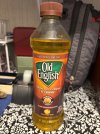
I've been using Old English wood conditioner. A light to medium coat and leave set overnight.
I've also used it on some leather sheaths and so far, so good on that. Just did a 45 year old Case sheath and the result was way above hopes .IMG_3837.jpegIMG_3838.jpeg
 
Historically, rosewood, cocobolo, ebony, and ironwood have not been stabilized, nor do they need it. When in doubt you could always apply a thin layer of wax. Other woods may not be as durable (although I would bet that osage orange would last a long time, given its well known resistance to rot).
 
Historically, rosewood, cocobolo, ebony, and ironwood have not been stabilized, nor do they need it. When in doubt you could always apply a thin layer of wax. Other woods may not be as durable (although I would bet that osage orange would last a long time, given its well known resistance to rot).
Good list, I'd also add walnut and olive wood, and probably many others. Some of these not only don't need stabilizing, but are difficult or even impossible to stabilize (they are so dense and oily that the epoxy or resin stabilizer can't get in).

Regarding the initial question, wax and mineral oil are great if applied to dry wood - don't put them on wet wood or you seal the moisture in and it causes problems. If you want to use what museums use to preserve wood that might be hundreds of years old, Ren Wax seems to be it.
 
I've been using Old English wood conditioner. A light to medium coat and leave set overnight.
I've also used it on some leather sheaths and so far, so good on that. Just did a 45 year old Case sheath and the result was way above hopes .View attachment 3116412View attachment 3116413
This, and lemon oil for wood that isn't heavily waxed or stabilized.
 
I'm a big fan personally of using Ballistol as a protectant/lubricant for guns and knives. It's good with metal, wood, and leather. EDIT: Based on other comments, apparently you/I should not use Ballistol on knives. I hadn't thought about the fact that Ballistol disolves copper, but that makes sense.

I know that the museum I work for typically doesn't use any kind of preservation methods beyond climate controlled storage. Altering the objects we collect makes it harder/impossible to do further studies on the objects. We try to alter artifacts as little as possible. Archaeologically, a well documented wooden tool that falls apart but is otherwise unaltered chemically is more useful since later testing is still possible, but if there have been added carbons (oils and such) or chemical alteration, then there isn't much more we can potentially learn about the origin/age/use history of an object.

Some museums do have conservators, and they are the ones who take care of preserving objects usually. But different museums have different priorities and goals. An art museum probably wants to preserve everything in as close to original appearance as possible. Some history museums want to stabilize fragile objects. The museum I work for is more of a research/repository museum, so our preservation methods are more about physical and environmental stability. Like careful packaging in non-reactive materials with fragile objects fully supported within a box and then placed in cabinets in a climate controlled vault, but the actual objects are not altered in any avoidable ways.

When it comes to my own stuff, I like to take a Haida inspired attitude toward preservation. On Haida Gwaii (a temperate rain forest) the Haida do not preserve their old village sites and their buildings and totem poles are allowed to return to the Earth. They believe that objects have their life-spans, and when they are done they should be allowed to decay naturally rather than be preserved unnaturally.

I do like to take care of my tools (I have my great-great-grandfather's rifle that I use for hunting sometimes that I plan to pass on to my kids), but I also accept that all objects. like all living things, have a life span. And it is better to use and appreciate a tool or object than to try to keep it perfect forever. All things decay. You can take care of things, but battling the inevitability of entropy will only rob you of the joy of having and using a tool. A rifle with a patina created by a century of my family hunting small game is worth far more to me than the same rifle in mint condition.
 
Last edited:
Ballistol and knives don't mix. It will clean and polish fine, but it has ingredients that can dissolve copper, and brass is a copper alloy. It can also mess up nickel silver if left for a while, so if it gets left in a slipjoint with a nickel silver pivot pin for instance it may in time cause some damage. If you use Ballistol, make sure to remove it all and wipe everything with lubricating oil.
 
I suspect you may be over anxious and indeed, overthinking things a bit Alex :) Keeping exotic wood samples in not very suitable places may well induce mould, damp, worse still rodent attack/fouling or insect invasion :eek: But as you say, the knives are kept in proper places, so not really a risk there. Extreme dryness could be a threat,
.

You've received much wise advice here so you can relax :) I'd say most wood handled knives are made of the right types of durable woods otherwise knife makers would have endless problems. Thus durability not really a question. I agree on the sparing use of mineral oil as a wipe over, but never favoured soaking as some do, it softens things too much and can entrap moisture. I've also heard that Ballistol can be harsh if overused. What surprises me is doubts over the use of beeswax. Sometimes use a quality furniture polish which contains this on knife handles, gets a fine lustre on wood handles. The quantity is so low and polished off that I cannot think it could harm wood handles at all. On the contrary, I have a Mahogany dining table around 200 years old and that gets polished (not often as it's a right effort ;) ) and it will have been fed with beeswax based polish over the centuries- no signs of dissolving!

Thanks, Will
 
I appreciate the heads up about using Ballistol on my knives. I hadn't thought about the fact that it needs to dissolve copper to really do its job on guns. I will keep that in mind going forward.
 
Thank you everyone for sharing your thoughts and experience! I sincerely appreciate it!

Maybe check with academia to see what archeologists recommend for preserving wooden objects from ancient civilizations. That might provide concise and definitive resolution to quandary.
I never thought of that before! Contacted a couple of institutions now. We shall see.
Where in the world do you live, Alex?? I live in the rainforest, but have never found mould on knife handles or stored wood for that matter, as long as it is kept dry, and occasionally oiled with mineral oil (food grade)!! Many older knives are spanning 40-50 years!!!
Northwest Russia. Box of wood was stored in an unheated garage, which was an obvious mistake of mine. Its existence simply fell out of my mind for a year or two...
AI summary. Might be worth digging a little deeperView attachment 3116241
I will!
I've heard repeatedly of the gunstocks rotting in firearms treated heavily with mineral oil. But I've also read, some years ago, that a lot of those issues were more likely due to excess moisture being trapped in the wood underneath a heavy application of oil. And the moisture itself, being trapped in the wood, is what causes the rotting issues. I firmly believe if the wood is adequately dried after it's been subjected to harsh, wet weather conditions, then a light application of oil after the fact shouldn't create any issues.

I've never hesitated in lightly applying just a thin sheen of mineral oil to my knife handles occasionally. And by 'occasionally', I'm talking about several weeks or even months between a light application. I've usually done it when I've periodically reset edges on oil stones used to sharpen the blade. And just the residual oil on my fingertip, when finished with that, is all I use to rub into the wood. I then wipe it clean with a rag or towel. I've never had any issues at all with wood, doing it this way. I've got an oak scrap that I dropped into my pan of mineral oil where I store some oil stones, to keep them saturated. I dropped the piece into the pan years ago, just to test my assumptions about whether it would suffer any damage from the oil. To this day, it's still just as hard and strong as it's ever been.
Ah, that might be it about oil usage on wood! Gives me an idea of a process: dry the wood, apply the oil. I will give it a good ponder.
Don't production knives usually use stabilized wood?
Since the stabilization process fills the wood cells with resin, it effectively turns the wood into resin blocks and slabs.

From Iowa cold and heat (-30 to +110 (F) is common, to subtropical/tropical conditions of Central and South Florida, and the Florida Keys, to the desert conditions of southern Nevada, my wood handled knives have never given me any issues.

Aside from the Dyna Wood (or whatever Buck called it) I don't know if Imperial and KaBar stabilized their Rosewood, or if Mora, Openel, MAM, and other Euro makes stabilize their beechwood or the other woods they use..
At most, I've put a light coat of Turtle Wax car wax on my wood handled knives ... and that maybe once every 3 to 5 years, at most.

Honestly, the only knife handle that ever failed on me is on a Buck 630(?) "Meritor".
That knife came equipped with a small factory installed edge chip. So, I have never carried that knife. Since new, it hasbeen in a drawer in my travel trailer. The rubber that Buck molded on the tang has turned gummy and sticky over the years ... almost as bad as the Smimano twist grip shifters on my Giant cross bike. (currently in storage in Iowa ... with two more of my bicycles and my first Miami Sun (adult) trike, that is waiting for a rebuild and upgrades, after I put roughly 47,000 miles on it, over the 10 years I used it.
(i r "car free". When not in Florida, I had other bicycles to ride while at that work location. From 1996 to 2013 I averaged around a combined 70,000 miles across that trike and three bicycles kept where I worked in Florida and Idaho. Since my stroke, my annual mileage has plummited to less than 100 miles, all on my 2016 Miami Sun adult trike. 🤬😡☹️ Disgusting. I should have at least 30,000 miles on my new trike ... not less than 1,000. 🤬😡)
They usually don't, that's the whole thing. Don't know if that's good or bad. Good for it being more natural, bad for preservation issues, I guess. I only have one traditional with stabilized wood, a GEC 89 Stainless Fruit Knife with stabilized antique (reharvested/reused) chestnut wood. I used it for its designed purpose - cut fruits - and washed it afterwards hundreds of times and it is doing just fine, maybe covers got a little bit paler. Wanted to fix that with a drop of mineral oil, like I do with micarta, but haven't got my hands on it yet. I assume stabilized wood might be treated almost as an artificial material, with some precaution of course.

Rubber deterioration is almost as annoying as celluloid outgassing. I have a couple of fixed blades with "craton" handles. Guess one day I'll have to master rehandling...

Regarding health, sadly the entropy works here as well as everywhere else. I remember Arnold Schwarzenegger gave a good advise: try focusing not on thinking about what you were able to achieve many moons ago, but on what you can do now and keep it as stable as possible. Take care, sir!
When in doubt you could always apply a thin layer of wax
But which wax exactly? Wax is wide term, that's the whole problem.
 
I'm a big fan personally of using Ballistol as a protectant/lubricant for guns and knives. It's good with metal, wood, and leather. EDIT: Based on other comments, apparently you/I should not use Ballistol on knives. I hadn't thought about the fact that Ballistol disolves copper, but that makes sense.

I know that the museum I work for typically doesn't use any kind of preservation methods beyond climate controlled storage. Altering the objects we collect makes it harder/impossible to do further studies on the objects. We try to alter artifacts as little as possible. Archaeologically, a well documented wooden tool that falls apart but is otherwise unaltered chemically is more useful since later testing is still possible, but if there have been added carbons (oils and such) or chemical alteration, then there isn't much more we can potentially learn about the origin/age/use history of an object.

Some museums do have conservators, and they are the ones who take care of preserving objects usually. But different museums have different priorities and goals. An art museum probably wants to preserve everything in as close to original appearance as possible. Some history museums want to stabilize fragile objects. The museum I work for is more of a research/repository museum, so our preservation methods are more about physical and environmental stability. Like careful packaging in non-reactive materials with fragile objects fully supported within a box and then placed in cabinets in a climate controlled vault, but the actual objects are not altered in any avoidable ways.

When it comes to my own stuff, I like to take a Haida inspired attitude toward preservation. On Haida Gwaii (a temperate rain forest) the Haida do not preserve their old village sites and their buildings and totem poles are allowed to return to the Earth. They believe that objects have their life-spans, and when they are done they should be allowed to decay naturally rather than be preserved unnaturally.

I do like to take care of my tools (I have my great-great-grandfather's rifle that I use for hunting sometimes that I plan to pass on to my kids), but I also accept that all objects. like all living things, have a life span. And it is better to use and appreciate a tool or object than to try to keep it perfect forever. All things decay. You can take care of things, but battling the inevitability of entropy will only rob you of the joy of having and using a tool. A rifle with a patina created by a century of my family hunting small game is worth far more to me than the same rifle in mint condition.
I apreciate your professional insight! I never thought about different types of museums having different goals in preservation their exhibits. Regarding the inevitable decay of things and one's attitude towards it. I feel what you are saying and absolutely agree. One can't fool the eternity. One should use what they have wisely, to live good, do good, and to have mindful joy out of it. It is just that I recently got into vintage/antique cutlery and I sure found a handful of nice little gems. But the visions of many used-to-be-fine knives in neglected, ruined, unrestorable condition caused a sour feelings in me. Sometimes a knife looks more or less good on the outside, but inside the blade well I find horrible rust, not to mention piles of rubbish. All of that I clean carefully and patiently, but still. I indeed am happy that I "overthought"my it once and always took time to oil not only the blades of my brand new classic acquisitions but also the springs, including insides of the blade wells. Yet I wanted to overthink it one more time and develop a preservation method for all the cover materials too. I know, my knives (and many other belongings) will outlive me regardless, even if neglected. I just always like to keep all my stuff in a proper order and condition, for it to remain usable and presentable. I myself believe that that is the right way. Ultimately, I try to do my business best now and hope that future generations will appreciate the legacy, but that'll really be their business then.
 
Back
Top