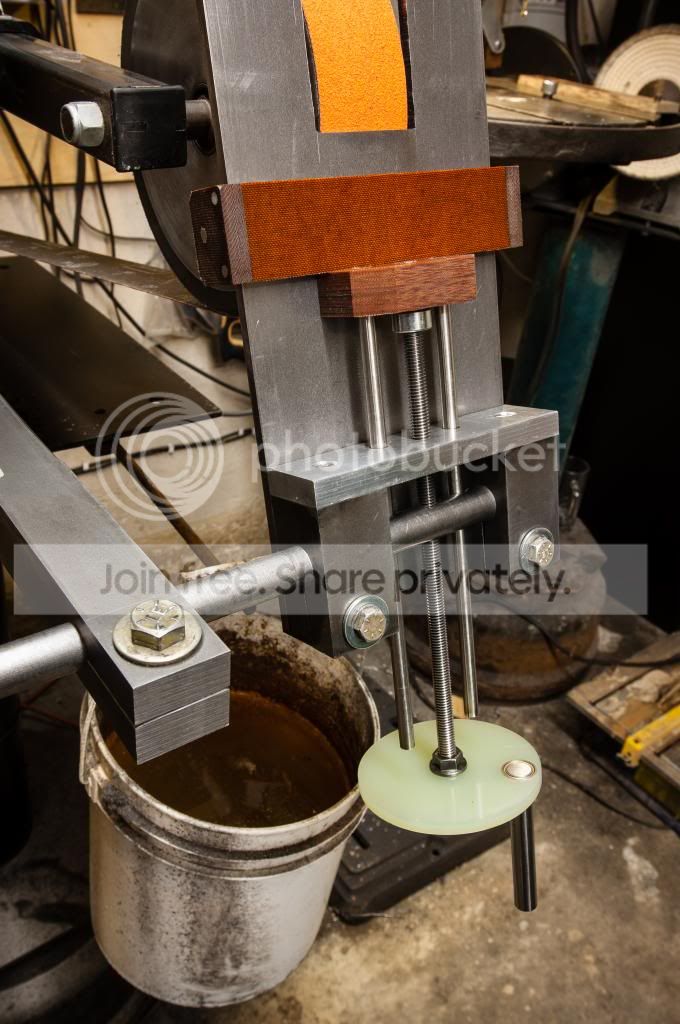
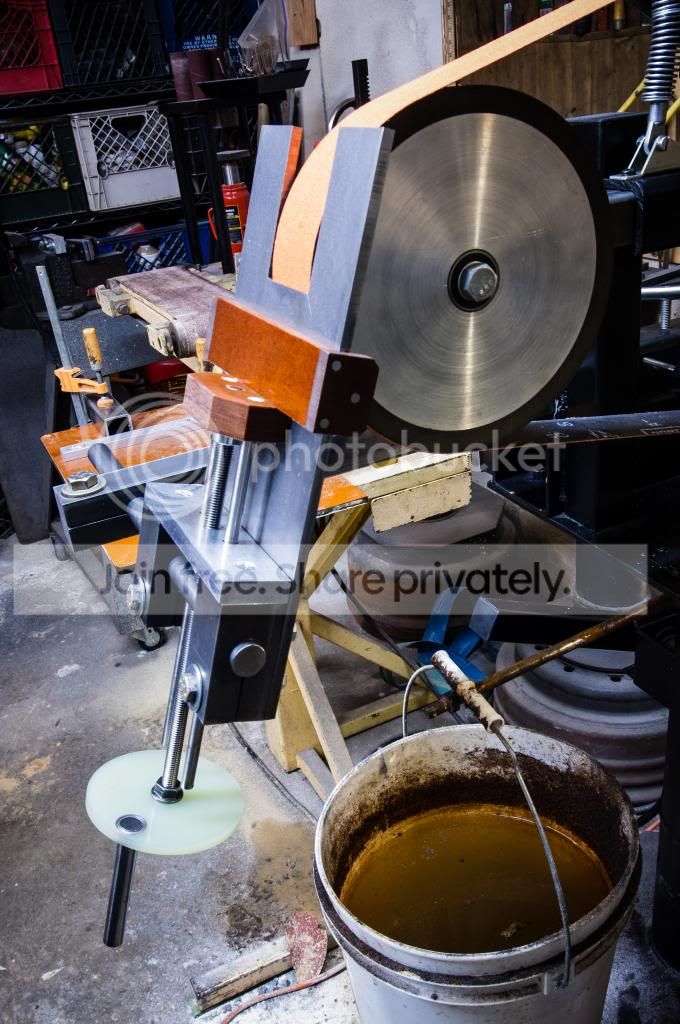
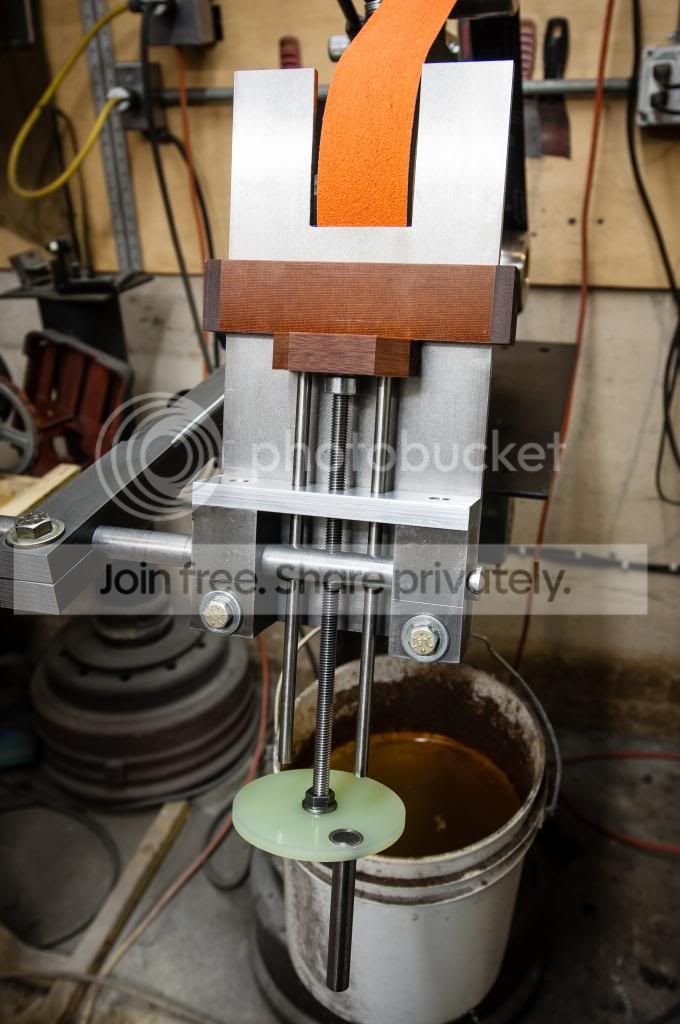
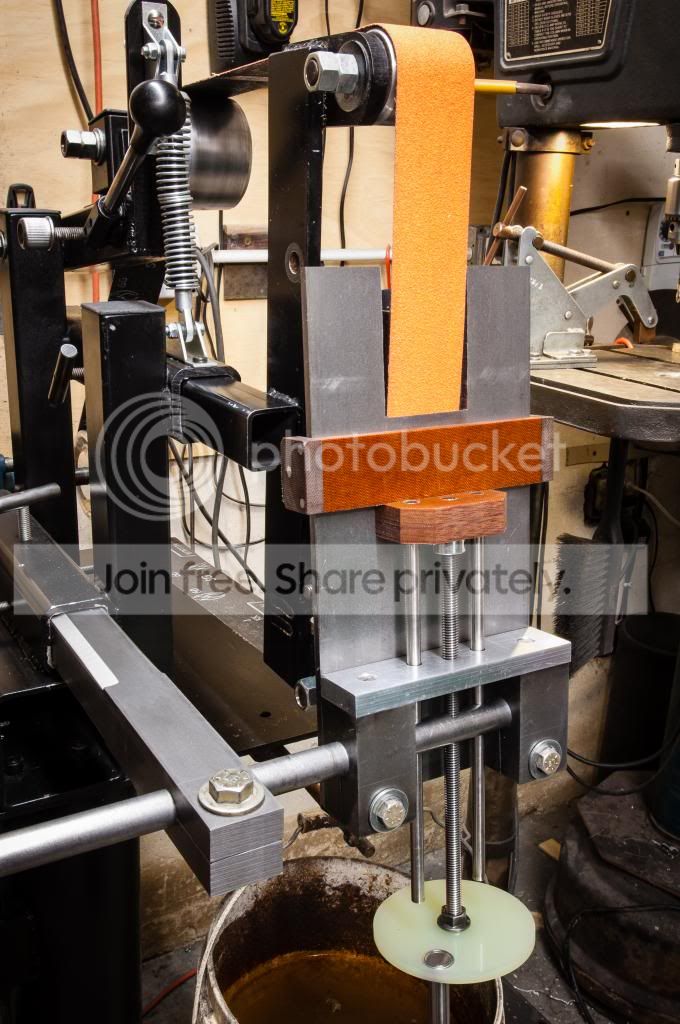
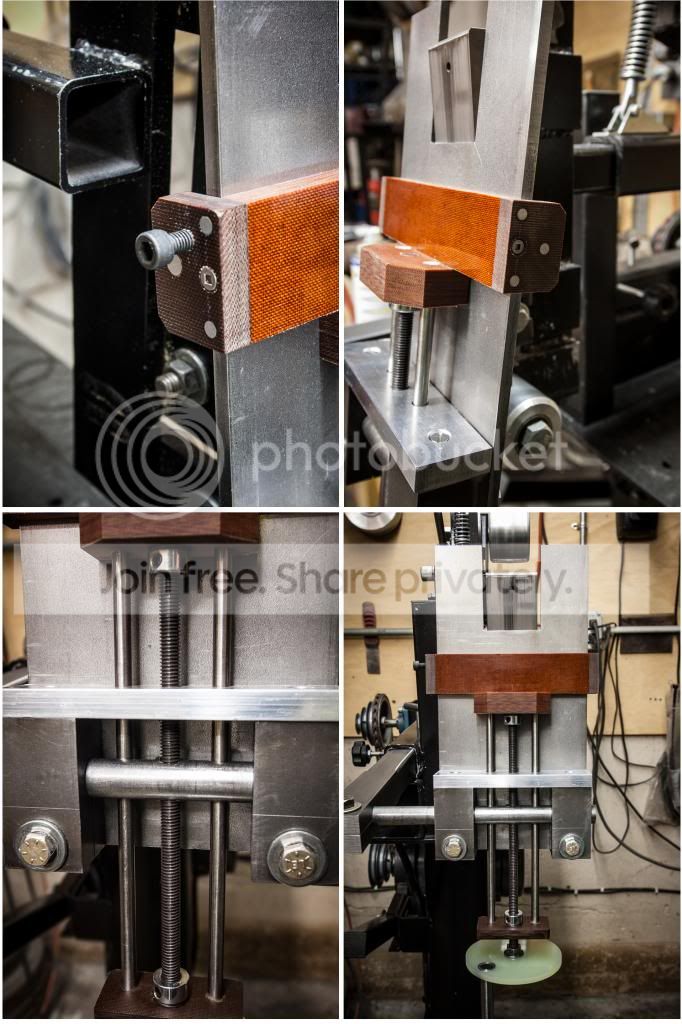
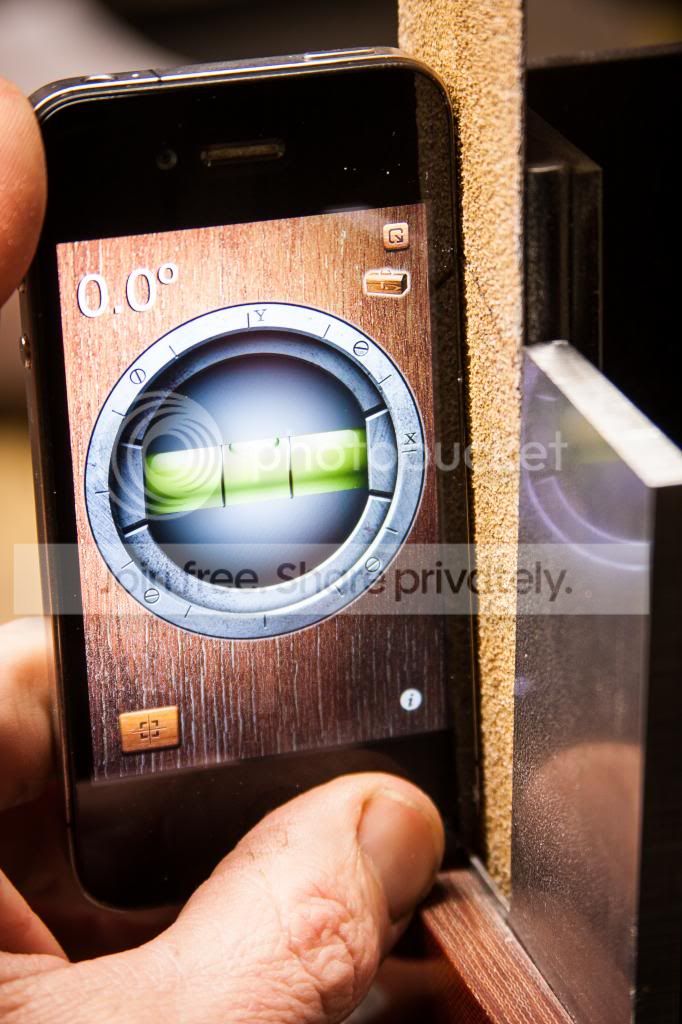
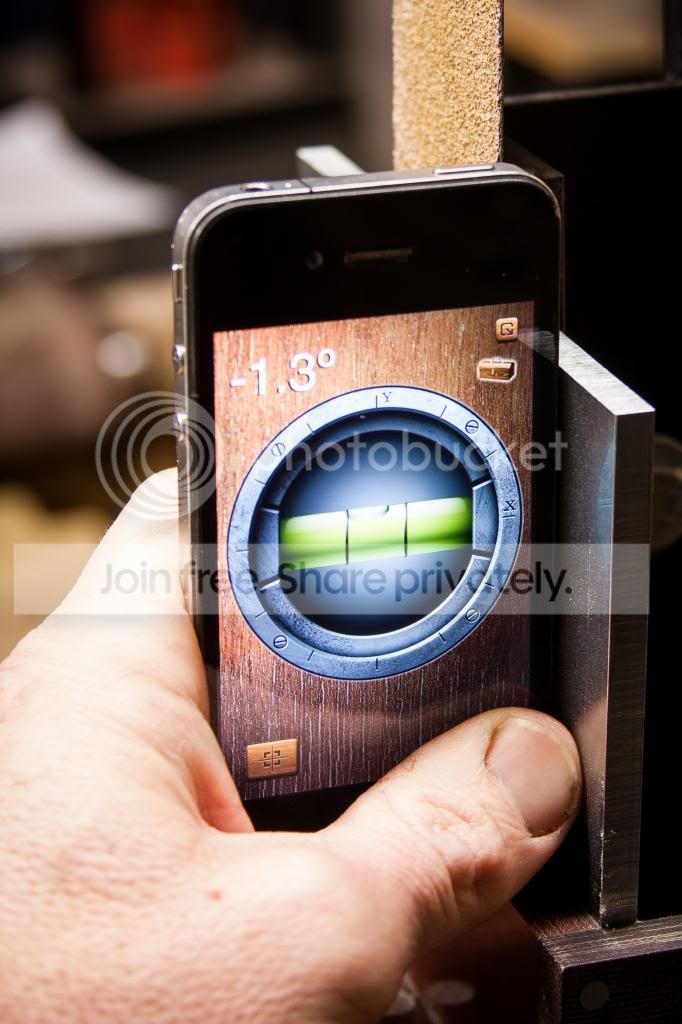
I researched a bit and decided that I needed to get close to a one degree angle for what I want to accomplish. I started out with this project hoping for a 5 degree angle, found out I could easily get 2.5 degrees. After seeing the math (thank you, Steven Penner), I went to town on my rig. I want to be able to reach a 2" inch bevel height (flat grind) with a close to .100" spine or stock, and a way to get there. 1.3 degrees appears to be my target. Thankfully, my buddy made me a 10" platen (A2), and that is what I needed for this set-up. I have been told that none of this matters, but the point of a jig is to provide accuracy, so I have to disagree. I've seen sleds and bubble jigs and other tools. Get rid of your drill press if you think knife making has to be done eyes and hands alone, trade in your belt grinder, too. Almost every knife I make, I have to hand work on a granite slab (thank you, Stacy for the tip), but I will not apologize for trying to make my work faster and more accurate, especially when I build the tools to make the tools I want to make.
Here is the steel I cut on a belt, working towards to 1.3 degrees.
Here is the present result.
Here are some progression photos, and some calcs. The funny thing is, I learned by doing this, how to accomplish the same objective without the hours of grinding the plate. Someone smarter than me will most likely see it too. I'm not talking about free handing, I'm talking about how to accomplish the same tool with less work.
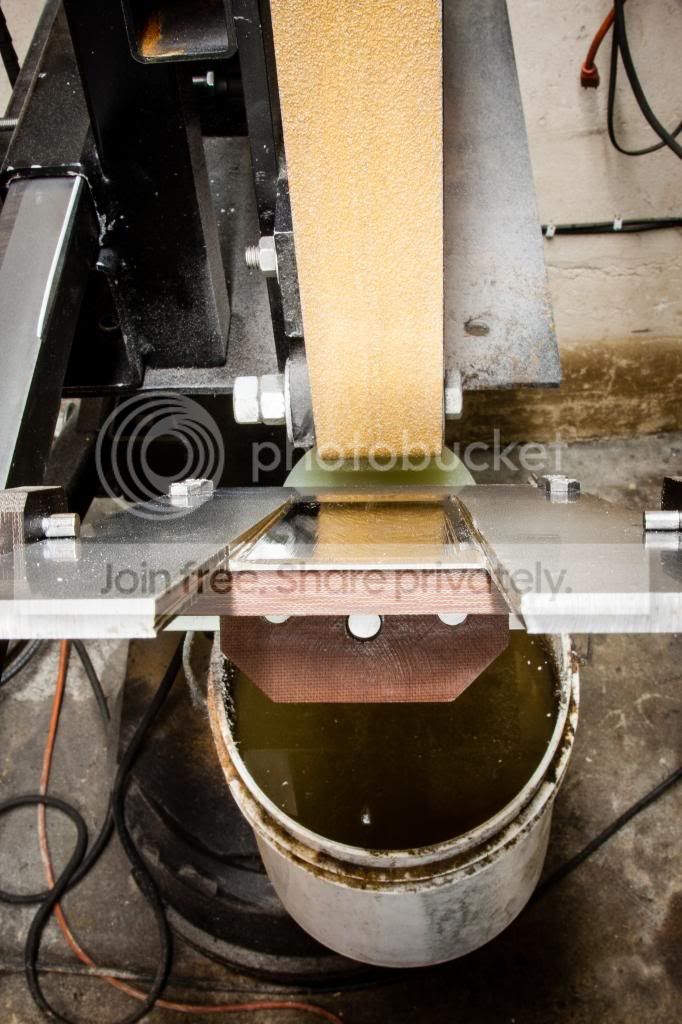
Grinding and cooling the plate.
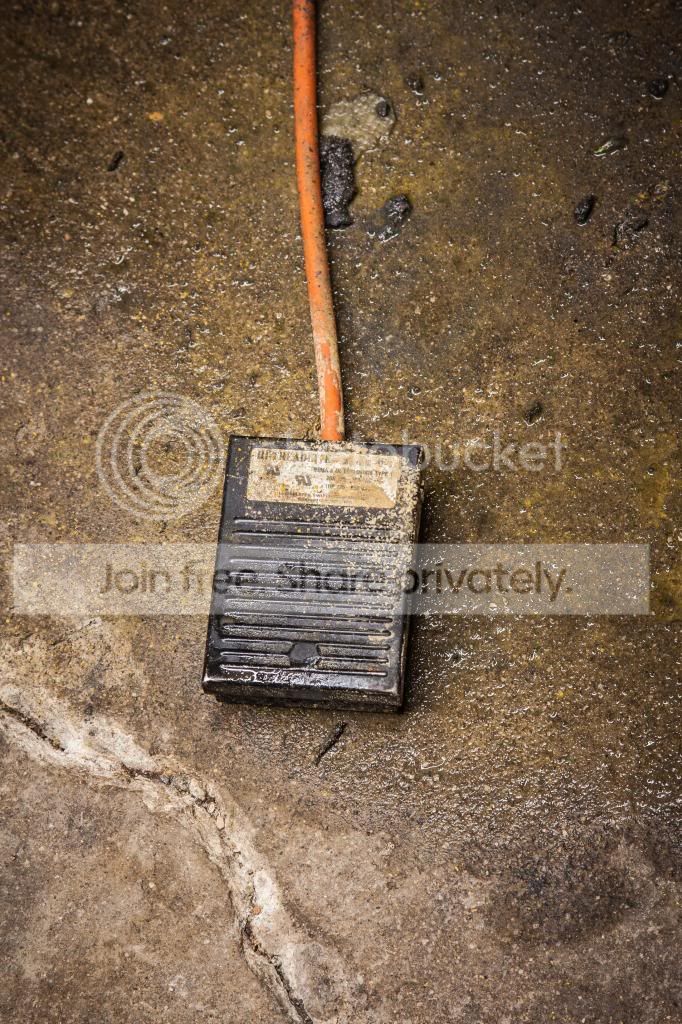
The reason a low voltage footswich is a good idea.
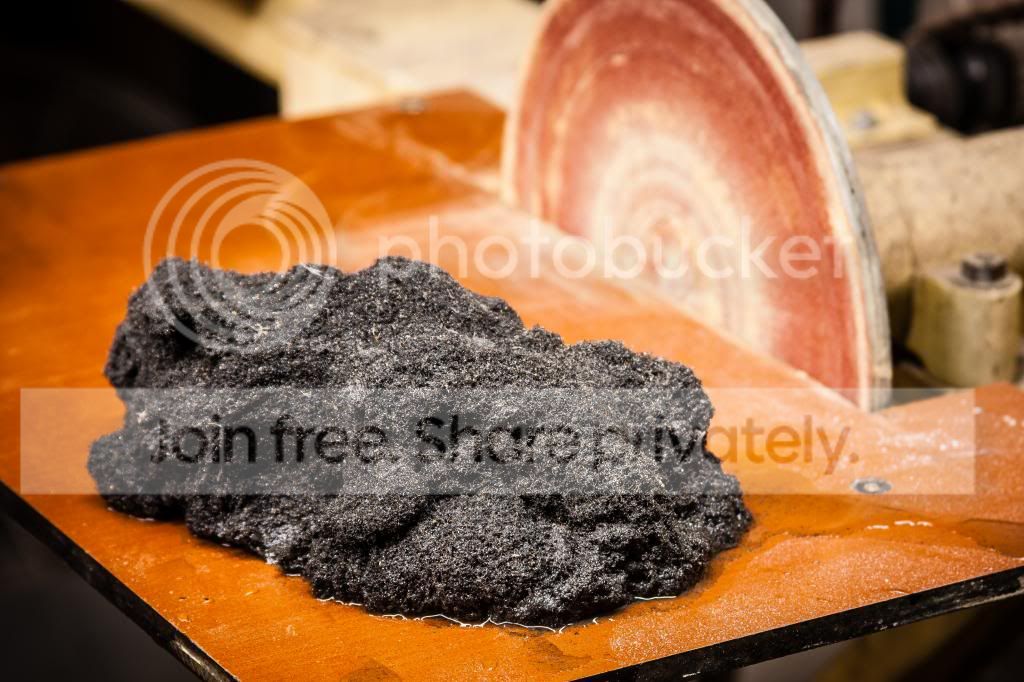
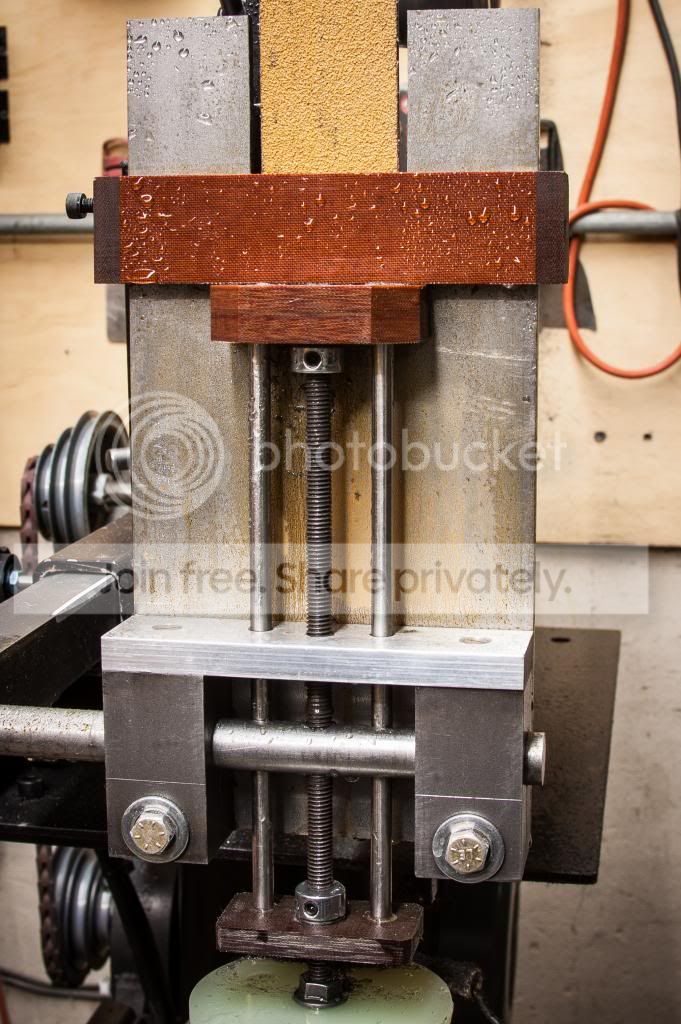
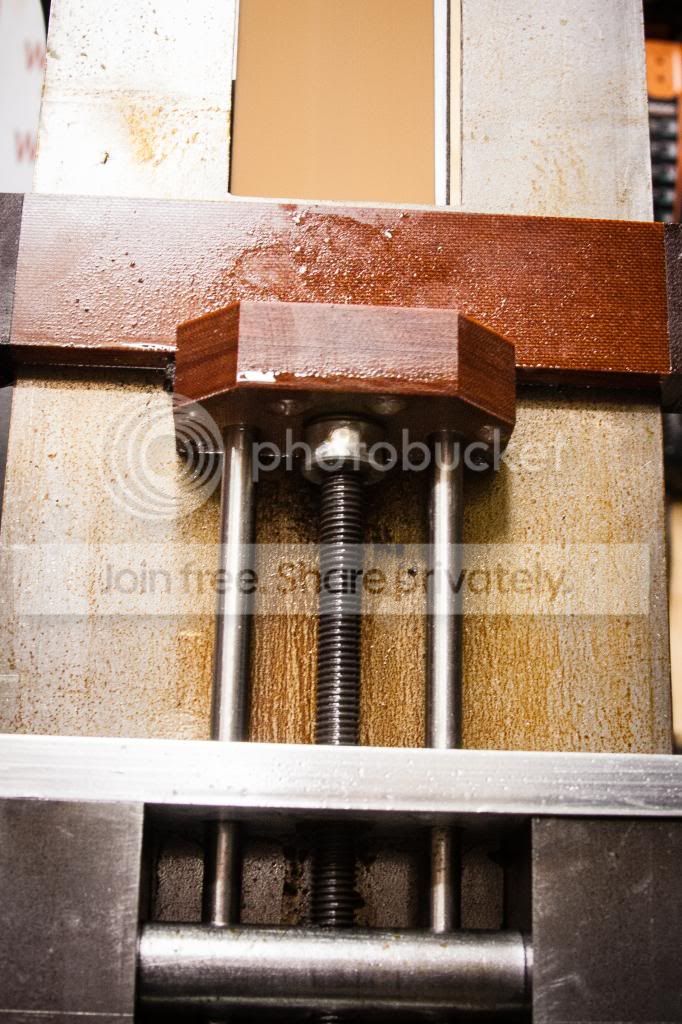
How fast water creates rust when the steel gets hot.
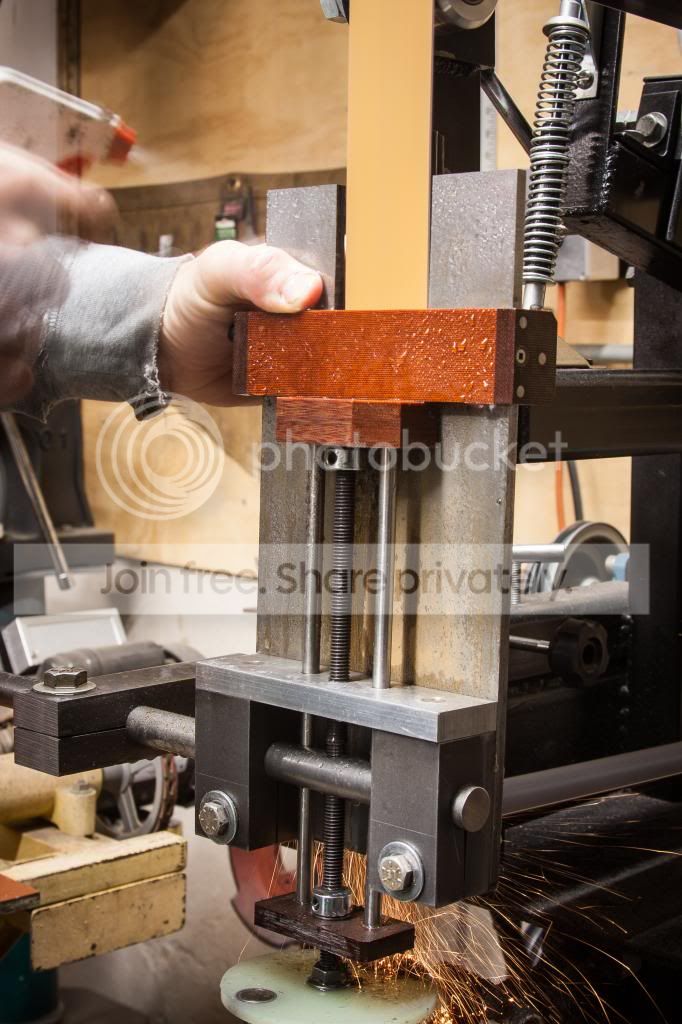
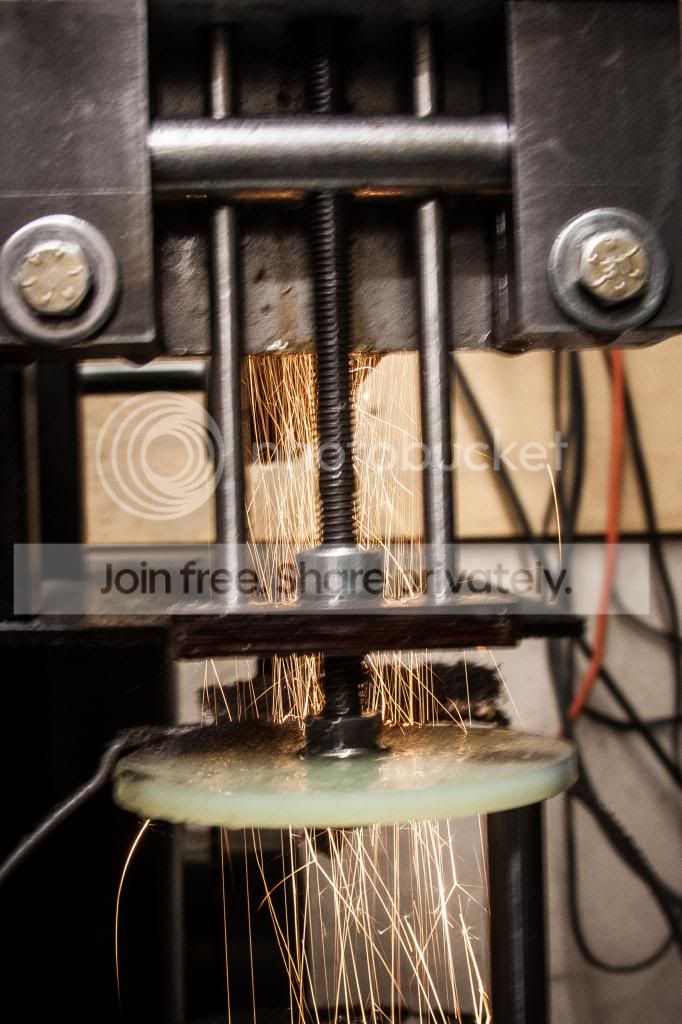
Hours of this....
What I'm working toward.



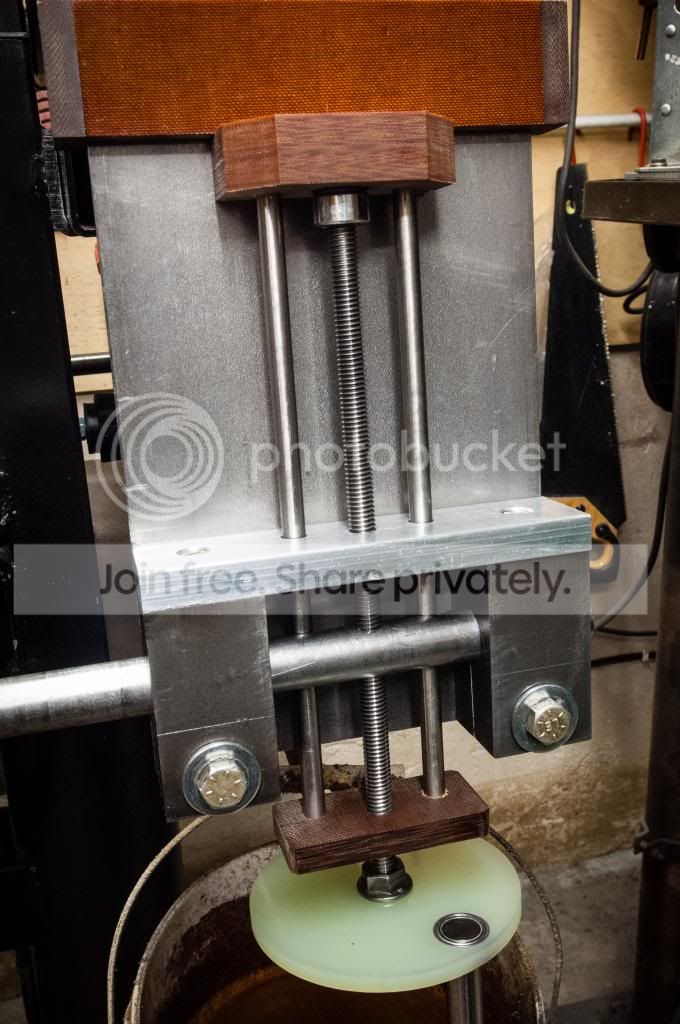
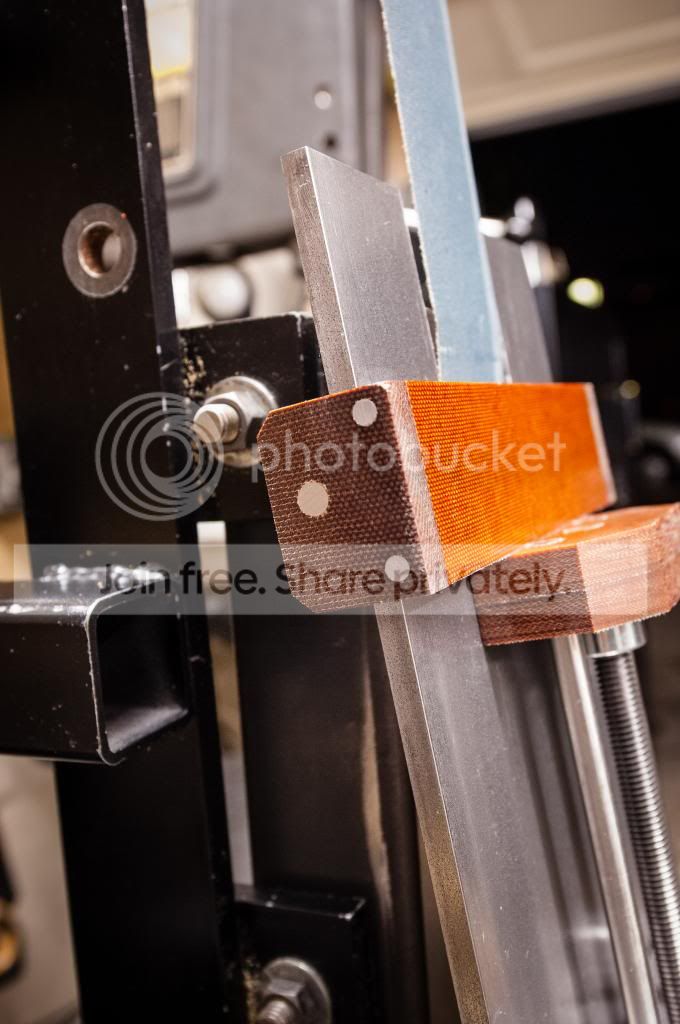

 .
.