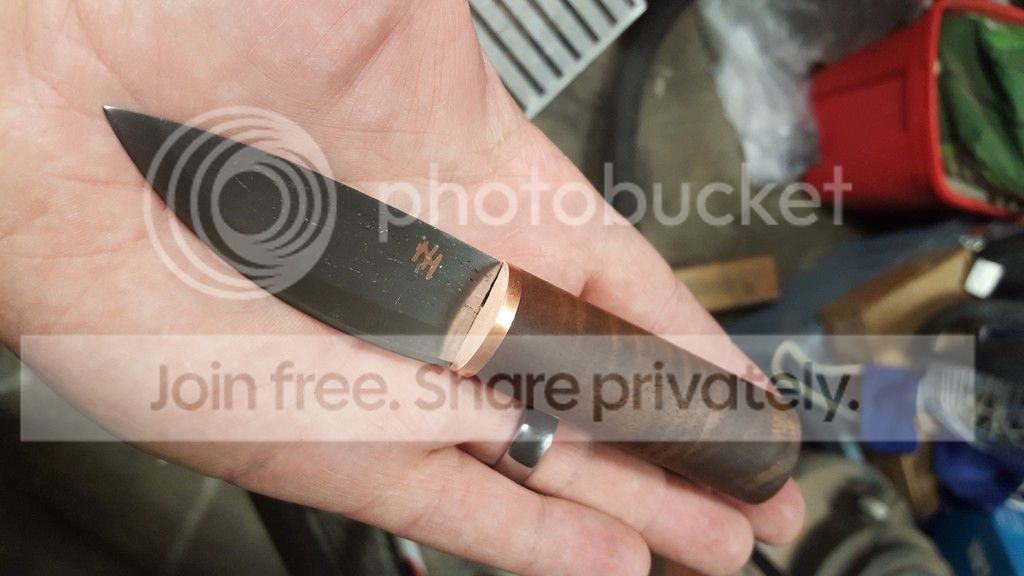
- Joined
- Jan 17, 2008
- Messages
- 539
I've been wanting to try making some period medieval knives for a while now, and in my research I found that knives made from a single piece of steel were quite uncommon due to the price of steel in medieval Europe. Most blades were made from wrought iron with a steel edge forge welded on.
So I went online and tried to find some wrought iron. A couple of stores on ebay sell scrap wrought iron, so I snapped up a flat rate box of 5/8" round salvaged from a mid 19th century building in Virginia and went to town.
First I drew out the iron into a rectangle about 1/4" by an inch (this is where I learned just how HOT you need to work wrought iron. Weird forging at temps where I'd normally be welding...) and wired on a quarter inch square by about an inch and a half length of 1075.
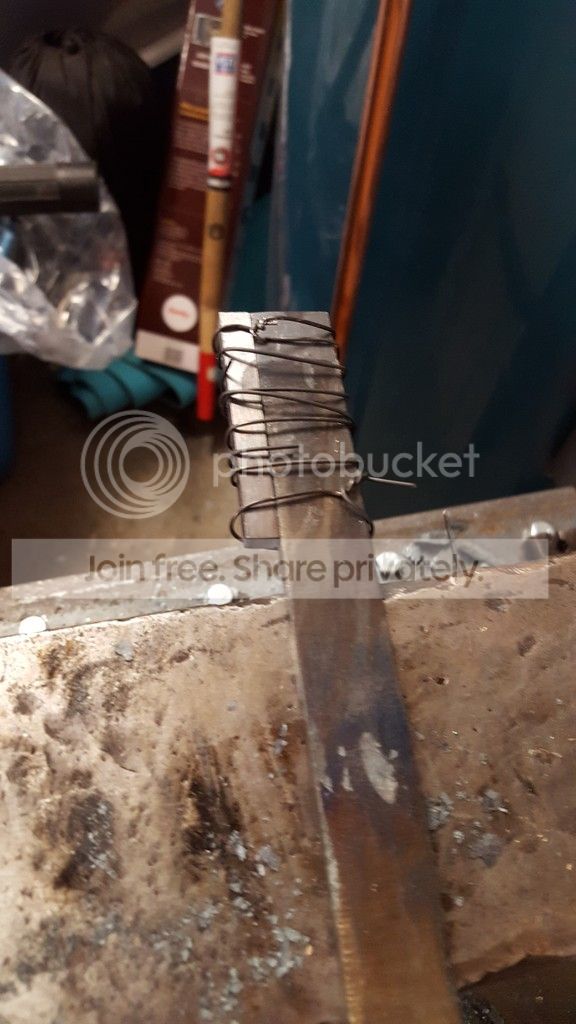
I really need to get a welder...
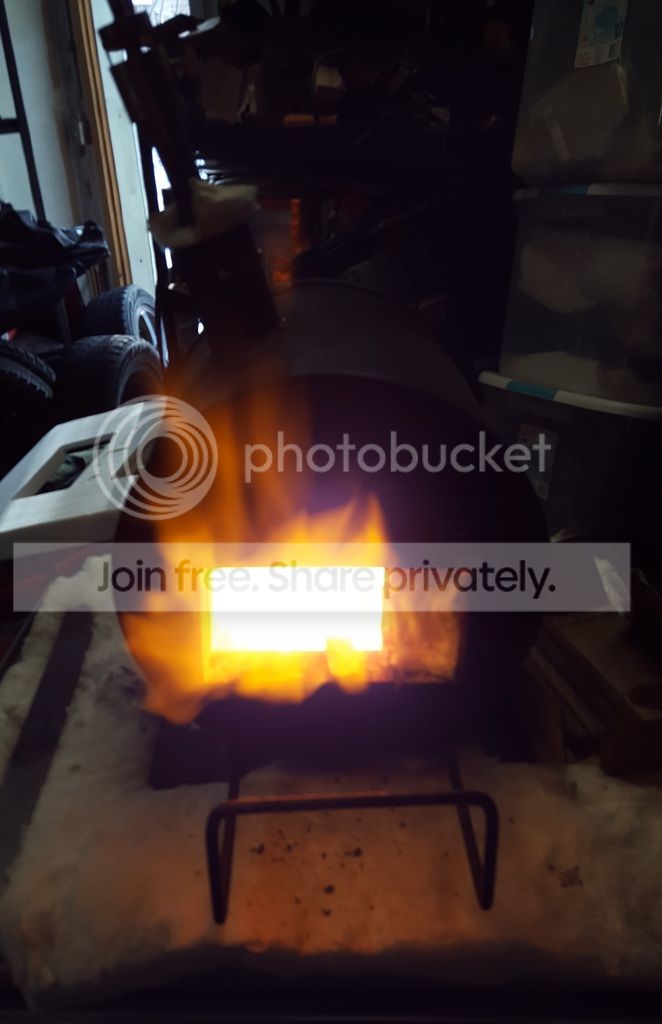
After several welding heats we have a solid piece!
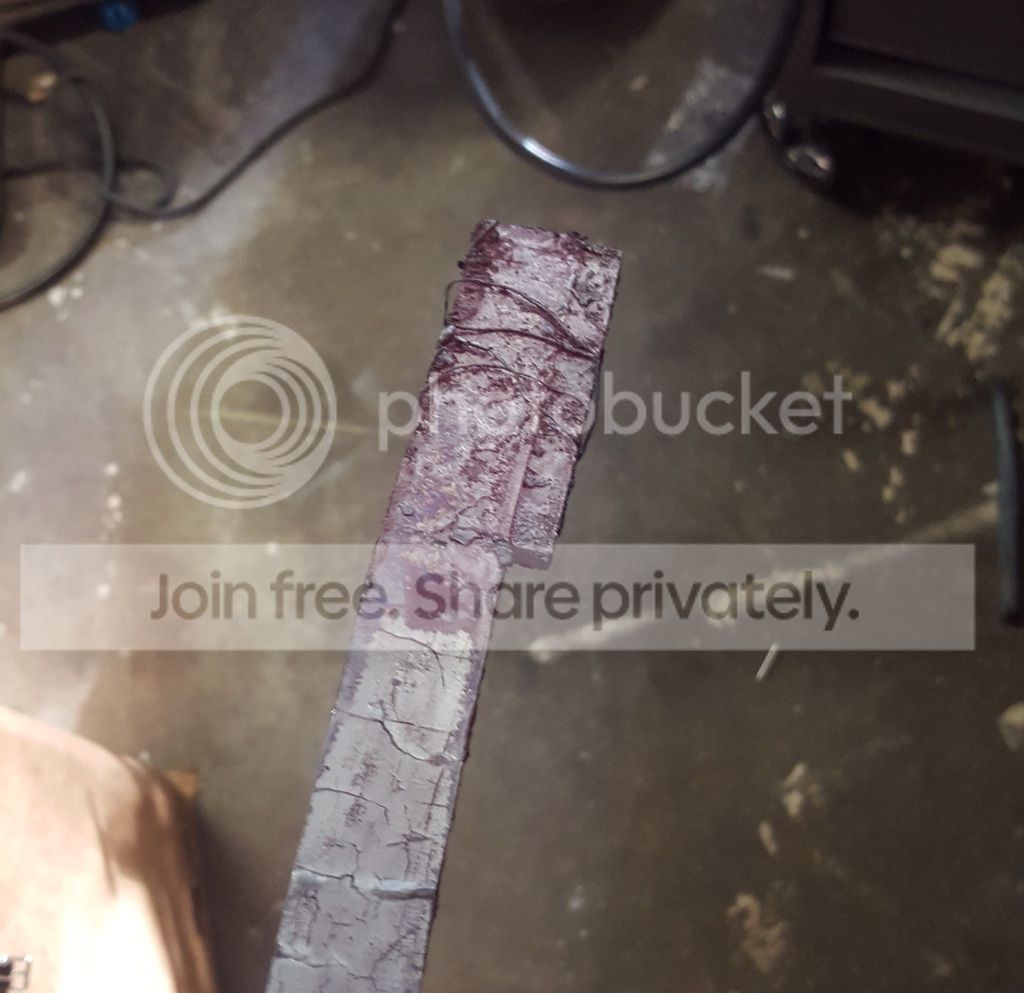
Only nice thing I can say about using the wire is that pretty much all of it burns off during the heats, and what's left is easy to remove.
Once I was confident in the weld I countercut the point
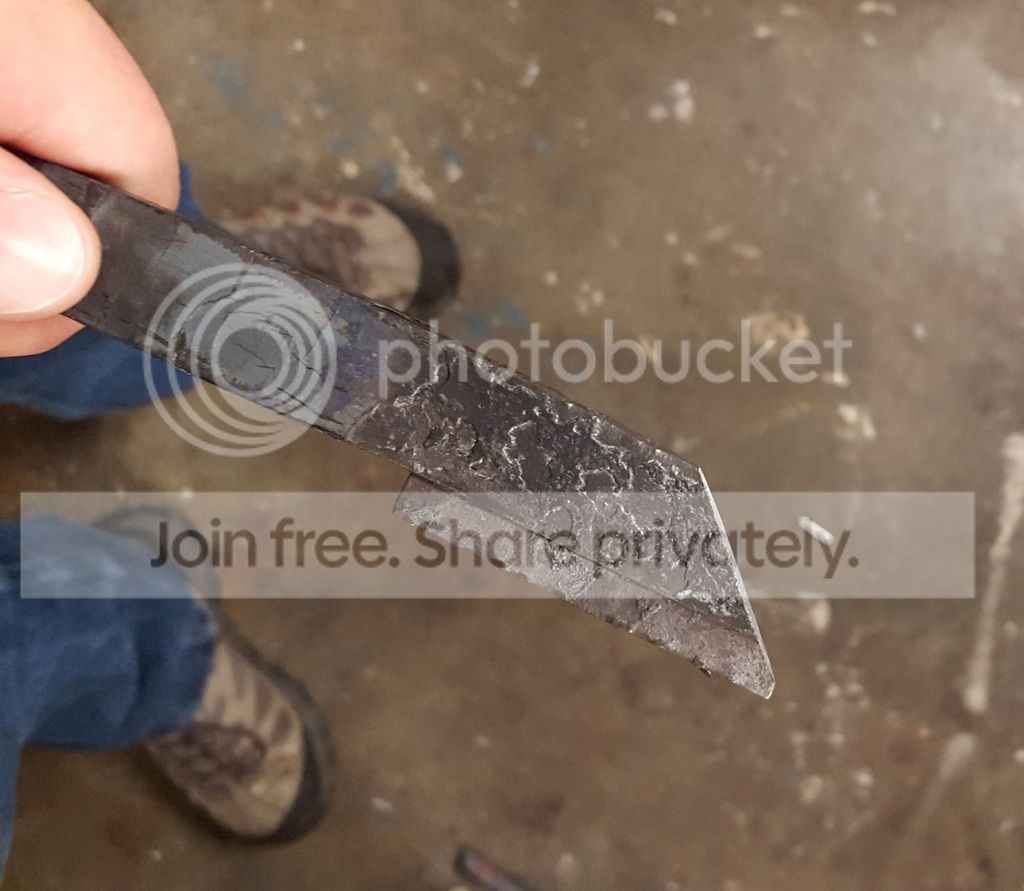
And roughly forged it back
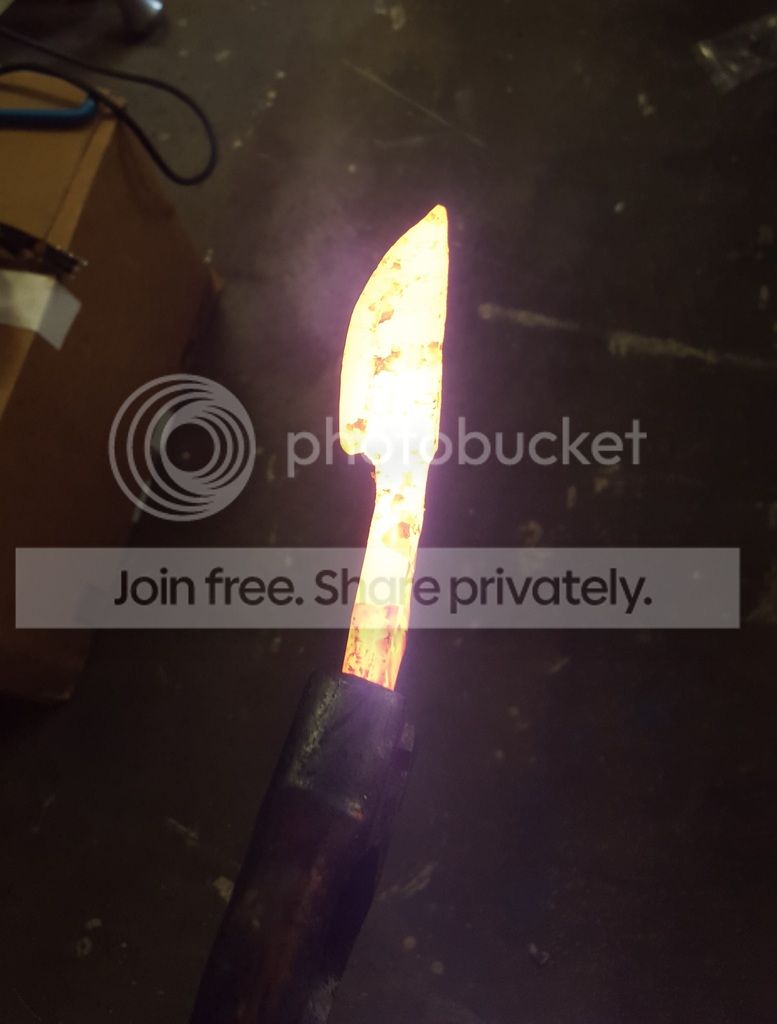
Forging the tip is actually one of the more challenging parts of the forging process for me. The wrought iron wants to bend way more than the steel does, so it's easy to bend the whole bar into a horseshoe shape just to move the tip a bit. Lots of straightening on the anvil ends up being needed.
After the tip is done I forged in the bevels, forged down the tang, and to the grinder we go! (Sorry, I failed miserably in the "remember to take pictures" part of that process, but it's no different from any other forged knife in that respect)
Ground the blade to .025" at the edge, and kept the spine at a bit over 0.125". Hardened and tempered it, then back to the grinder and brought it back down to 120grit. At this point I took it over to Mark Knapp's shop where he was nice enough to let me use his ferric chloride (which is surprisingly hard to get up here in Fairbanks with DOT's hazmat shipping regs being as they are)
here's where she stands right now. I really like how that wrought iron looks after etch...
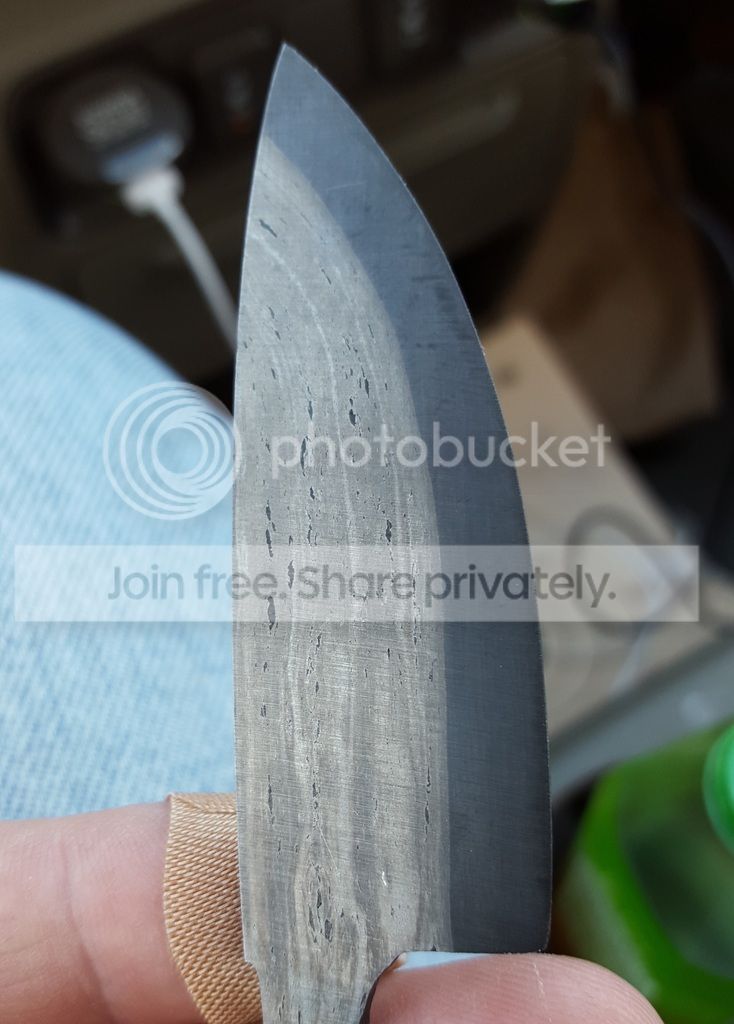
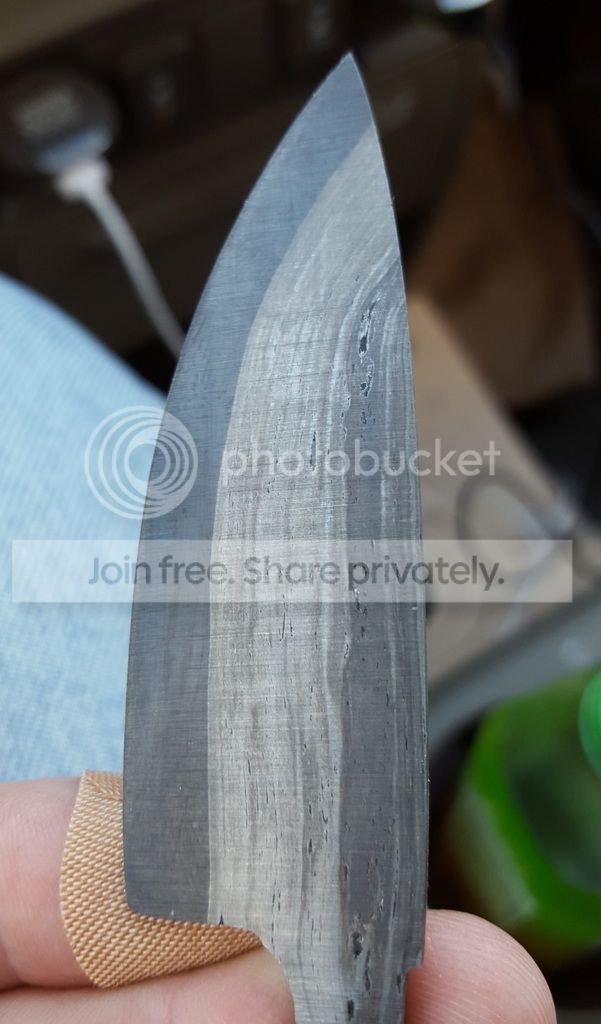
Next step is I'll even up the tang shoulders, and finish sanding it down. Then I'll give it another etch before starting on handle and hardware.
Any comments, constructive criticism, or suggestions?
Thanks!
Nate W.
So I went online and tried to find some wrought iron. A couple of stores on ebay sell scrap wrought iron, so I snapped up a flat rate box of 5/8" round salvaged from a mid 19th century building in Virginia and went to town.
First I drew out the iron into a rectangle about 1/4" by an inch (this is where I learned just how HOT you need to work wrought iron. Weird forging at temps where I'd normally be welding...) and wired on a quarter inch square by about an inch and a half length of 1075.

I really need to get a welder...

After several welding heats we have a solid piece!

Only nice thing I can say about using the wire is that pretty much all of it burns off during the heats, and what's left is easy to remove.
Once I was confident in the weld I countercut the point

And roughly forged it back

Forging the tip is actually one of the more challenging parts of the forging process for me. The wrought iron wants to bend way more than the steel does, so it's easy to bend the whole bar into a horseshoe shape just to move the tip a bit. Lots of straightening on the anvil ends up being needed.
After the tip is done I forged in the bevels, forged down the tang, and to the grinder we go! (Sorry, I failed miserably in the "remember to take pictures" part of that process, but it's no different from any other forged knife in that respect)
Ground the blade to .025" at the edge, and kept the spine at a bit over 0.125". Hardened and tempered it, then back to the grinder and brought it back down to 120grit. At this point I took it over to Mark Knapp's shop where he was nice enough to let me use his ferric chloride (which is surprisingly hard to get up here in Fairbanks with DOT's hazmat shipping regs being as they are)
here's where she stands right now. I really like how that wrought iron looks after etch...


Next step is I'll even up the tang shoulders, and finish sanding it down. Then I'll give it another etch before starting on handle and hardware.
Any comments, constructive criticism, or suggestions?
Thanks!
Nate W.
Last edited: