How To Yes, it’s here: The Opinel dating chart

Joined
Feb 15, 2026
Messages
142
IMG-20260406-000116.jpg

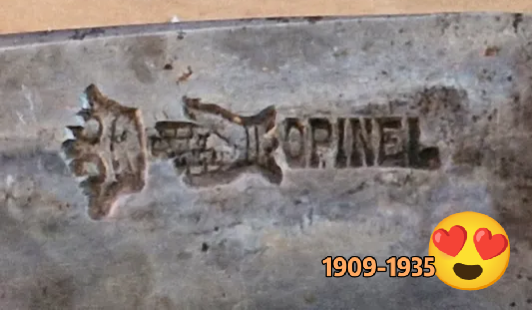
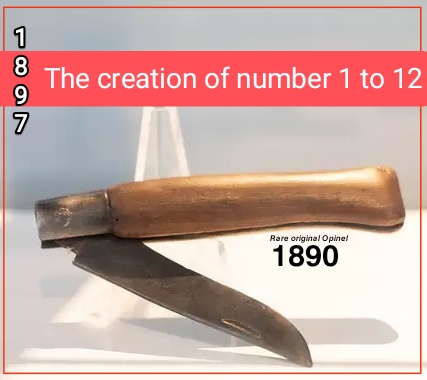
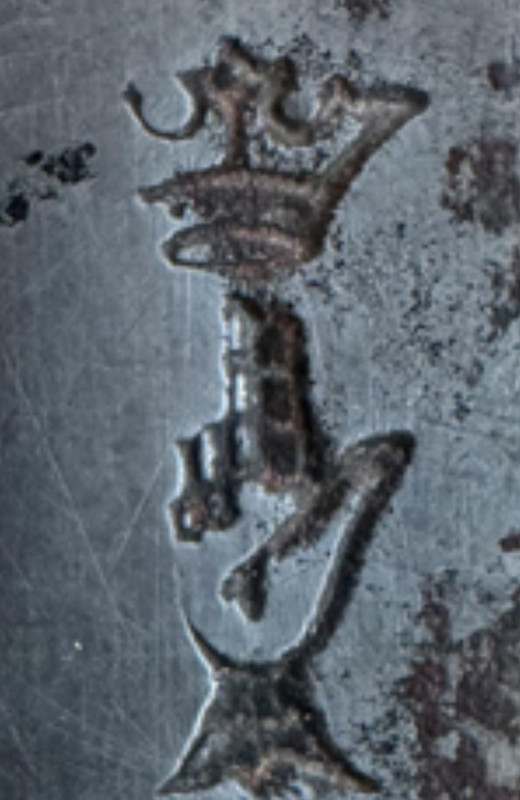
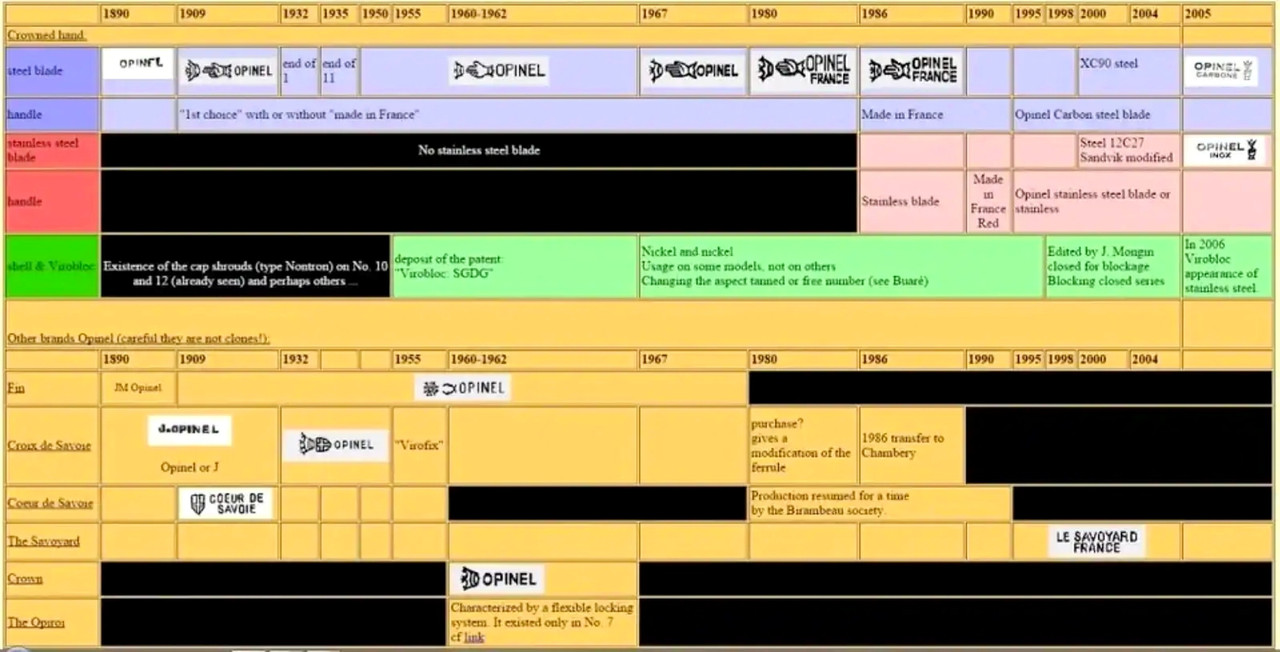
I'm sharing this classic chart from fpanda for those trying to date their knives. Like many of you, I check it from time to time, but I always forget where to find it...


This chart is essential for identifying tang stamps, Virobloc variations, and dating vintage Opinels from the early 1900s to the 2000s.
IMG-20260405-231538.jpg


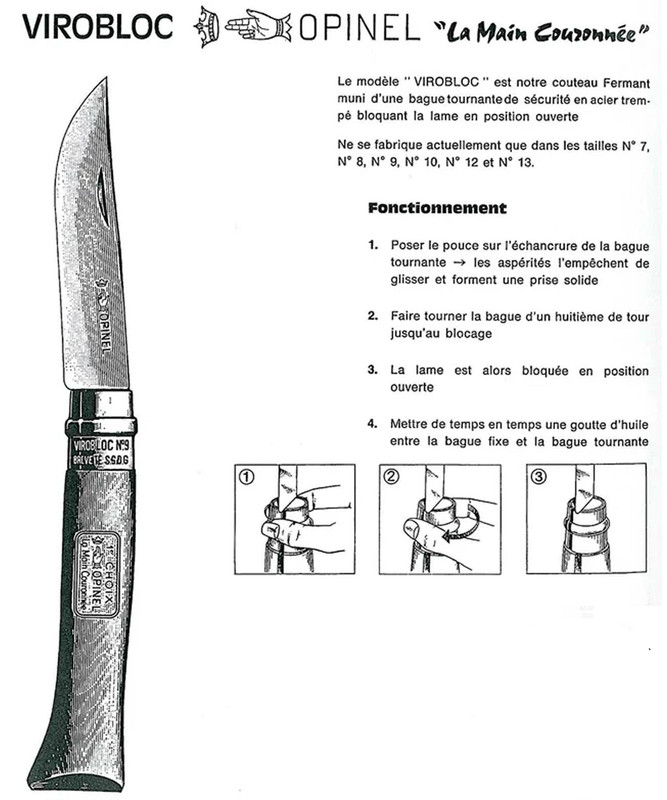
Quick tip for dating your Opinel: Check the Virobloc (Safety Ring).
  • Pre-1955: No safety ring at all.
  • 1955 - 2000: The Virobloc was invented in 1955 by Marcel Opinel, but it only locked the blade in the open position. Early virobloc 1955-1966, no stainless steel blade, see tag blade and shell (opinel, Number, breveté or breveté SGDG). Virobloc 1967- 1985 no stainless steel blade and see the tag blade.
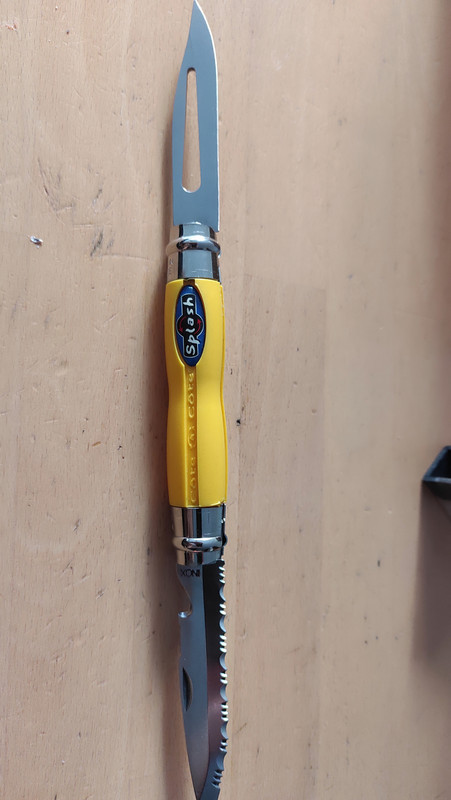
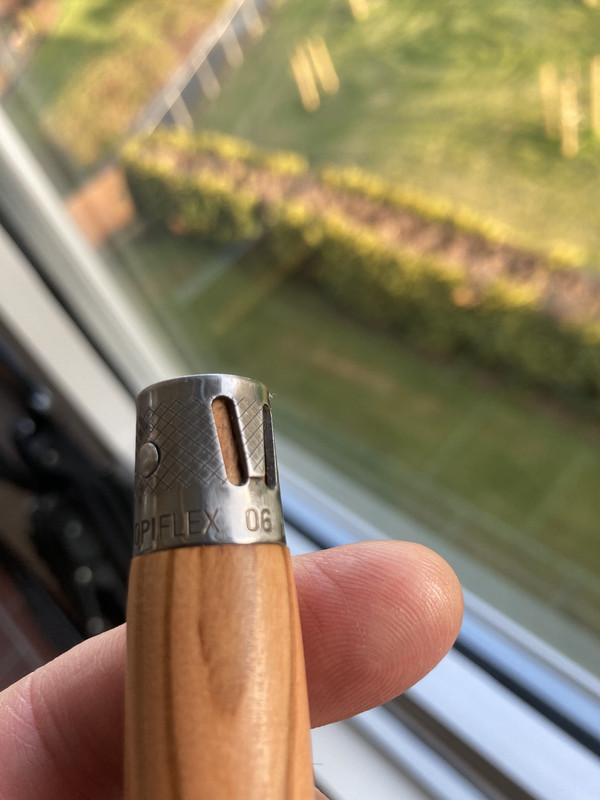
  • 1998: the locking ring is redesigned to introduce locking in the closed position. Many manufacturers would take advantage of the expiration of the first Virobloc patent to create their own versions.
  • Post-2000: The ring was modified to lock the blade in both the open and closed positions. From the No. 6 model upwards, the Virobloc safety system became mandatory.
If your knife has a safety ring but won't lock while closed, you know it's a 'vintage' piece from that 45-year window between 1955 and 1999.


A quick breakdown of the fpanda website:

The museum (highly recommended)

Standard models

The Different Series

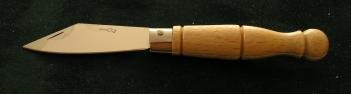
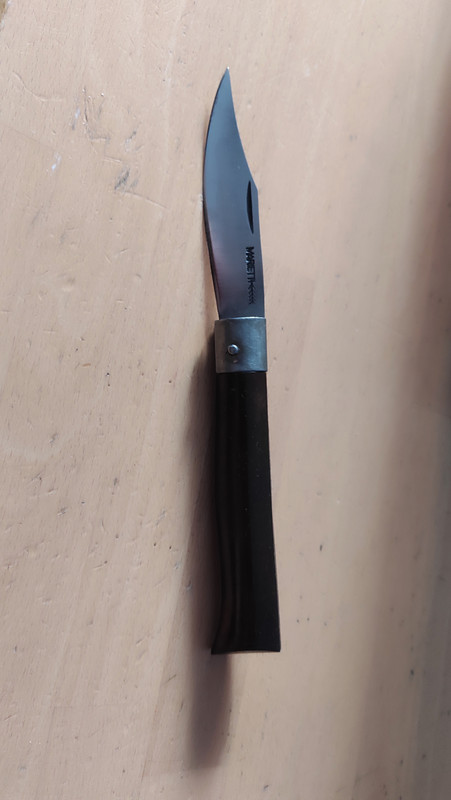
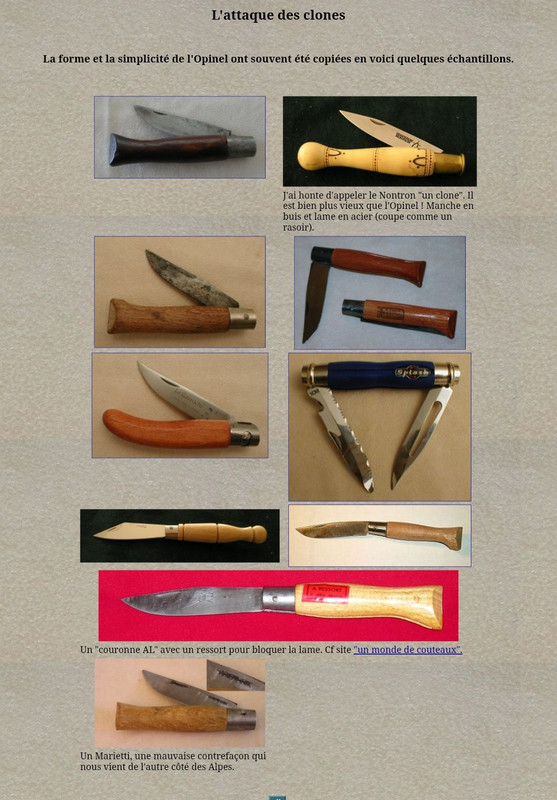
The clones

images(3).webp


OTHER RESOURCES...

Sizes and weights
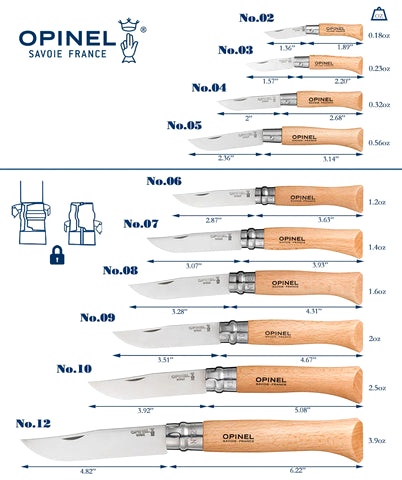
IMG-20260406-010714.jpg


IMG-20260406-211033.jpg


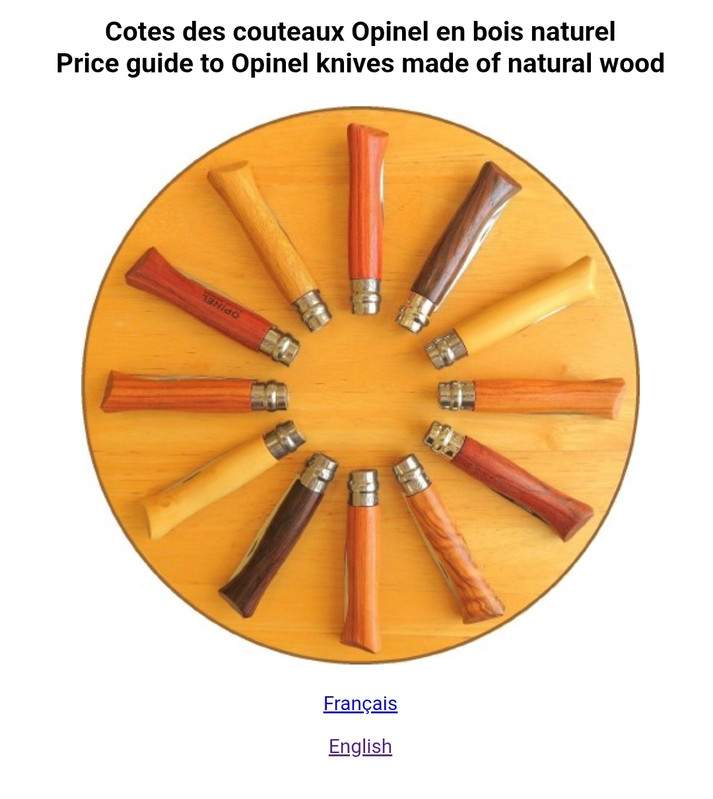
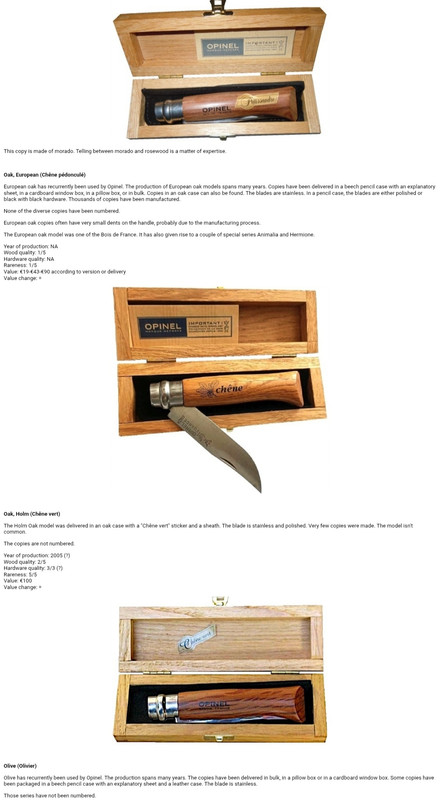
Price guide to Opinel knives made of natural wood
Screenshot-2026-04-16-01-49-52-431-edit-com-android-chrome.jpg

IMG-20260416-020228.jpg

Prices are for guidance only (check current prices)


oie-oie-twinkles.gif
 
Last edited:
Wow, thank you for sharing! I especially love the ole html-construction website.

One thing. I think traditional Austrian knife - Trattenbacher - is an independent creation, not an intended Opinel "clone". Am I wrong?
clone_all.jpg
 
Wow, thank you for sharing! I especially love the ole html-construction website.

One thing. I think traditional Austrian knife - Trattenbacher - is an independent creation, not an intended Opinel "clone". Am I wrong?
View attachment 3154309
I like it. They don't think so but I think so. That type of ferrule dates back to the 19th century, and who knows where it actually originated (it's a simple friction mechanism).This is a French clone from Thiers...

IMG-20260408-115111.jpg


I think yours only has the ferrule in common. Does giving this type of ferrule a conical shape make it a clone?". Mine took advantage of Opinel's Virobloc change and patent issues to be manufactured. In Europe, they have always copied each other.
I have a traditional Italian knife with this ferrule, but it isn't a clone. The original design is from the 19th century:

IMG-20260408-120236.jpg


And this same brand has a blatant copy in the photo on the French website (the last one in the bottom photo). What Opinel purists think is another story... That's how they consider it on the fpanda website. If someone shows me a 19th-century patent, I'll shut my mouth.

Screenshot-2026-04-08-12-18-54-853-edit-com-android-chrome.jpg
 
Last edited:
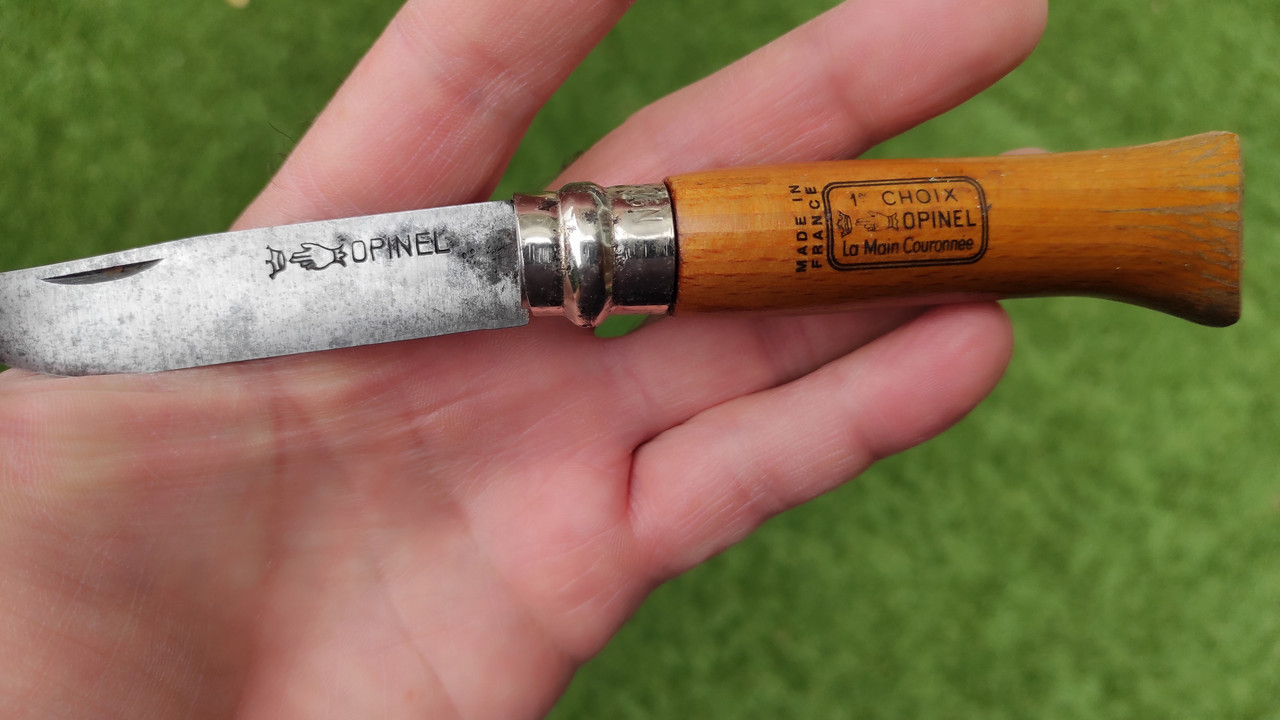
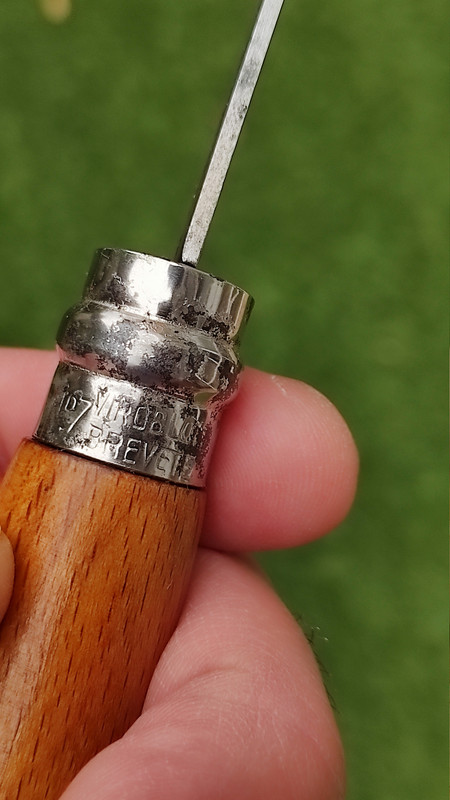
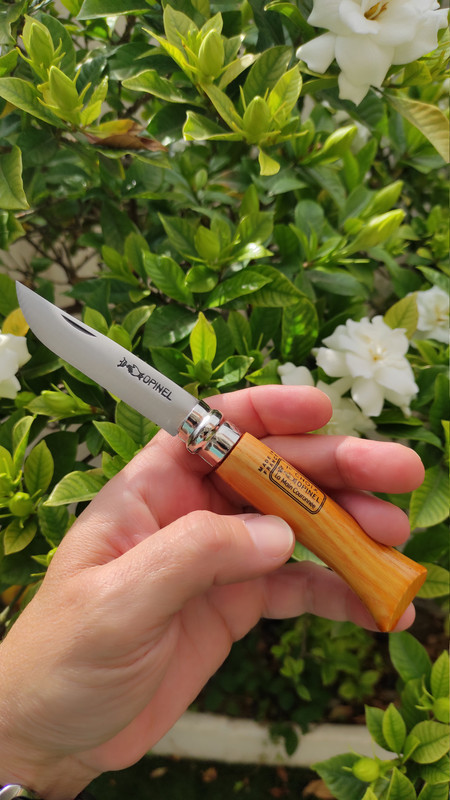
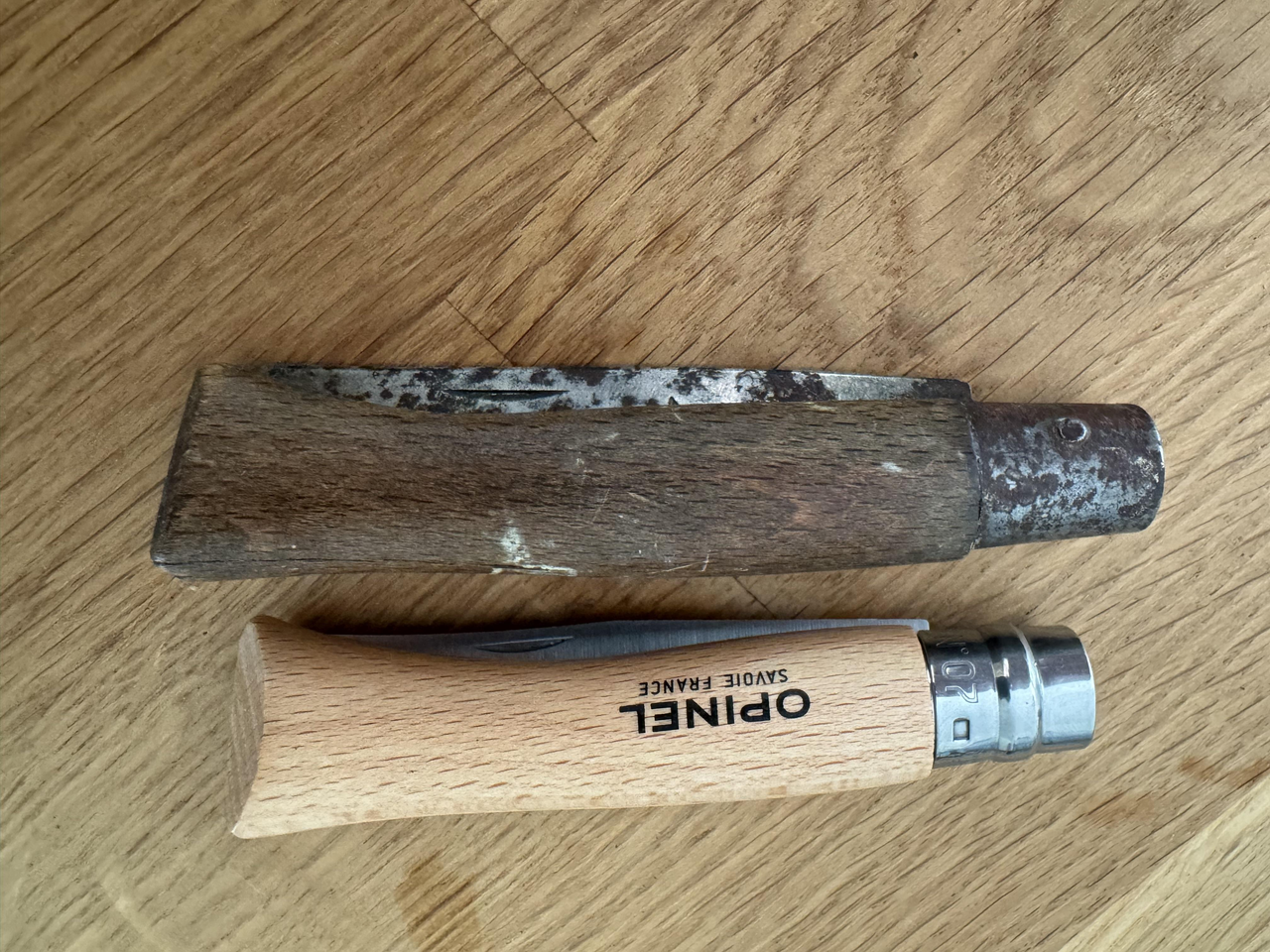
An early virobloc... 1955-1967. It arrived today.

IMG-20260509-125500.jpg

IMG-20260509-125520.jpg

IMG-20260509-125524.jpg

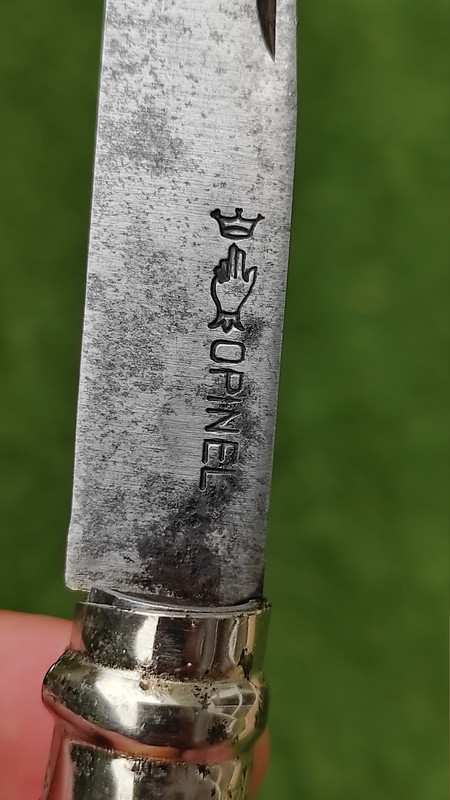
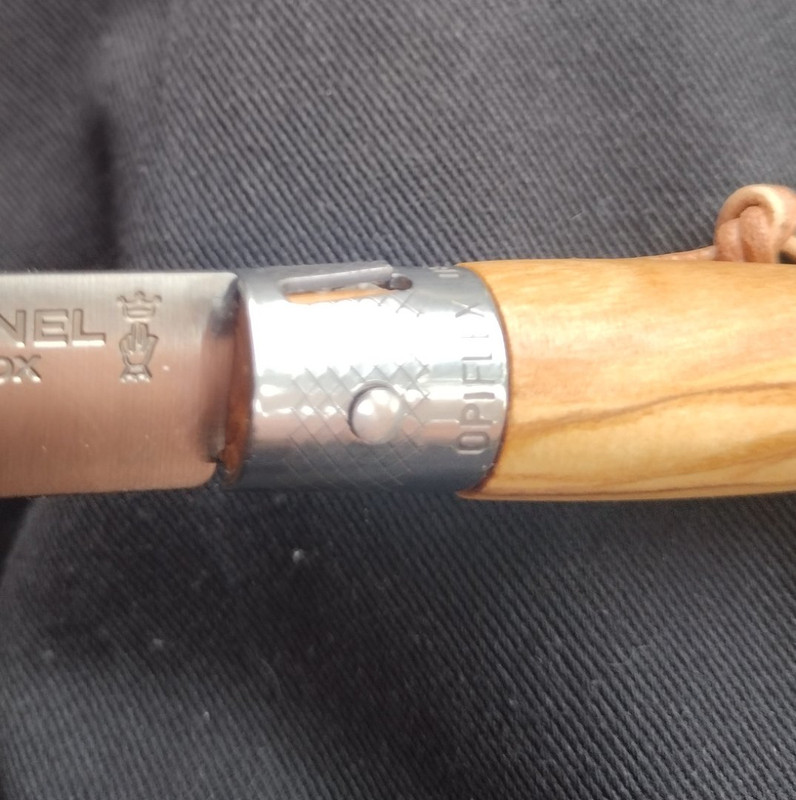
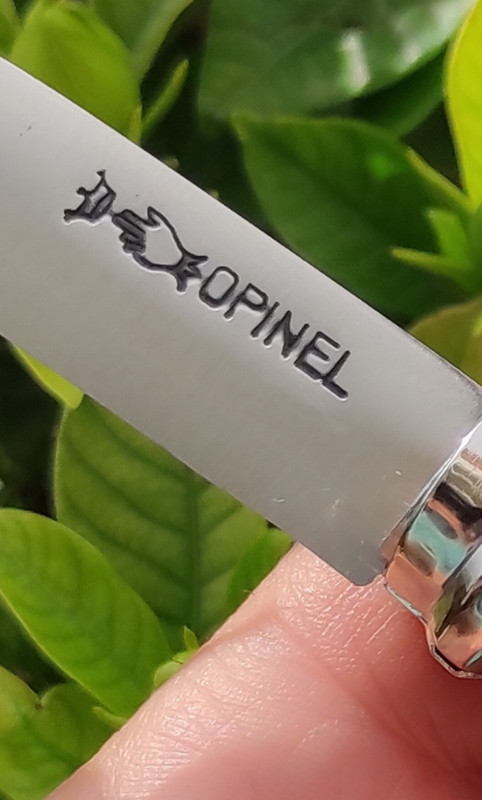
Opinel, number, virobloc, BREVETE with/without SGDG (The ones that have it are the early ones and the most sought-after). To be sure that your Opinel is from between 1955 and 1967, the most reliable way is to check the blade stamp (blade design changed in 1968).

No lock when the blade is folded.

IMG-20260514-203511.jpg
 
Last edited:
Thanks for posting that. I always have to go hunting for it. For my money, the most desirable Opinels are pre-2000, precisely because they lack the closing lock.
 
Thanks for posting that. I always have to go hunting for it. For my money, the most desirable Opinels are pre-2000, precisely because they lack the closing lock.
I use the chart above to go hunting for them. This one was the jackpot. It's curious that all the oldest ones I've bought have been from Italian sellers.
 
A Curious Fact. The Virobloc and its patents: Documented Chronology of the early Virobloc (Source: Espacenet)

1. Patent FR1071530 (A)
Priority Date: February 27, 1953
Publication Date: September 1, 1954
Title: Cran d'arrêt (rotating ring?)
Inventors: Marcel Opinel and Léon Opinel
Description: This document represents the initial development of the folding knife
concept featuring a safety system.

2. Patent FR1142967 (A)
Priority Date: May 16, 1955
Publication Date: September 25, 1957
Title: Couteau pliant (Folding Knife)
Inventor: Maurice-Henri-Jean Opinel
Description: This is the primary patent associated with the Virobloc as it is historically recognized.

3. Patent FR68792 (E)
Priority Date: December 29, 1955
Publication Date: June 10, 1958
Description: This corresponds to a certificate of addition or related improvement.


This indicates that the Virobloc was not a single event in 1955, but rather a development process and a family effort:

1953: first patented concept.
1955: redesign or final version.
1957: publication of the main patent.
1958: complementary improvements.

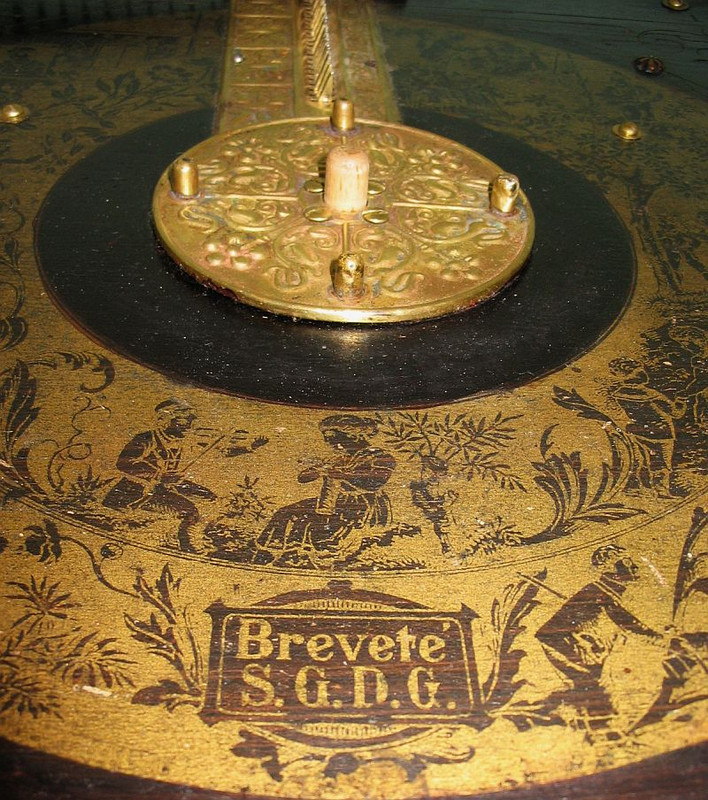
Why do we find the words 'Breveté' and 'Breveté SGDG' on the locking rings of these early Viroblocs? My own theory: This is due to a French regulation dating back to the 19th century. In theory, products patented in France were required to carry the 'Breveté SGDG' mark throughout the life of the patent. Although this rule was abolished in 1968, Opinel had already simplified it to just 'Breveté' during the 1960s. This explains the rarity of the pieces that feature both terms on the ring. It is also true that, on certain knife sizes, it was physically difficult to include the full text.
 
Last edited:
Back
Top