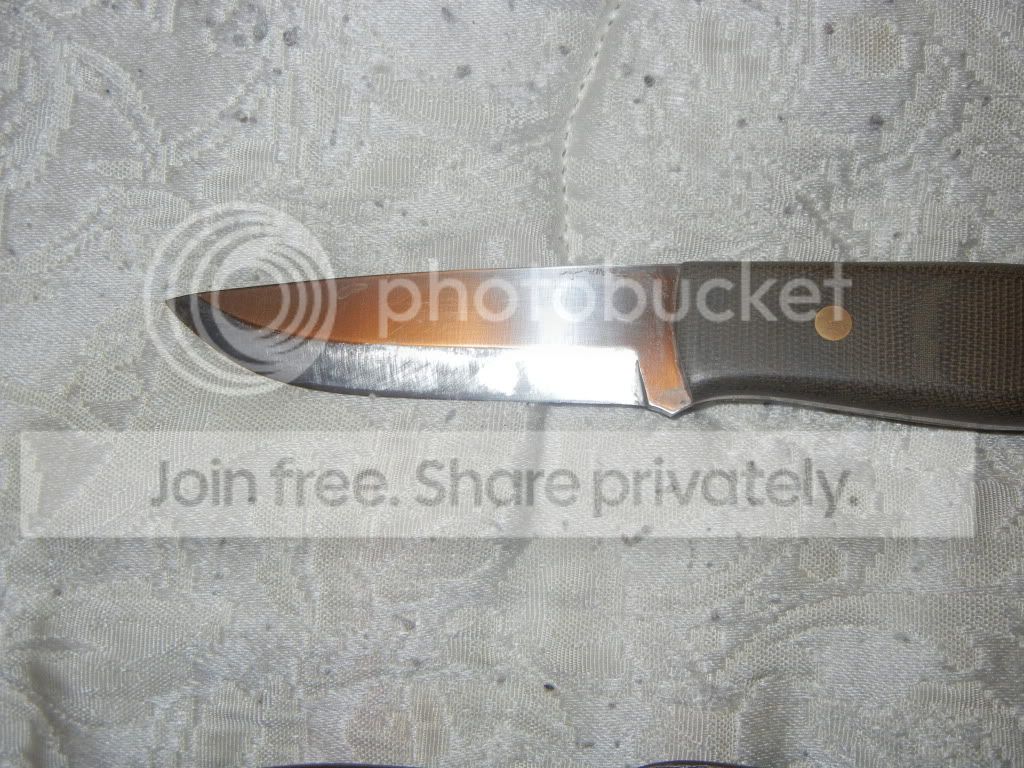
I'm still adhering to my "10 Essentials" as categories rather than specific items. You noted "tools" where you have a good fixed blade and saw...same concept:
1. Appropriate Clothing: Include a good shell, wool bush shirt if really cold, quality wool socks, gloves (both leather work gloves and liners), boots, fleece watch cap and my Filson packer hat...layered is the key. Also, this is where I start to incorporate my daily EDC...sunglasses, cravat (bandana), neck gaiter, watch, etc.
2. Tools: Of course a fixed blade is probably the most essential in my mind, but that doesn't negate the folder or two in my pockets, SAK Outrider and/or Spirit multitool and of course a nice folding saw. If I'm in thick soft vegetation, I'll most likely have some type of machete; if I was in more northern climates, I would add a good hatchet/axe. Another aspect is maintenance…a small bottle of oil and a simple sharpening kit, stone or diamond rod is integrated.
3. Water: This applies to transportation (bladder, bottle/canteen), nested cup or stainless cup for boiling and of course other means to purify/filter (water filter, purification tablets/solutions). I've included a steel/Ti cup here, and I know that several people list the Billy can or nesting cup as a separate item, but for me, the primary function is collecting and boiling water. The beauty is that it's a part of a system that has multiple functions and when I plan for water, it's just integrated into the list. A good cup can be used for more, such as digging, signaling (if polished), collecting insects/plants/berries or nuts, used as a 0300 pee can so you don't have to get out of your shelter when it's sub-zero temperatures (make sure you clean it well in the morning or drink it like Bear

), and of course a great all round implement that you can boil water and cooking in.
4. Fire: We all know there are several methods, but the key is to have some redundancy in this area. For me, a simple fire steel is primary with a lighter (or two) and matches as a backup...don't forget this is also includes tinder!
5. Shelter (& cordage): As small as the wallet sized space blanket to a compact sil-tarp/poncho...that's the most common way. Don't forget a few large garbage bags and plenty of 550 or other type of cordage.
NOTE: I'll mention it now, although it applies to all categories is that your skills must be at a level where you can still adapt or improvise as many of the "essentials" you don't have on you or in the case of an accident of losing your one and only knife or having your poncho catch fire. You still need to learn and practice how to make natural shelters, primitive means to make a fire and learn what can be used to substitute for a cutting implement (glass, rock, bone, etc); I just think that's as important as always making sure your essentials are planned for and carried with you.
6. Illumination/Signaling: This is one category with a couple of different items. Signaling is as simple as a whistle or signal mirror or could be improvised by using your firearm (if you are carrying) or as technical as a cell phone or emergency beacon. Illumination is where you can make double duty of your items. Several of the newer LED models have built in strobe functions...they provide nighttime illumination or can act as an emergency signaling strobe. I usually carry at least two lights...a nice belt mount one and a head lamp in the pack...having your hands free in the dark to travel, set up camp or search for a dropped item is a tremendous asset!
7. FAK: This is typically an easy one, but many people don't really pay attention to what's in it. I don't want to go into too much detail, but Rescue Riley has a great selection and shows some very basics that should be included without making it too bulky. For me, I've twisted my ankle pretty bad in the past, so I keep a small ACE ankle brace (much better than a wrap for me). A good set of Sliver Gripper tweezers is a must and here is also where I include the items that are typically listed as a single item: Sunscreen, Insect Repellant and Chapstick.
8. Navigation: I consider both the map and compass a necessity and essential items. Of course this is also where you could have your GPS and of course where you’ve practiced your primitive navigation skills to both find North and understanding terrain features for traveling.
9. Self-Defense: This is my list and what I feel is essential for me, hence the dedicated category. Now, for some, this could mean a hunting rifle/shotgun or a concealed (legally) pistol/revolver. A firearm isn’t the only aspect, as I see bear-spray as a good alternative if you can’t carry a firearm, but even a good, stout walking stick is a tremendous weapon to keep dogs or snakes at a distance. With a little training a walking stick/staff is a much better weapon against a knife as it really gives you leverage, distance and more significant impact.
I though about a listed item for food, but that’s typically a given when I head out, even for a day hike. Plus, food is not an essential for short term as you can go without about a week before you really start to feel the impacts. Additionally, there are other means to acquire food (fishing, hunting, trapping/snaring, edible plants/roots/fruits), so I’m less concerned about have to focus planning in this area as it’s addressed in my last category.
10. Lastly, I’ve added a small “Repair” category that is more of a PSK than just repair. Small sewing kit with needles and safety pins; dental floss, flat role of duct tape, fishing line, hooks/sinkers and dry flies, snare/utility wire (I already have a couple of dedicated snares added here as well), zip ties, Krazy glue, small tube of silicone sealant (for my Silponcho or tarp if I have one) or any other specific item that you may need (mini screw driver/glass repair kit, etc.).
Just my rambling and I should pull out a couple kits to take pictures of, but all of the above could be in a small should bag or butt-pack yet more often in a small shoulder pack. I didn’t include a PSK, but that is always carried as well and has a few smaller redundant items…the key is to have it on your “first-line” so it’s always with you unless your skinny-dipping when disaster strikes.
ROCK6