101 bits of bushcraft or wilderness wisdom

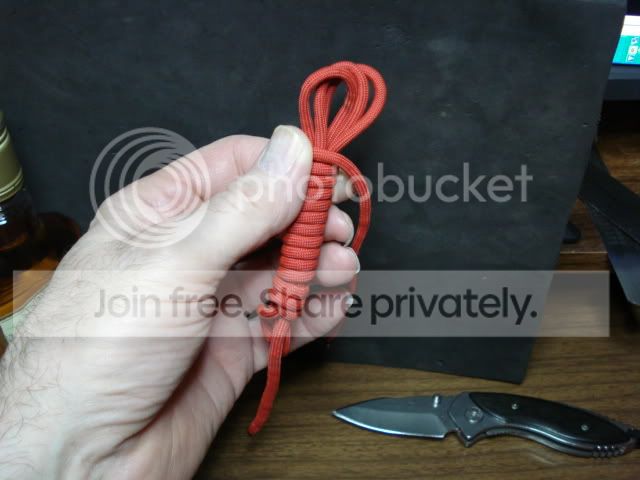
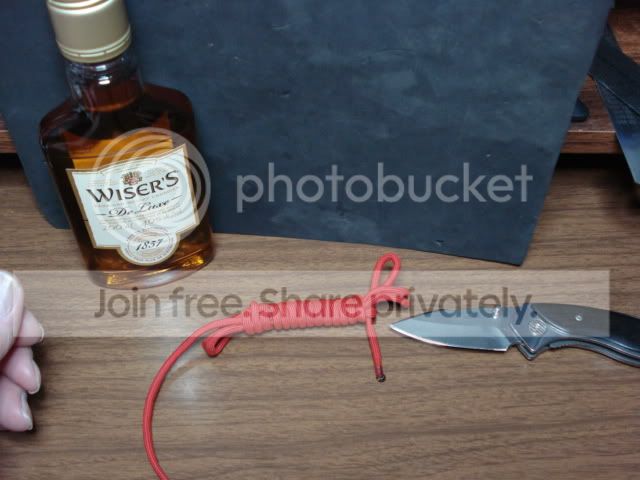
This is not a big deal, but something I find handy. Typically, I EDC 4 or 5 hanks of 550, about 5-1/2 feet long. These I use for work, practising knots, or whatever. In order to keep them handy, I first take 3 wraps around my fingers.

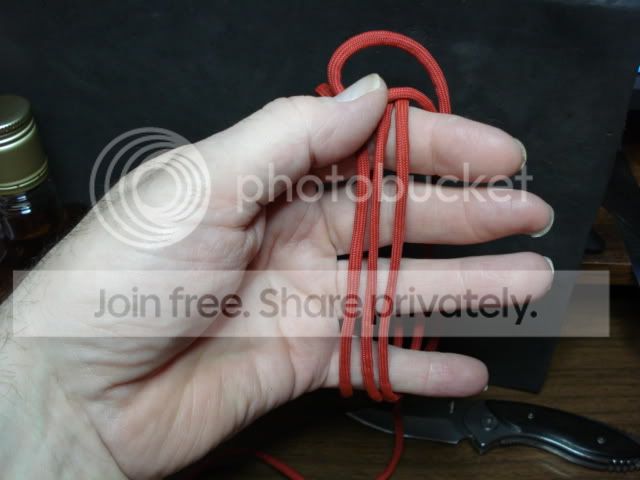
DSC05131.jpg


DSC05132.jpg


I then start wrapping around the 3 loops formed, starting at the end with the loose end.

DSC05133.jpg


I continue to wrap to the other end.

DSC05134.jpg


I then take a loop in the working end and put it through the 3 loops that formed the core.

DSC05135.jpg


I finish off by pulling on the other loose end - this pulls one of the core loops tight down on the looped working end.

DSC05136.jpg


DSC05137.jpg


This holds everything together.


DSC05138.jpg


When I need the cord, a quick yank on each end and it readily comes undone.

Hope that's clear....... damn whisky! :(

Doc
 
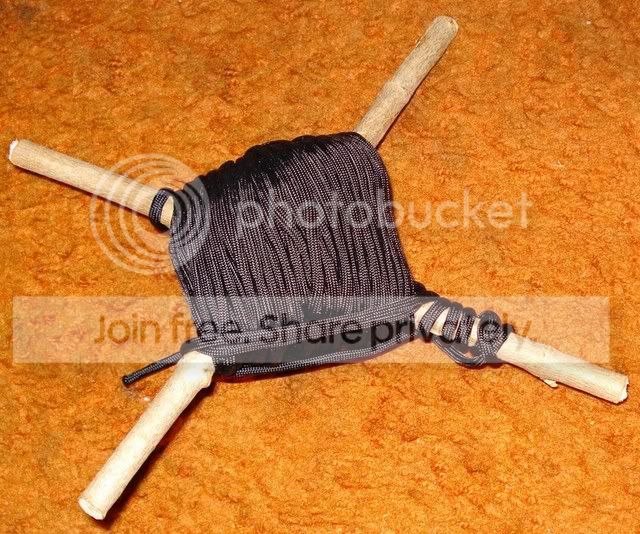
Garrett mentioned above (#3) about keeping lengths of 550 from tangling up. My method is to take a couple of sticks and trap one end of the 550 between them.

DSC05139.jpg


I then wrap around both sticks a couple of times, locking the loose end in place.

DSC05140.jpg


At this point, I open the sticks up and turn the assembly 90 degrees and continue to wrap.

DSC05141.jpg


I continue to wrap a bit, then turn the assembly and wrap some more.

DSC05142.jpg


When I want to finish off I tie a Clove hitch on one of the sticks.

DSC05143.jpg


The advantage to this is that long lengths of cord don't get tangled, and if you're using a length for something, the whole lot won't go rolling off on you.

A larger amount of 550:

thisone-1.jpg


Once again, no big deal, but it works for me.

Doc
 
Excellent idea Doc.

What I do is basically make an "H" out of cardboard and leave the middle part of the H really thick. This way, you get the spooling effect and the two "legs" of the H keep the spooled cord from falling off the middle section. Kind of like the old kite string "H"s that were made out of plastic. This leaves you with a flat spool of cord. When you want to unspool it, you can bend the H so that it forms a round spool and then bend the little legs too so that the cord doesn't unravel from the bent H. This gives you kind of a unbalanced tumbler effect if the spool is then placed over a bar stick of some kind. Basically, instead of rolling smoothly, it rolls with a sort of bounce every time around. This can help to get approx lengths if you know how much comes off with each bounce around.

Another idea with cord is to get a color that has a decent visibility....like hunter orange. This way, when you want to make something like a clothesline, you don't "clothesline" yourself as you walk past it. If the need arises for a more subdued color, for traps etc., make some mud and roll the cord in it for a while. Even white or orange cord turns brown in these conditions. BTW, the same goes for the inner strands of white. Now you have the best of both worlds.
 
Last edited:
This gives you kind of a unbalanced tumbler effect if the spool is then placed over a bar stick of some kind. Basically, instead of rolling smoothly, it rolls with a sort of bounce every time around.

That's exactly the way my 2 stick method unrolls.

Another idea with cord is to get a color that has a decent visibility....like hunter orange. This way, when you want to make something like a clothesline, you don't "clothesline" yourself as you walk past it.

Another good idea, Garrett. You can also hang a few things off the 'clothesline' to draw your attention to it.

Hey, did you notice the shortage of pictures in this thread, in particular, ones with knife porn? :confused:

Doc
 
That's exactly the way my 2 stick method unrolls.


Another good idea, Garrett. You can also hang a few things off the 'clothesline' to draw your attention to it.

Hey, did you notice the shortage of pictures in this thread, in particular, ones with knife porn? :confused:

Doc

Your right Doc. Here ya go:
DSC01182.jpg
 
I always bring a small lightweight net hammock; there's nothing better than to hang around being able to keep still while wildlife is getting closer and closer (rabbits and birds, not bears and cougars :D). It's also very nice to get off the hard ground (or even the soft grass after a few days.)

@ You can call me al: 101... great idea!

I took the liberty to gather all the tips and hints up to this point:

  1. Leave your camp as good or better than you found it.
  2. ALWAYS bring toilet paper, or at least, make sure you can positively identify poison ivy...
  3. Tell someone where you´re going & when you´ll be back .
  4. Don't eat where you sleep! including leaving food in your camp.
  5. Always wear a hat. Get into the habit of it when outside. The one time you don't take it is the one time you will find yourself highly exposed to the sun.
  6. 2 words: BUG DOPE
  7. 1 word: SPORK
  8. Never travel in the deep weeds alone.
  9. When you're in a new place and aren't sure of which trail to follow, check for tracks. You'll be amazed at how many times you'll figure out which way to go to stay on the trail by looking for prints coming out of it.
  10. Bring a first aid kit
  11. always carry a knife(or 3)....
  12. Stop and look around often.
  13. A tweak to this one; look behind you from time to time as you hike so you're familiar with what the return trip looks like.
  14. be able to start a fire w/ more than one way (firesteel, lighter, friction method, etc.) and being proficient enough to use either method
  15. prepare packing supplies for more than what is expected
  16. dont forget raingear, poncho etc....
  17. A compass is good moral support even if you're pretty good at basic navigation.
  18. Sleep above the valley floor but below the crest of the hills.
  19. Bring an extremely light gardener's knee pad; to rest your knee on or for sitting down on wet floor
  20. Always put out your fires when leaving.
  21. Prepare a list and use it to pack. That way you are unlikely to forget anything important.
  22. Drink water.
  23. I always carry two compass. Not that I've ever gotten lost, ahem, but there are times I've begun to doubt the veracity of my compass..
  24. Know how to use and practice with every item you carry.
  25. Avoid cotton and embrace wool.
  26. When you start losing your coordination - stop. You're either over-tired, dehydrated, or hyperthermic. The next thing you're probably going to lose is your judgement.
  27. Always sheath your knife (or secure your firesteel) after you use it, dont just leave it on the ground or stuck in a stump, even if you plan only to leave it for a minute.
  28. In cold weather, even if you sleeping gear is adequate to keep you warm through the night, heat up fist-sized rocks in the fire until just below glowing red. Wrap up in a hand towel (use a beater-you will probably char the cloth) and bring into your sleeping bag with you. Held against your chest or with your feet, it will be warm and cozy for at least a few hours. As it cools down, unwrap the rock a little at a time to release more heat. - I've used this technique to make it through a 10* F night in relative comfort when I was only packing a light fleece blanket.
  29. Pack twice as much water as you think you will need (until you get used to how much water you actually need
  30. Do and/or plan to carry what you need to make yourself comfortable enough for eight hours sleep should you have to spend the night out. If you can do that and stay hydrated, you got it made.
  31. Be selective in who you let handle your knife.
  32. make sure your clothing, pack, and boots are in good condition before you head out in the wood.
  33. Carry a needle, and thread pluss a few spare buttons just incase.
  34. When you see sign of rain or foul weather put your rain gear on.
  35. If you backpack, invest in a inexpensive digital postal scale and use it as you pack. It's amazing how it makes you decide between two pieces of gear or clothing when you compare true weight.
  36. Drink clean water every chance you get. (hydrate,hydrate,hydrate !!)
  37. Give yourself adequate time to set up camp before the sun sets. Doing it in the dark is more difficult AND dangerous.
  38. Wrap the handle loops of your packs (and other areas that don't need tightening or adjusting) with 550 cord. This is a convenient way to pack extra cordage without wasting space in the interior of your bag.
  39. Slow down, think things through, but use daylight wisely.
  40. Enjoy the moments.
  41. Lanyards; Use them on crucial gear.
  42. I love my pencil sharpeners the best tinder maker in the world.
  43. The best man made tinder, Lip balm (Obviously petroleum jely based) and tampons. Lip balm also good to protect carbon steel edges. Lubicant for firearms tempory seam sealent, cracked heels, and funny enough cracked lips. Tampons sterile cotton for wound cleaning, can't think of anything better for plugging an entry wound, blister pad, final filter for improvised water flter.
  44. Do stop and smell the flowers; if it ain't fun your trying to hard.
  45. I will always preach redundancy.. oh and dummy cord everything
  46. Don't wait until you're thirsty for a drink of water.
  47. Always have a headlamp, will make life alot easier in the Bush at night, have one with LED bulbs and pack extra Batteries, you will be set for a few weeks of night light use.
  48. A tube of super glue is useful for countless applications.
  49. Take care of your skin. Apply sunscreen every two hours during daylight hours. A moisturizing layer applied prior to the protective layer will greatly enhance the effectiveness of both.
  50. Dry out and sanitize your feet while resting.
  51. watch out where the huskies go, and don't you eat that yellow snow.
  52. Bring a good book. It'll help relax you and pass the time. It can also be used for emergency writing paper, tinder, insulation or TP.
  53. Duct tape: The original multi-tool.
  54. Extra pair of socks (I carry wool), in case your feet get wet, they can also be used as mittens.
  55. Bring a compass and map and know how to use them.
  56. Own your skills and sweat is your enemy
  57. On sea ice, look at the overturned lip of the snowdrifts - walk in the opposite direction to which they are pointing and you will get back to land. Wind direction in this part of Victoria Island anyway mostly comes from the land and blows towards the sea during winter, and reverses during Summer.
  58. Warm your hands up by placing them flat on your bare stomach - or inside the belly flap of a freshly killed caribou.
  59. pack several garbage bags , for the obvious reason and they can protect you and your gear from rain .
  60. Always have two ways to purify water, boiling is the third.
  61. Trail boots and camp shoes.
  62. Bring a tooth brush.
  63. Permanone for your clothes and Ultrathon for your skin = tick free.
  64. A couple or three sheets of 8-1/2 X 11 notebook paper and a sharpened down lead pencil in a baggie. Keep notes and map your route. If you get lost, even the briefest notes and maps will help.
  65. shake out your boots before you put them on in the morning. Critters like to make them home.
  66. If you're going to be in an area for a while, just climb up a ways, sit, and listen for a while. You might learn who else is out there with you.
  67. Otters are cute; don't kiss them.
  68. Bears are soft and fuzzy; don't hug them.
  69. Stop and listen. Quiet and calm.
  70. If your in steep country and packing as heavy load - three legs are better than two! Whenever I'm hiking in the mountains I take a trekking pole.
  71. Don't pee into the wind.
  72. if possible, spool your paracord instead of just folding it up....this will save a tremendous amount of time since a bundle of paracord can tend to become a spiderweb of cord really quick
  73. a couple of great items for making/fixing things: super glue, twist ties, duct tape, hockey tape, zip ties, rubber bands
  74. this may be obvious but rolling your clothing will allow you to pack more as well as keeping things from wrinkling
  75. combat rolls are great....take two socks and lay them overlapping horizontally so that the toe on one sock is touching the heel on the other....then lay a t-shirt folded in half lengthwise on the ground and then lay a pair of underwear on top of the shirt....put the overlapping socks towards the top of the t-shirt/underwear and roll it up like a sleeping mat.....the socks should be sticking out on both sides....then fold each side of the socks over the roll like you would when you bundle a regular pair of socks....this will not only condense the entire bundle but it makes finding a change of the essentialls easier to find in your pack
  76. having two belts is a nice way to go......one belt is through the loops on your pants and is for holding your pants up...the other is not through the loops and its where you attach all of your gear so that if it sags it won't pull you pants down too.....when nature calls its much easier to just take the outer belt off
  77. Ivory soap floats.
  78. Basically, the message is that a filthy camp is a sin
  79. My tip is always, always go to the toilet before you get into your bag for the night. Oh and while you are up take the chance to drink some water.
  80. I always bring a small lightweight net hammock
 
Last edited:
RoyalIM posted about bringing headache medicine (advil, tylenol, etc) - this goes right along with it...
If you have seasonal allergies, be sure to bring some Benadryl or whatever you may normally take- some of the fun of being out there is taken away when your eyes are watering and puffy, you can't stop sneezing, and your sinuses are clogged. Trust me, I know:D
 
If you hike with a woman (wife, girlfriend, whatever) having a tampon in your first aid kit can confer instant Hero status. If you are a woman, keep a tampon in your first aid kit.
 
Wear only one pair of heavy, loose fitting socks, never two pairs at once.
In extreme cold, the mild loss of blood circulation to the feet will be what gets you cold and hurt, in the long run.

Layer clothing, loosly.

Hang socks and clothes outside overnight. In the morning, the frozen sweat and moisture can be shaken out of it.
 
Garrett, what saw is that in your picture? It doesn't look like the Sawvivor that I have used.

TIA.
 
If you hike with a woman (wife, girlfriend, whatever) having a tampon in your first aid kit can confer instant Hero status. If you are a woman, keep a tampon in your first aid kit.

+1 a really big +1 based on extensive experience
 
1.) know how to locate the dang ¨Polaris¨ star (North Star) at night

2.)know the benefits of pine needle tea.

3.)at least know some of the basic knots especially the bowline, clove hitch, carrick bend and taut-line hitch, etc.

4.) know how to construct a safe and adequate shelter to protect you from the elements

5.) and w/ all the skills a person *thinks* he knows, a sound & wise man would always practice, practice, practice what he knows
 
Garrett, what saw is that in your picture? It doesn't look like the Sawvivor that I have used.

TIA.

Off topic, and I apologize, but what kind of machete is that?

Sorry, should have covered those things.

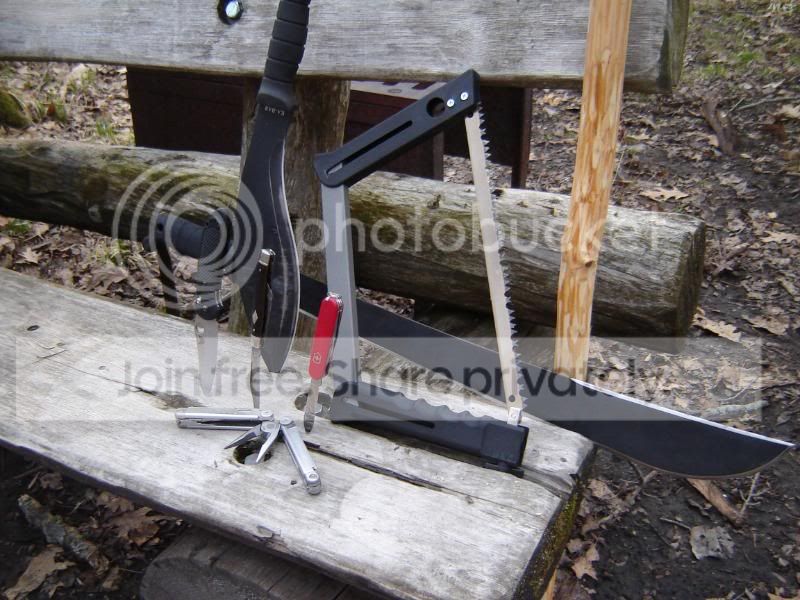
Machete is a Cold Steel 24" latin machete that I convexed and sharpened the back 6" or so.

Saw is a Outdoor Edge folding type I picked up at Gander Mountain. Pretty decent saw. Also comes with hacksaw blades and a nice little carrying case. http://www.outdooredge.com/product_detail.php?cat_ID=5&prod_ID=8

The others are Ka Bar Kukri, Benchmade Griptilian, Imperial Stockman (got for $2 at Janesville show this year....amazing little knife really), SAK tinker, and Leatherman "old" wave.
 
Saw is a Outdoor Edge folding type I picked up at Gander Mountain. Pretty decent saw. Also comes with hacksaw blades and a nice little carrying case.

Thanks a million, Garrett. I think I see one of those hurting my poor, wounded bank account in the very near future.
 
Always pack your rain gear in the very top of your pack or a side pocket so it is easy to get to quickly.
 
I find that a permanant packing list works very well. I have one attached to the inside lid of both my camping boxes and am working on the one that will live in my pack
 
Back
Top