1080 Woodlore Clone WIP (Work in Progress)

Joined
Feb 4, 2011
Messages
21
Well I may have been bitten by the steel bug. While the scales on my first knife are epoxied and drying in clamps, I already started on my second WIP.

A very encouraging friend contacted me an offered some 1080 steel. I couldn't believe the generosity in this offer. Of course I accepted. It arrived today. It is an 8" bar, 3/16 thick. This is a little on the heavy side for me, but I thought I would have a go at making a woodlore type clone that was based on a 3/16" spine. In my mind the intended function of such a knife will be hard use, including battoning.

My inspiration comes from the basic bushcraft / woodlore knife design. It just looks right to me and I would love to own one. So why not make it.
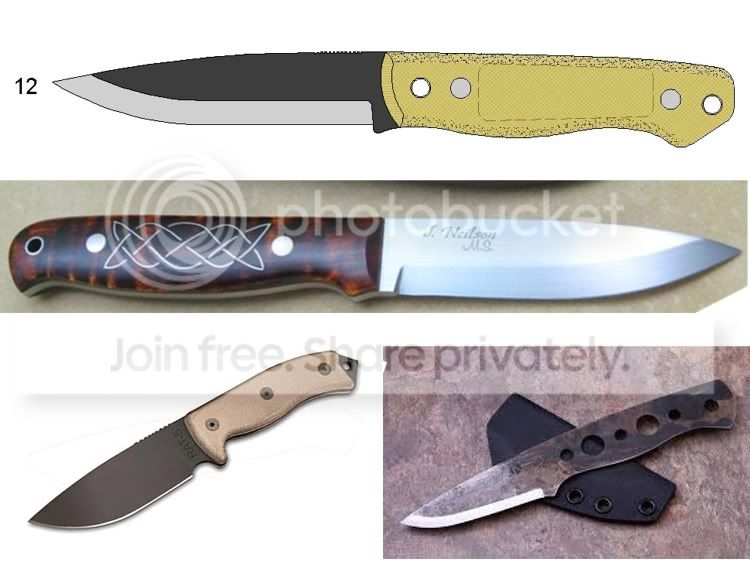
WoodloreInspire.jpg


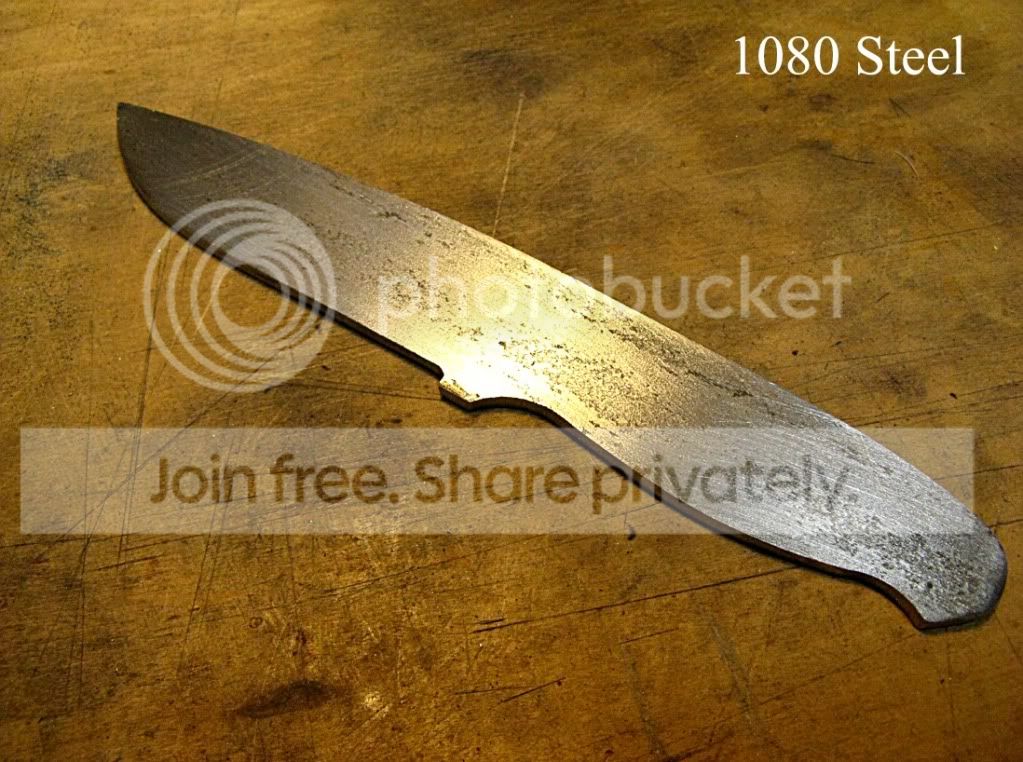
My friend already annealed the 1080, so it came ready to work.
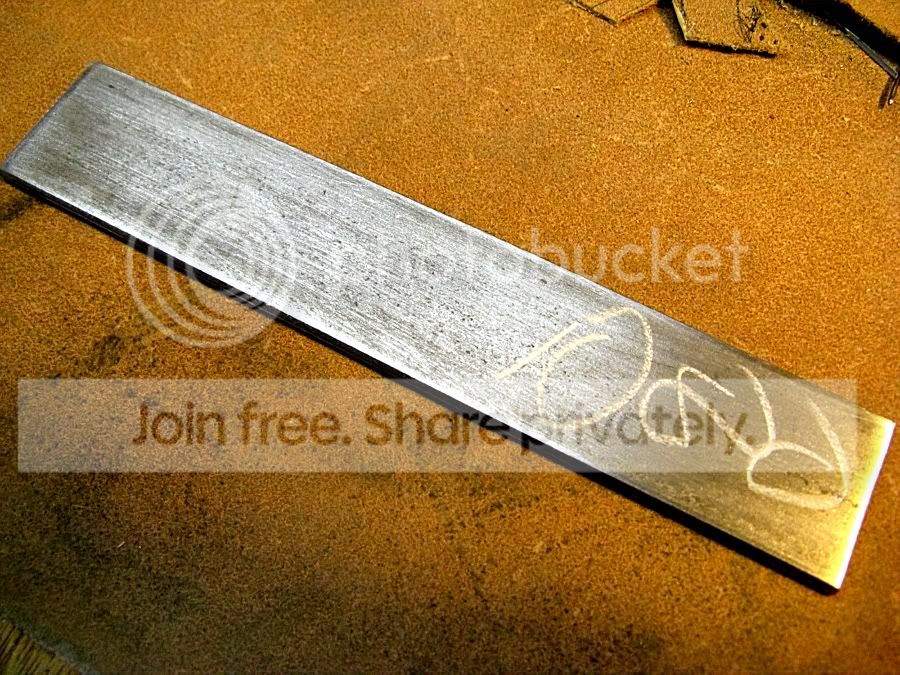
Woodlore1.jpg


My first step was to sand off the scale from the furnace.
I had worked up a basic design layout. Next to the bar it looked just about right.
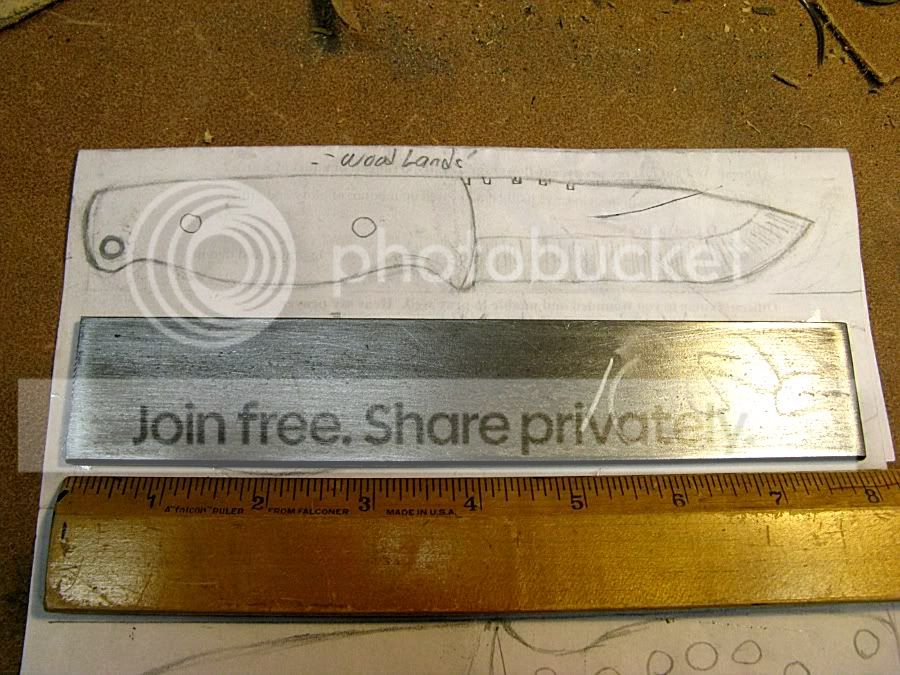
Woodlore2.jpg


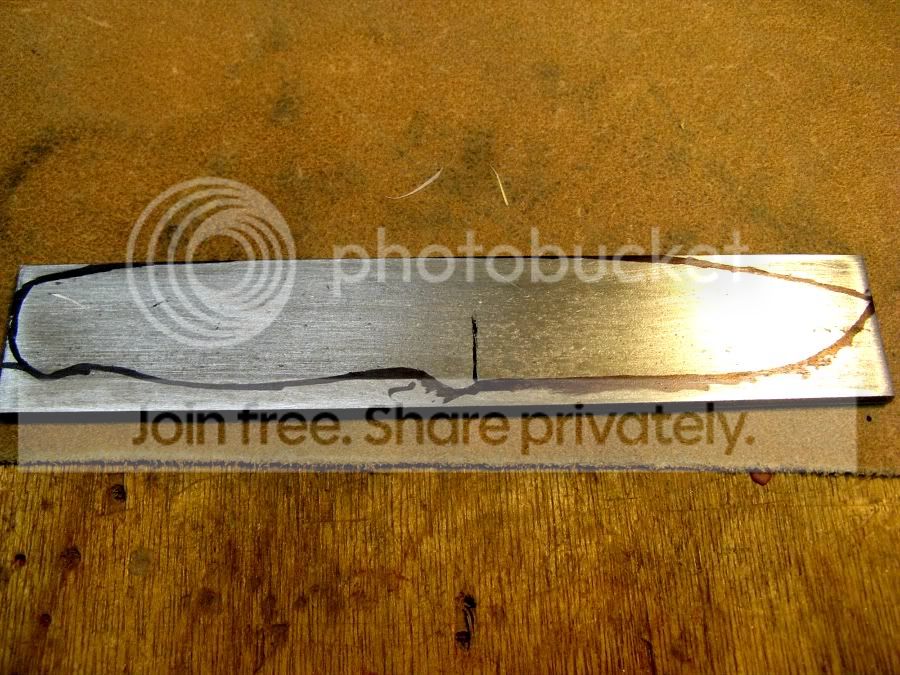
I traced the outline onto the steel with a marker.
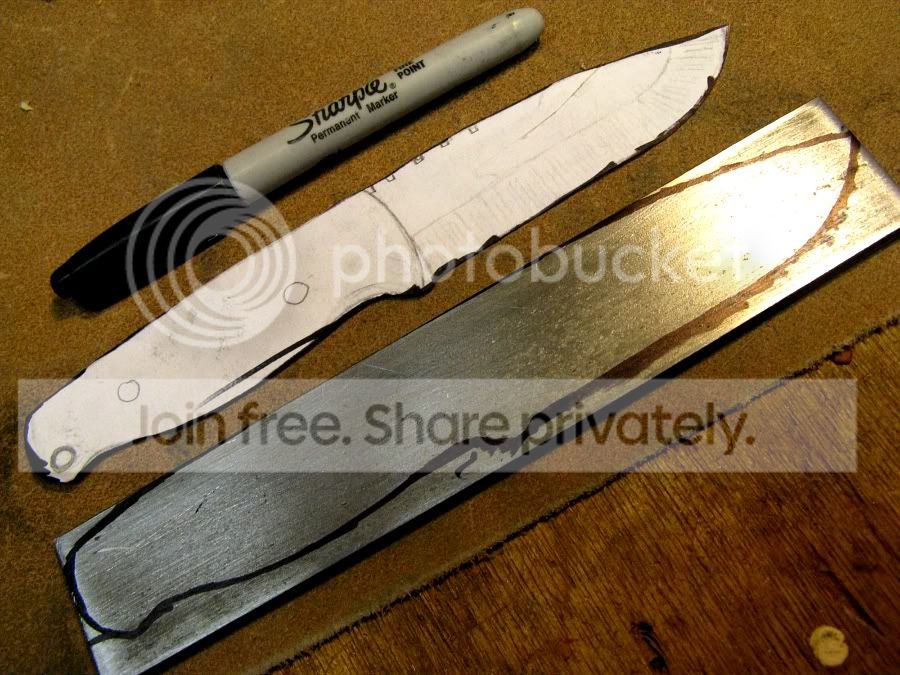
Woodlore3.jpg


Marked the line for the ricasso.

Woodlore4.jpg


Helpful advice and words guiding my next steps will be greatly appreciated.

Luke DeBee
 
I like your selection of a woodlore/bushcraft style of knife. Maybe it's just my old eyes, but did you want your knife to be so much wider (top to bottom) than the knives that were your inspiration? It doesn't have the sleek lines of a racer but more of a Clydesdale. Maybe what you need for whapping it with a club to split logs. Good grinding. Ain't this fun?!?!?

LonePine
AKA Paul Meske, Wisconsin
 
I like your selection of a woodlore/bushcraft style of knife. Maybe it's just my old eyes, but did you want your knife to be so much wider (top to bottom) than the knives that were your inspiration? It doesn't have the sleek lines of a racer but more of a Clydesdale. Maybe what you need for whapping it with a club to split logs. Good grinding. Ain't this fun?!?!?

LonePine
AKA Paul Meske, Wisconsin

I'll work on the lines a little bit more...
Thanks
 
Go ahead and start profiling the blade. You can tweak the profile as you go to get it exactly like you want it. Grind a little and hold it up to a white or light background (blue sky works best for me) and you get an idea where you want stop and where you want to remove more steel for the exact look that you want. Don't drill pin holes until it is completely profiled. Once profiled and pin holes are drilled you will need to scribe lines on the blade edge to use as a guide when filing/grinding. If you don't know what I'm talking about let me know and I will describe it to you.
 
Go ahead and start profiling the blade. You can tweak the profile as you go to get it exactly like you want it. Grind a little and hold it up to a white or light background (blue sky works best for me) and you get an idea where you want stop and where you want to remove more steel for the exact look that you want. Don't drill pin holes until it is completely profiled. Once profiled and pin holes are drilled you will need to scribe lines on the blade edge to use as a guide when filing/grinding. If you don't know what I'm talking about let me know and I will describe it to you.

I think I know what you mean. Thanks
LDB
 
Go ahead and start profiling the blade. You can tweak the profile as you go to get it exactly like you want it. Grind a little and hold it up to a white or light background (blue sky works best for me) and you get an idea where you want stop and where you want to remove more steel for the exact look that you want. Don't drill pin holes until it is completely profiled.

I confess that there have been times that the design I drew on paper wasn't the design that ended up made in steel. Call me lazy I guess, once I had everything profiled I didn't want to mess up the nice smooth edges by grinding more off. I ended up with a blade that was wider (top to bottom) than I wanted and I was never pleased with it. But there are also times when unplanned "modifications" happen to a design during the forming that work out as good or better than planned.

I'll bet that was helpful, huh?

- LonePine
AKA Paul Meske, Wisconsin
 
I has able to spend a little time in the man cave and have the rough profile of the knife cut out.


Woodlore5.jpg


Do you think it looks too chunky? I am not aiming for the most graceful, artistic lines. I am after function: basic bushcraft / woodlore , camp knife. I am not after a tomato slicer.

Blade width at ricasso 1 3/8". Overall length 8".
So does the form suggest this function in your opinion?

Knife makers, what can you suggest as my next step?

Luke DeBee
 
G'day Luke,

Im no expert mate but I think that the handle looks a bit too thick to me. Once you get scales on it it may be hard to grip. My .02cents

Matt
 
I'm no knifemaker .. yet.. :D But yes I agree with the above poster that the handle does look rather thick. But maybe you have huge hands so I could be wrong. I like the blade shape and I think your design is great with the exception of the handle.
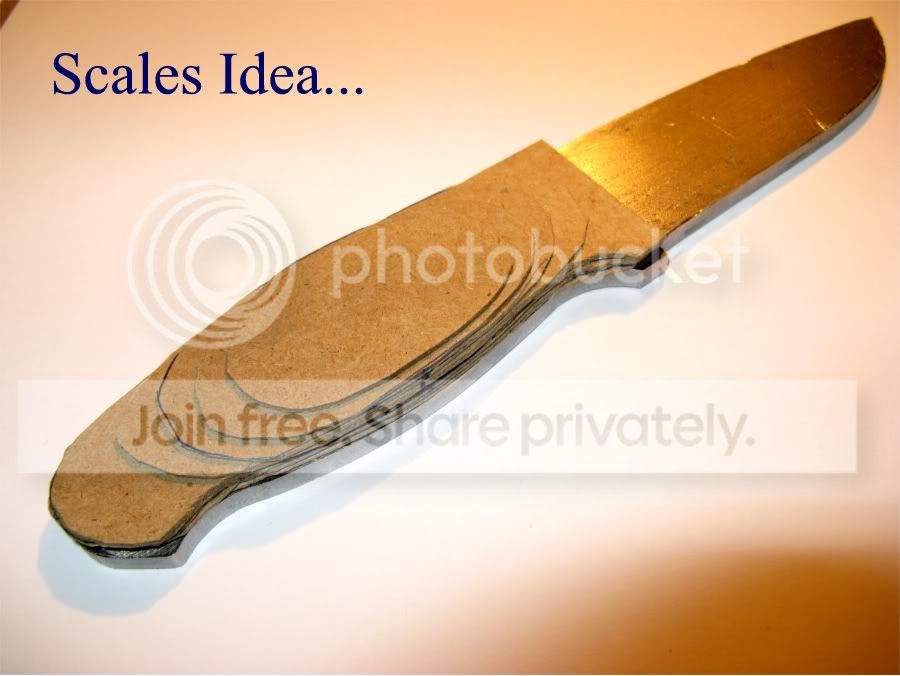
 
Here is an idea I have for the scales...

Woodlore6.jpg


Since the bar stock is 3/16", which is thicker than some knives, and since the shape / profile of the grip is a little over an inch I believe on this knife the scales will generally have to be thinner.

LDB
 
Make the knife like YOU want it. Don't worry about what anybody else thinks. You can randomly pick any knife ever made and there will be people who like it and people who don't.
 
I was able to spend some time alone in the man cave again today. Quiet "think time." While I was there I made some progress on the woodlore clone of mine.

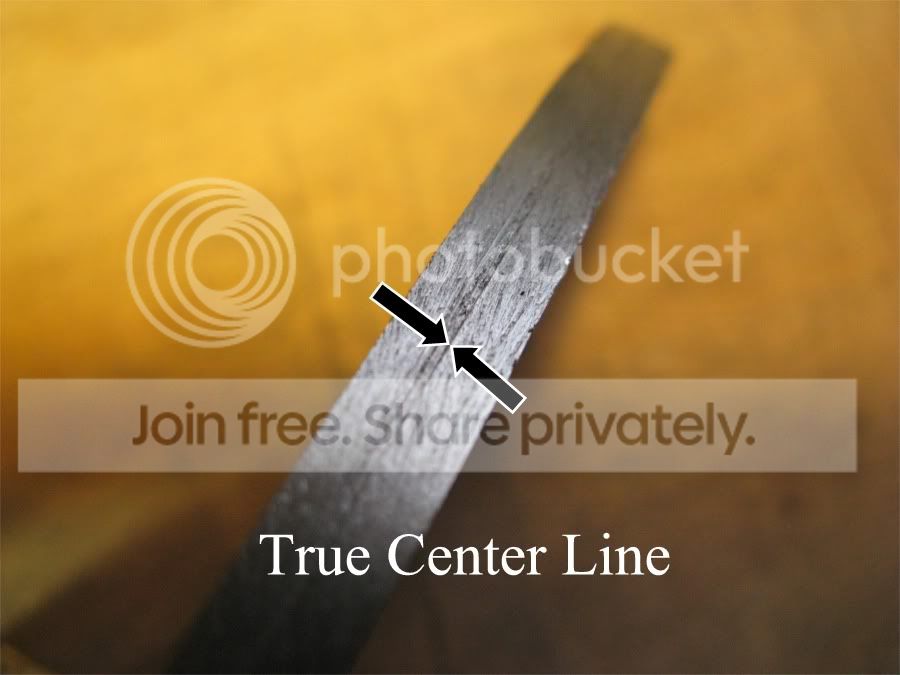
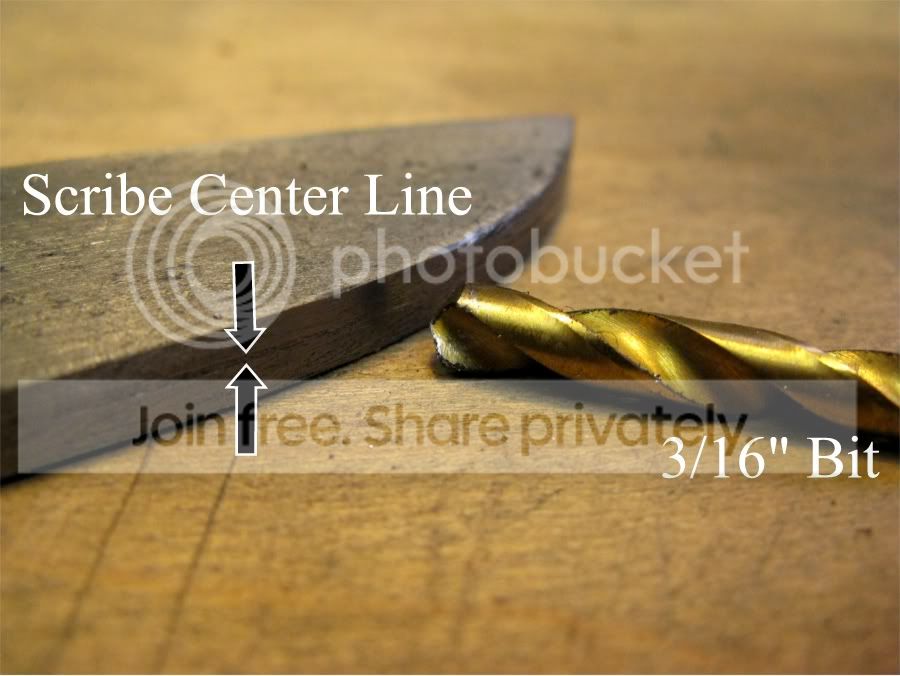
I scribed the center line on both sides of the blade: spine and cutting edge side. Remember this is thick 3/16" 1080 flat annealed bar stock, so I used a 3/16" bit.


Woodlore10.jpg


I made three attempts for the center line, but I finally got there.

Woodlore11.jpg


Even though the steel is annealed, I ruined four titanium coated bits drilling the holes in the stock for the scales. Not sure why this was so hard. Maybe it was the Chinese bits. Get what you pay for...

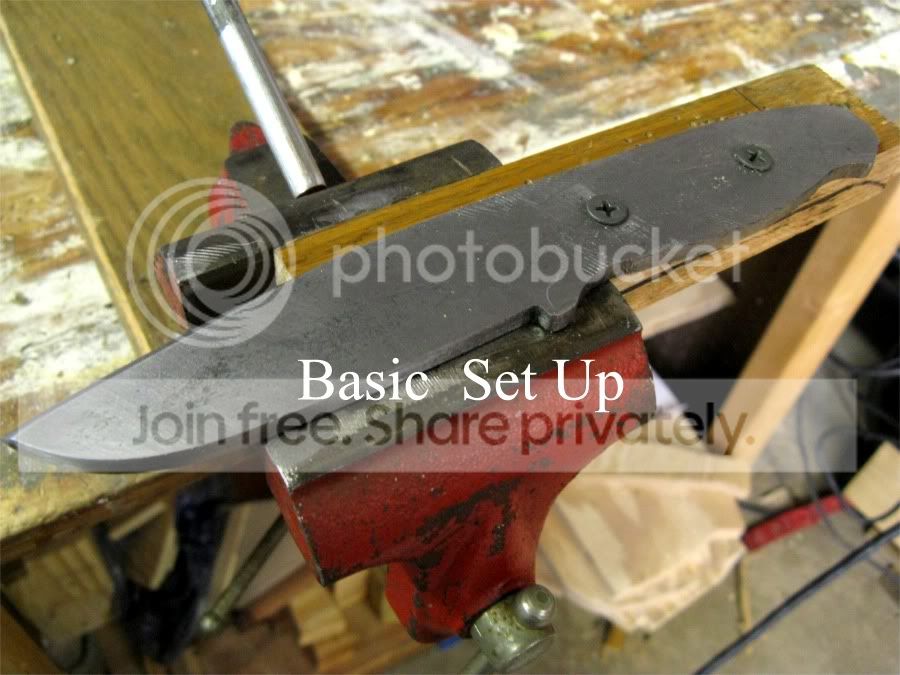
Used screw to mount the blade to wood. The flat edge of the blade is parallel to the wood block and the edge to be filed protrudes about 1/8".

Woodlore12.jpg


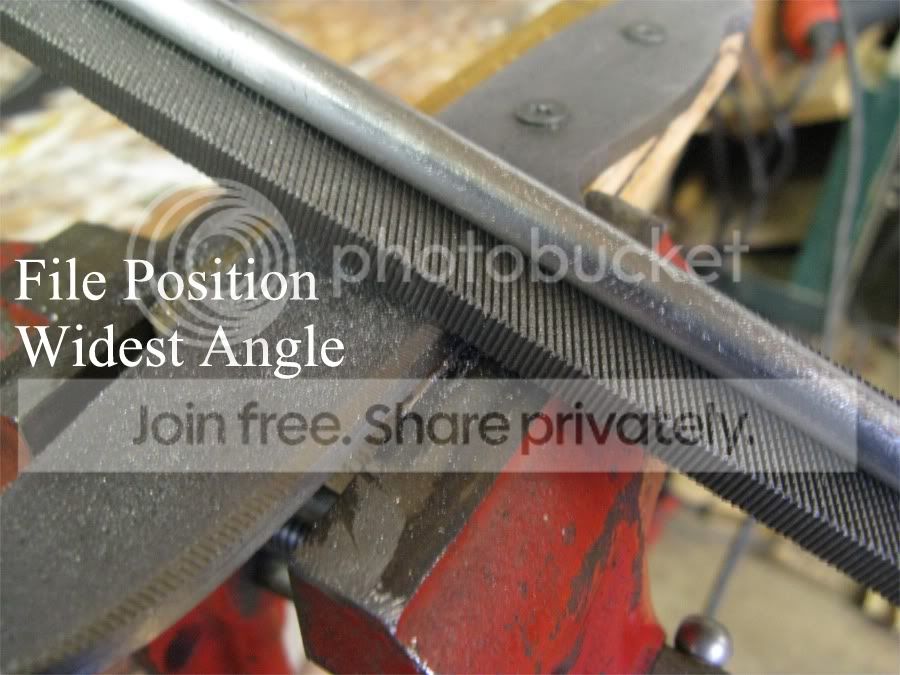
Today my goal was to start putting a very wide angle on what will be the final cutting edge. I used the highest hole in my file jig to yeild the widest angle.

Woodlore13.jpg


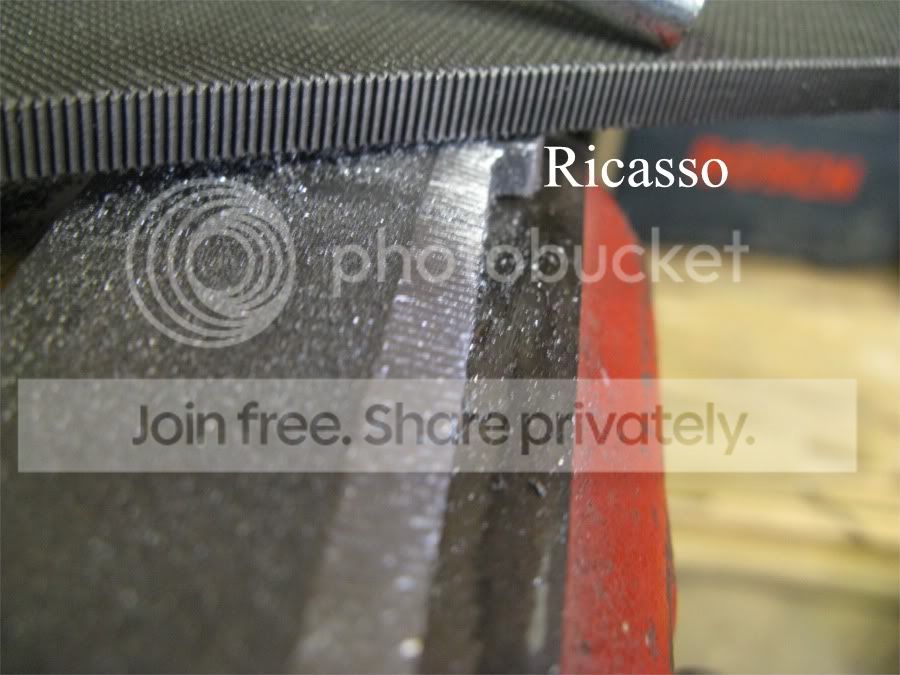
I worked carefully around the ricasso. I have learned that some makers place a block here to protect the ricasso from a grinding belt.

Woodlore14.jpg


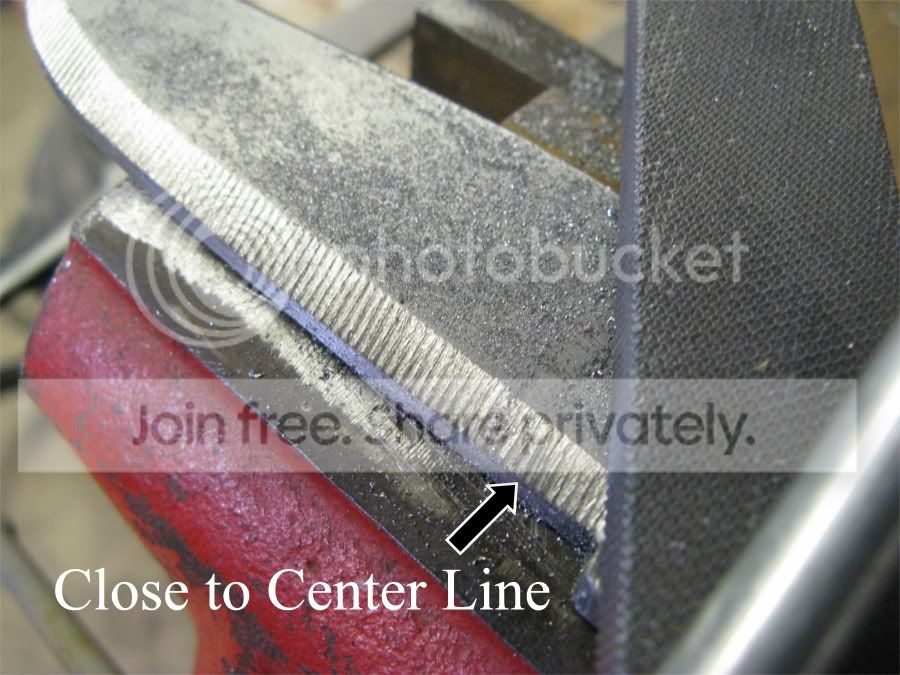
I stopped when I came close to my center line.

Woodlore15.jpg


Next step will be the other side.

Comments welcome, especially helpful advice from knife makers...

Luke DeBee
 
Mr DeBee It looks to be coming along nicely. It sometimes seems to me that making a knife is just a long string of problem solving. How to do this, how to do that, how to do something better, etc, etc. My brain really gets a workout. Apparently you're better at solving problems than I am.

I made three attempts for the center line, but I finally got there...

Even though the steel is annealed, I ruined four titanium coated bits drilling the holes in the stock for the scales. Not sure why this was so hard. Maybe it was the Chinese bits. Get what you pay for...

Used screw to mount the blade to wood. The flat edge of the blade is parallel to the wood block and the edge to be filed protrudes about 1/8"...

Comments welcome, especially helpful advice from knife makers...

Luke DeBee

When scribing your center line did you scribe it then flip the blade and scribe a second time? This will give you two close together parallel lines that show you where the center is.

I have some 1080 steel just like yours. It seems I can drill a little way into it and then,... the drill goes nowhere except around and around. I'm wondering if maybe it was formed by cold rolled and so became work hardened or something. This is just a guess but it's very frustrating. I'm trying to figure out how I can anneal it easiest and cheapest.

When I made my first knives with a file I used a piece of wood to lay the blade on. It never occurred to me that I could use screws to hold it in place. I used a screw type clamp to hold it to the wood. One problem with that was that it tended to put scratches on the tang, which I guess wasn't all that much of a problem because they got covered up with the handle material. The blade would occasionally slip on the wood so I started putting a strip of some sort of foamy mesh stuff that is often put in cupboards because it has a high coefficient of friction and dishes don't slide around. My piece of wood stuck out both sides of the vise that held it so I could easily and quickly flip the blade over and file on either side.

There's more than one way to skin a cat or make a knife. Good knife building.

- LonePine
AKA Paul Meske
 
That looks like a pretty cool jig. I am going to have to scrounge around the shop for all the materials I need to make one of those. Looks like an overgrown Lansky sharpening system. I have been a little wary of starting the bevels on my first knife because of an inability to hold a true angle when filing by hand. (Not only am I a perfectionist, I'm a metrologist by training and won't be happy with hand held tolerances.)

The handle you are planning, is that cork sheet? How are you planning to laminate the layers together?
 
Even though the steel is annealed, I ruined four titanium coated bits drilling the holes in the stock for the scales. Not sure why this was so hard. Maybe it was the Chinese bits. Get what you pay for...
Luke DeBee

Luke,

If you burned up drill bits that fast you were drilling without cutting fluid and/or too fast for the bit. Unless - you did not drill a pilot hole first and then chase with whatever size you were going for. Either way, you still need proper "speed and feed" and cutting fluid.
 
Luke,

If you burned up drill bits that fast you were drilling without cutting fluid and/or too fast for the bit. Unless - you did not drill a pilot hole first and then chase with whatever size you were going for. Either way, you still need proper "speed and feed" and cutting fluid.

This is a good reminder. Thanks. I was using a light oil as I drilled, the speed was slow. But I didnot use a pilot hole. Next time I'll use one. Thank you.

Luke DeBee
 
Is the file attached to the rod in your jig, or is it just resting against the top of the file and used as guide?
 
Back
Top