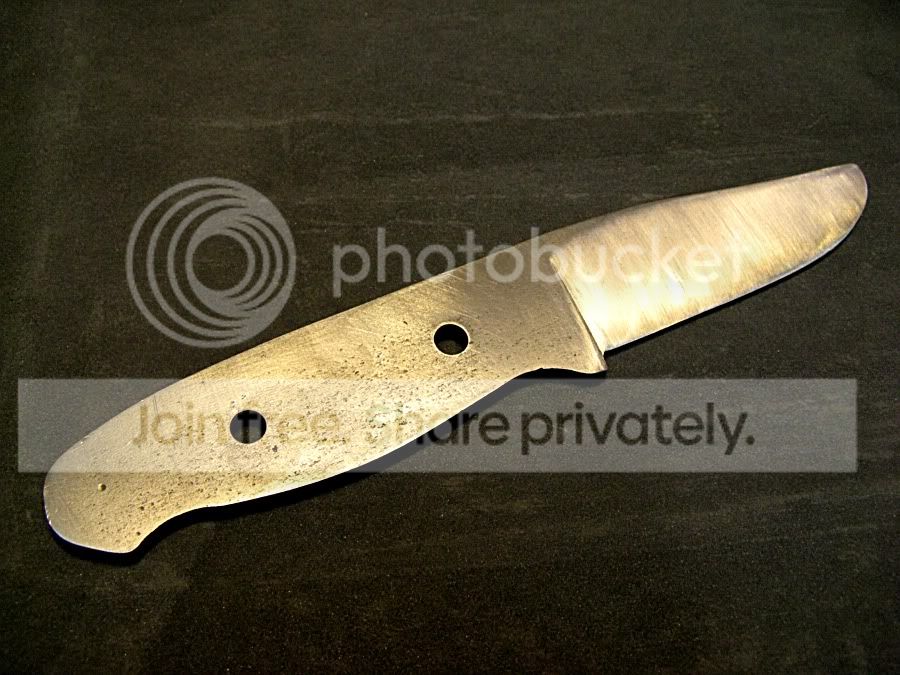
Today I spent 6 hours working by hand on the woodlore clone with files.
It is a good way to learn beacuse the process is slow. The garage was cold, so the steady work kept me very warm.
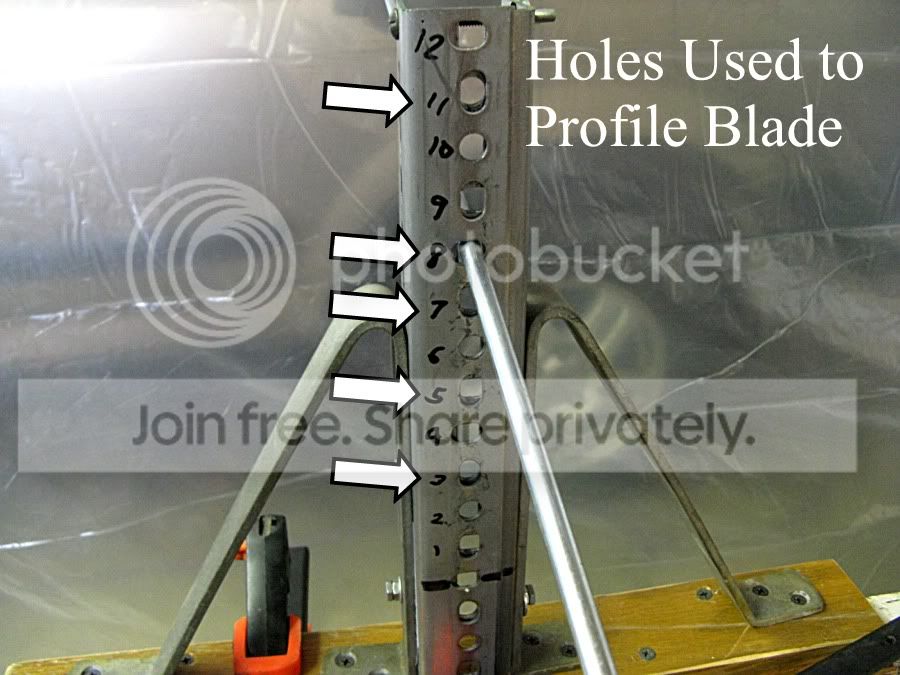
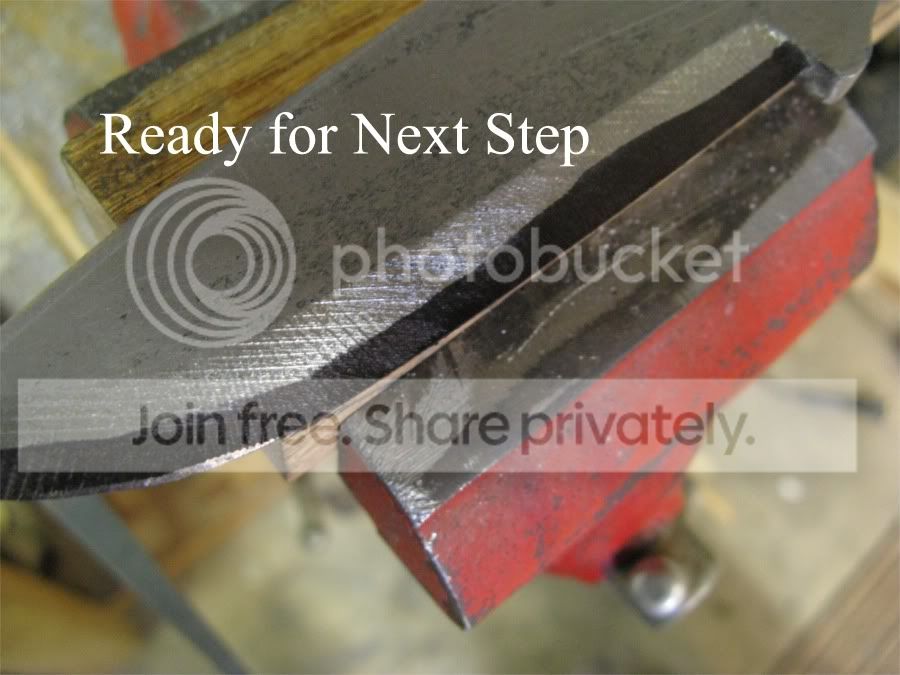
To start, here is a pic of the jig I made to help me profile the bevel with a file.
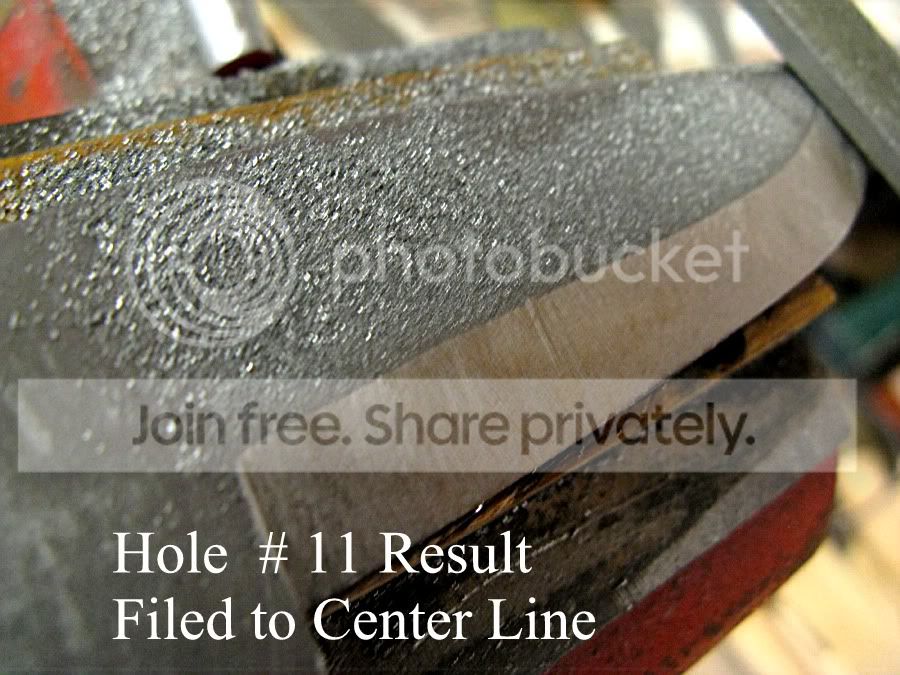
I used a coarse file and filed down to the center line, letting the jig guide the file.
Using hole # 11 gave a very wide angle as the first cut into the edge of the blade. I read somewhere else that the process is now walking the gind back toward the spine of the blade.
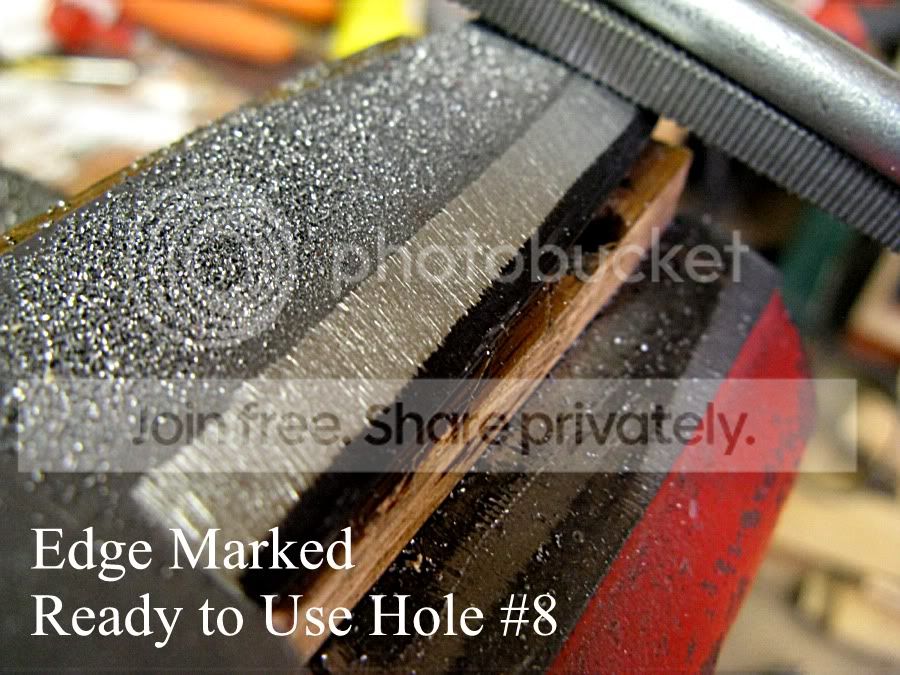
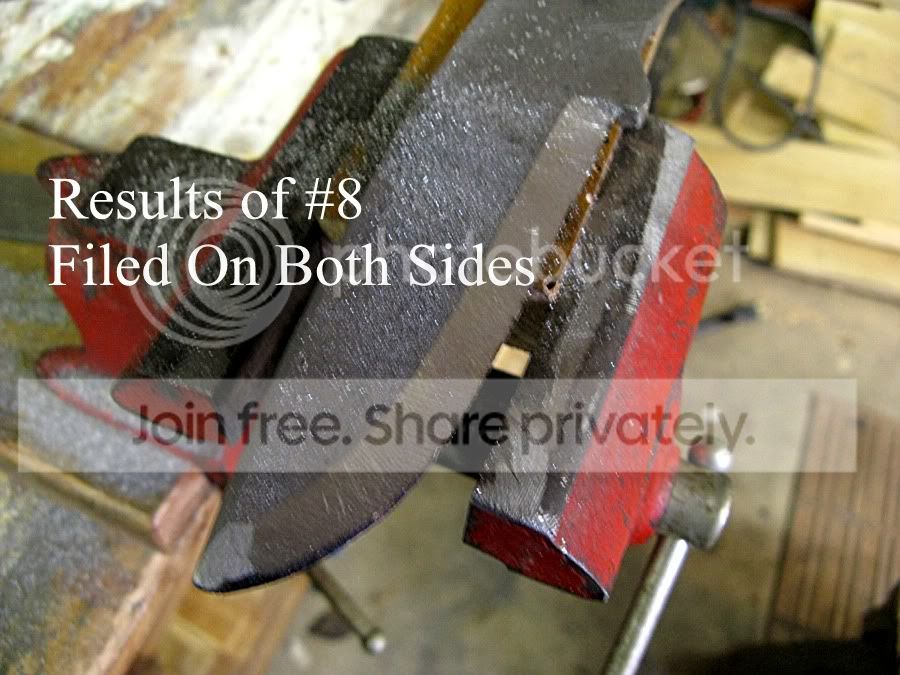
After I repeated this for the other side, I marked the edge of the filed grind with a marker and moved the jig rod down to # 8
Each time I dropped the rod into a lower hole, and re-filed the blade, the shoulder of the grind went closer to the spine.
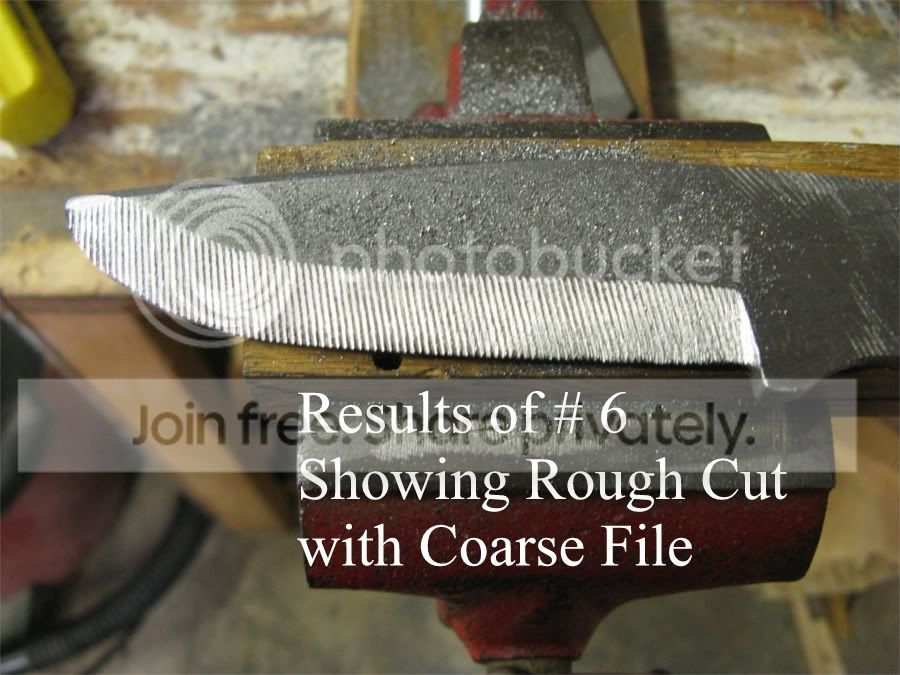
The next pic shows the state of the blade after file work from possition #6. The coarse file really ate into the steel.
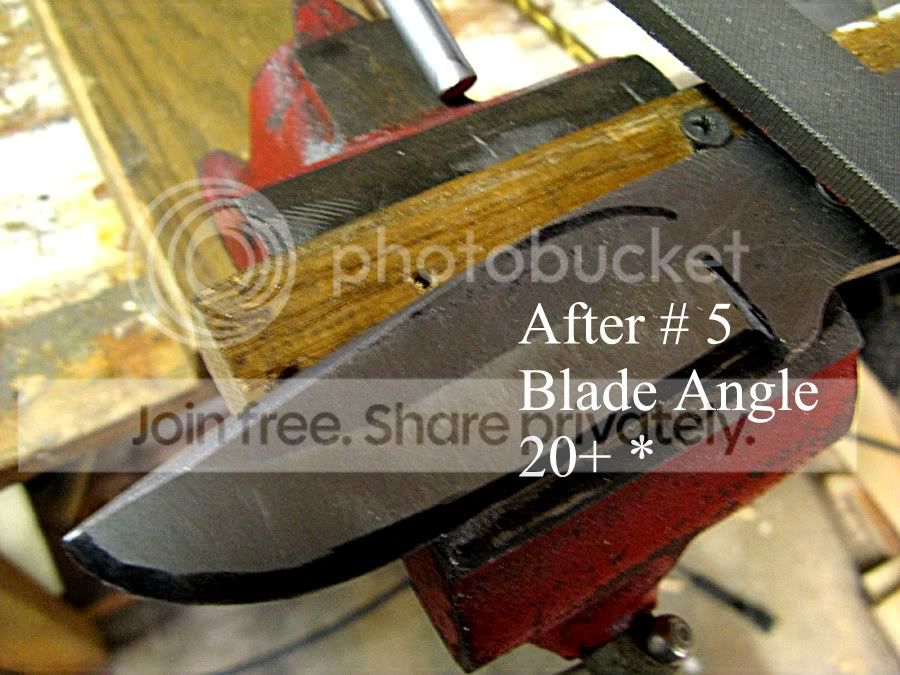
I started to really like the look of the way the blade was taking shape at this step. But I found that because the bar stock was 3/16" wide the angle of the blade was over 20 degrees at this stage. This was far too wide for my tastes. More filing would be needed...
I didn't take pics of every step along the way. I think you get the idea how I worked with the file. Eventually I was down to hole # 3 and the angle was close to 12 -13 degrees.
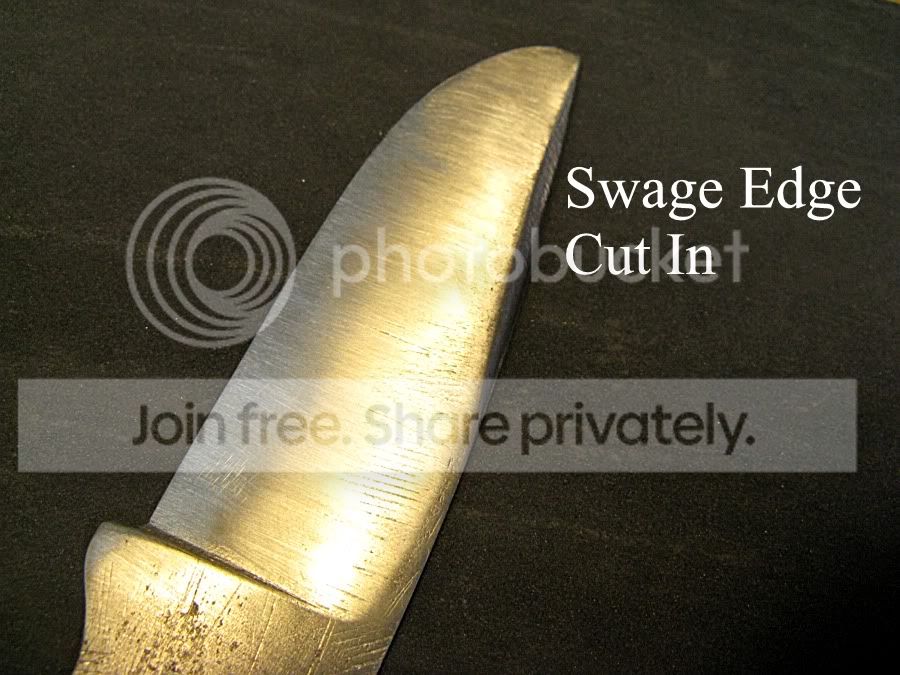
I started to refine the swage edge, or false edge on the top of the spine. Not sure why I did this. I guess I wanted to try it and see what difference it would make.
You can see the difference it made in the top profile of the point.
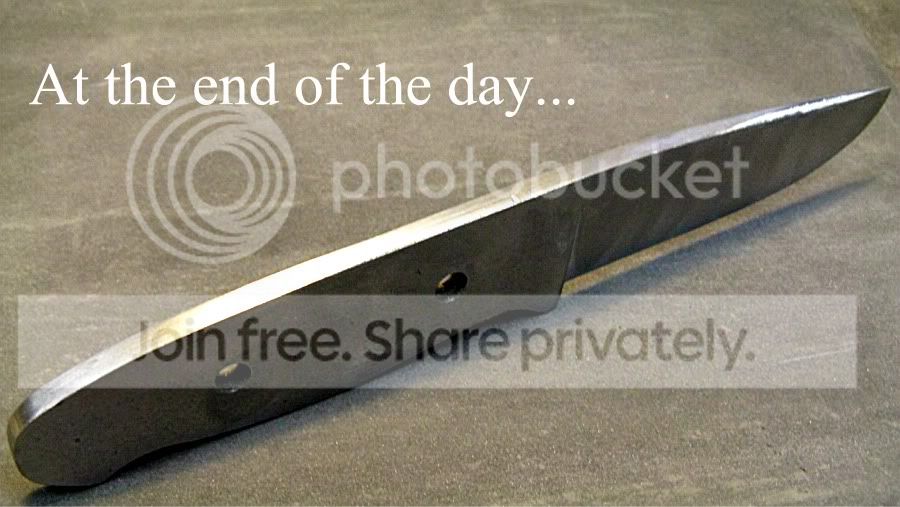
This is what it looks like after a day's work with files and 220 grit sandpaper.
Things I learned: a flat grind to the spine is almost a necessity if the bar stock is 3/16" and you want to end up with a shallow blade angle.
Files can really tear into annealed steel. If I didn't card the file often, even a medium bastard file will pick up a stray piece of steel filings and gouge the blade surface.
220 paper can take some of the gouges out but not all of them
Had a great day discovering a new ability and starting a new skill.
Thanks for checking in.
Luke DeBee