- Joined
- Apr 8, 2015
- Messages
- 31
I shall sharpen and report results. Thanks for all the help!

The BladeForums.com 2024 Traditional Knife is available! Price is $250 ea (shipped within CONUS).
Order here: https://www.bladeforums.com/help/2024-traditional/

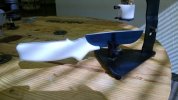 Well here it is and I think I probably would have given up on it if I hadn't gotten the advice I did from my fellow forum members. So my hat is off to all. I would like to remind everyone that this is my first effort at producing a knife so I am no knife maker and to call me a novice is probably an insult to all novices. I decided I wanted this edge to be sharpened at 15 degrees because that seemed appropriate for a fine kitchen slicer. At first I couldn't get a reasonable edge at all and I think that was due to the temper issues caused by the laser. I kept grinding and the thing finally started feeling and testing like a knife edge. The sharpness tester I use indicated that I had a huge wire edge so I first went to work on that with a couple swipes on the felt and then micro grit papers. On the BESS scale I finally got the knife to test 295 unstropped and 265 stropped which is a solid indicator that there is very little wire edge remaining (that's down from a whopping 550/174 when I first started). For those unfamiliar with the BESS it is based on the sharpness of a double edge razor blade which has a value of "0" on the scale. A utility razor blade is about 100 on the BESS and most factory cutlery edges are around 350. With that in mind you can see that I am considerably sharper than a high end cutlery factory edge but not anywhere close to "razor sharp" and don't want to be. The knife really cuts nice and seems to hold an edge reasonably well. I retested after slicing up a couple of tomatoes and four potatoes and while there was no discernible difference to me while using the knife the blade retested at 297. That's not very scientific but it's what I have to report at this time. I like the knife and in particular the handle but we're going to have to see if it suffers corrosion issues as time goes by. If you want to listen to the advice of a rank amateur and have limited shop resources like I do and if you want to start making knives this may be a possibility. Once again thanks to all for the good advice and input.
