- Joined
- Jun 5, 2012
- Messages
- 1,071
I'm an aspiring knife maker. I've made many knife like objects, even some planer and shear blades, but no full knives as of yet. I have enough free time lately that I decided to just take the plunge. I fell in love with the 2x72 class of machines as soon as I saw them. I've been doing metalworking and related crafts for some time, and wish I'd gotten on the 2x72 bandwagon sooner. They're ideal machines for knifemaking, and incredibly flexible and useful for other custom work as well.
I've been doing some heavy duty lurking and looking at 2x72 designs, old, new, and homebrew. I can't say I'm really trying to reinvent the wheel, more just try to fill in all the checkboxes for my personal machine. I'm also on a budget, and I have access to adequate tools and equipment for the build, plus I just love building stuff like this. I was hoping that in addition to sharing my progress so far, I could maybe get a bit of advice regarding belts, and also any experiences with rubber coated drive/idler wheels. I'm wondering, do they make a significant difference in overall noise or feel?
So far I've picked up a couple grits of ceramic(blaze) belts, and a couple grits of aluminum oxide belts. I got a red scotchbrite belt, but it seems a bit rough for finishing, so I may need to see if I can exchange it before I use it.
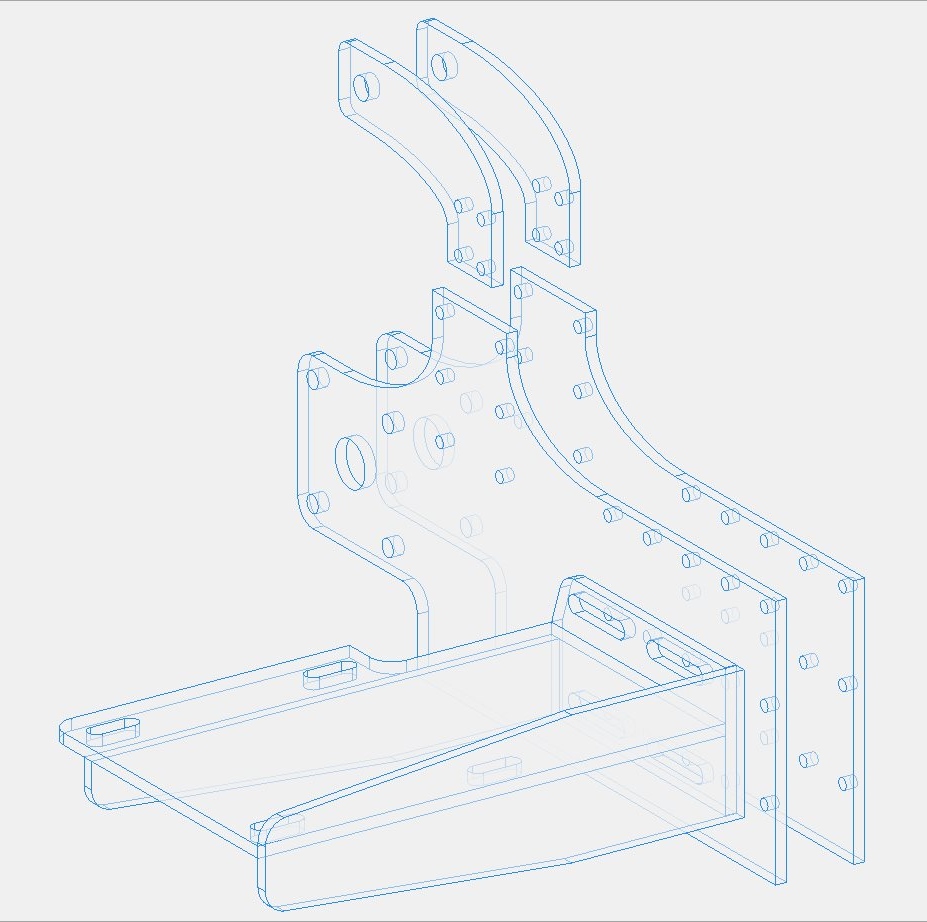
This is a wireframe of the main components, at least the main components that are made from 1/4" mild steel sheet. The other pieces (some flat bar parts, tooling arms, idler arm) are not shown. I'm still finalizing some of that. I'm going to be using drilled and tapped 0.5"x1.5" bar for the crosspieces, both on the two tool arm sockets and the idler support arm socket. The arms will be .250 wall 1.5" square tubing. I designed a self contained idler/alignment wheel support arm, the tension spring will be hidden inside the arm tube, and the idler arm will pass over the top of it. You will be able to change the idler height, so you can change the overall geometry of the belt as needed.
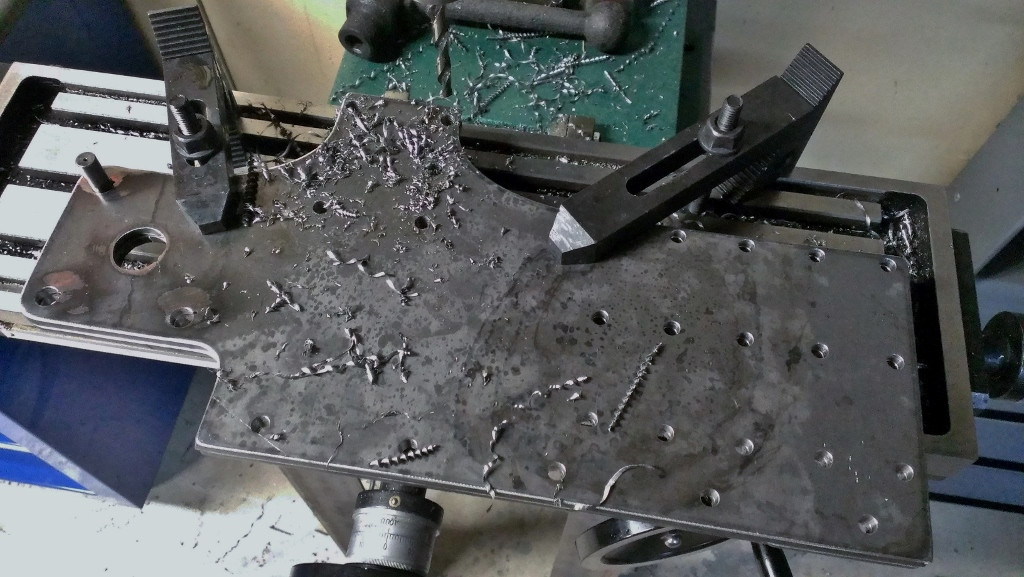
I went to a good friend's house today and made use of his plasma table. Considering how little work we did dialing everything in, I was happy with the results. There were some cosmetics issues here and there, but nothing that can't be massaged out. I decided to just drill the small holes on the mill, as plasma can be pretty iffy with smaller holes, even if using fine-cut consumables and spending some tuning time. I probably would have used laser or water if it was in the budget, but this is more than sufficient for my current needs.
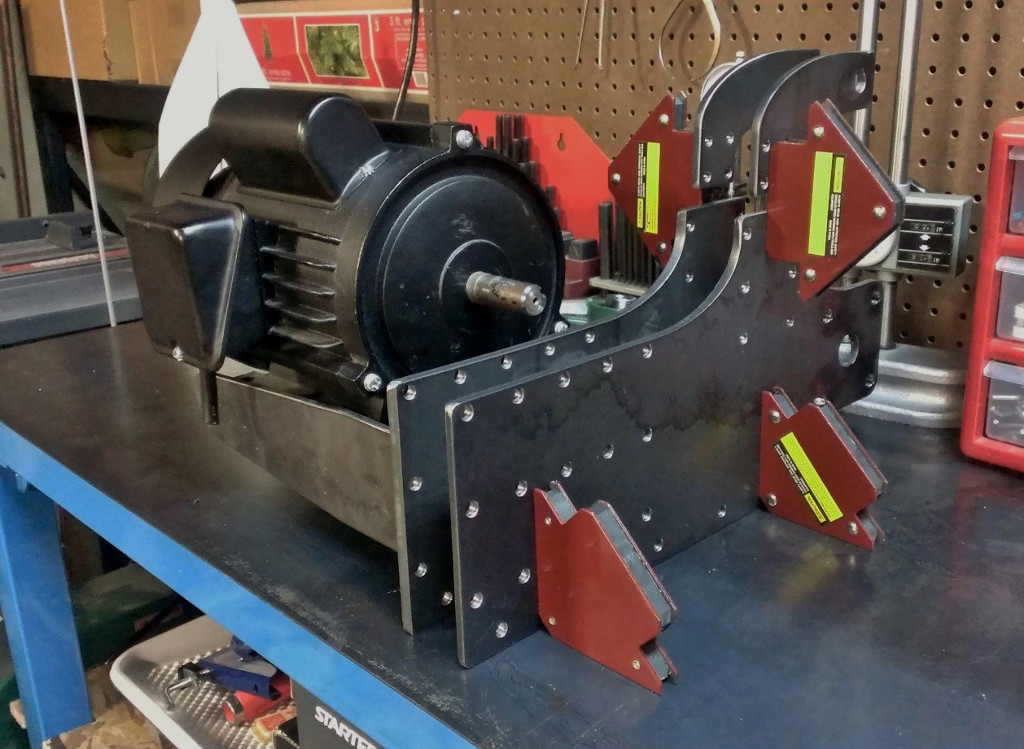
This is a little mockup I did, just to get a feel for everything with the motor in place. I'm pretty happy with it. It looks like everything will line up nicely. The line of holes along the bottom is for the tilt mechanism. It will be a heavy duty piano hinge, and the side shown will have two spring loaded draw latches for the vertical position, while the horizontal position will rely on rubber stops.
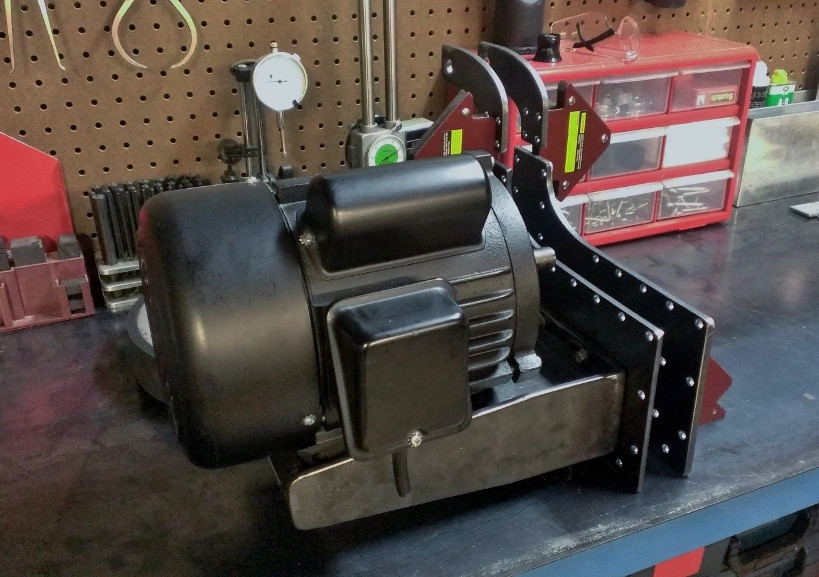
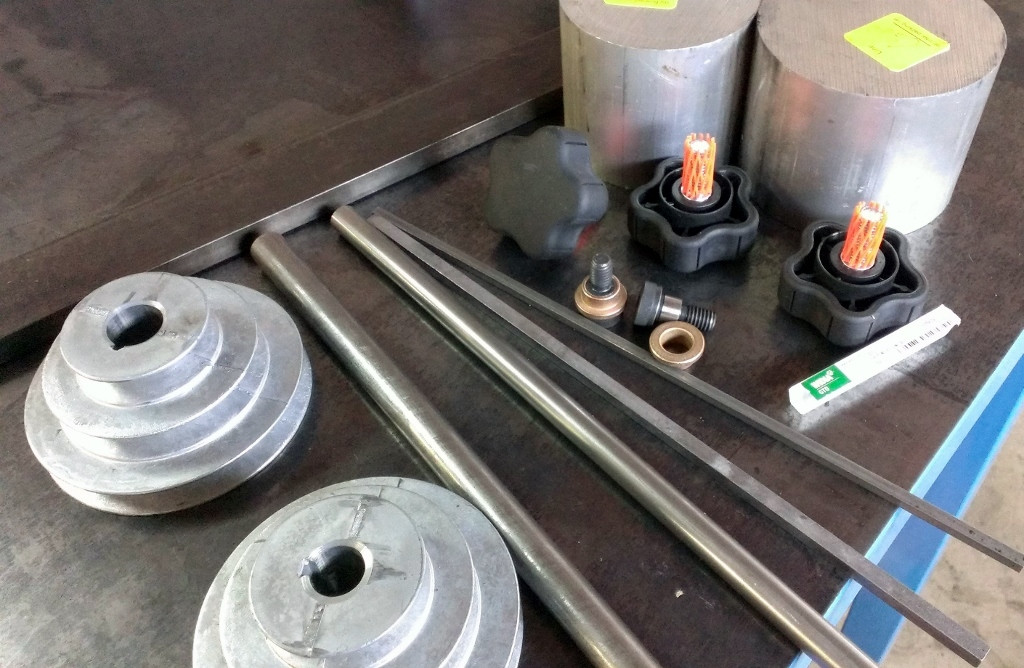
Here's the current family photo. I'm still waiting on some parts and materials, notably the material for the idler and drive wheels, as well as the step pulleys, shaft material, and some fasteners/odds and ends. I got the motor from my old boss, it's a single phase 1hp/1750rpm take-off from a very nice Delta drill press that was refitted with a DC motor and speed control. I wish I could justify a variable speed setup right now, as I'm a huge fan, I've had variable speed on almost every machine I've used in the past years, and I love it. I'll just have to live with the 3-speed step pulley setup for now.
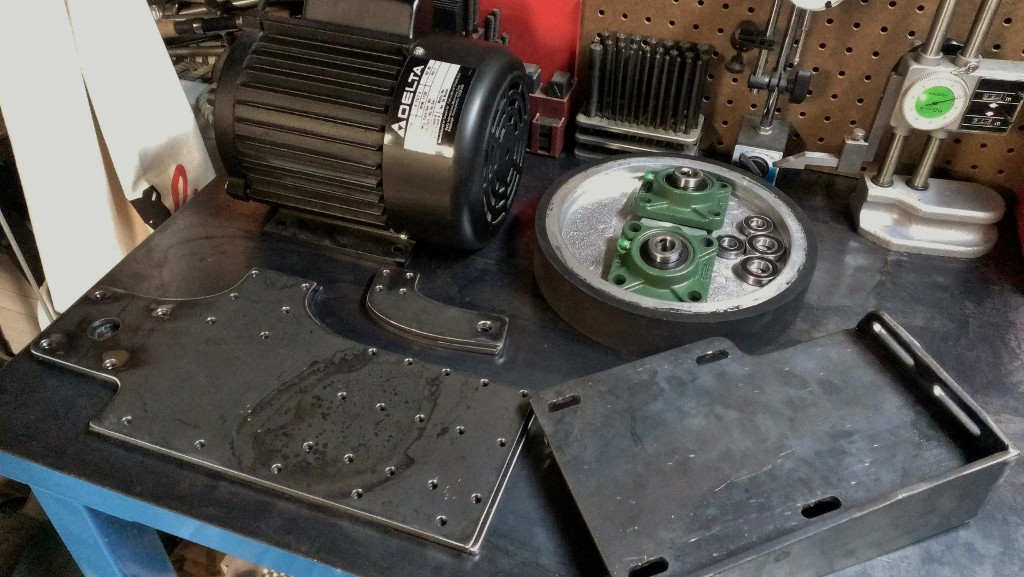
As soon as I finish the drawings showing the idler arm assembly and the rest of the parts that weren't plasma cut, I'll update the 3D drawing at the top of the post. I am hoping to have the rest of my stuff in by the end of the week, so I may even be spinning belts by this coming weekend. :thumbup:
I've been doing some heavy duty lurking and looking at 2x72 designs, old, new, and homebrew. I can't say I'm really trying to reinvent the wheel, more just try to fill in all the checkboxes for my personal machine. I'm also on a budget, and I have access to adequate tools and equipment for the build, plus I just love building stuff like this. I was hoping that in addition to sharing my progress so far, I could maybe get a bit of advice regarding belts, and also any experiences with rubber coated drive/idler wheels. I'm wondering, do they make a significant difference in overall noise or feel?
So far I've picked up a couple grits of ceramic(blaze) belts, and a couple grits of aluminum oxide belts. I got a red scotchbrite belt, but it seems a bit rough for finishing, so I may need to see if I can exchange it before I use it.
This is a wireframe of the main components, at least the main components that are made from 1/4" mild steel sheet. The other pieces (some flat bar parts, tooling arms, idler arm) are not shown. I'm still finalizing some of that. I'm going to be using drilled and tapped 0.5"x1.5" bar for the crosspieces, both on the two tool arm sockets and the idler support arm socket. The arms will be .250 wall 1.5" square tubing. I designed a self contained idler/alignment wheel support arm, the tension spring will be hidden inside the arm tube, and the idler arm will pass over the top of it. You will be able to change the idler height, so you can change the overall geometry of the belt as needed.
I went to a good friend's house today and made use of his plasma table. Considering how little work we did dialing everything in, I was happy with the results. There were some cosmetics issues here and there, but nothing that can't be massaged out. I decided to just drill the small holes on the mill, as plasma can be pretty iffy with smaller holes, even if using fine-cut consumables and spending some tuning time. I probably would have used laser or water if it was in the budget, but this is more than sufficient for my current needs.
This is a little mockup I did, just to get a feel for everything with the motor in place. I'm pretty happy with it. It looks like everything will line up nicely. The line of holes along the bottom is for the tilt mechanism. It will be a heavy duty piano hinge, and the side shown will have two spring loaded draw latches for the vertical position, while the horizontal position will rely on rubber stops.
Here's the current family photo. I'm still waiting on some parts and materials, notably the material for the idler and drive wheels, as well as the step pulleys, shaft material, and some fasteners/odds and ends. I got the motor from my old boss, it's a single phase 1hp/1750rpm take-off from a very nice Delta drill press that was refitted with a DC motor and speed control. I wish I could justify a variable speed setup right now, as I'm a huge fan, I've had variable speed on almost every machine I've used in the past years, and I love it. I'll just have to live with the 3-speed step pulley setup for now.
As soon as I finish the drawings showing the idler arm assembly and the rest of the parts that weren't plasma cut, I'll update the 3D drawing at the top of the post. I am hoping to have the rest of my stuff in by the end of the week, so I may even be spinning belts by this coming weekend. :thumbup:
Last edited: