- Joined
- Jun 5, 2012
- Messages
- 1,071
I assume your 10" contact wheel is the one from Grizzly. Let us know how it works out once you add the bearings. I am in the midst of my own grinder build (not nearly as nice- based on the No Weld Grinder), and while I expect to do most of my work on the platen, for about $80 and a little work, I may want to try the same.
Yeah, I'm trying to make this grinder on a budget which is ballooning day by day. The boss just shakes her head and scowls at me now when she walks through the garage on her days off. I hope the pink and black G10 camping knife I plan to make for her will smooth things over. Luckily I bagged a good one, she loves guns and knives

Anyways, sorry for the little segway... I was going to bore the wheel out on the lathe, but as soon as I started to set it up I decided to hold off. I didn't like the degree of precision I was getting on that chuck, and I didn't have a four-jaw big enough (a four-jaw is a chuck with four separately movable jaws to allow odd or misshapen parts to be centered and held without need for shims or special fixtures).
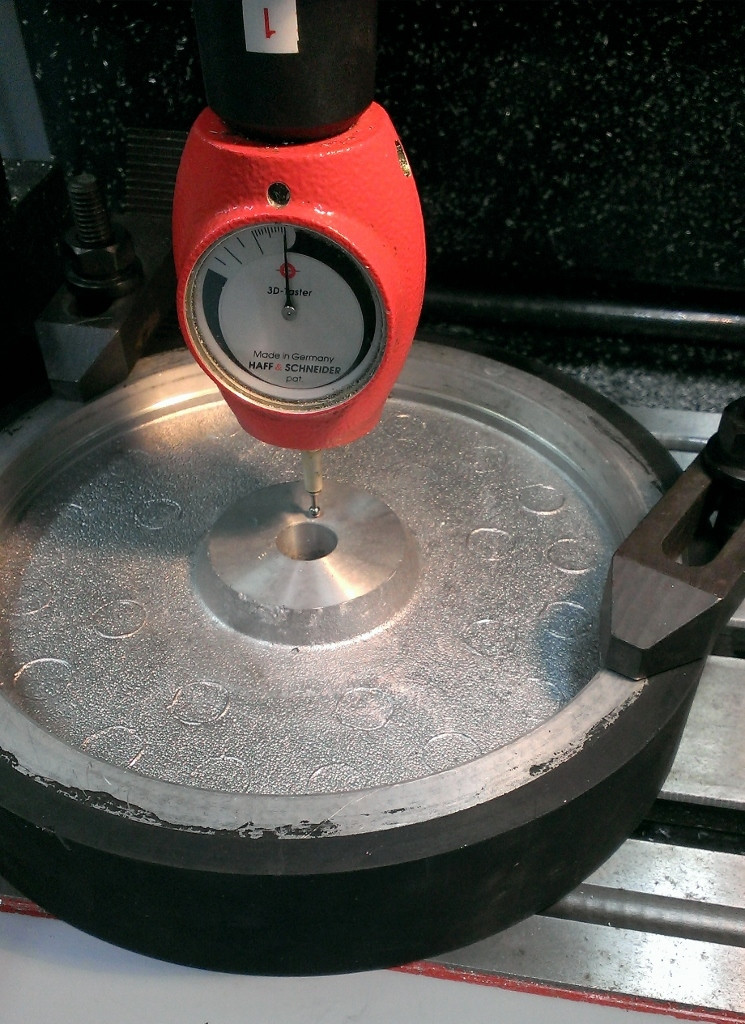
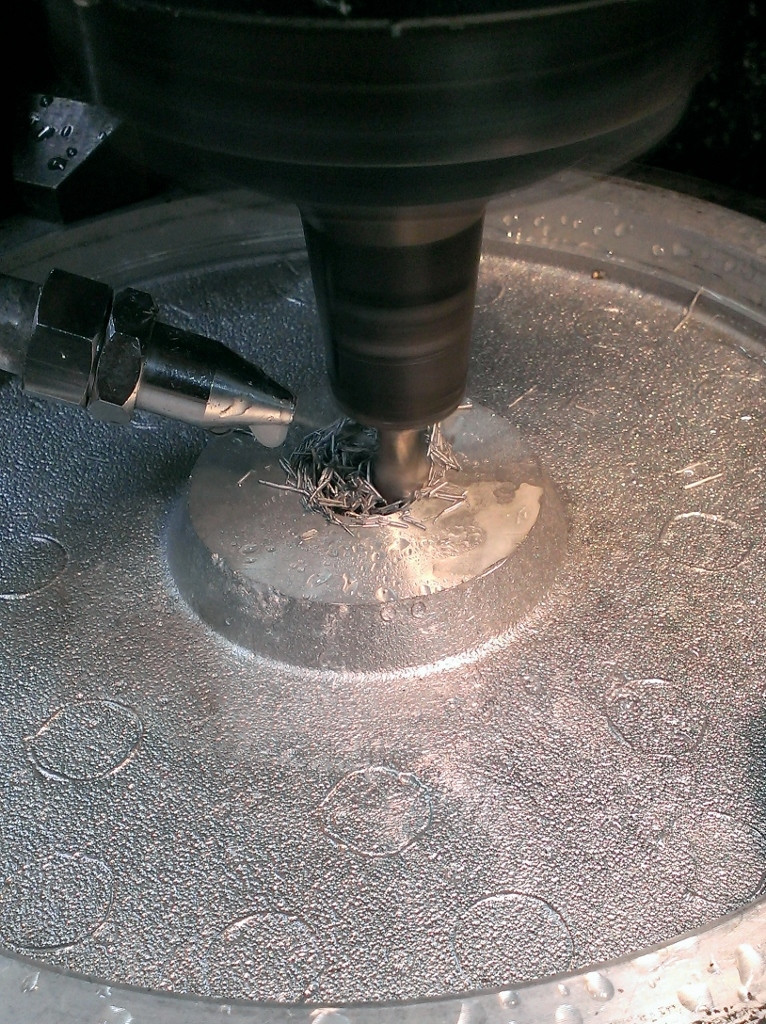
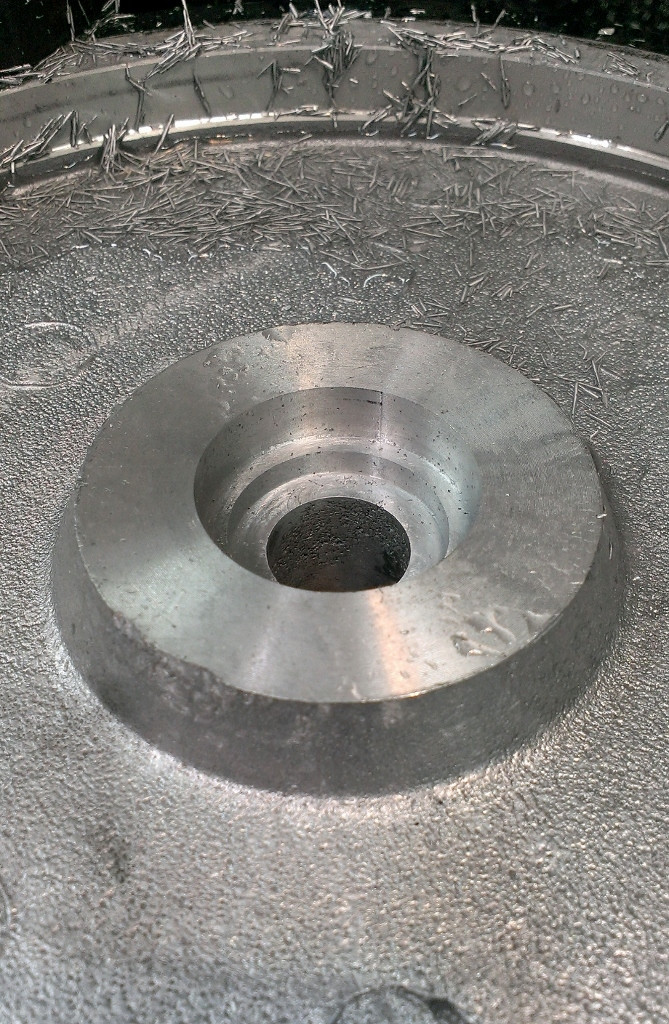
I decided to abort, and come back another day to do it on the CNC mill. I'm gonna mount it flat to the bed and use the probe to center the bore, plus it's a lot easier to shim than lathe chuck jaws, if the mill is out of tram at all (head tilt). I feel I'll be happier with the results, plus it's cake to dial in the bearing seat diameter. If I had some real guts, I'd machine some holes in the solid hub to lighten it a little, but I'm 100% chicken when it comes to balancing. I don't want to have to mess with it if I throw it off.
Once more, I'm much farther behind than I'd hoped, but I figured I'd post what I had done anyways, just to keep things interesting.
As promised, I took a couple pics of the idler wheel turning process. This isn't a superior method, it requires a lot of attention and fiddling if you don't have the right machine and/or fixture. In this case, I would have greatly preferred having at least machined some soft jaws, but I didn't have the jaws or the time. I watched the video on Beaumont's site, and that's the "right" way to do it, as opposed to my "barely good enough" way. Things like this really need the proper fixture to get a superb result every time, and not require tweaking at the end.
First, I face off the billet on the "big" lathe at my old work.
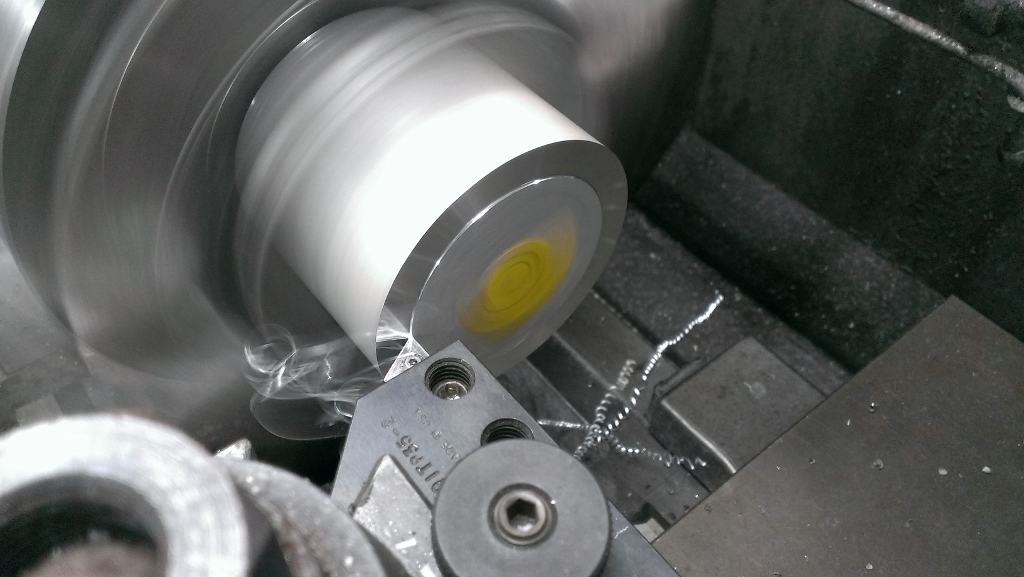
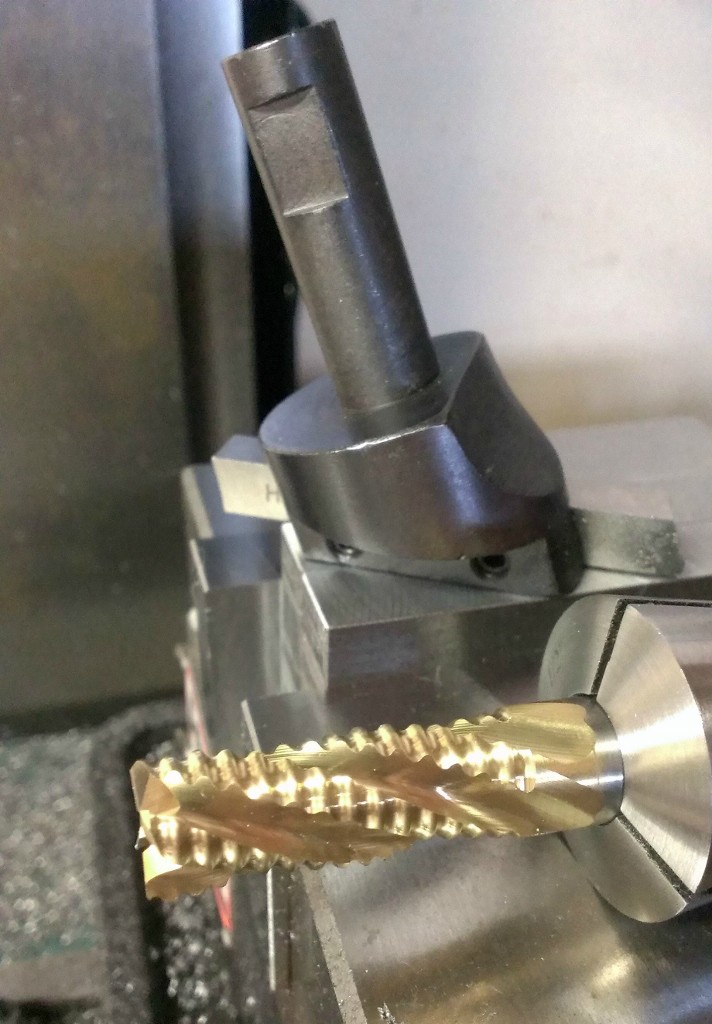
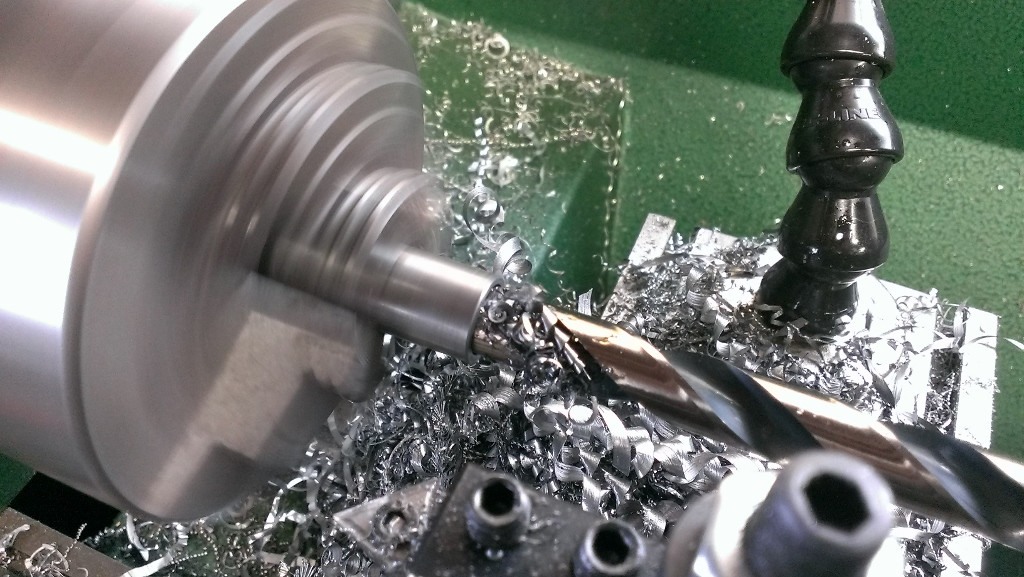
Next, I pre-drill the 3/4" clearance bore for the shaft, this was skimmed to size after the bearing seats and counterbore were machined. It allows me to double check my center from the other end once I flip the part. I thought I got a picture of the boring bar setup, but it didn't come through for some reason. Just imagine a long round black metal bar w/flat, using the same triangular insert and tool holder as in picture one.
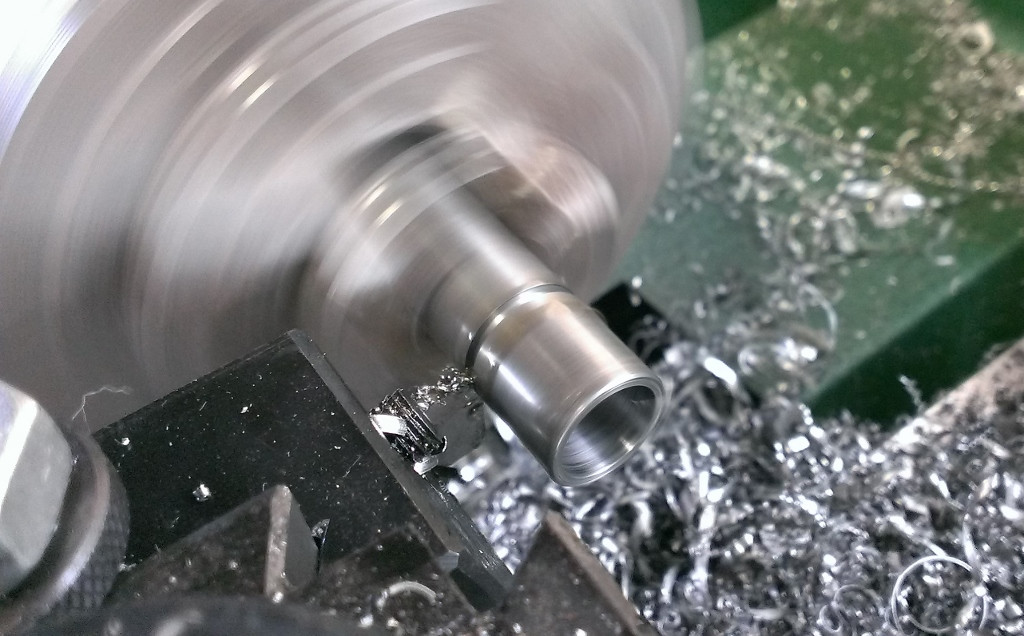
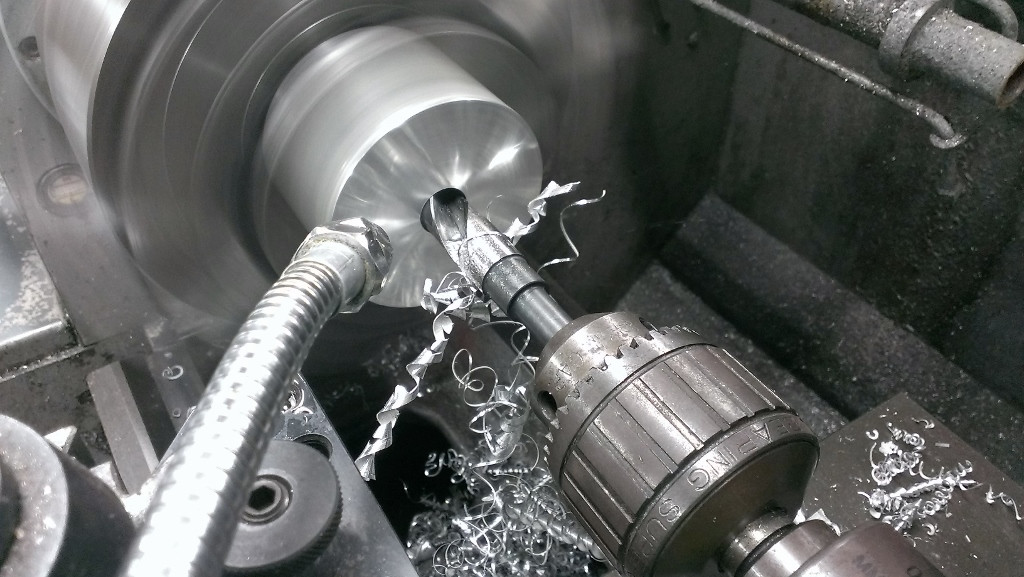
After this, I bored the counterbore (for grabbing the wheel from the inside when flipped and when cutting the crown), as well as the bearing seat. Then the wheel was flipped and grabbed from the inside of the counterbore. This was one of the fiddly parts I was talking about. It would have been much easier to get the flipside centered if I'd had some soft jaws for the chuck or on an expanding collet. I had to do some shimming and fiddling to get it within reason.
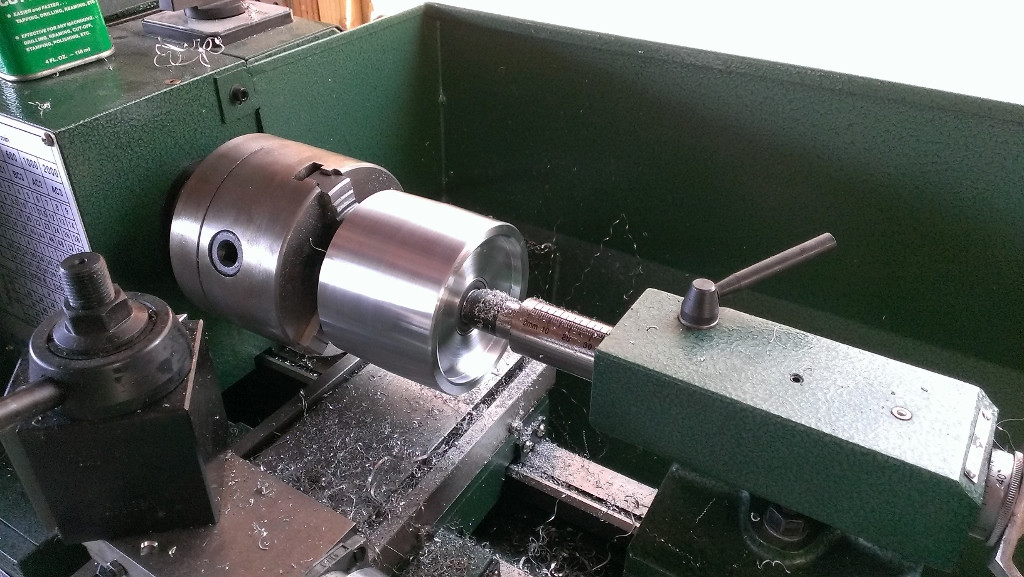
I decided once I got home that I wasn't quite happy with the result, so I set it up on my small lathe to dial in. I chucked up and centered a stub of the bearing shaft, then placed one of the bearings over the stub (the bearings were already press fitted into the seats). Then I used the dead center to hold the other bearing and slightly load it. The wheel is then driven by the nose of the chuck jaws but centered on the bearings themselves. After re-turning the crown, it runs impressively true. That little machine has surprised me more than once.
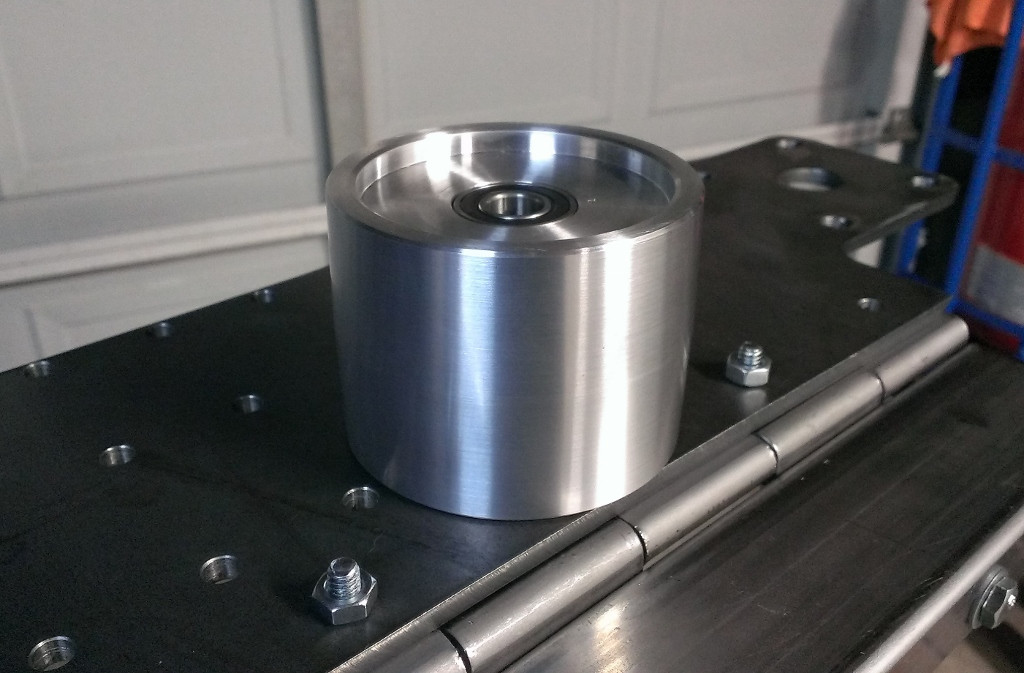
The finished product. According to my measurements, it's true to within .001", which is as good as I'd hoped for. I already ordered the drive wheel though, for just over $60 shipped it just isn't worth the trouble I went through on this one, plus that bore is best done with a reamer, and I don't feel like scraping the keyway since I don't have a keyseat broach and arbor.
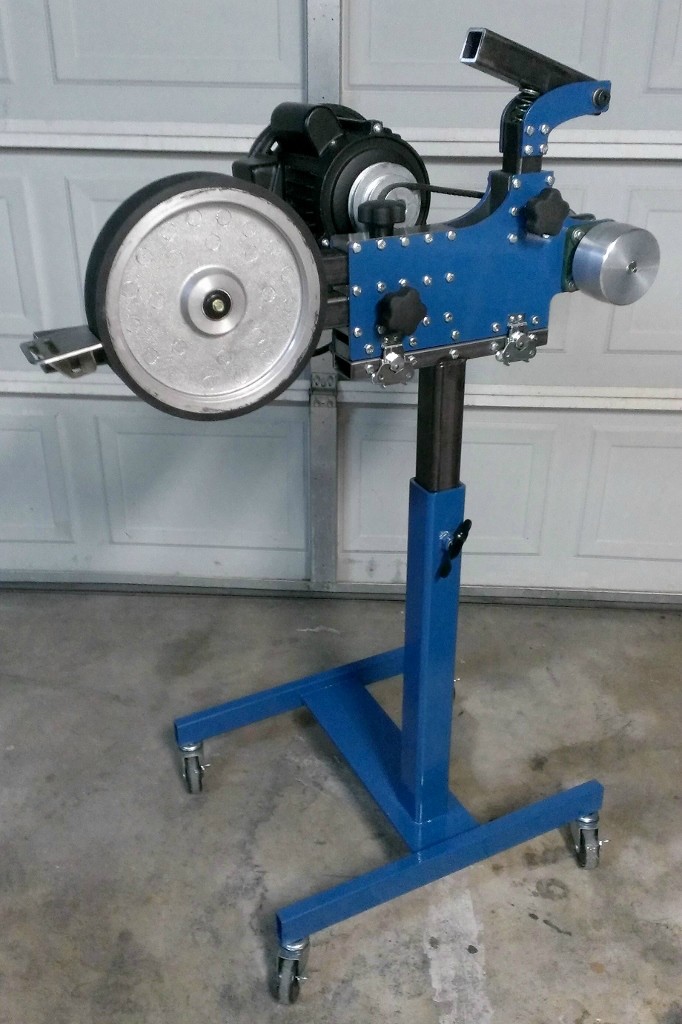
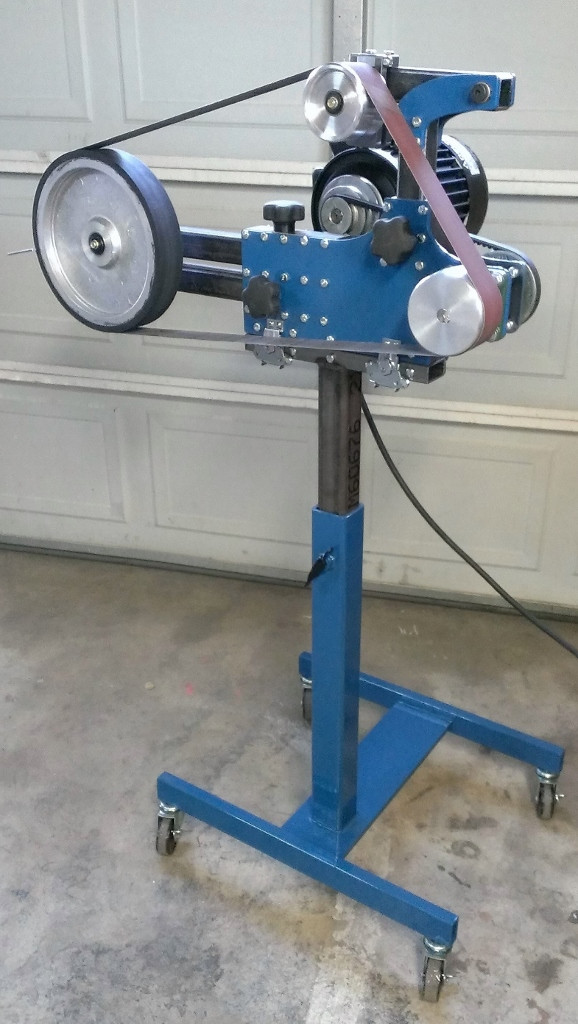
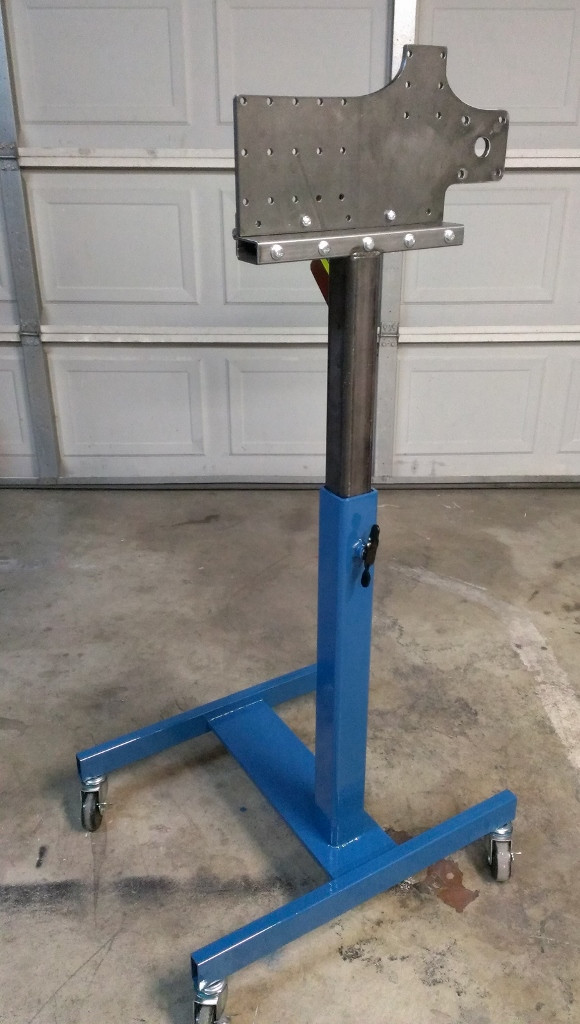
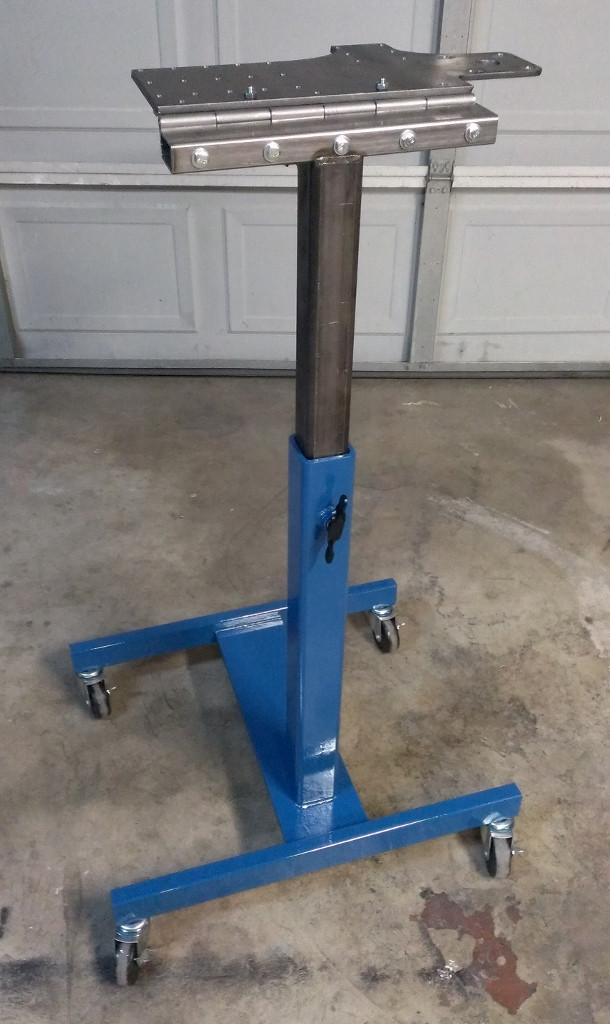
I also got the stand painted, and the wheels mounted. I did a mockup with one of the side panels to give an idea of how everything sits.
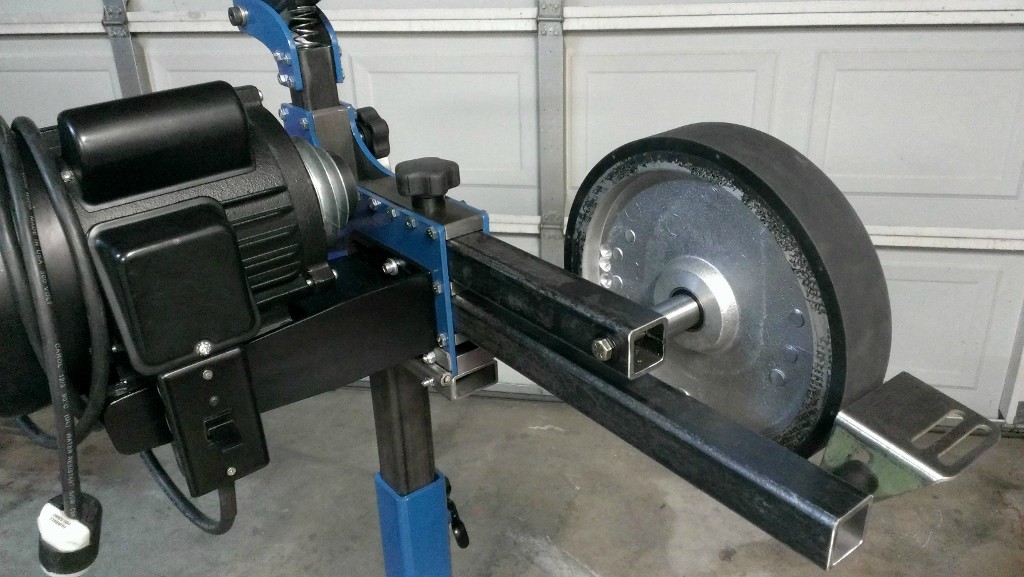
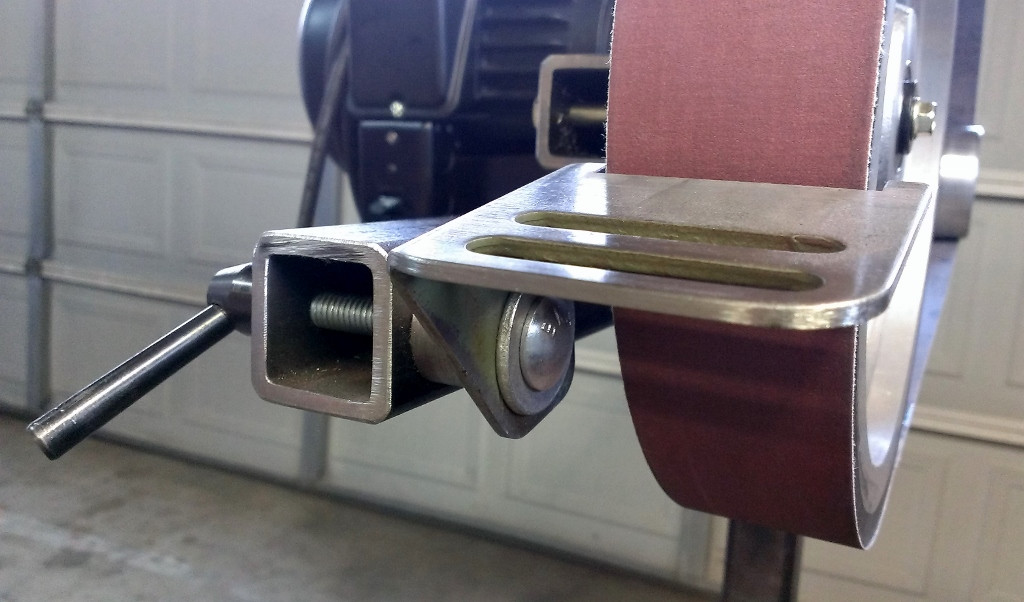
When tilted:
Last edited: