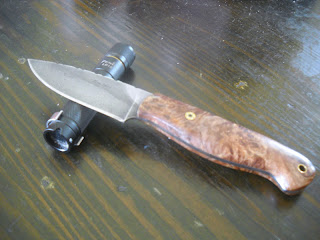
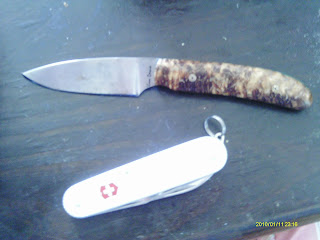
52100, is one of my favorite commercially made knife steels, I also am very fond of the 10xx series (1080,1084,1095) L-6 and W-2 depending on the purpose of the knife. My personal knives that I edc, one is damascus made from 52100 and 15n20, one is 1095 with a stone washed finish, one is L-6, and one is misery whip steel. I plan on making myself a hunter out of w-2 because of the great hamon lines it produces and it's edge holding. Bottom line on most steels is the heat treat for a certain knife. On a slicer Rc 59-61 is ok, but try to do that on a chopper and you will have a lot of little pieces of knife.
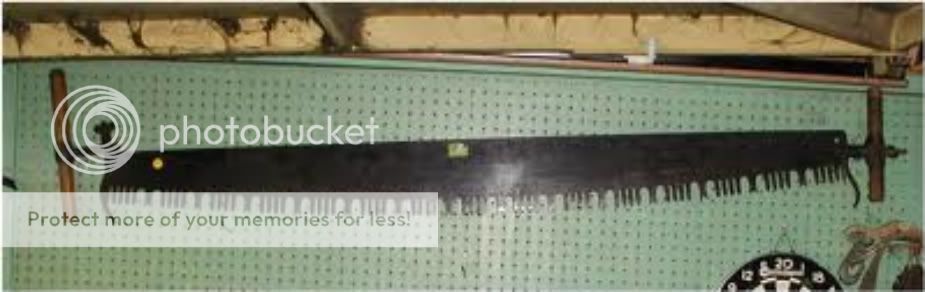
I posted a photo of a misery whip saw, these were the two man crosscut saws used for logging before chainsaws. You can only imagine the misery endured by the poor fellows that were at the neds of these saws.

I normally only do forging on larger knives to reduce the amount of grinding, I do not forge any of the misery whip bladesl other than a few small knives playing around. The forged look in the texture is actually years of natural pitting That I clean up and blend in to the new grinds. I only have a hammer and railroad tie anvil that I made, no power hammer, so I only do a little forging until my arm wears out. I do cut the blade profile from the saw blade and then grind it into a blade. I then test the blade for hardness, if it is under a Rc56 I then re-heat treat. Some are under and some are over, I guess there heat treating back then was not quite as accurate as it is now, no digital heat treat ovens.