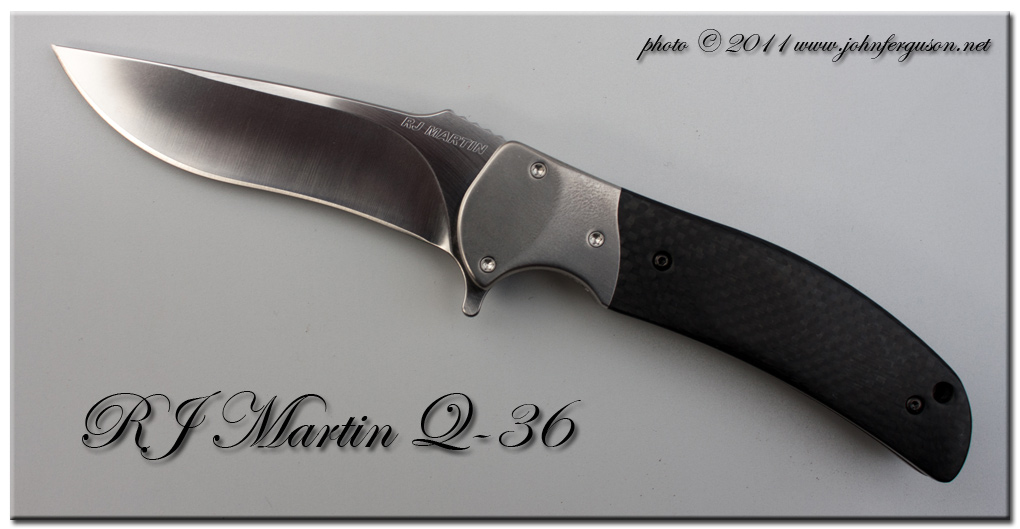
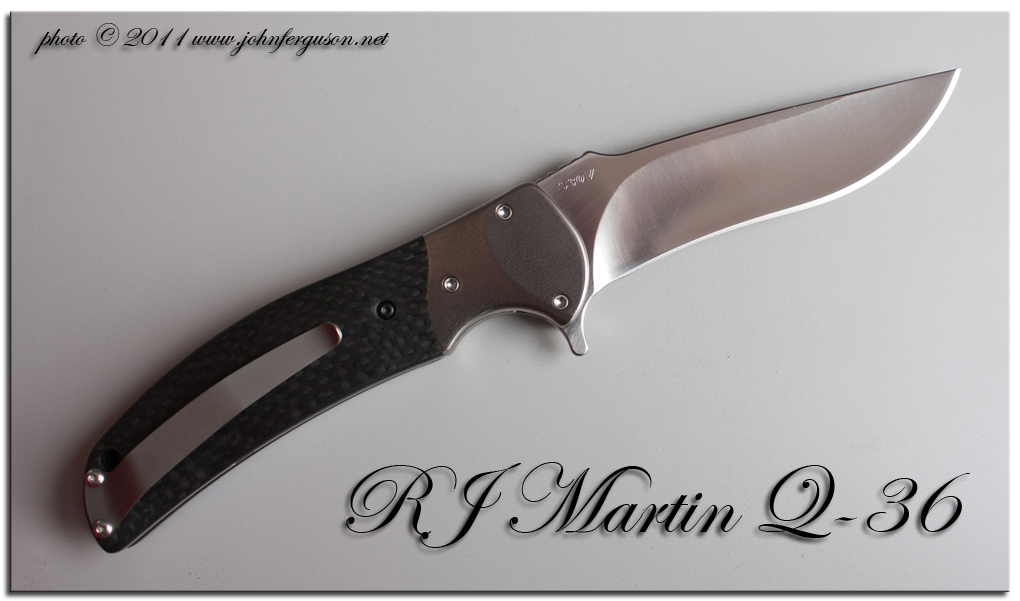
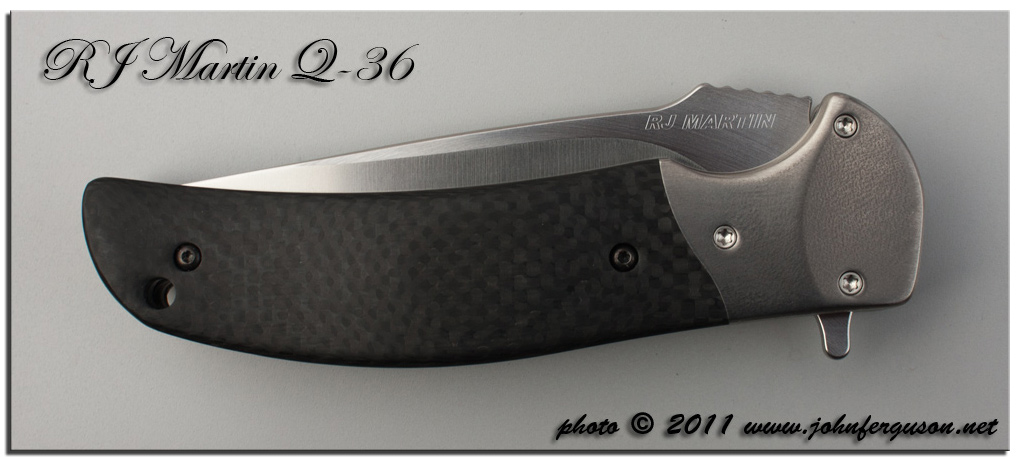
There are no rules except anarchy, and anarchy rules! I'm serious. We're all here in the custom knife world doing our thing our own way. I started shooting my own knives for fun, then I suddenly became an antique Scagel knife collector and everything changed. My stuff needed to be photographed for a magazine article and I'd made a promise to the previous owner that I'd share the find with the world, take the set of knives around to shows etc. I was familiar with the work of Eric Eggly and Terrill Hoffman (Coop hadn't broken out yet). They sort of overtook Jim Weyer (another standard raiser, in his time), whose creative bent was perfect for the emerging art knife phenom back in the day.
Naturally, as I focused on trying to take a decent knife picture, I was greatly influenced by the aforementioned as well as a few others like Hiro Soga whose photos in the Japanese magazine KNIFE really opened my eyes. Found a knife photography forum where Coop had been steadily working, every day, on knife photography for a good two years. It was a stroke of luck for me that I could just jump in his wake. We learned a lot together and developed a friendship that I value. I entered 27 photo contests on that forum before winning my first one, and it was actually a tie! Still I plowed on.
Since I didn't really know what I was doing technically, I relied on my fertile imagination and and BS skills. Every now and then I'd get something to work out but, compared to now, it was pathetic. Experimentation has always been vital to me so that's the way I learn now. My photographs in two years won't look anything like what I'm doing today. And more photographers will slog up to the top for a while just like in the past.
Aside from all that, knife photography at the professional level today is a very difficult skill to master. It's taken me seven years and a lot of help from my photographer friends. Rather than address specifics, here's what I've learned in those years that turned out to be important for my growth.
First,
people like different things and that's why somewhere between 8 and 12 different photographers are able to routinely get published in the knife world. (That, by the way, is what separates the pros fro the rest. Pro images are preferred by editors who look at hundreds of crappy knife shots sent in all the time.) So, because people will always like different styles and ways of doing things, I resist judging and actually enjoy looking at the different ways other photographers do things. I appreciate them. It is not easy to take a decent knife photo!
Second, it helps to
be objective. I learned by entering photo contests until I finally got it. There's no better way. Getting objective is what helped me advance through those ranks. I use a 5 step process to evaluate and grade my own images and those of my colleagues and others. I picked it up from Coop along the way and tweaked it. I won't get into it here but there are the five categories that get formally rated: Composition, Clarity, Color, Lighting and Creativity. What one measures, improves. :thumbup:
And last, my most challenging lesson,
begin with the end in mind. These days, every knife image I make will have (in my mind) some specific end use. Every use requires a different approach. I never shoot or process the same way twice. I actually don't think I'm capable of doing anything the same way twice. So, what I do is
make a custom photograph of a custom knife. Get it?
It's a cool second career with fabulous tax deductions, I'll say that. However, you're only as good as your most recent image. I just finished up this one today. It's a slick 'show everything' composite tuned for the web - that was its end use.
You wouldn't necessarily know it by looking, but this image's aspect is 11X17. The full resolution file I prepared for print could be easily used as
a double page spread in BLADE or some other publication. Might as well make it easy for editors and layout folks to choose my image for that special feature article that starts with a title and text overlay on a big beautiful photo across two pages. I even made sure the vertical midline wouldn't cut through a critical part of the composition and that I left appropriate spaces for text. Enough of that. Here's the image du jour -
think butterscotch. 



 :thumbup: