
-
The BladeForums.com 2024 Traditional Knife is available! Price is $250 ea (shipped within CONUS).
Order here: https://www.bladeforums.com/help/2024-traditional/
You are using an out of date browser. It may not display this or other websites correctly.
You should upgrade or use an alternative browser.
You should upgrade or use an alternative browser.
Blades upon Books - Traditionals
- Thread starter WhittlinAway
- Start date


CrepuscularGimlet
Basic Member
- Joined
- Jun 9, 2026
- Messages
- 174
I haven't read any of his works since HS. Thank you for the reminder.

5K Qs
Gold Member
- Joined
- Jul 20, 2014
- Messages
- 16,484
I bought this book almost 50 years ago, and decided to read the 5 novels again starting this spring. I finished the last one this week. (I was alternating these novels by Hammett with other stuff I was reading, so it probably took me almost 3 months to read all 5 novels.)
Hammett is usually credited with starting the "hard-boiled detective" genre of crime fiction. He wrote the 5 novels included in this collection between 1929 and 1934, and never wrote any other novels, although he lived 25 more years. He also wrote about 80 short stories, usually published in special-interest magazines before he started his novels.
The first two novels are narrated by The Continental Op, a nameless operative working for the Continental Detective Agency. (Hammett also wrote 28 short stories told by the Continental Op.) As a young man, Hammett had worked for the Pinkerton National Detective Agency, and his experiences there inspired much of his subsequent fiction. Red Harvest is a great, but very violent, story, in which the Op"cleans up" a mining town by getting 4 corrupt factions to essentially wipe each other out. The Dain Curse has the Op trying to solve a series of crimes, including murders, related to the members of a family said to be "cursed"; it has a plot that is quite convoluted, and is my least favorite of the 5 novels.
The Maltese Falcon is probably the most famous of these novels, and is the story on which the popular movie is based, with Humphrey Bogart playing Sam Spade, the private detective who is the protagonist of the novel. I saw the movie before I read the book, and was surprised to find that most of the dialogue in the movie is taken almost verbatim from the novel.
The Glass Key is another really good story, in which the corrupt "political boss" of a city is in danger of losing his power, and his right hand man, and best friend, is trying to fix the situation. There's a murder to be solved, but the police aren't doing it, so the right hand man becomes the "detective" in this story. There's an attempt by the boss to ignite a romance with a senator's daughter, but the real "love story" in this novel is the non-romantic relationship between the boss and the fixer.
The Thin Man is Hammett's last novel, and the protagonist is Nick Charles, a retired private detective who is married to Nora, who seems to be considerably younger and maybe a rich heiress. They are from San Francisco, but are in New York, where Nick used to work, and get involved in murders related to a former client of Nick's, the client's ex-wife (who may have been a former lover of Nick's), the strange son and daughter of the former client and his ex-wife (both son and daughter seem to put Nick on a pedestal), and the business assistant of the former client. This novel turns out to have a quite complicated plot, but it all makes sense in the end. I especially like this one because there's more humor in it than in the other 4 novels. Everybody in this book drinks WAY too much, but that's true of most characters throughout Hammett's novels; I wonder if it's related to being written during Prohibition?

- GT
Hammett is usually credited with starting the "hard-boiled detective" genre of crime fiction. He wrote the 5 novels included in this collection between 1929 and 1934, and never wrote any other novels, although he lived 25 more years. He also wrote about 80 short stories, usually published in special-interest magazines before he started his novels.
The first two novels are narrated by The Continental Op, a nameless operative working for the Continental Detective Agency. (Hammett also wrote 28 short stories told by the Continental Op.) As a young man, Hammett had worked for the Pinkerton National Detective Agency, and his experiences there inspired much of his subsequent fiction. Red Harvest is a great, but very violent, story, in which the Op"cleans up" a mining town by getting 4 corrupt factions to essentially wipe each other out. The Dain Curse has the Op trying to solve a series of crimes, including murders, related to the members of a family said to be "cursed"; it has a plot that is quite convoluted, and is my least favorite of the 5 novels.
The Maltese Falcon is probably the most famous of these novels, and is the story on which the popular movie is based, with Humphrey Bogart playing Sam Spade, the private detective who is the protagonist of the novel. I saw the movie before I read the book, and was surprised to find that most of the dialogue in the movie is taken almost verbatim from the novel.
The Glass Key is another really good story, in which the corrupt "political boss" of a city is in danger of losing his power, and his right hand man, and best friend, is trying to fix the situation. There's a murder to be solved, but the police aren't doing it, so the right hand man becomes the "detective" in this story. There's an attempt by the boss to ignite a romance with a senator's daughter, but the real "love story" in this novel is the non-romantic relationship between the boss and the fixer.
The Thin Man is Hammett's last novel, and the protagonist is Nick Charles, a retired private detective who is married to Nora, who seems to be considerably younger and maybe a rich heiress. They are from San Francisco, but are in New York, where Nick used to work, and get involved in murders related to a former client of Nick's, the client's ex-wife (who may have been a former lover of Nick's), the strange son and daughter of the former client and his ex-wife (both son and daughter seem to put Nick on a pedestal), and the business assistant of the former client. This novel turns out to have a quite complicated plot, but it all makes sense in the end. I especially like this one because there's more humor in it than in the other 4 novels. Everybody in this book drinks WAY too much, but that's true of most characters throughout Hammett's novels; I wonder if it's related to being written during Prohibition?
- GT

black mamba
Gold Member
- Joined
- Oct 21, 2009
- Messages
- 24,237
The Thin Man movies with William Powell and Myrna Loy are great fun . . . watch them if you can.


CrepuscularGimlet
Basic Member
- Joined
- Jun 9, 2026
- Messages
- 174
Shady reading afternoon


DaveHS
Gold Member
- Joined
- Nov 22, 2024
- Messages
- 9,131
Gary, thank you for writing wonderfully effortless recap of five of the foundational works in American (and global, because if their massive impact) crime fiction. The Glass Key has always been a favorite of mine. The Coen Brothers made a tremendous film adaptation of this novel in one their best films, Millers Crossing!The Glass Key is another really good story, in which the corrupt "political boss" of a city is in danger of losing his power, and his right hand man, and best friend, is trying to fix the situation. There's a murder to be solved, but the police aren't doing it, so the right hand man becomes the "detective" in this story. There's an attempt by the boss to ignite a romance with a senator's daughter, but the real "love story" in this novel is the non-romantic relationship between the boss and the fixer.
DaveHS
Gold Member
- Joined
- Nov 22, 2024
- Messages
- 9,131
I pulled this one in weekend cooking adventures. This is a unique cookbook in that the narrative voice is so strong you feel as though you know the author personally before you’ve even made a single recipe! The recipes all work perfectly; so then you realize that one of our most beloved southern novelists was also a masterful home cook!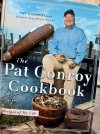
DaveHS
Gold Member
- Joined
- Nov 22, 2024
- Messages
- 9,131
100% agreeThe Thin Man movies with William Powell and Myrna Loy are great fun . . . watch them if you can.
DaveHS
Gold Member
- Joined
- Nov 22, 2024
- Messages
- 9,131
Beautiful Northwoods Canoe, Jim! And a book that was a huge influence on me as a young man. A buddy and I did a 21K mile driving and camping loop of the USA, sticking mostly to the blue highways after reading this.
5K Qs
Gold Member
- Joined
- Jul 20, 2014
- Messages
- 16,484
Thanks for the recommendation, Jeff.The Thin Man movies with William Powell and Myrna Loy are great fun . . . watch them if you can.

I don't recall ever seeing any of the Thin Man films, but I used to do crossword puzzles regularly, and would often run into a clue like "Nick and Nora Charles' fictional dog", so I became familiar with Asta before ever reading the novel.

Thanks for the kind words, Dave.Gary, thank you for writing wonderfully effortless recap of five of the foundational works in American (and global, because if their massive impact) crime fiction. The Glass Key has always been a favorite of mine. The Coen Brothers made a tremendous film adaptation of this novel in one their best films, Millers Crossing!
 I've never seen Miller's Crossing and didn't realize it was based on The Glass Key.
 I need to start posting my little "reviews" of all those books you sent me last Thanksgiving. I think I've read all of them now, and enjoyed most of them, and I have photos with knives. All I need to do now is generate some text to go with them!


- GT
DaveHS
Gold Member
- Joined
- Nov 22, 2024
- Messages
- 9,131
Predict you will love Millers Crossing. It is one of my favorite gangster movies. Albert Finney in one of his best performances. Not to mention Gabriel Byrne in a star turn and John Turturro's best grovel. The Coen's famously don't talk much about their movies but Millers is heavily influenced by The Glass Key. Just like The Big Lebowski is their love letter to Chandler's The Big Sleep. Until they made No Country For Old Men they hadn't "officially" done an adaptation. That is a nearly perfect adaptation. Their version of True Grit is one of the perfect film adaptations of all time. Portis' novel is a masterpiece; so is the Coen's film version.I've never seen Miller's Crossing and didn't realize it was based on The Glass Key

CrepuscularGimlet
Basic Member
- Joined
- Jun 9, 2026
- Messages
- 174


