

- Joined
- Feb 23, 2001
- Messages
- 2,101
HCF Prototype Testing
Introduction:
Back in January 2008, I started an online discussion about creating an official knife for the regular posters on the Hiking and Camping Forum on Knifeforums.com. The discussion resulted in heavy traffic to the post and numerous responses with suggestions for an ideal knife for Hiking and Camping. Mike Stewart of Bark River Knife and Tool posted he would kindly create a prototype knife for testing and eventually do a small run of these knives. After some thought, Mike believed he could improve on his first prototype and he offered to make two for me to test and evaluate before the limited production run. The following is a practical review meant to demonstrate the ability of both knives during a day hiking excursion to one of my favorite camping areas.
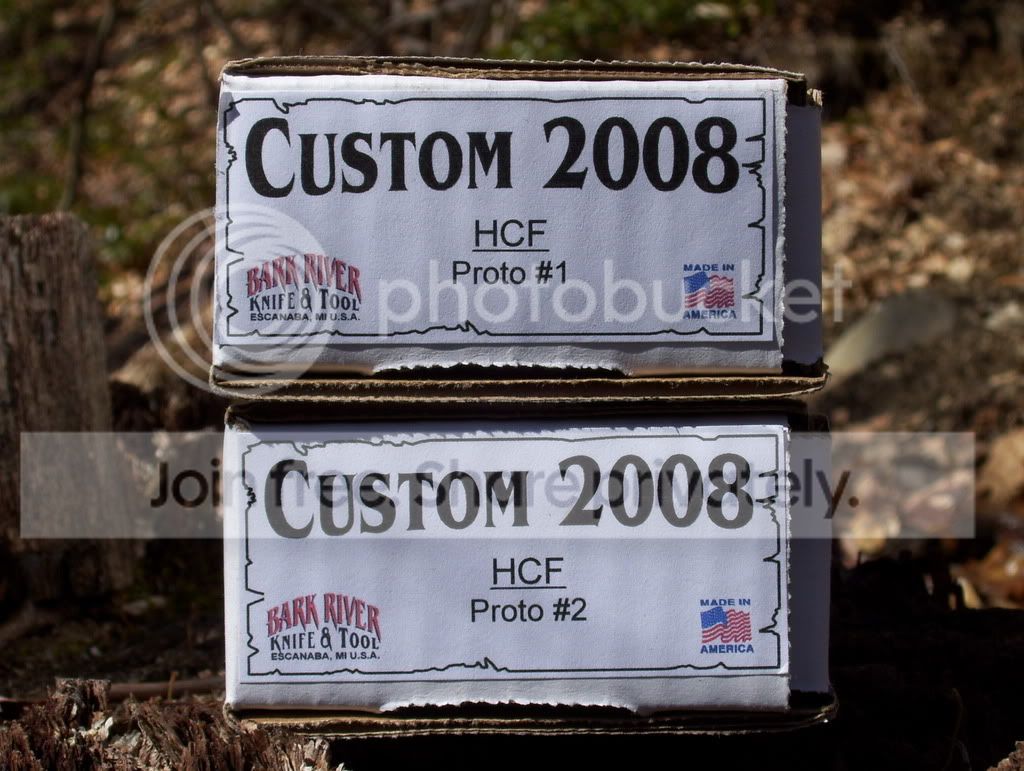
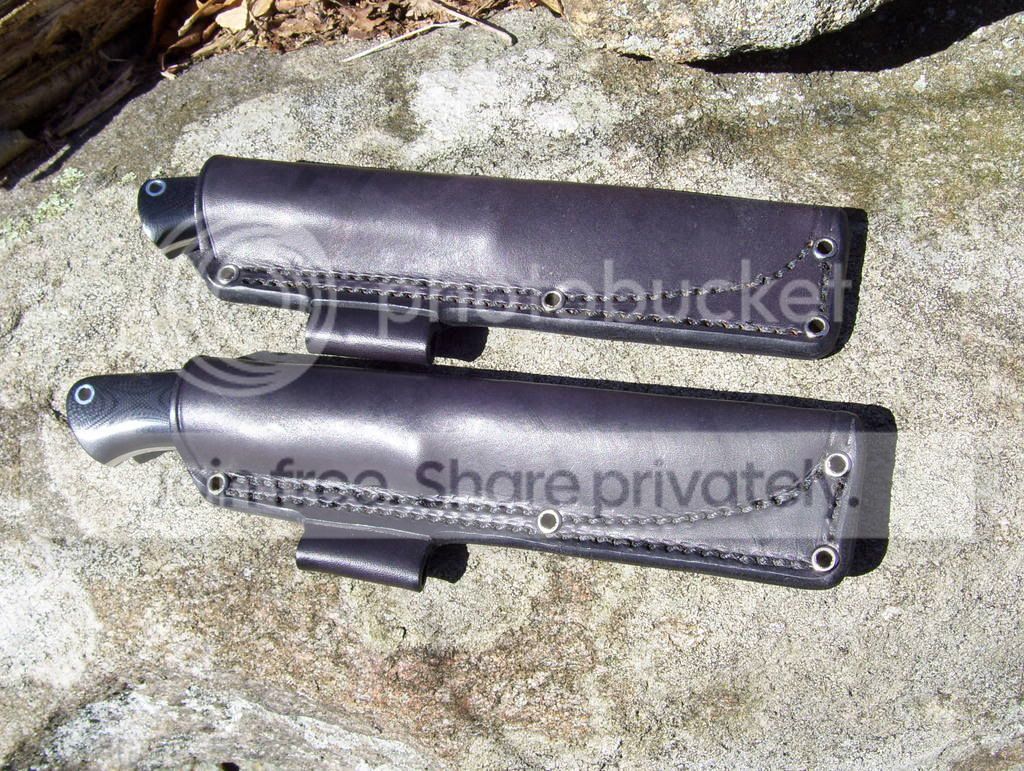
Both knives arrived on my doorstep finished with polished black linen micarta handle slabs and solid pins. They arrived shaving sharp with customary Bark River Knife and Tool convex edges. Each was carefully packed as is standard with Bark River Knives with cardboard edge protectors in individual boxes with packaging peanuts and plastic bagged sheaths. Both knives arrived with supple black leather Sharpshooter Sheath Systems belt sheaths. The HCF proto 1 fit very deep in the sheath with less than 1” of handle sticking out while the HCF proto 2 was a snug fit with more handle exposed. The HCF proto 2 handle molded itself in the sheath and seemingly “snapped” secure each time it was resheathed.
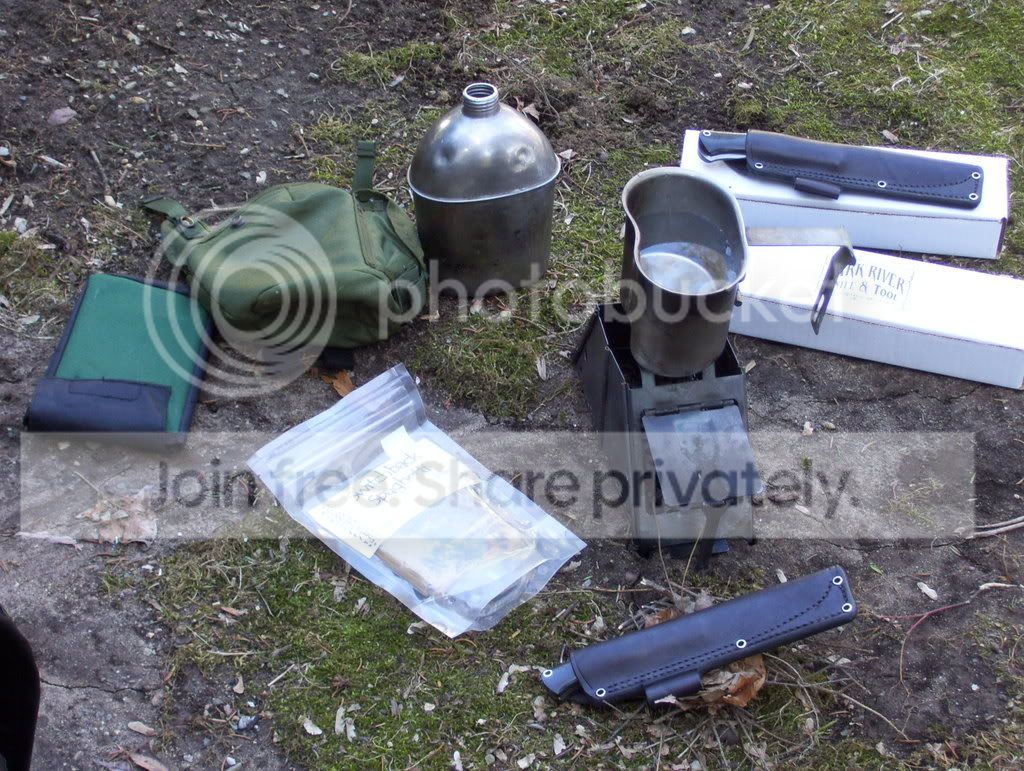
The field testing for this knife included hardwood battoning to create fuel for a pocket cooker. This handy stove is one commonly carried by hikers and campers that prefer an economical way of boiling water and warming food. While small twigs, leaves and kindling can be used, hardwood is a better choice as the heat output is greater, burn time longer and the coals are more substantial. The HCF Prototype knives performed flawlessly. The winner in this case is the HCF proto 2 as the larger more robust handle was easier to grasp and control while striking the blade with a baton.
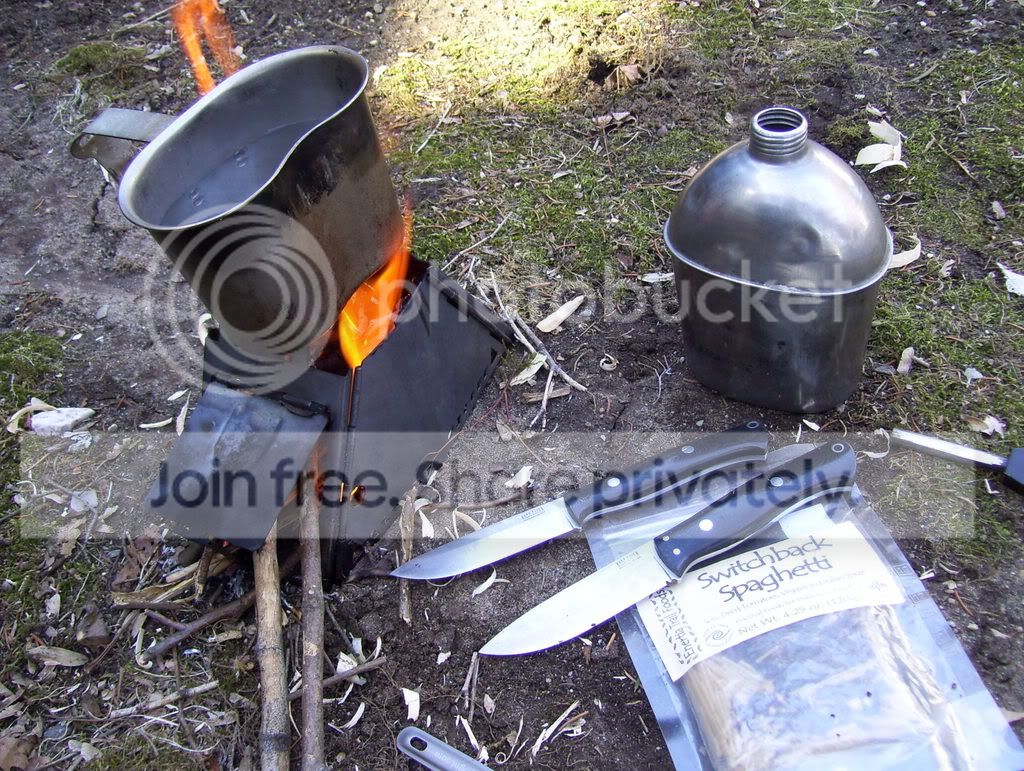
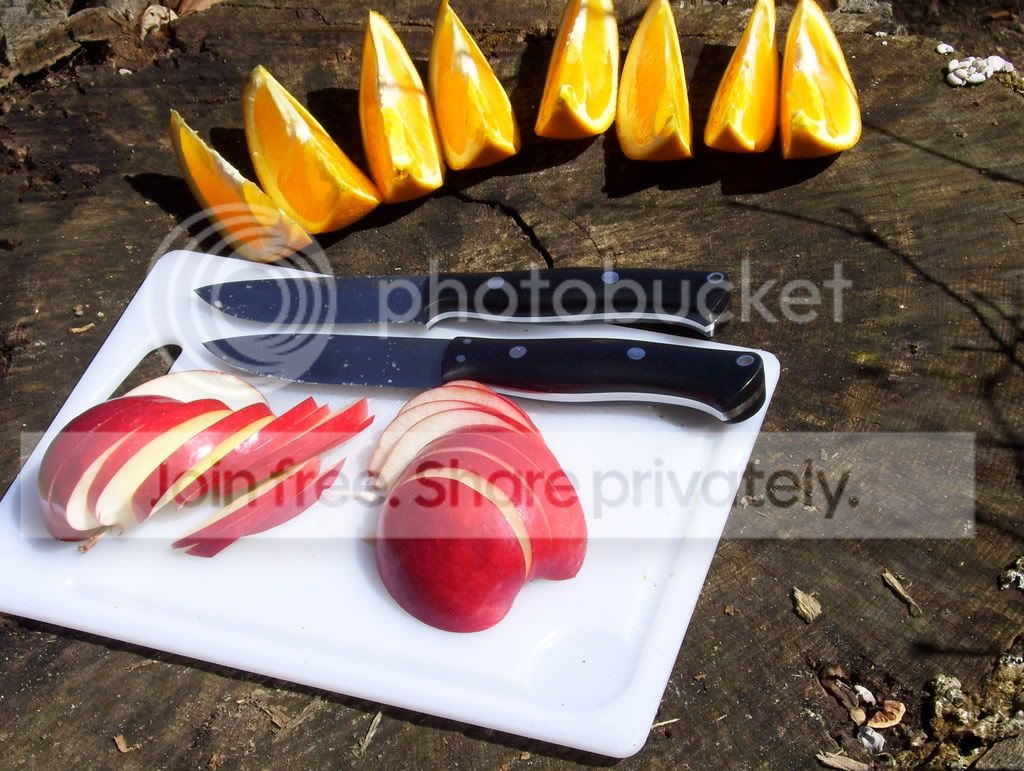
Testing and evaluating cannot be done on an empty stomach; both knives were employed in food prep duty. Each knife has a life and personality of its own in backwoods kitchen duty. The smaller HCF proto 1 handled like a larger sturdy bird and trout knife while the HCF proto 2 acted like a heavy duty utilitarian blade. Both knives sliced effortlessly thanks to the superb edge geometry standard on all Bark River Knife and Tool Products.
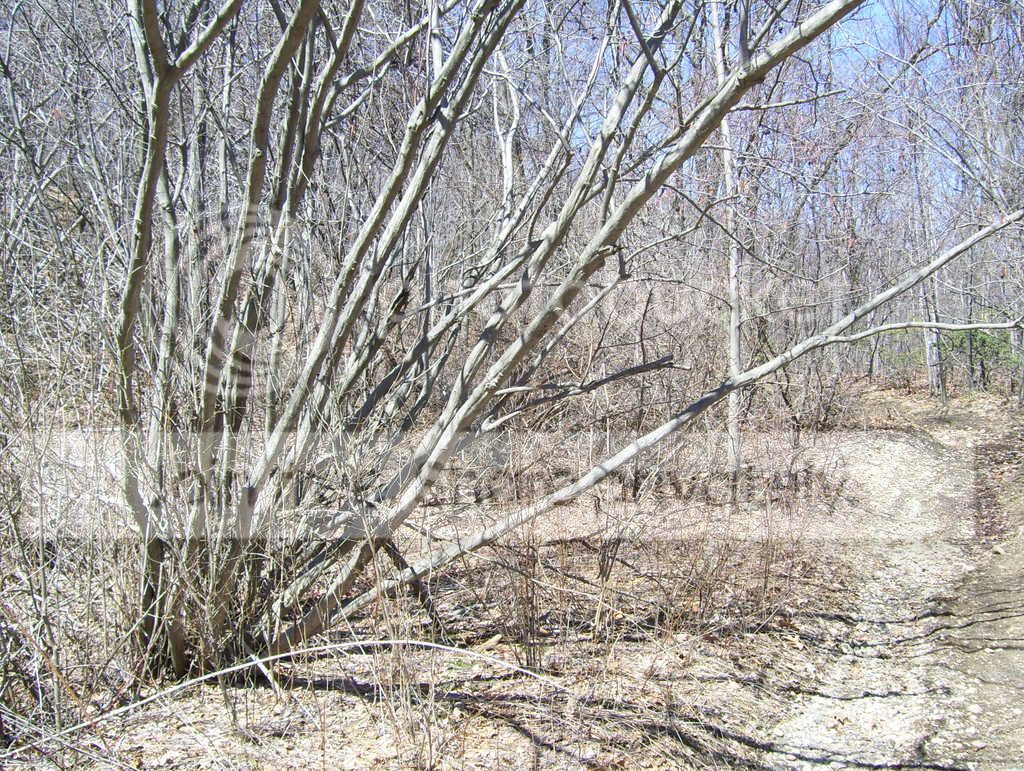
Camping and hiking are two pastimes that can and usually do lead to learning about outdoor survival and bushcraft skills. Knowing this, I wanted to test both knives’ ability to perform common tasks the bushcrafter and survival skills practitioner may use on a regular basis. I found a nice cluster of ironwood and since it was tucked away and plentiful, I took a piece for a hiking staff. I used the HCF Proto 1 to cut the staff by bending it at its base and pushing the knife through the stressed grain. No problems!
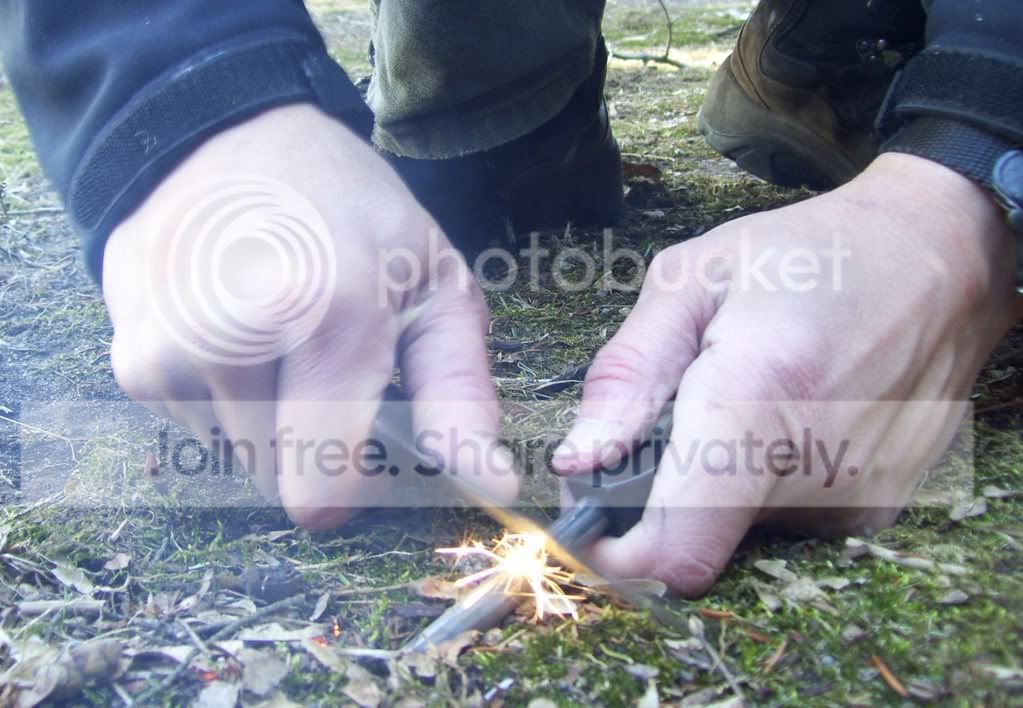
I tried my best to demonstrate the typical use of a firesteel using the 90 degree sharp spine of the knife. Not the best picture but this knife can easily perform this duty. This shot doesn’t do the use of a firesteel justice as a good strike will rain sparks down on tinder. I just wanted to show how it would spark and I quickly made scrapes back and forth while my camera’s timer ticked down. Both of these knives spark a ferro rod nicely!
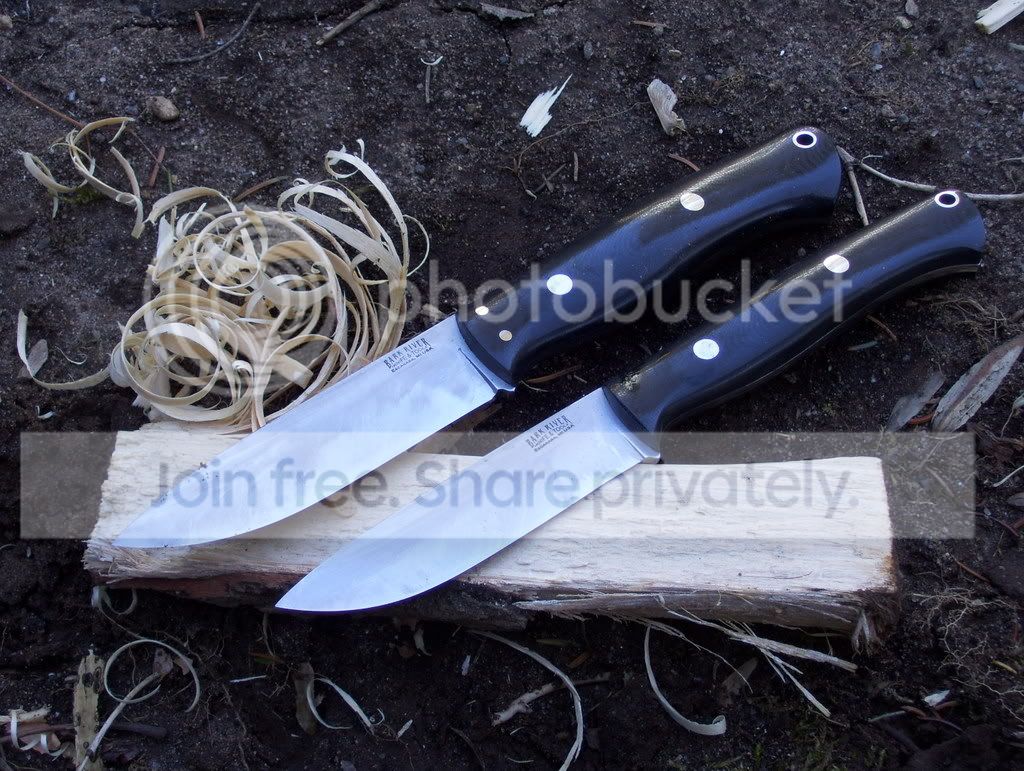
You’re probably wondering where the close-ups of the knives are at this point. Well, here you go! These were taken after all the cutting, battoning and slicing was said and done. Both knives are shaving sharp after a full day. Here is a run of the mill fuzz stick done a little with both knives.
HCF Prototype 1:
Blade Steel: A2
Blade Length: 3.9”
Cutting Edge: 3.875”
Blade Width: .875”
Blade Style: Drop Point
Blade Thickness: .140”
Handle Length: 4.6”
Overall Length: 8.5”
Weight: 5 oz.
Overall impression: This knife is very nimble and quick in the hand. The knife has a sleek streamlined look that invokes thoughts of light and fast hikes or summit attempts. When grasped, it is hard to distinguish this knife from a bird and trout knife or a lightweight hunter. The thin stock of the blade makes it an ideal slicer yet it retains heavy enough stock to handle battoning and heavy tasks. I used this knife to cut mullein hand drills for next month’s gathering. This knife easily cut through the shafts and did so cleanly.
HCF Prototype 2:
Blade Steel: A2
Blade Length: 4.1” from tip to handle slabs
Cutting Edge: 4”
Blade Width: 1”
Blade Style: Drop Point
Blade Thickness: .170”
Handle Length: 4.6”
Overall Length: 8.7”
Weight: 6 oz
Overall Impression: The HCF Proto 2 is a seriously substantial yet manageable knife in the hand. Robust and brawny, the knife is is a veritable melting pot of proven bushcraft and general purpose knives. The HCF Proto 2 may be a sturdy knife in the hand but it has excellent edge geometry and a beautiful convex edge that allows for both light and hard use. The thickness of the knife gives it reassuring strength while battoning while retaining control and ease of cutting in more gentle and refine tasks like making fuzz sticks. The larger handle of the HCF Proto 2 is a welcomed feature during prolonged whittling and carving.
Conclusion
If it were up to me, I would produce both knives in limited production runs or offer them as a matched pair. Prototype one could be used for hiking and prototype 2 could be used for camping. However, the original idea was to create a knife for both purposes and one must stand out as the better choice. After a lot of difficult trial and deliberation, a clear standout is the HCF prototype 2. The difference in weight is negligible but the strength of a .170” blade over a .140” blade is added insurance should your life ever depend on just one knife. I come from the school of thought believing it is better to err on the side of too much than too little. While this can be taken to an extreme, the .170” blade when properly ground offers great strength yet remarkable fine cutting ability. The added width of the handle makes it less likely to twist in the hand and a more secure purchase can be made.
For the production run, I would recommend shortening the handle by a .10” of an an inch as well as the blade by a .10” of an inch. This would make the knife have a sharpened edge of approximately 3.9” and an overall length of 8.5”. Thickness would remain at .170 and a full height grind could be optional. I’m going to continue testing these knives and let others on the CT Wilderness Gathering next month do the same.
Introduction:
Back in January 2008, I started an online discussion about creating an official knife for the regular posters on the Hiking and Camping Forum on Knifeforums.com. The discussion resulted in heavy traffic to the post and numerous responses with suggestions for an ideal knife for Hiking and Camping. Mike Stewart of Bark River Knife and Tool posted he would kindly create a prototype knife for testing and eventually do a small run of these knives. After some thought, Mike believed he could improve on his first prototype and he offered to make two for me to test and evaluate before the limited production run. The following is a practical review meant to demonstrate the ability of both knives during a day hiking excursion to one of my favorite camping areas.
Both knives arrived on my doorstep finished with polished black linen micarta handle slabs and solid pins. They arrived shaving sharp with customary Bark River Knife and Tool convex edges. Each was carefully packed as is standard with Bark River Knives with cardboard edge protectors in individual boxes with packaging peanuts and plastic bagged sheaths. Both knives arrived with supple black leather Sharpshooter Sheath Systems belt sheaths. The HCF proto 1 fit very deep in the sheath with less than 1” of handle sticking out while the HCF proto 2 was a snug fit with more handle exposed. The HCF proto 2 handle molded itself in the sheath and seemingly “snapped” secure each time it was resheathed.
The field testing for this knife included hardwood battoning to create fuel for a pocket cooker. This handy stove is one commonly carried by hikers and campers that prefer an economical way of boiling water and warming food. While small twigs, leaves and kindling can be used, hardwood is a better choice as the heat output is greater, burn time longer and the coals are more substantial. The HCF Prototype knives performed flawlessly. The winner in this case is the HCF proto 2 as the larger more robust handle was easier to grasp and control while striking the blade with a baton.
Testing and evaluating cannot be done on an empty stomach; both knives were employed in food prep duty. Each knife has a life and personality of its own in backwoods kitchen duty. The smaller HCF proto 1 handled like a larger sturdy bird and trout knife while the HCF proto 2 acted like a heavy duty utilitarian blade. Both knives sliced effortlessly thanks to the superb edge geometry standard on all Bark River Knife and Tool Products.
Camping and hiking are two pastimes that can and usually do lead to learning about outdoor survival and bushcraft skills. Knowing this, I wanted to test both knives’ ability to perform common tasks the bushcrafter and survival skills practitioner may use on a regular basis. I found a nice cluster of ironwood and since it was tucked away and plentiful, I took a piece for a hiking staff. I used the HCF Proto 1 to cut the staff by bending it at its base and pushing the knife through the stressed grain. No problems!
I tried my best to demonstrate the typical use of a firesteel using the 90 degree sharp spine of the knife. Not the best picture but this knife can easily perform this duty. This shot doesn’t do the use of a firesteel justice as a good strike will rain sparks down on tinder. I just wanted to show how it would spark and I quickly made scrapes back and forth while my camera’s timer ticked down. Both of these knives spark a ferro rod nicely!
You’re probably wondering where the close-ups of the knives are at this point. Well, here you go! These were taken after all the cutting, battoning and slicing was said and done. Both knives are shaving sharp after a full day. Here is a run of the mill fuzz stick done a little with both knives.
HCF Prototype 1:
Blade Steel: A2
Blade Length: 3.9”
Cutting Edge: 3.875”
Blade Width: .875”
Blade Style: Drop Point
Blade Thickness: .140”
Handle Length: 4.6”
Overall Length: 8.5”
Weight: 5 oz.
Overall impression: This knife is very nimble and quick in the hand. The knife has a sleek streamlined look that invokes thoughts of light and fast hikes or summit attempts. When grasped, it is hard to distinguish this knife from a bird and trout knife or a lightweight hunter. The thin stock of the blade makes it an ideal slicer yet it retains heavy enough stock to handle battoning and heavy tasks. I used this knife to cut mullein hand drills for next month’s gathering. This knife easily cut through the shafts and did so cleanly.
HCF Prototype 2:
Blade Steel: A2
Blade Length: 4.1” from tip to handle slabs
Cutting Edge: 4”
Blade Width: 1”
Blade Style: Drop Point
Blade Thickness: .170”
Handle Length: 4.6”
Overall Length: 8.7”
Weight: 6 oz
Overall Impression: The HCF Proto 2 is a seriously substantial yet manageable knife in the hand. Robust and brawny, the knife is is a veritable melting pot of proven bushcraft and general purpose knives. The HCF Proto 2 may be a sturdy knife in the hand but it has excellent edge geometry and a beautiful convex edge that allows for both light and hard use. The thickness of the knife gives it reassuring strength while battoning while retaining control and ease of cutting in more gentle and refine tasks like making fuzz sticks. The larger handle of the HCF Proto 2 is a welcomed feature during prolonged whittling and carving.
Conclusion
If it were up to me, I would produce both knives in limited production runs or offer them as a matched pair. Prototype one could be used for hiking and prototype 2 could be used for camping. However, the original idea was to create a knife for both purposes and one must stand out as the better choice. After a lot of difficult trial and deliberation, a clear standout is the HCF prototype 2. The difference in weight is negligible but the strength of a .170” blade over a .140” blade is added insurance should your life ever depend on just one knife. I come from the school of thought believing it is better to err on the side of too much than too little. While this can be taken to an extreme, the .170” blade when properly ground offers great strength yet remarkable fine cutting ability. The added width of the handle makes it less likely to twist in the hand and a more secure purchase can be made.
For the production run, I would recommend shortening the handle by a .10” of an an inch as well as the blade by a .10” of an inch. This would make the knife have a sharpened edge of approximately 3.9” and an overall length of 8.5”. Thickness would remain at .170 and a full height grind could be optional. I’m going to continue testing these knives and let others on the CT Wilderness Gathering next month do the same.


