
CAD Software for designing knives?

Actually Nathan I used splines for the whole design. I was however quite limited by my handle material.
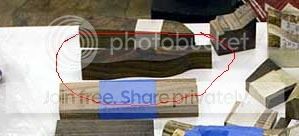
HandleMaterial111.jpg

As you can see there's not much there to work with and if I tried to radius the top too much the handle would be too skinny. So I decided that with the straight line on top a more jagged "modern" look would be better with that handle material. In retrospect not the greatest example to use :o
 
I'm still interested to hear about the art programs and their worth for knife making apps. I know they are capable of generating a DXF file and tool paths for knifemaking, but are they any good ??

Also, I can't remember if I saw it on Darrel Ralphs Site or BobCad/CAMs site. One of them advertises that he uses that software(among others I'm sure). :confused: A pretty respected knifemaker, at least in my book.

What do you mean by "art programs?" Do you have any specifally in mind? I have never heard that term – and I've been working with PCs since 1982. :eek:

Adobe Illustrator is an illustration program. It does not have the mathmatical precision of "real" CAD software such as AutoCAD, Inventor, ProE or Solid Works, among others. When you draw a 25mm square in AI and import it into AutoCad or any CAM program, it may measure out at 24.00035mm x 24.0005mm for example. It may come out 25mm x 25mm. This is because AI is a Postscript based program.

These things USUALLY don't bother the average knifemaker, but they are not acceptable in industry and sometime they cause me problems too.
 
What do you mean by "art programs?" Do you have any specifally in mind? I have never heard that term – and I've been working with PCs since 1982. :eek:

ArtCam Pro is what my friend uses (there are many others), he's a master wood carver (mind blowing skills for real !!) utilizing modern software. Selftaught he has been teaching the software designers and users new tricks(artcam was calling him up with questions)(I think Art Cam was developed by mastercam and sold to delcam). He is good enough to work between his home here in Covington and Montreal . Here is a link to his site which shows some of the stuff he is doing with one of those "art programs" ;) . http://www.digitalwoodcarving.com/creating.htm Thanks for your input Kevin, since '82 ? WOW ! :cool: Ever heard that comedy routine about the guy with the computer??........are you from the future ?? :D
 
ArtCam Pro looks like a CAM program directed toward a niche market for 3D relief carving and woodworking applications. There's another I recall called VCarve or something similar. Cool stuff but not really knife-related. I'm not sure what makes that an art program?

Mastercam is an excellent CAM program for all around industrial use. Expensive, but good, reiable and widely used, so if you learn Mastercam, you have good job propects.

When I started with PCs a Radio Shack Model One was a Boss Ride. I had Columbia University refuse to accept papers which were done using word processing software and printed out on a needle printer becasue they said all submitted papers must be "typed." Fred Flintstone was in my class. :-)
 
ArtCam Pro looks like a CAM program directed toward a niche market for 3D relief carving and woodworking applications. There's another I recall called VCarve or something similar. Cool stuff but not really knife-related. I'm not sure what makes that an art program?

Not knife related? Explain please.

Mastercam is an excellent CAM program for all around industrial use. Expensive, but good, reiable and widely used, so if you learn Mastercam, you have good job propects.

Jim claims (& I very much respect his opinion) that Art Cam Pro is an extremely powerful tool also. Looking back at some of the stuff Jim has done I think I'm answering my own question about whether or not its any good. We are planning a collaboration folder this fall/winter and to say I'm excited to have the oppurtunity to work closely with this guy is an understatement. His work graces the halls of everything from the Whitehouse to rework of the Windsor castle when it burned yrs ago.

" Fred Flintstone was in my class. :-)

That's funny :) :thumbup:
 
i use turbocad pro 11. i like the 2d features because it was easy to under stand, and the users manual was very helpful. after i am done with the design, all i have to do is email it to my waterjet guy and he has everything he needs to cut out my blank. the 3d features are very nice, i use the chamfer feature to put all my bevels on the knife, and you can toggle between 2d and 3d very easy. i paid a whopping $150.00 for the program and i am about to upgrade to version 14 pro for another $200.00 . (very reasonable). i am very happy with this program, i have used it also to design my new shop. it is one of the best investments i have made. if you have never done any kind of cad work before (like me) i would recomend you try this one first. you can work with every file format out there, dwg,dfw, tcw, jpeg, bmp, dfx, ige, ect. ect. ect.
 
I used Autocad many, many years ago and have not used a CAD system for a long time. I just purchased the 2D version of viacad at http://www.punchcad.com/full_store.html for $69. It should be here next week and I'll get it installed on my laptop. The price is right - I could have gotten a pirated or cracked Autocad but prefer to keep my software legal.
 
Actually Nathan I used splines for the whole design. I was however quite limited by my handle material.

snip

:o


Jared,

Splines, I see.

You know, I'm not faulting your design. It is both original and attractive. Perhaps I'm just being a design prick (my day job)

However, I see discontinuities in several places around the perimeter of the design which I had attributed to a bunch of linked up tangent arcs. But it could also be a bunch of linked up tangent splines instead, no? This is what I'm talking about when I say it is easy for a computer to leave an imprint on a design. A hand forged and ground blade wouldn't have these weird transitions.

I should define C2 curvature continuity.

C0 is two curves that connect (no gap) but are not tangent. There is a line or edge that you could see and feel between the two segments.

C1 is two curves that connect and are tangent. There is a line you can see, but no edge. It is the point where the curvature or rate of curvature changes instantly from one value to another between curves. Your eye sees the instant change as a conspicuous point, and in a three dimensional object, light reflecting on that object makes a sudden jump. This "tangent but not continuous" appearance is a tell tale signature of CAD designs that people can avoid if they, A: become CAD guru's and use high dollar CAD programs, or B: use something like Illustrator, which has an easier to use spline interface...

C2 (called G2 by some) is curvature continuity where there are no instant change in the curvature from one curve or surface to another. In automotive design circles, this is part of "class A surfacing" and is what the CAD designers are doing on visible surfaces on an automobile.

So, my original point in this was: using a drawing program like Illustrator is a very pragmatic way of using a computer to develop blade shapes. Using CAD (or at least any CAD I'm familiar with) to develop a nice refined shape is quite a bit to bite off for your average knife maker.
 
Back
Top