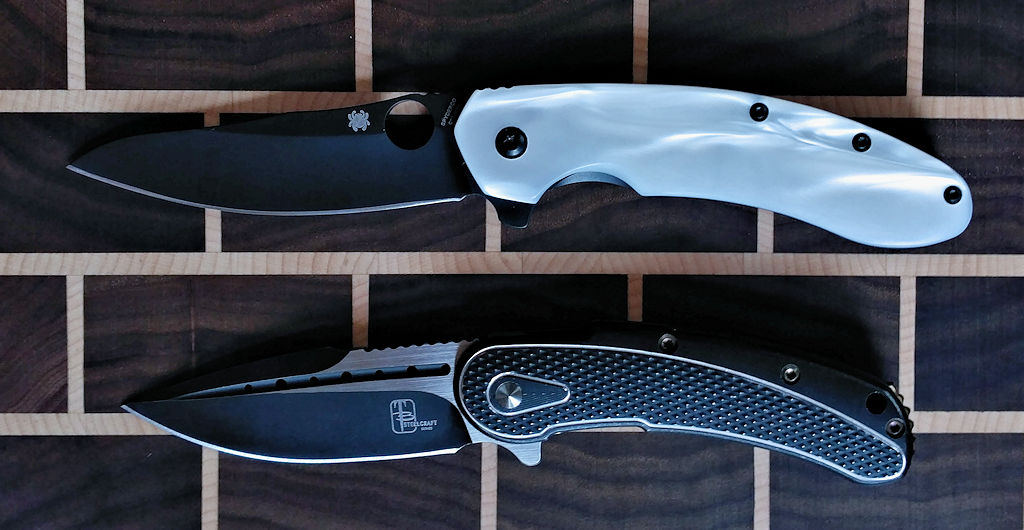
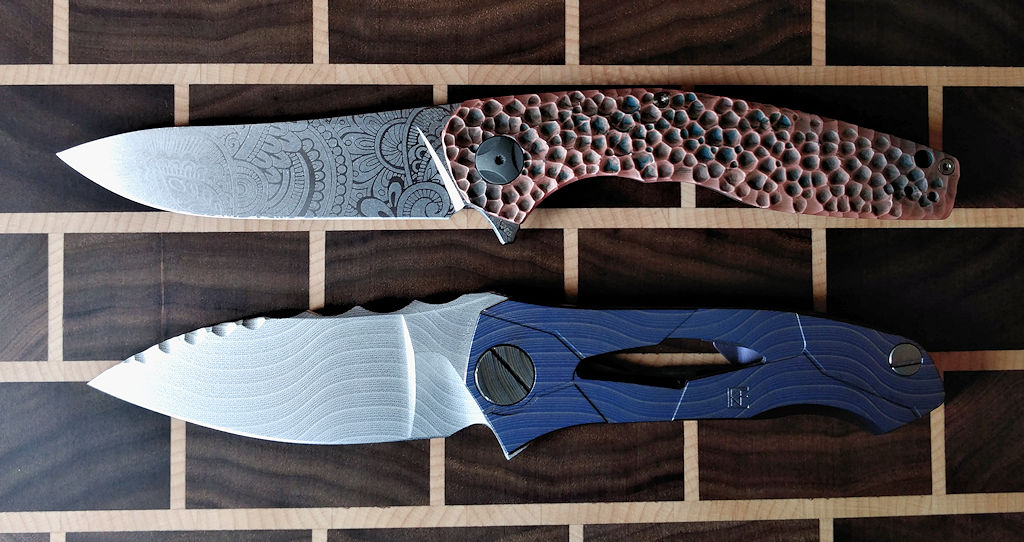
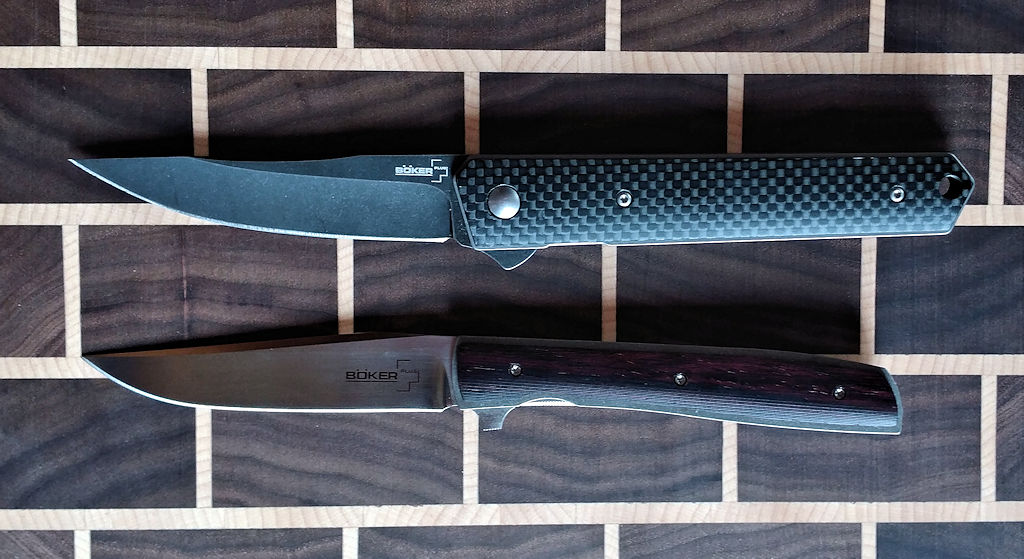
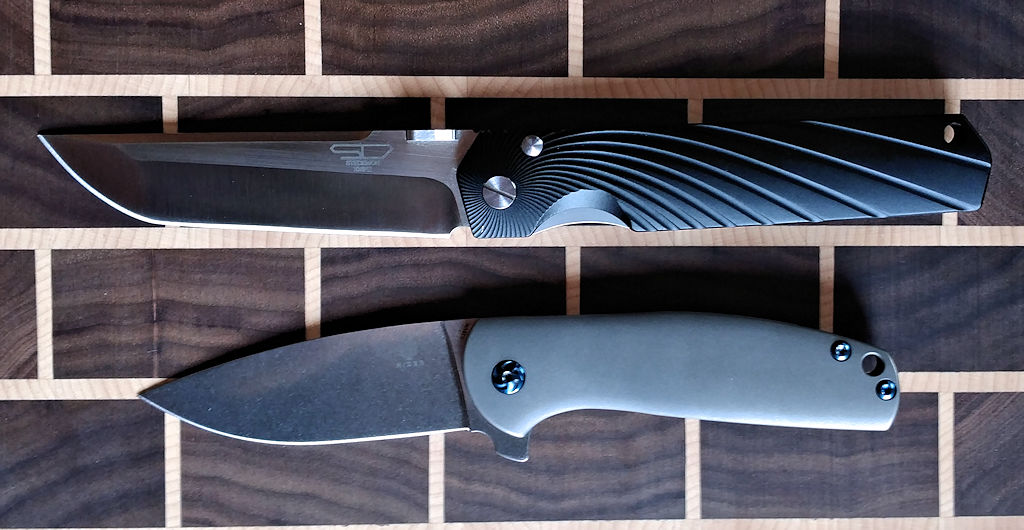
The problem in this discussion is where does the line get drawn. It really seems to be different for everyone. Some dont care if a design is borrowed as long as no counterfeit logos are used. Others say nope, if it copies anything its not ok. Problem with the later is so much copying is going on in the whole world of knives that its hard to just point the finger at china and cry foul. Especially when paid dealers of this forum sell clones and certain knife companies of this forum copy designs all the time. Boker being a HUGE offender in that regard. Microtech is another. Supposedly brous has taken ip as well. I just see too much forgiveness to companies not based in china to sit there and put all the blame on them. My viewpoint is its not even illegal to buy counterfeit goods for personal use. I personally dont like counterfeits. But i also dont subscribe to the idea that if you make a knife you can tell another person they cant make a knife that looks like that. If that was the case ninety percent of people starting as knifemakers would be chastised for ripping off randall and loveless.
If you cant legally protect it with IP laws then its not actually IP. Some just go so far with it if its a chinese knife but you bring up other instances and its nothing but crickets chirping because there is no rational defense for why its ok for some and not others. But even if i fly to china and buy a counterfeit knife i can bring it back and use it and no law was broken. My knife hobby is not my life. Its a hobby. Knifemakers, dealers and manufacturers are not my personal friends i feel an obligation to defend or go to bat for. They provide a product that i am buying. No relationship is taking place. So just buy what I like. If I choose to buy a clone instead of the genuine article its because i have no plan and never did of buying the original. So they werent getting a sale either way. But even then its a design that has no legal protection for a reason. And with no logos or other actual protected IP i dont see any harm in people enjoying a product they bough for personal use.
China has a huge reputation for not honoring IP of all sorts. Not just knives. Software, Music, Movies, Fishing tackle, the list goes on and on. The Chinese govt. does little or nothing to enforce international IP laws and treaties. My brother had a company put out of business because they sent some of their software over to china as a favor for evaluation without thinking. Their IP was no longer secret and no longer controlled just by them. Guaranteed the Chinese govt. copied it as it went across the firewall border china has. But China is far from the only one.
The fishing industry is crawling with copies and knock offs from someone else's idea that took off. Typically a new hot lure hits the market every 2-3 years. The entire industry makes their own version of it within 6 months. And those copies are from companies that manufacture in the USA or China, or anywhere else.
Part of the problem is a legal one. Lots of loopholes to slip through. For starters, getting a patent or a trademark or a copyright does not get you protection. (IP or Intellectual Property is the catch all term.) It only establishes "priority" You were the first and registered it. You are (hopefully) able to protect your investment and IP, and stop others from using your IP. The big catch, and it is 'UGE, is YOU have to enforce your rights. Meaning you have to find the party who is stealing your ideas, and sue them to get them to stop and recover damages. The government isn't going to do it. The FBI isn't going to investigate it. You have to do it all! How many companies, yet alone people, have the resources to carry on that kind of protection of their IP. Very few. And if you have to go up against one of the "big boys" in the industry, you are simply out of luck. They will out spend, out lawyer, and outlast you almost every time. That's why a company like Pure Fishing, ie: Berkley et al can get away with copying everybody elses hot lures every year and get away with it. Too rich and too powerful.
So that is the big picture, but far from the only one. For a product like fishing tackle, or knives, your problems are compounded because there are so many other loopholes for a copycat to use and skate free. For instance, you may have a patent on a knife, the Patent office granted it, for what ever reason. If you patented it because of the look, or the shape, or the color, or the size, you are out of luck. None of those qualities can actually be protected under patent. You can't patent a shape. You might be able to protect it under a trademark, but that is also expensive, and you would have to trade mark every product you make. Too expensive.
But let's say that you do have a completely new design, never been done before. Maybe you decided to make a magnetic floating bearing on your folder and you patented that. 6 months down the road, there are cheap knockoffs showing up on your dealers shelves. You track them down and send them cease and desist letters, yada, yada, yada. They keep going and you sue them. Open and shut case right? NO! they only have to show they have changed the design as little as 10 percent and they are found to have not violated your patent. In the case of knife shapes, a slight variance in shape, or design, and they are off the hook. That is why you see a thousand copies of the hot lure next season, each with their own little twist on the shape, or design, or action. So you can't win in court even though it is blatantly obvious they have copied your idea. But you can't patent a shape!
One of the few areas of product and IP copying where the law does protect you and police step in, is when there is a definite intent to defraud the public by putting out counterfeit goods. But that means they are selling it with the exact everything about your product. Same look, size, color... but most important, with your name and trademarks. They are selling it as if it was yours. That is where the fraud comes in. But it is not like police forces have a lot of resources to put into departments like that when violent crime is the main public concern.
Sorry for the long winded post, but I see so much of it and there is little that can be done to control it. Particularly when major countries like China are doing little to nothing to control it. Add to that, many of the manufacturers over there do contract or production runs for many companies. Factory that makes knife components will make the components or knives for many different brands. I can't be the only one who has noticed the virtually identical knife being sold under 3-4 brand names. It falls under this who topic.
But what I am referring to is not the direct copying of a brand's product. I am referring to a company that offers knife manufacturing to other knife companies or brands. For example. Guy has a little knife company, wants to start a new line of cheaper knives. Does he go design a whole new line, and figure out manufacturing, etc? Maybe not. Particularly when he can go to a Chinese factory, and they simply pull out a catalog of all their products and components. The guys looks and sees Knife Model XKY, 8" long, spring assist flipper with frame lock. Wants to add that to his product line as his own design. "No problem" says the factory salesman. "You have lots of changes that can be made. Here are 5 other versions of that knife we sell to other company's. You can't get a knife like any of those, but if you want to make a change or 2, no problem! How about a matte finish on the blade, we anodized the frame, Black is good, and we put on copper colored scales? How do you like that? We already have those components in stock, can ship 5000 by next Tuesday if you have your packaging ready to go. You'll be selling your new exclusive knife design by the end of next month. Did you want the edge smooth or serrated?"
None of this violates any IP rights anywhere. So a fair percentage of duplicate knifes are not necessarily counterfeited. But a lot unfortunately are. With little in the way of protection or recourse to the proper owners of the IP.