Choosing a large knife

While I am first in line to say Larrins work and tests are absolute invaluable and incredible information...I (and I imagine many others) have not had this kind of result with Kabar's steel (which is 50-110B...close enough to 1095). I've had numerous Beckers over the years that have withstood some outright criminal treatment without so much as a chip or roll, and thats with always thinning the edge considerably as well as convexing it.

I will always vote BK9.


At least mention something R Root Jr said incorrectly instead of a seemingly passive aggressive "you dont know much" response. It doesn't help anyone learn anything and certainly won't help retain a new member to the forum.
Thanks! This is the kind of info I am looking for. I'd always heard good things about Becker and ESEE back in the day. I used to casually peruse knife forums back in college when I was too poor to really own anything nice. That was probably around 18 years ago or so and if I remember correctly it seemed like everything was 1095 or bust back then.

What do you think is the reason the BK9 seems to perform so well? Is it grind, heat treatment, mass, combination??? I realize that not everything can be broken down into a simple graph and rating system, or at least if they are broken down in such a way, it does not tell the complete story. I love to learn! Let me know of any good text or video resources that may help.

I wished the guy well and good luck on his knowledge journey. Don't think he needs you pearl clutching on his account.


Not worried about it. Move on.
Water under the bridge man. I may be new here, but I'm not new to forums. I get it. I'm sure you all have had this same conversation a thousand times, and a lot of people are really looking for validation of their own thoughts instead of the insight they lack.
 
I've been keeping an eye out for a cheap, used Buck 108 Compadre Froe for a while and I've never seen one come up. Cooincidentally, I just purchased one a few days ago on the bay. It was a great deal on a new one. I do a lot of hammock backpacking and I wanted something to pair with a folding saw for delimbing and batoning so I can leave the axe at home. It seems like the perfect tool for the job. If I get a chance to put it to use soon I'll report back.
I think you are the second person to recommend this. I've gone back and forth as to whether or not a point would be useful on a knife this big. I'll always have at least one smaller knife with me too. I doubt there are 30 days in the last 17 years that my folder has not been in my pocket. Also, if I am bringing out something this big, I'm likely going to throw a 3-4" fixed blade in a pack as well. What has been your experience with this?

Kind of a tangent. Are there any decent froes on the market right now?
 
I think you are the second person to recommend this. I've gone back and forth as to whether or not a point would be useful on a knife this big. I'll always have at least one smaller knife with me too. I doubt there are 30 days in the last 17 years that my folder has not been in my pocket. Also, if I am bringing out something this big, I'm likely going to throw a 3-4" fixed blade in a pack as well. What has been your experience with this?

Kind of a tangent. Are there any decent froes on the market right now?
This will be my first experience with a froe-like tool. I've always carried an small fixed blade, folding saw, and boys axe when camping. I'm just going to swap out the axe for the Buck 108. I'll probably still bring a folder or small fixed blade with me like I have in the past for finer tasks. I don't see any real advantage in having a point for chopping, and the shape of the 108 seems pefect for batoning (better than a traditionally tipped blade IMO, YMMV). I haven't looked at many other options since the Buck 108 just seemed perfect for the job I had in mind.
 
What do you think is the reason the BK9 seems to perform so well? Is it grind, heat treatment, mass, combination??? I realize that not everything can be broken down into a simple graph and rating system, or at least if they are broken down in such a way, it does not tell the complete story. I love to learn! Let me know of any good text or video resources that may help.

A few reasons:

1. Kabar seems like a good company that cares about treating its workers and customers well. Over the years they have treated me very fairly with questions I have asked or warranty issues. Also Ethan Becker (the designewr of the Becker line Kabar makes although it wasnt always made by them) is a good dude. He cares about the knives and who is making them. I have spoken to him a few times and each time he took time out of his busy day to correspond.

2. The steel they use is actually 50100b which they sell under the 1095 Crovan name. Its not much different than 1095 but does have a few more smaller amounts of alloying elements. Is it a super steel? No. Is it very tough even with a thin edge? Yes. I have owned Bk11/14/2/16/9 (and probably a dozen carbon kabars) and all have performed excellently. The steel imo makes the most sense in the bk9 as its a nice balance in being able to easily resharpen with minimal equipment (I use an old marble machete brick) but doesnt get damage with heavy chopping or batoning into hard woods like oak. Kabar has been heat treating this steels for decades and does an incredibly consistent job.

3. The bk9 is IMO the perfect size. It chops like a bigger blade yet feels like a smaller knife when choking up and notching/carving etc. Just get one (can find them used pretty easily) and you will not regret it.

Another blade(s) I would put up their with it is the Terävä Skrama 200 and 240. The 200 is a bit smaller and the 240 is a bit bigger than the bk9. Go ovcer the the Becker subforum and you can read lots of experienced user reviews of the bk9. Its called the king for a reason.
 
2. The steel they use is actually 50100b which they sell under the 1095 Crovan name. Its not much different than 1095 but does have a few more smaller amounts of alloying elements. Is it a super steel? No. Is it very tough even with a thin edge? Yes. I have owned Bk11/14/2/16/9 (and probably a dozen carbon kabars) and all have performed excellently. The steel imo makes the most sense in the bk9 as its a nice balance in being able to easily resharpen with minimal equipment (I use an old marble machete brick) but doesnt get damage with heavy chopping or batoning into hard woods like oak. Kabar has been heat treating this steels for decades and does an incredibly consistent job.
The steel used by KaBar matches the composition of Sharron Steel (went belly up in 1987) "50100B". With the closure of Sharon, that steel composition was no longer commercially offeredm, as the composition belonged to Sharron and was not an industry standard alloy. KaBar contracts with a steel producer to have the steel custom made and they buy each entire lot of steel. Last I heard, the last time they needed to buy a lot, they had to find a steel producer outside the US in order to obtain it. Case switched from CV steel to 1095 steel for the same reason. No US mill willing to make the smaller quantities they use.

Composition of Sharon 50100B as posted by Paul Tsujimoto, who was an engineer at KaBar and Camillus, and was Technology Director at Ontario, and a contributor here until he retired.

C: 0.95-1.10;
Mn:0.30-0.50;
P:0.025max;
S: 0.025max;
Si:0.15-0.25;
Cr:0.40-0.60;
Ni:0.25;
Mo:0.06;
V:0.15-0.25.

Compared to 1095 from a user perspective, the alloying elements serve to produce a tougher steel and they improve the uniformity of the heat treat through the thicker portions of the blade.

(When Cold Steel Carbon V knives were produced by Camillus, Carbon V had the same composition, except they left out the nickel. Again, custom batch that Camillus purchased the entire lot from the mill. AG Russell purchased the remnants of the lot when Camillus went bankrupt in 2007. They've had some knives made of it. Think they call it "DM steel".)

The tougher alloy, plus the geometry of the blades is what makes the Beckers perform so well.
 
Last edited:
The steel used by KaBar matches the composition of Sharron Steel (went belly up in 1987) "50100B". With the closure of Sharon, that steel composition was no longer commercially offered. KaBar contracts with a steel producer to have the steel custom made and they buy each entire lot of steel. That being so, they . Last I heard, the last time they needed to buy a lot, they had to find a steel producer outside the US in order to obtain it. Case switched from CV steel to 1095 steel for the same reason. No US mill willing to make the smaller quantities they use.

Composition of Sharon 50100B as posted by Paul Tsujimoto, who was an engineer at KaBar and Camillus, and was Technology Director at Ontario, and a contributor here until he retired.

C: 0.95-1.10;
Mn:0.30-0.50;
P:0.025max;
S: 0.025max;
Si:0.15-0.25;
Cr:0.40-0.60;
Ni:0.25;
Mo:0.06;
V:0.15-0.25.

Compared to 1095 from a user perspective, the alloying elements serve to produce a tougher steel and they improve the uniformity of the heat treat through the thicker portions of the blade.

(When Cold Steel Carbon V knives were produced by Camillus, Carbon V had the same composition, except they left out the nickel. Again, custom batch that Camillus purchased the entire lot from the mill. AG Russell purchased the remnants of the lot when Camillus went bankrupt in 2007. They've had some knives made of it. Think they call it "DM steel".)

The tougher alloy, plus the geometry of the blades is what makes the Beckers perform so well.
Thanks for the extra information on that. Makes sense as Sharon closed so long ago they custom order a copy of it. It also puts into perspective how small the knife steel industry is in comparison to others like construction/cookware/auto/etc.
 
Hello and welcome to BFs!

Of the 3 mentioned, I would vote for the Ontario. I have owned several over the years and they are a good bang for the buck. You also can't do wrong with an ESEE or Kabar. ESEE also a great rep for their warranty (not sure if that has changed in the last year or two tho).

You've mentioned a mini froe and some of the tasks you want the fixed blade to do. I hate to open up a new rabbit hole for you but ... Have you considered a hatchet and small(er) fixed blade combo?
Maybe a Fiskars or Council Tool (Check out the Axe/Hatchet section) + Mora Kansbol/Bushcraft?
 
Just food for thought. If you are considering going into the $250.00 to $300.00 range you might add a Syko 1311 to your list to check out. I don't know what kind of prices they are currently bringing or how available they are now but not so long ago you could find a good used one in that price range.

It's a little longer and more dedicated chopper than the Becker BK9 so it wouldn't be quite as handy for other jobs, but they are real effective choppers. And unless you go up to CPK or Busse money they are hard to beat for that use.

Also the Huntsman Feel Beast or possibly another of the big knife offerings from Huntsman might interest you. I've not owned one myself and they might be a bit over your max price, but I've heard good things. Again it's a bigger more dedicated chopper, but it might intesterest you. I'm not sure how hard to find that would be.

There are some makers on the forums that offer choppers now and then. Prices can vary greatly.

For all the big blades and choppers I have the ones that can be had in that price range the BK9 would still be my choice for a caple knife that can handle chopping and batoning and yet still perform well cutting stuff and is light enough to carry on your belt.
 
I think many of the suggested knives are great options. I have a Kershaw Camp 10 that I like, but I'm certain I don't use it as much, nor even in the same ways, as many on the forum do. I mostly use it for bashing up firewood and broken tree limbs. I've had it for a few years now and haven't broken it, though a few of the beatings it took made me think it might. Oh, and I bought it specifically for processing firewood, and because it was cheap.

 
Oh, its just the main one where he compares the attributes of the various steels. I just figured with all of the options, someone might have figured out how to economically incorporate a superior steel into their designs. Though, I understand heat treatment is more important, and that many of the steels are not going to be cost effective. But 14C28N or 12C27 seems to be suitable for the application and are cranked out in volume at reasonable prices on smaller knives. Steels like 5160, 52100, AUS-8 and 8Cr13MoV seem to be an improvement over 1095 in this application also. Others like D2 and VG10 give some tradeoffs in toughness for greater gains in edge retention and corrosion resistance and could be an alternative if designed and executed correctly. However, I realize I could be 100% off base and completely wrong, which is why I am here.


Its not really a matter of being cost effective at all, they are rugged steels that take abuse well. Condor makes a whole bunch of stuff in 1075 that I've beaten the crap out of and it's performed admirably.

Don't discount "simple" high carbon steel, often it's superior for the task at hand even if it's not new and sexy
 
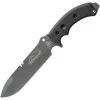
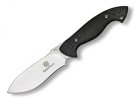
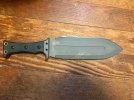
Hi! I am looking at a few options for big choppers that don't break the bank so I don't feel as bad about using them as a tool. I am currently eyeing the Kershaw Camp 10, the APOC Wallace Bowie, and the Ontario RTAK II. I can pick any of these up right now for less than $110. I think that I would mostly use these like a mini froe, but may do some minor chopping, delimbing and other camp task. I would love to hear thoughts and experiences with these models. I am also open to any other suggestions, I don't mind spending more if the value is there and I can always keep an eye out for sales. Thanks!
are you looking for a english billhook,at the end of the day?
 
Back
Top