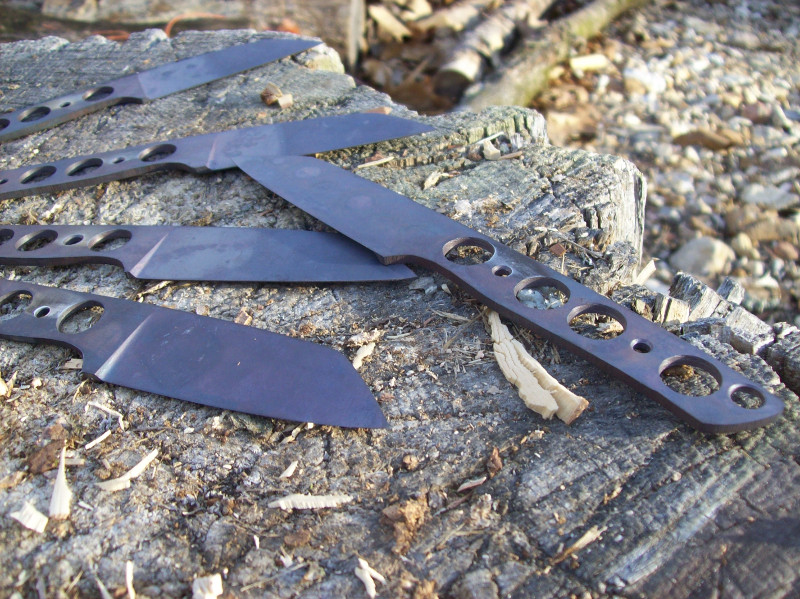
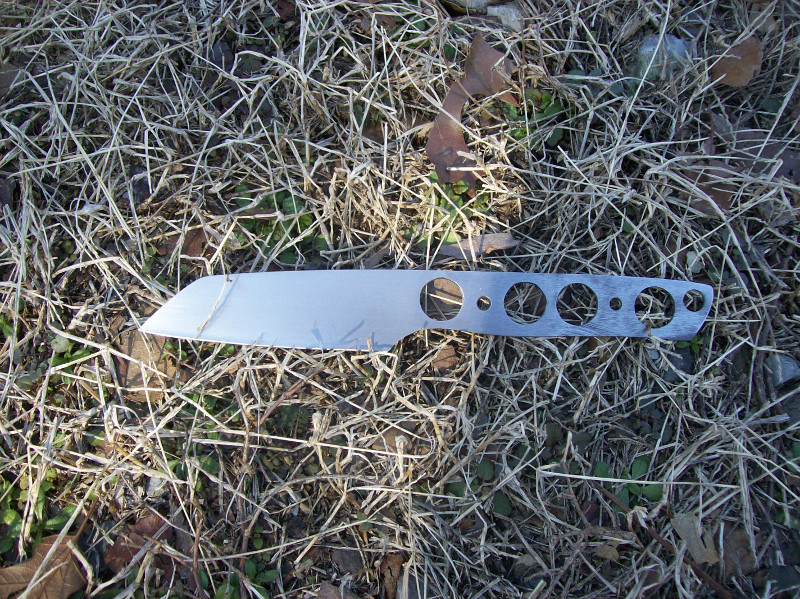
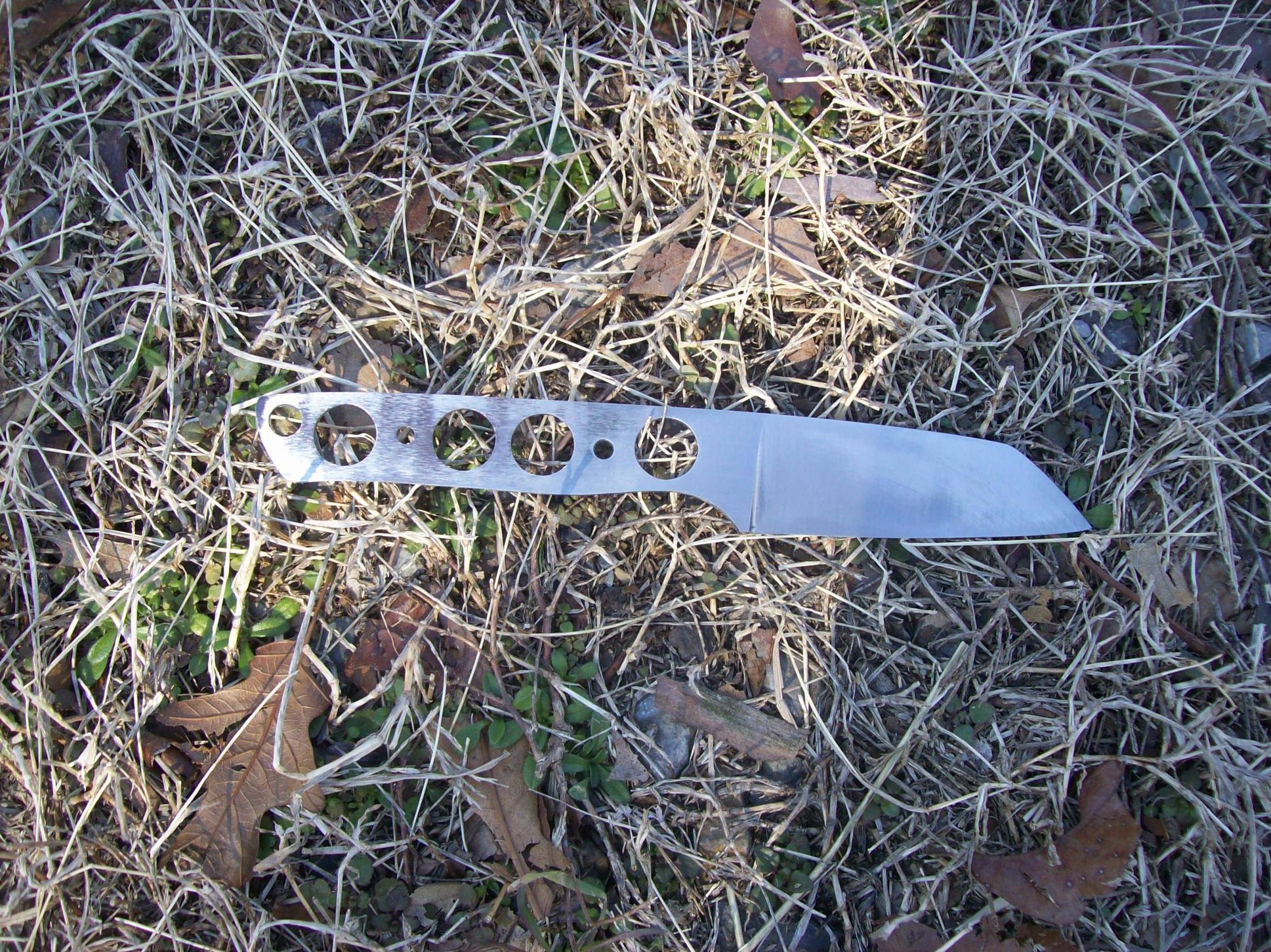
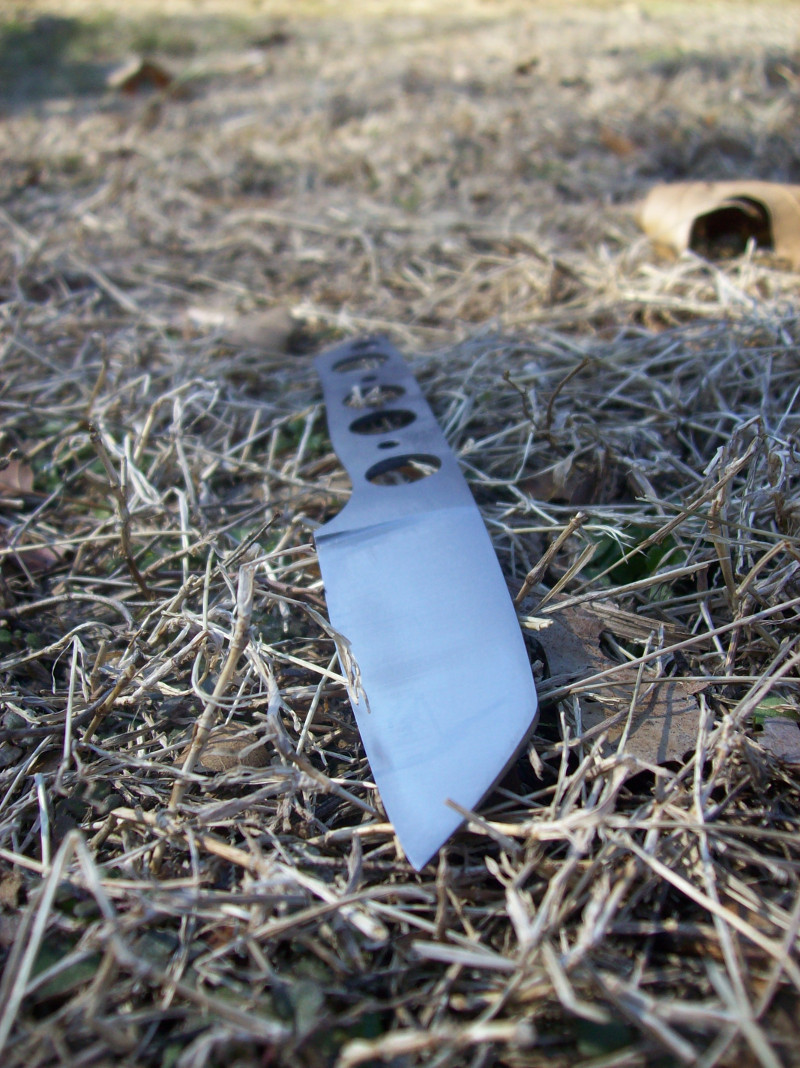
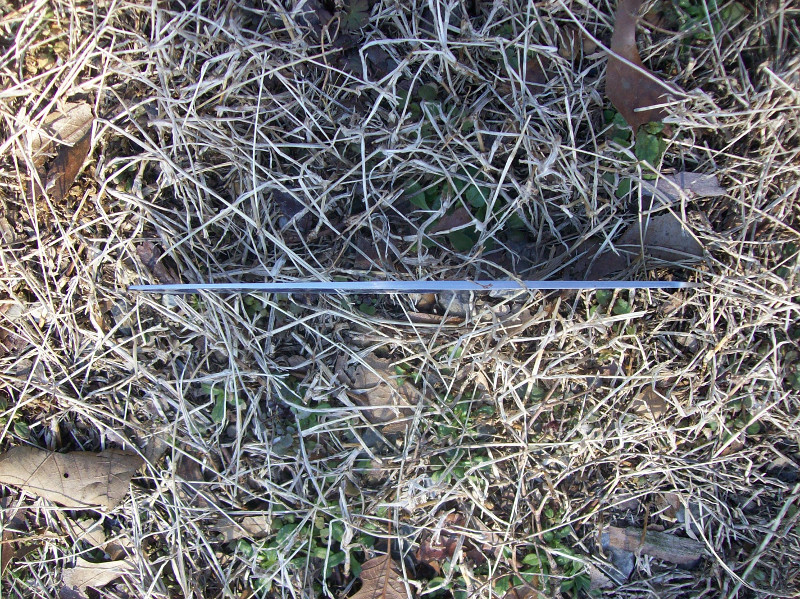
CPM 3V Modified Sheepsfoot WIP

If you leave the ricassos at 80 grit, you're asking for a lot of trouble with rust and pitting if they get anywhere near water. Any exposed 3V should really be at least 400 grit. It's not nearly as touchy as O1 corrosion-wise, but it's definitely not stainless either. In my experience it's a little more likely to bloom and pit than D2 is.

Good point, I didn't even think about that. I'll see if I can get it to a higher grit after HT, if not I may give it an etched finish to help prevent some rust.
 
It won't be too bad to get it up to 280 (65 norax) or so and scotchbrite if you can. That is around the baseline for stopping (slowing) rust in my opinion with 400 grit being even better.

I agree with James and some people say 3V can even pit before you see rust. I keep it lightly oiled and feel it is somewhat rust resistant compared to many steels.

The 3V will be tough to grind and I would use more belts for sure. Double up on 120 grit or so and that will really help. You will only need maybe 2 extra 120 belts and one extra 80 to get a decent finish with your batch for the bevels. Don't worry, it will be a fair bit more grinding labor but they are going to rock when you ar done! Plus at high grit it is hard to screw up because it will barely grind, lol! Use this to your advantage.

Keep up the great work! They are looking really good! I bet they will be very fast in the hand and feel great on a belt sheath. Awesome design... :cool:
 
Lovin the design Matt! A little tip on taking pics that was recently given to me (that I experimented and verified myself) is don't worry about the type of light, just adjust your white balance to match it. Make your photo lighting th only lighting for the shots. Dim or turn off room lights. I don't have a light box but use a softbox on my lighting.

-Xander
 
Thanks for the good info Daniel! I'm planning on getting a SB belt or two in the near future. Maybe a coarse and a medium. I'm pretty good for other belts right now I think...

Thanks Xander, I actually did try adjusting the white balance on my last pics and it did help but there's really not much you can do against that bright morning sun. Before I edited them, the blades were bright blue from the sky's reflection, at least I got that out! :D
 
Good point, I didn't even think about that. I'll see if I can get it to a higher grit after HT, if not I may give it an etched finish to help prevent some rust.
Daniel's tips will serve you well. Etching or passivating 3V helps too... one of the benefits is that it cleans away any tiny bits of grinding dust that may be stuck on the blade or in scratches... those will cause pitting every time. You can either sand off the resulting gray on the surface (with fresh, clean paper) or leave it alone for a low-glare finish that's fairly durable. I think 3V with a high-grit finish and an etch looks really cool.

Either way, I think you're going to be pleased. 3V is great stuff. :thumbup:
 
Well, I got these back from Peter's today!

0zBY4.jpg


I also picked up a fine scotchbrite belt. Hopefully in the next few days I will be able to clean these up and finish them out.
 
Thanks Daniel!

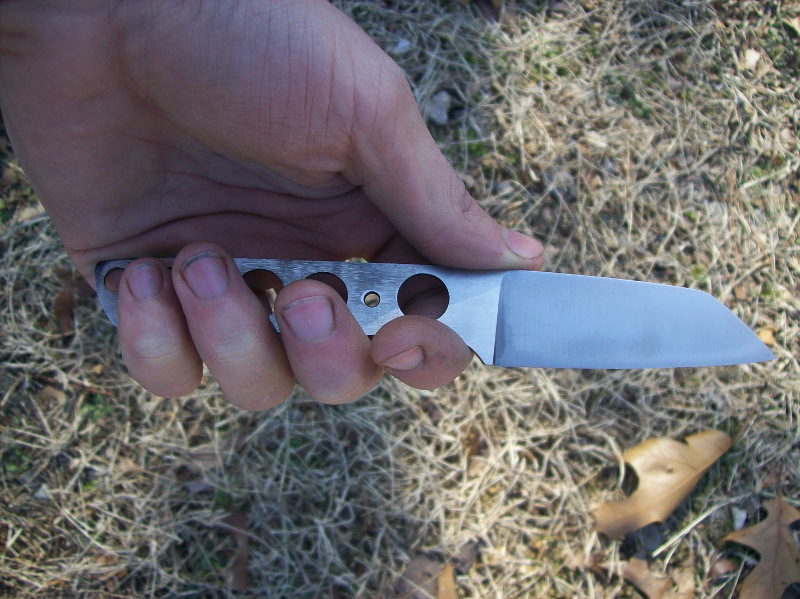
Here's the first one cleaned up. I ground to 220 grit, scotchbrited, etched then scotchbrited again. There is some remoil on the blade in these pictures, ignore the smudges please :rolleyes: Also, this one has a tapered tang. Can you say light as a feather? :D

JyLwu.jpg


CU4XP.jpg


s1jBu.jpg


7BFMS.jpg


oabhP.jpg
 
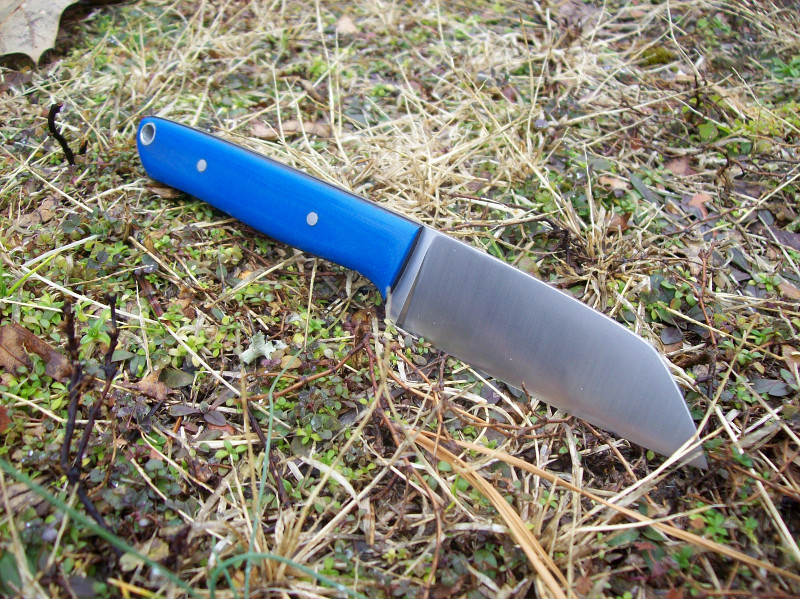
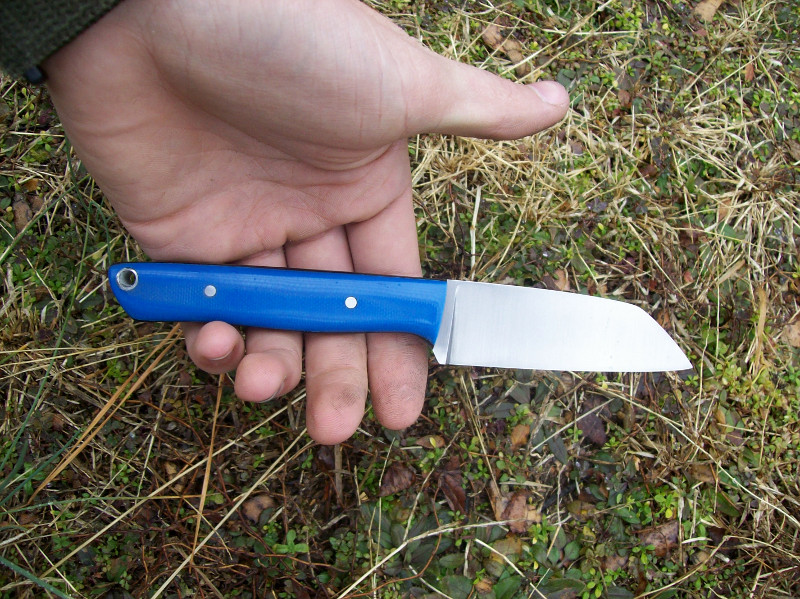
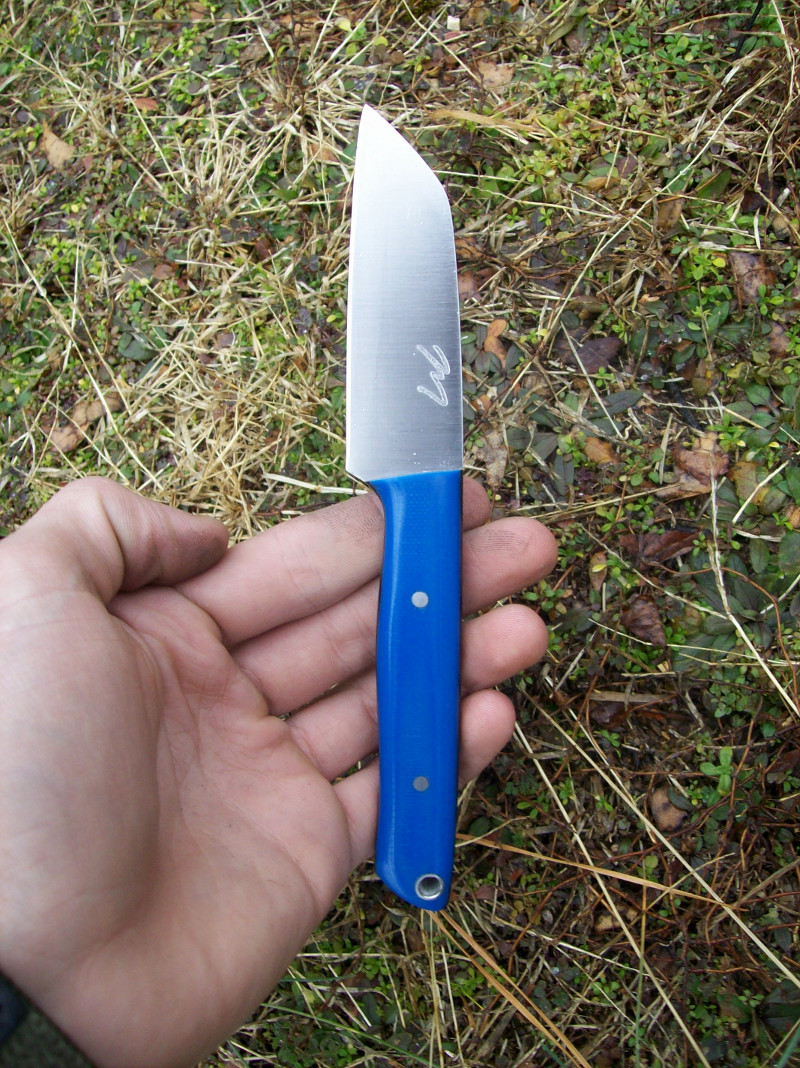
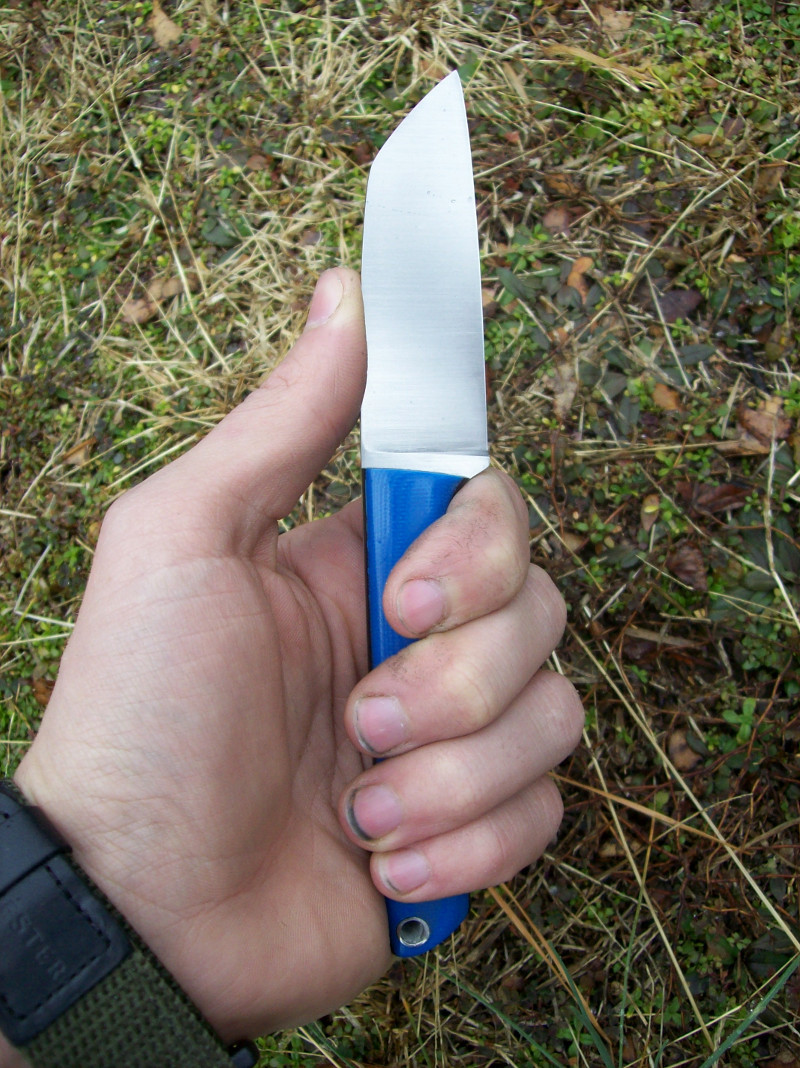
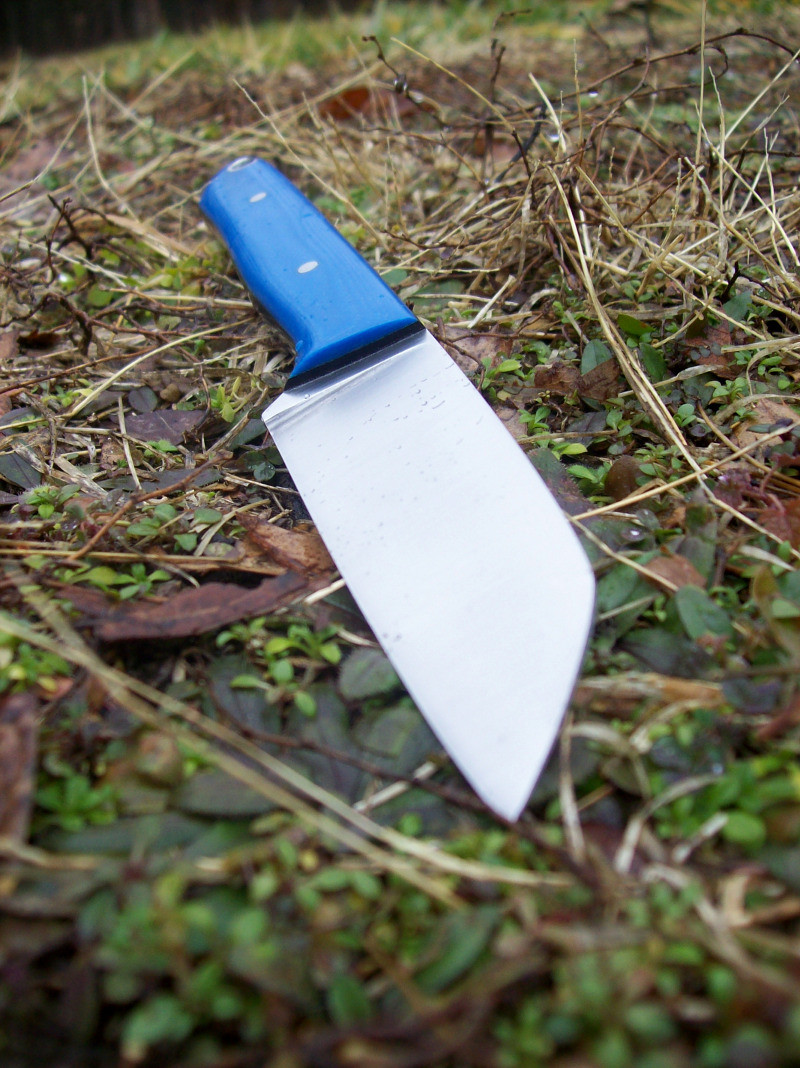
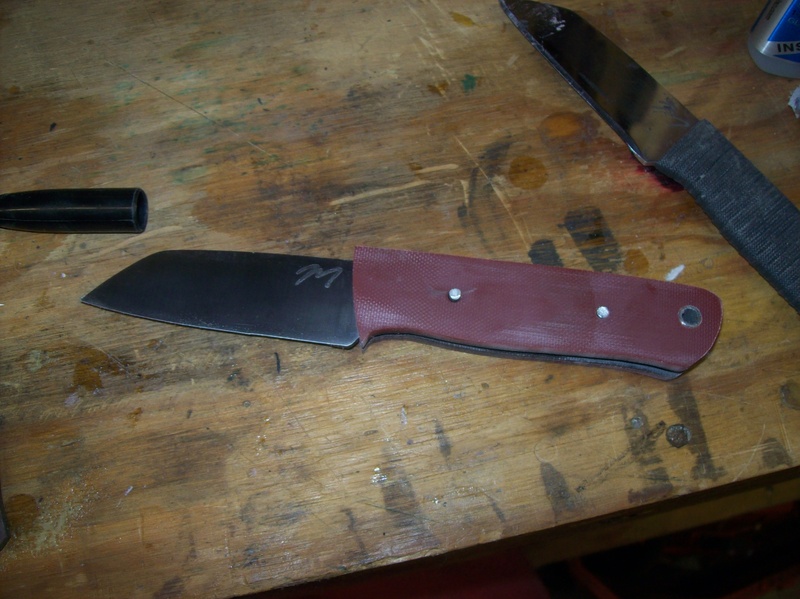
Alright, I got another finished out, this one with a handle. Now that I have figured out a process for these I'll start taking some in progress pics on the next one. For now, here is the one I just finished.

Specs

Steel: CPM 3V @ 60Rc
Grind: Right Hand Chisel FFG with polished convex edge
Handle: 1/8" Blue G10 with .060" black G10 liners
Hardware: Stainless pins and lanyard tube
Finish: Ground to ~P180 (A100), etched then applied a scotchbrite belt finish
7" OAL, 3" cutting length
I don't have a scale that weighs in ounces but this thing is LIGHT

I did some test cutting on a cardboard box and this little knife just ripped through it effortlessly. I'm very pleased with how the edge geometry turned out. An interesting thing is that the secondary bevel (which is on the left hand side) applies just enough resistance to keep the knife very close to straight cutting unlike many chisel ground knives.

Enough talk, PICTURES!

U58US.jpg


TEVr4.jpg


Mdber.jpg


S7OpI.jpg


LRV10.jpg


Let me know what you guys think and be ready for more in depth WIP pictures of the next one soon.
 
I like that knife ALOT!!! I used to rip into carboard boxes at work with a sheepsfoot swiss army knife that had a chisel grind, if I remember right. I consider it one of the most useful designs out there. Great job.
 
Thanks guys, I am really liking the control and efficiency you get from a sheepsfoot blade. Chisel just tops it all off!

I mentioned this in the for sale thread, when I was testing the shaving ability of the edge, not only did I find out that it was hair popping sharp, I also cut my arm pretty good. I have never ever done that before. Didn't even notice it until it started bleeding :eek: It just cut effortlessly.
 
Wow. That is a beautiful knife. I would love to get on a waiting list for one just like that blue one. Keep up the great work :thumbup:
 
Alright, time for some in progress pics!

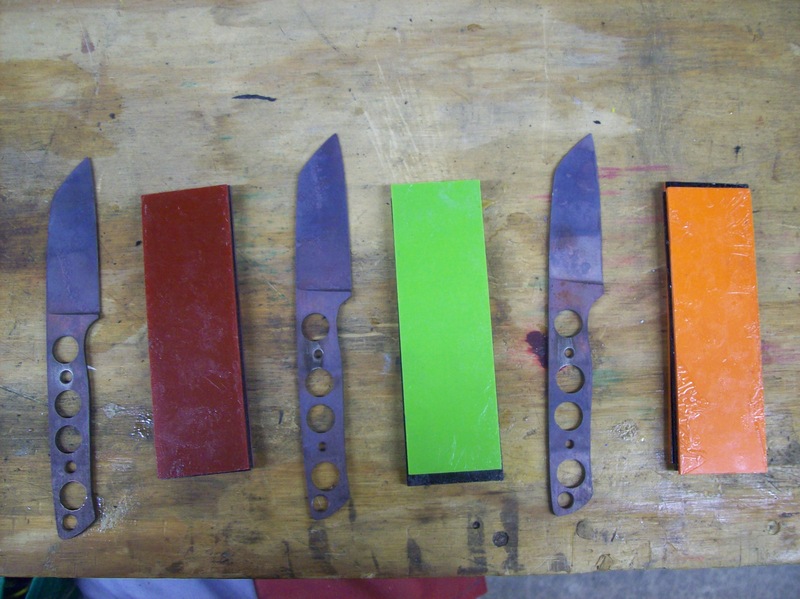
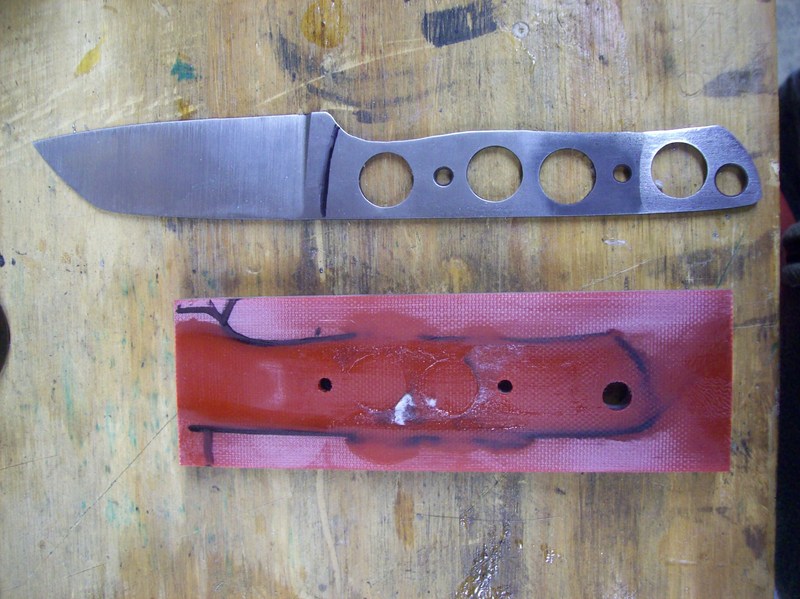
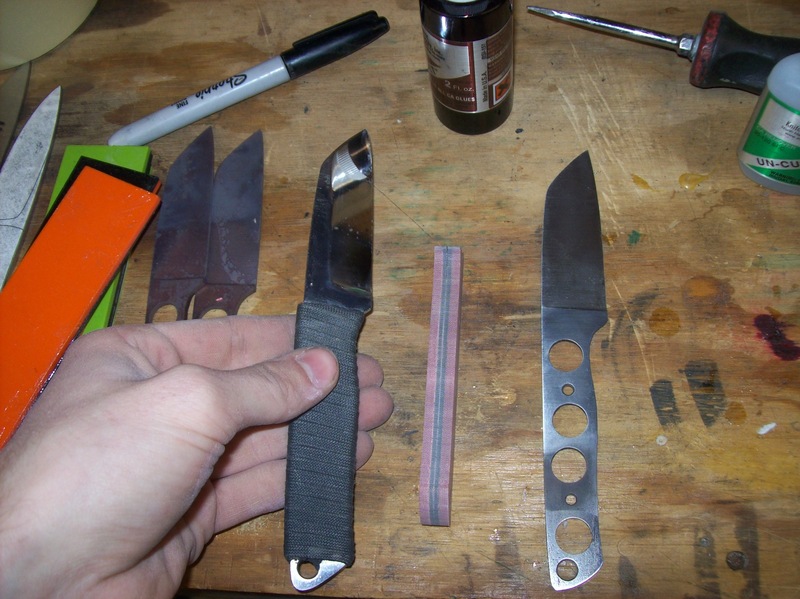
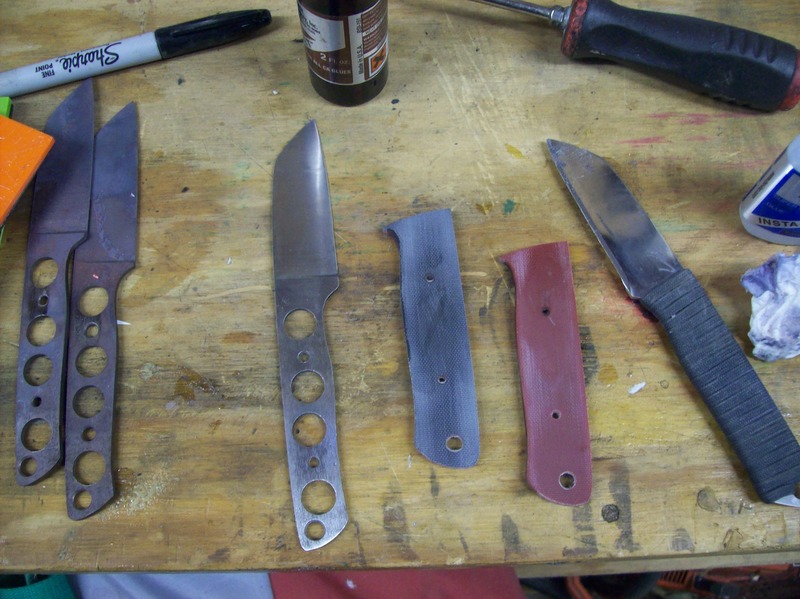
Here's what I am working with
3mrnzfM.jpg


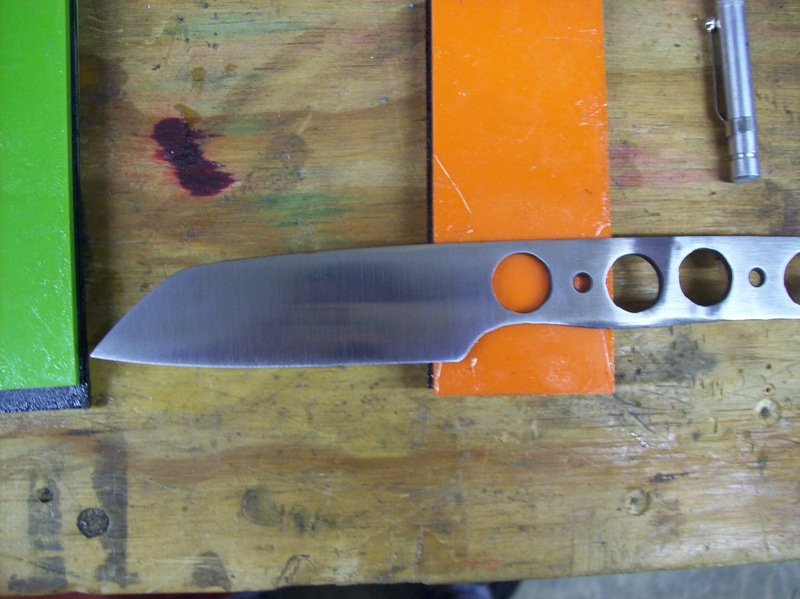
I ground the scale off and refined my pre HT work with a Trizact A100. I actually took the knife to around 400 but decided I liked this finish best. After grinding I etched the blade in Ferric Chloride for a couple of minutes then put a final satin finish on with a very fine ScotchBrite Belt. Here's what the blade finish looks like:
gBIUBwk.jpg


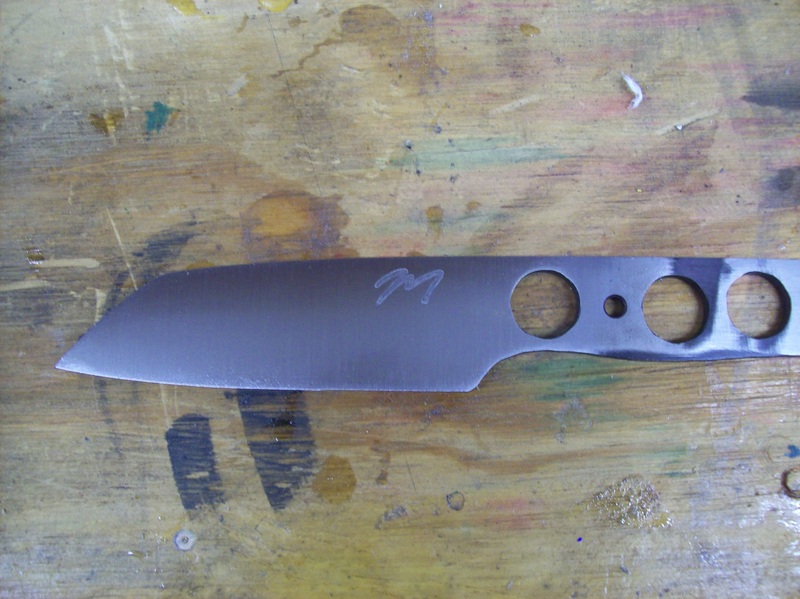
I etch my makers mark at this point
JaFokVU.jpg


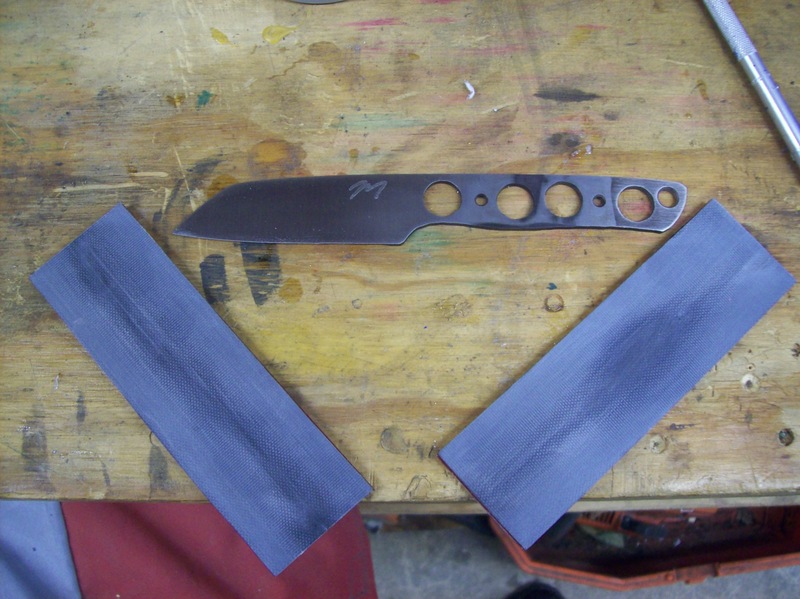
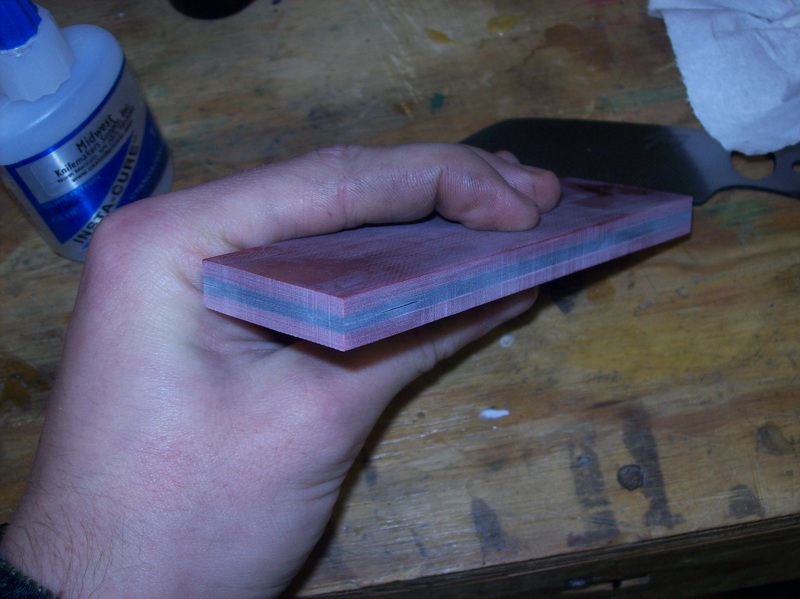
Now I need to get my scales ready to glue. To start, I tack the two scales together with a small amount of CA glue. I grind the sides of the scales flush.
d5IlLLQ.jpg

dEpiK81.jpg

57k3476.jpg


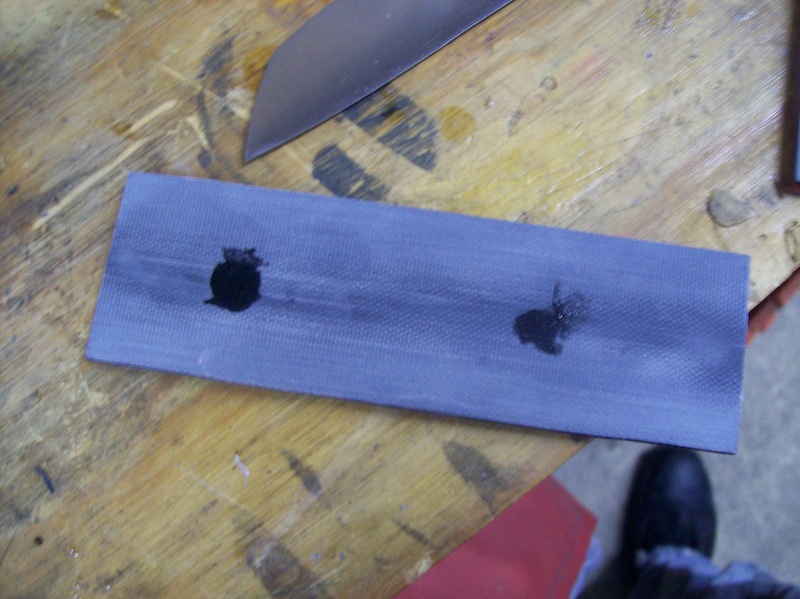
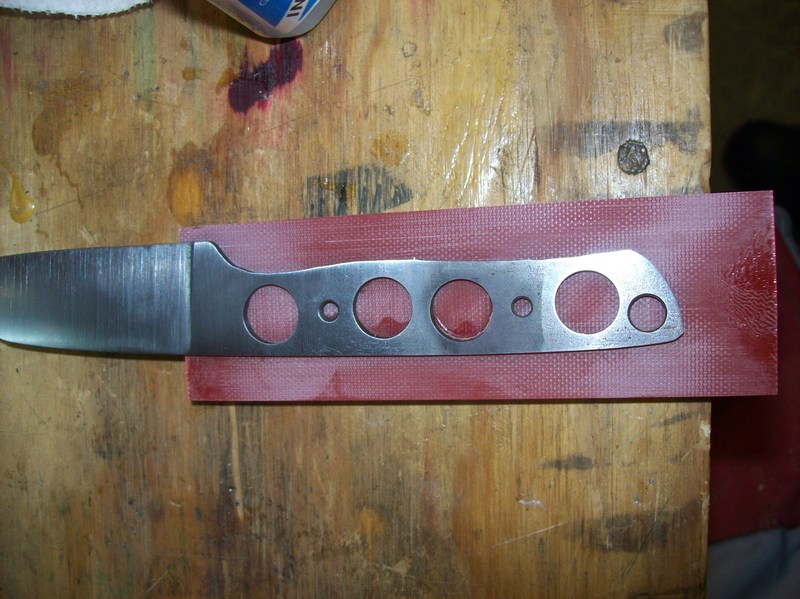
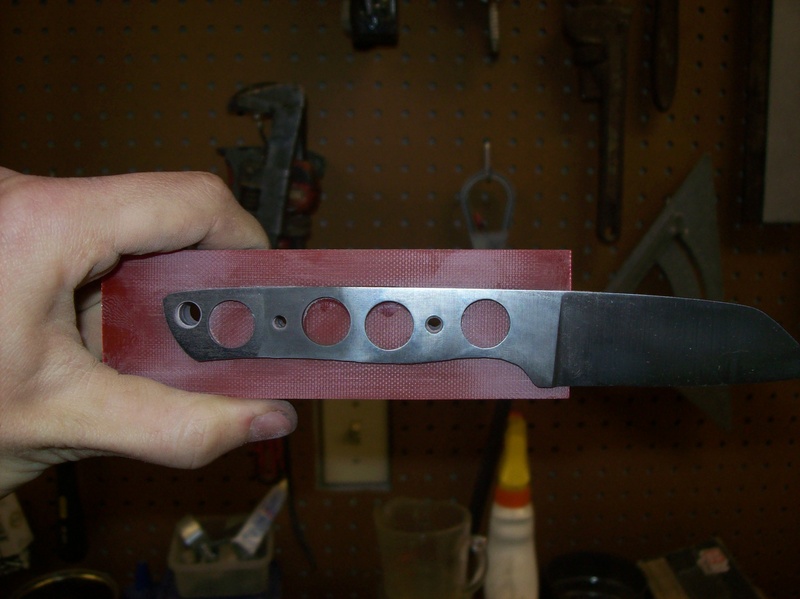
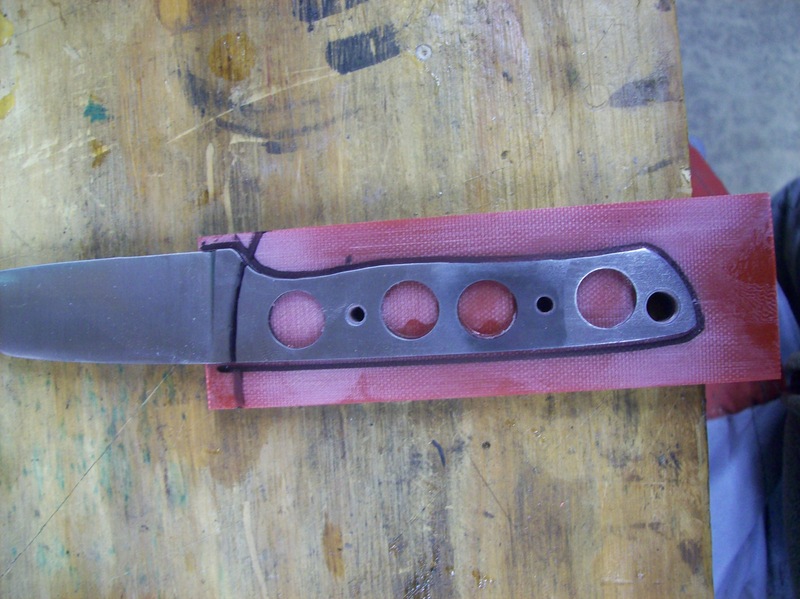
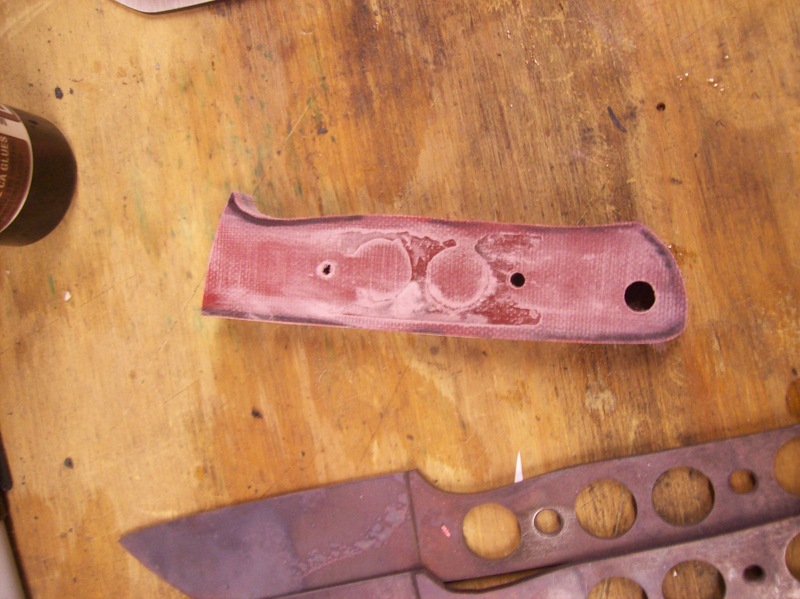
Next I set the knife on the scales and tack it into place with CA glue. I drill my holes using the holes in the blade as a guide. After drilling the holes I trace the outline of the knife onto the scales. I also mark where I want the front of the handle to be.
J1o7gmg.jpg

eIjPSMj.jpg

tjmPK1o.jpg


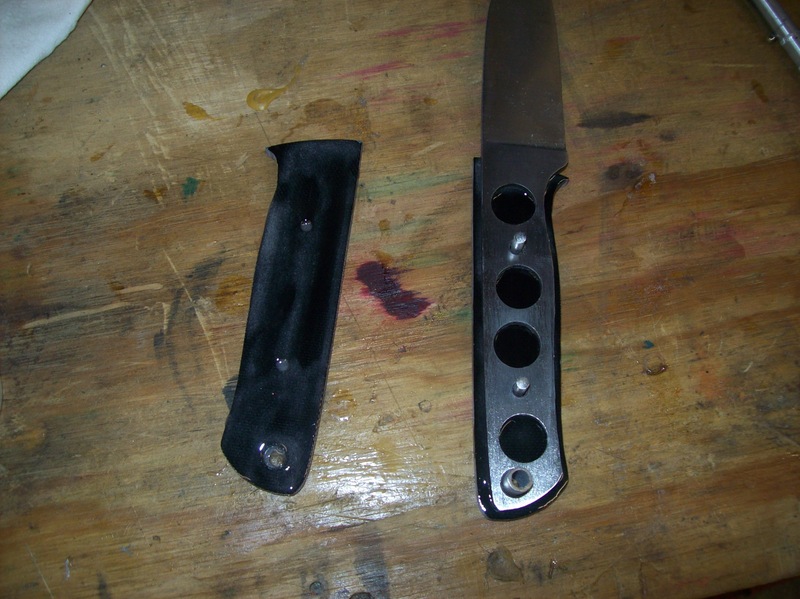
I take some CA debonder and let it work for a few minutes then pop the knife off of the scales. Next I go ahead and rough off most of the excess G10 on the grinder. I grind the front of the scale to ~320 grit then buff with pink compound.
Lv206Ua.jpg

EzTI4s9.jpg

qQT654E.jpg


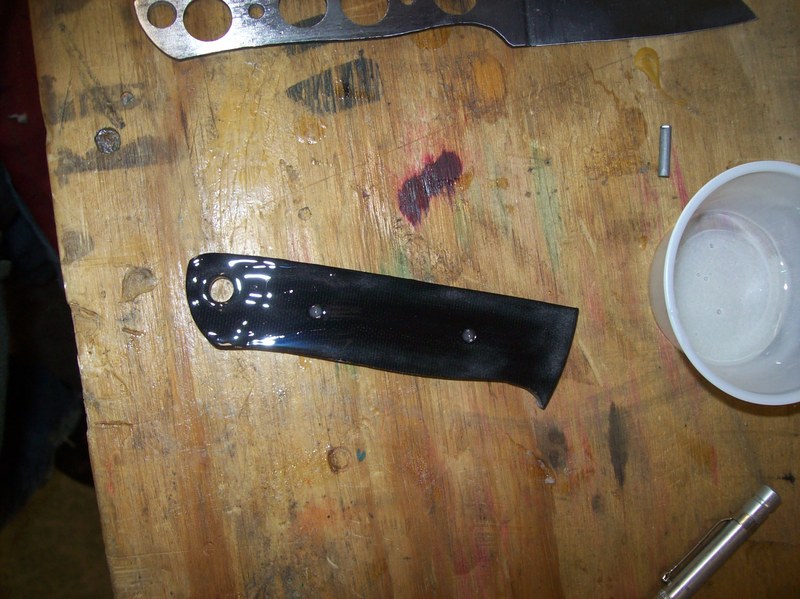
Here's the fun (dangerous) part. I take my personal shop knife and press it between the two scales and pop them apart. It is VERY easy to cut yourself here. Be careful.
NYVbz8z.jpg


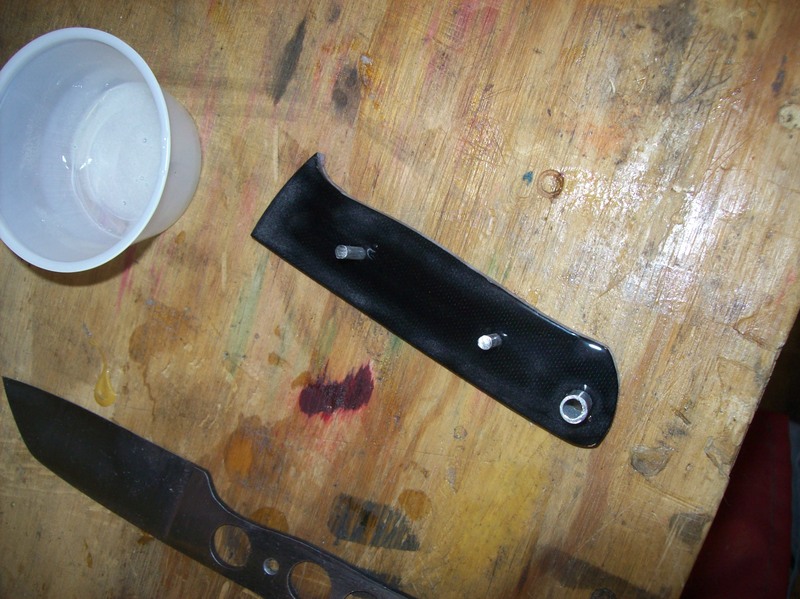
I take the scales to the grinder and get rid of any leftover CA glue and rough up the inside.
b0NVYwq.jpg


I take a piece of pinstock and mark how long it needs to be then cut it and lightly chamfer the ends.
jT4e9Vy.jpg

yLSnDjA.jpg


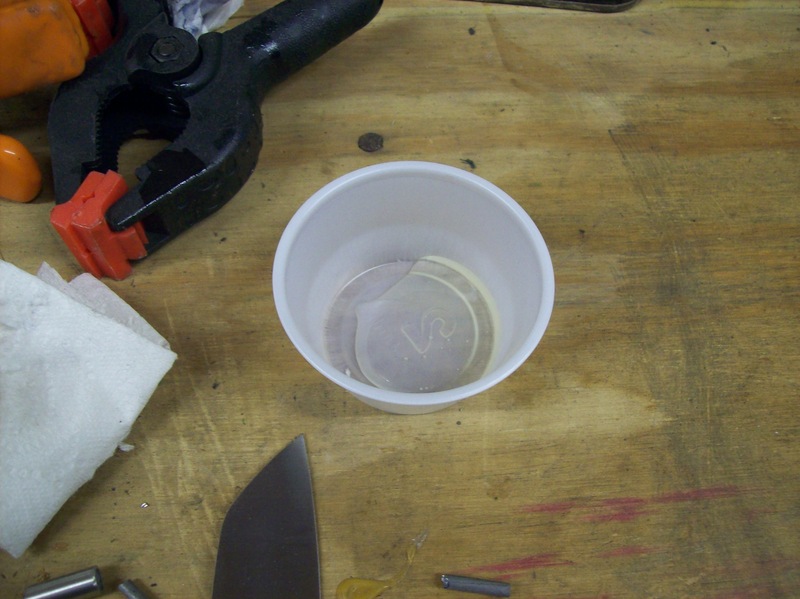
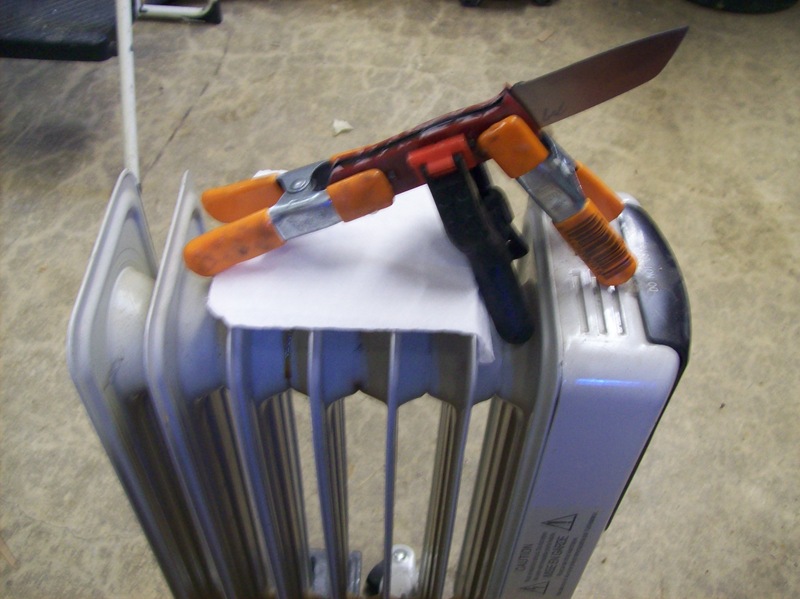
I clean everything with denatured alcohol then get everything ready for glueup. I pour my epoxy and then check the amount left in the bottles to be sure that I have equal amounts. Epoxy pours much better if you warm it first. I usually set the epoxy bottles on top of the space heater for a few minutes.
jGEY4nU.jpg


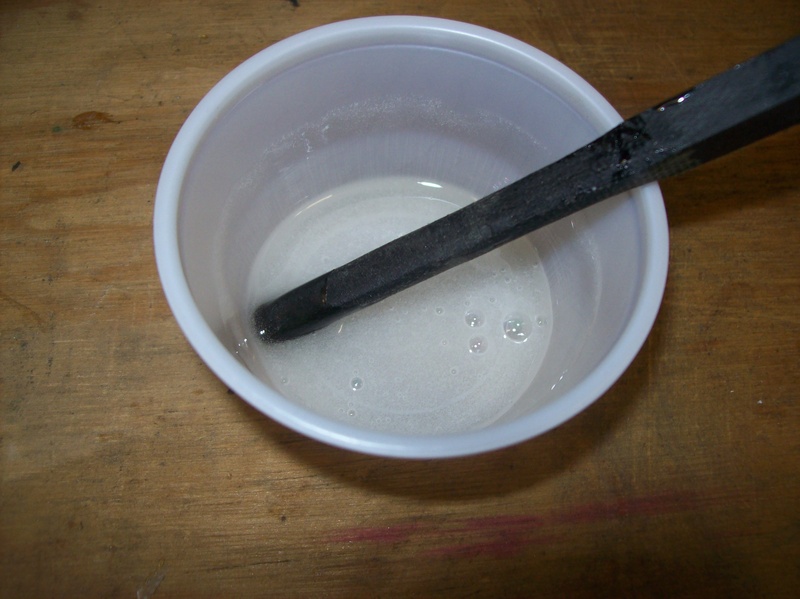
Mix the epoxy then mix it some more. Notice my specially made epoxy stirrer ;)
k6gPIUn.jpg


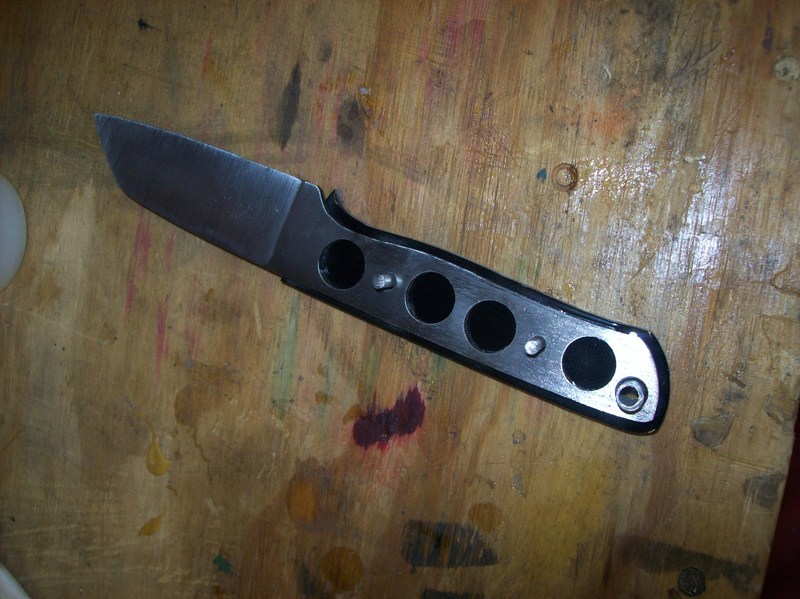
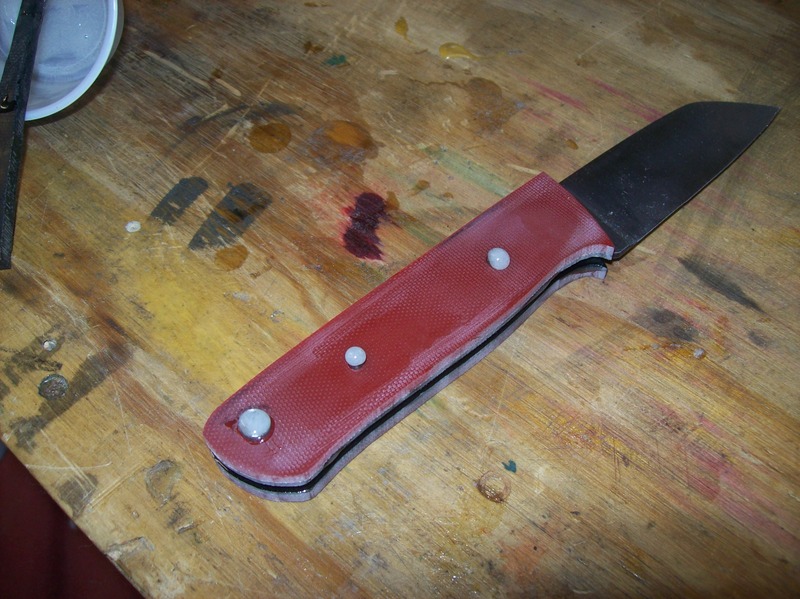
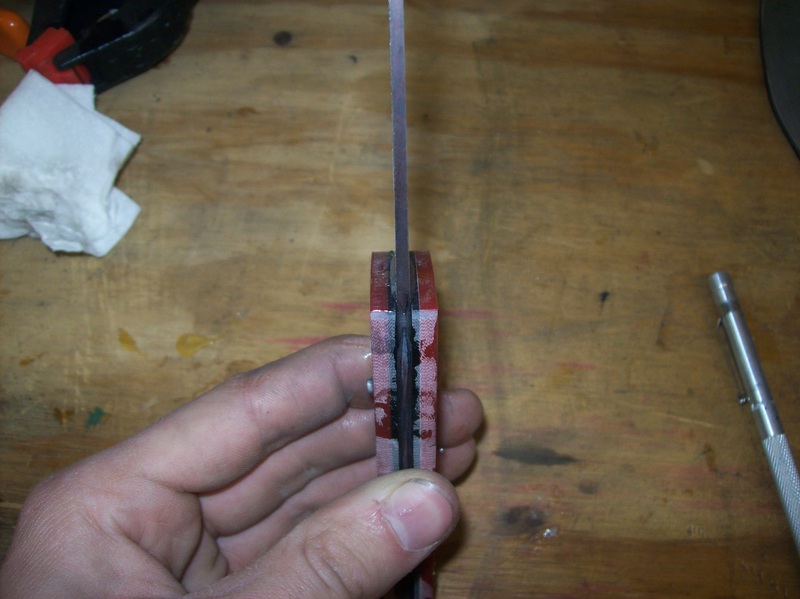
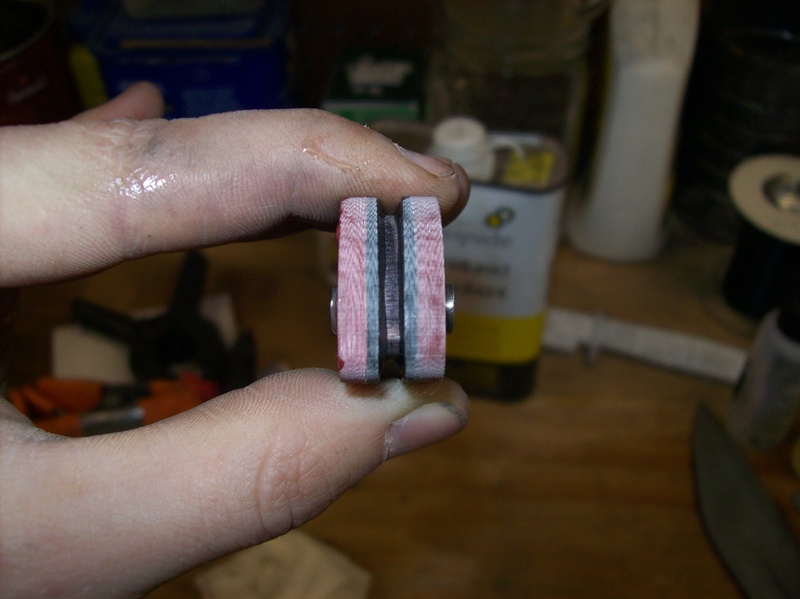
I spread an even coat of epoxy over the surface of one scale then place the pins in it. I take the knife and set it on top of the epoxy using the pins to keep things roughly lined up. I put epoxy on to the other scale then set it on top of the knife.
aTTDUpL.jpg

T5jH05W.jpg

xRO6yI0.jpg

hSDSCpL.jpg


Knife sandwich complete!
6iCuYtY.jpg


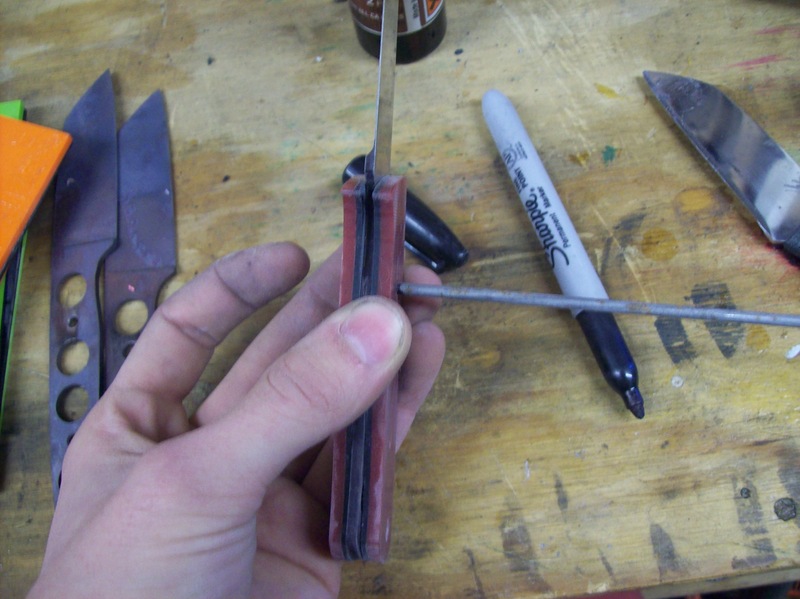
Make sure the fronts of the scale are even and the pins are perpendicular to the spine.
vngxeIa.jpg

YTzke71.jpg


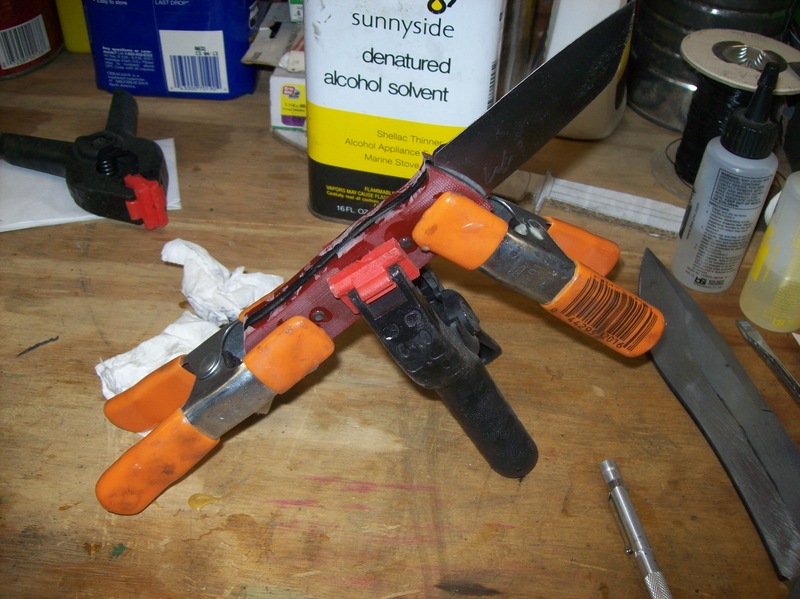
Clamp 'er up! The spring clamps will try and move the scale around especially while there is still an excess of epoxy inside. Just keep correcting things until they stop moving.
0BZV3Aq.jpg


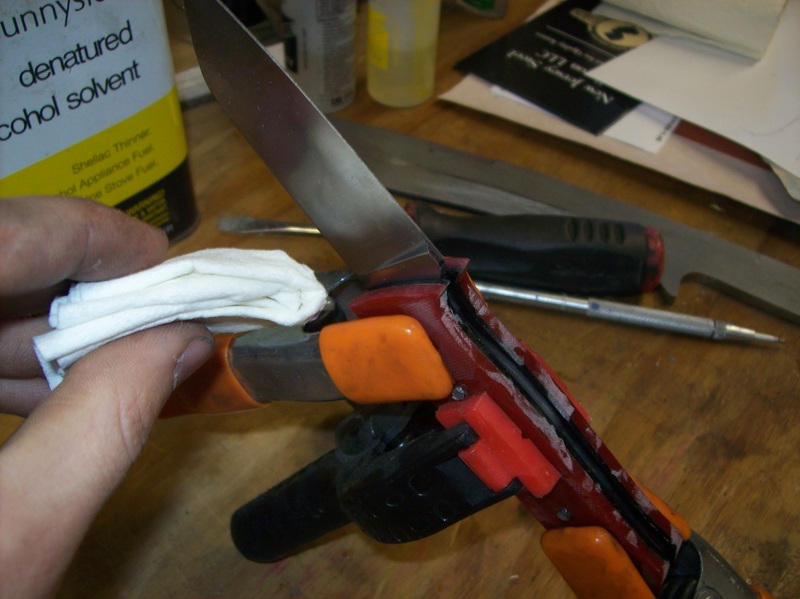
Let the knife sit for about 5 minutes or so and let the epoxy ooze out. Take a qtip, paper towel or something and soak it in alcohol. Use it to clean up the excess epoxy on the front of the scales. Don't take the clamps off at to do this or you'll pull epoxy out from under the scales. You'll probably have to do this part several time as more epoxy oozes out.
0Je45H4.jpg


Leave the knife to cure in a warm place for the next few hours. Make sure you put something under the knife to catch drips.
96ngozK.jpg


And that's all for now folks! A few final thoughts:
First off, wow, those are some crummy pictures! :( My apologies and I assure you the knife looks much better in proper light.
Secondly, this is just how I do things. I' sure there are better ways to do it but this work for me.

Thanks for looking everyone, feel free to ask questions!

 
I love lighting lol the way it brings out things you can't even see in person.
Nice knife all around!
 
Thanks 9blades, the lighting in the shop is actually pretty good but it is just dim enough that my ancient camera needs to use the flash to focus properly and of course the flash ruins it.
 
Thanks Matt for this WIP! While I have been following this thread and really like the design, your handle attachment has really caught my eye. I'm going to be attaching my first handles soon and have been looking for other options that may work better for me and I like your method. Unorthodox? Perhaps, but except for using too much epoxy for a temporary hold, it looks to be a method even I couldn't screw up. I love seeing different approaches to achieve the same end results so thanks again.
 
Thanks Matt for this WIP! While I have been following this thread and really like the design, your handle attachment has really caught my eye. I'm going to be attaching my first handles soon and have been looking for other options that may work better for me and I like your method. Unorthodox? Perhaps, but except for using too much epoxy for a temporary hold, it looks to be a method even I couldn't screw up. I love seeing different approaches to achieve the same end results so thanks again.

Glad you enjoyed it! Too much CA would definitely be a problem, it just takes a couple tiiiiiny drops.

Good luck with your projects!
 
Back
Top