
-
The BladeForums.com 2024 Traditional Knife is available! Price is $250 ea (shipped within CONUS).
Order here: https://www.bladeforums.com/help/2024-traditional/ -
America has reached 250 years, and I am grateful to be here, in the best country in the world. Thank every one of you who helps make this country a better place, those who have gone before and risked it all, and those who've paid the ultimate price to make the United States what we are today.
Happy Birthday America! Let Freedom Ring for all time!
You are using an out of date browser. It may not display this or other websites correctly.
You should upgrade or use an alternative browser.
You should upgrade or use an alternative browser.
Custom Bushcraft
- Thread starter Lorien
- Start date

- Joined
- Dec 11, 2006
- Messages
- 1,659
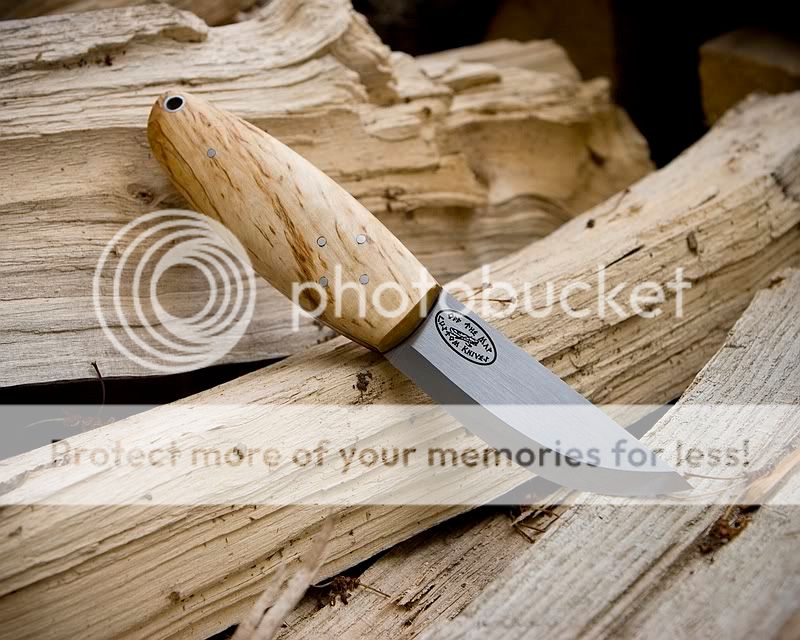
Here is mine:
Curly Birch:
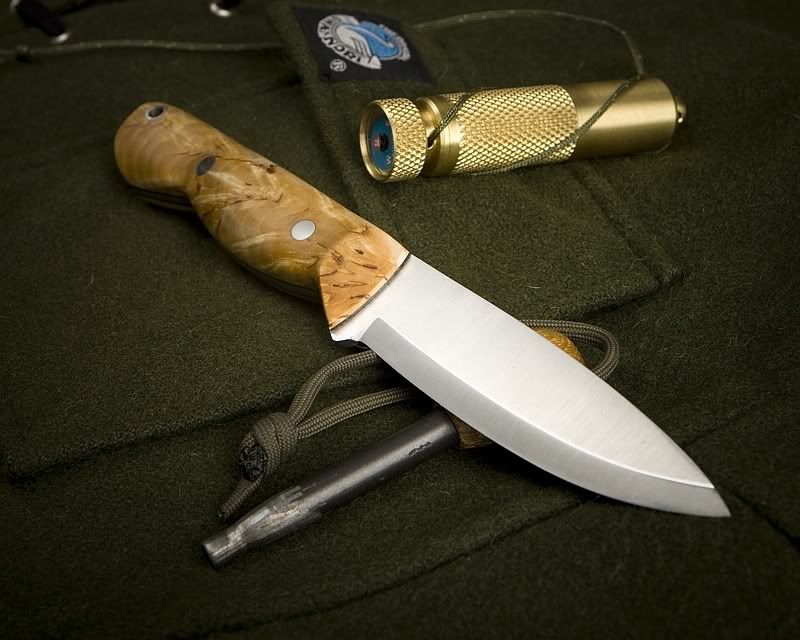
Stabilized Curly Birch:
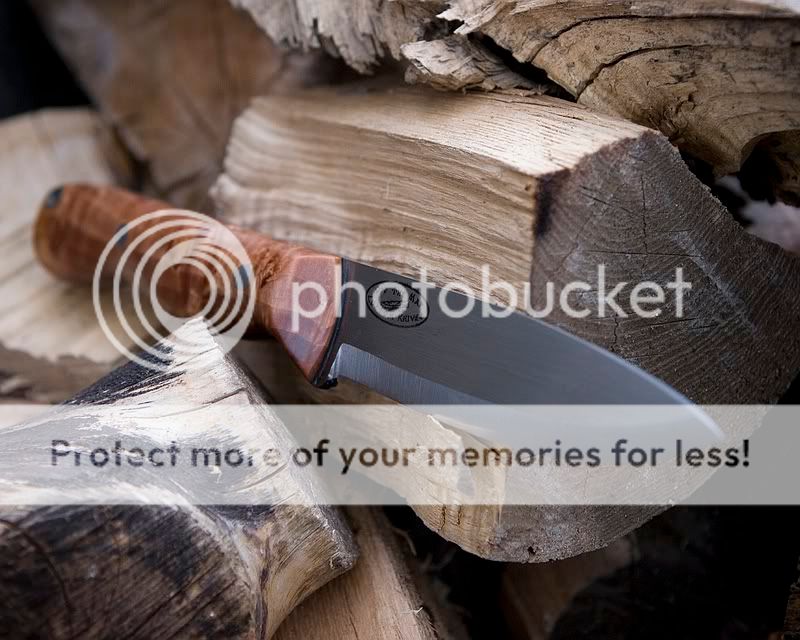
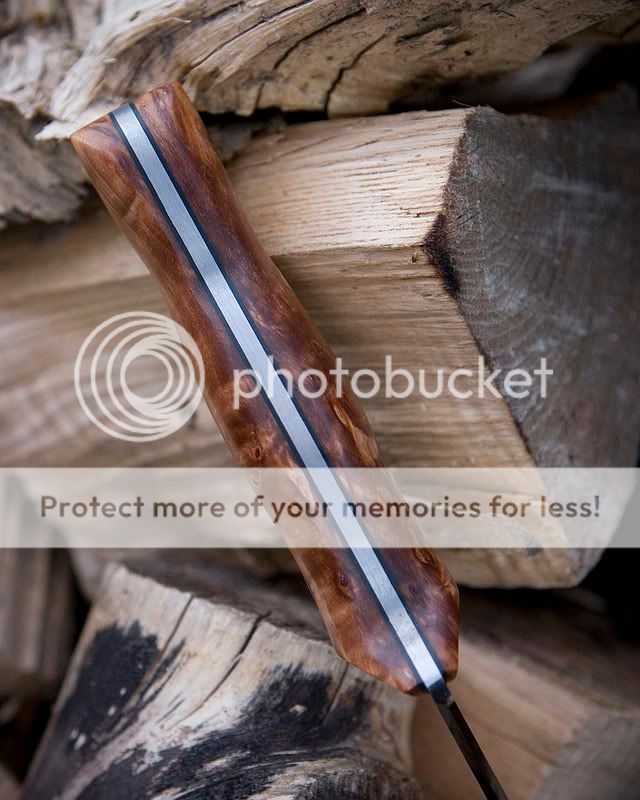
Box Elder Burl:

Cocobolo:


Micarta:


Skog Kniven (curly Birch):
B
Curly Birch:
Stabilized Curly Birch:
Box Elder Burl:
Cocobolo:
Micarta:
Skog Kniven (curly Birch):
B

- Joined
- Feb 14, 2007
- Messages
- 1,531
Beautiful knives Brian!
I came across this site and only looked at the photo's but there are some good looking knives pictured.
http://swc-handmade-knives.com/CUSTOM-KNIFE-GALLERY
Also, here is a recent thread showing a few others...
http://www.bladeforums.com/forums/showthread.php?t=636525
Just like polishing the car, having a unique tool (especially if you helped in the design) just feels good and friendly to some of us.
RogerP asked for a definition. Myakka used a term I like, "wilderness living skills." Consider the knife is to be used for breaking down wood and shaping (carving) wood into bowls, spoons, or the "test" net needle. This is in addition to fire and food use so you want a controllable blade and a very very comfortable handle.
Here is the Mors Kochanski description most of the UK knives seem to fall under and especially the snookum,
General Purpose Bush Knife
Blade as long as the width of the palm
Blade tip close to center line of the handle
Back of handle and back of blade should be on the same line
Back of blade should not be thinned or sharpened (able to baton/firesteel)
Good carbon steel 2-2.5 mm thick (3/32) and 2-2.5 centimeters wide (about 1)
Steel soft enough for a shaving edge without frequent sharpening using common tools
Blade should be full tang
Handle should be durable, water resistant and if necessary can be shaped to users hand
Pommel should be strong to protect handle when knife is driven tip first into wood
Curvature of the cutting edge should extend full length of the blade
Point should be sharp enough to penetrate deep into wood
Knife handle should be about as long as the width of your palm
Cross-section of the handle should be oval instead of round or rectangular
A guard on a bush knife is in the way
No breaking when driven 4 cm (1.5) into a tree at right angle to grain and stood on**
Paraphrased from:
Kochanski, M. L. (1987). Bush Craft Outdoor Skills and Wilderness Survival. Canada: Lone Pine Publishing
**This is always a point of contention so don't dwell on it. Ironically the next line is First Aid for Knife Cuts
I came across this site and only looked at the photo's but there are some good looking knives pictured.
http://swc-handmade-knives.com/CUSTOM-KNIFE-GALLERY
Also, here is a recent thread showing a few others...
http://www.bladeforums.com/forums/showthread.php?t=636525
Well, I don't know, after a good wash and wax inside and out my car always seems to drive better. I prefer mirror blades also if for no other reason because I can use them to change or clean my contact lens.Making it pretty may not add to the function but it doesn't hurt either. Having a nice paint job on your car doesn't make it drive any better.
In fact, pretty sometimes does have function. I like to mirror polish my knives
Just like polishing the car, having a unique tool (especially if you helped in the design) just feels good and friendly to some of us.
In my opinion I would say yes despite the "Kephart style" handle.steelshaper - is that J. Neilson knife posted above a bushcraft knife according to your understanding of the definition?
Roger
Great looking knife but, aside from the flowing handle curve, I wouldn't consider it a Nessmuck, much less a bushcraft knife.Some would consider Nessmuks as bushcraft knives so how about this clip point integral Nessmuk by Todd Begg is it a bushcraft knife?

RogerP asked for a definition. Myakka used a term I like, "wilderness living skills." Consider the knife is to be used for breaking down wood and shaping (carving) wood into bowls, spoons, or the "test" net needle. This is in addition to fire and food use so you want a controllable blade and a very very comfortable handle.
Here is the Mors Kochanski description most of the UK knives seem to fall under and especially the snookum,
General Purpose Bush Knife
Blade as long as the width of the palm
Blade tip close to center line of the handle
Back of handle and back of blade should be on the same line
Back of blade should not be thinned or sharpened (able to baton/firesteel)
Good carbon steel 2-2.5 mm thick (3/32) and 2-2.5 centimeters wide (about 1)
Steel soft enough for a shaving edge without frequent sharpening using common tools
Blade should be full tang
Handle should be durable, water resistant and if necessary can be shaped to users hand
Pommel should be strong to protect handle when knife is driven tip first into wood
Curvature of the cutting edge should extend full length of the blade
Point should be sharp enough to penetrate deep into wood
Knife handle should be about as long as the width of your palm
Cross-section of the handle should be oval instead of round or rectangular
A guard on a bush knife is in the way
No breaking when driven 4 cm (1.5) into a tree at right angle to grain and stood on**
Paraphrased from:
Kochanski, M. L. (1987). Bush Craft Outdoor Skills and Wilderness Survival. Canada: Lone Pine Publishing
**This is always a point of contention so don't dwell on it. Ironically the next line is First Aid for Knife Cuts
I only own one custom knife that i bought at a knife show 20 years ago. At 56 years old I had never had a custom of any kind built to my specs but I recently ordered one of B.G. Andrews bushcraft knives made with mesquite wood scales that I sent him.I harvested the wood over 30 years ago with my father. I will probably never have another custom made but I wanted this type of knife because I will use it and probably pass it on to my son. Had I got a custom Bowie or a fighter or other pattern I probably would not have used it. I know this because I have knive in these pattern but dont use them. I see this as the very best quality tool for what I enjoy doing very much, woods wandering.IMHO--KV
- Joined
- Feb 14, 2007
- Messages
- 1,531
Bushcraft knives are supposed to be well made, inexpensive to moderate priced knives. However, there may come a day when collectors of high end knives start asking to have them made with expensive handle materials and pattern welded blades.
If the collection theme is "significant knife styles" or "knives from an era" I should think some unique examples of this style would find their way into a collection.
General question out of curiosity folks, are there any Kephart or Nessmuk originals from the period out there? I've only seen the Nessmuk drawing and the one museum held Kephart and the one Kephart advertising photo.

- Joined
- Jan 15, 2006
- Messages
- 758
If the collection theme is "significant knife styles" or "knives from an era" I should think some unique examples of this style would find their way into a collection.
General question out of curiosity folks, are there any Kephart or Nessmuk originals from the period out there? I've only seen the Nessmuk drawing and the one museum held Kephart and the one Kephart advertising photo.
I have never seen even a photo of an orginal Nessmuk (one that was used or carried by George (Nessmuk) Sears). Maybe there was only one. His decendants may have it but in the past they have not been very willing to share much about him. All of the folklore comes from the single drawing in the book "Woodcraft".

- Joined
- Jan 21, 2008
- Messages
- 3,346
Rick marchand of www.WilderTools.com sells some really nice high end bushcraft style blades.
When I think Bushcraft, I tend to think Mora.
Ramm9 already posted Mors Kochanski's definition published in his book.
I think if the collector market were to try to define a Bushcraft knife, it would be found to include any knife not to pretty to beat the tar out of while..... out in the bush.
Considering the price point of Mora, any custom bushcraft knife would be considered high end.
Ramm9 already posted Mors Kochanski's definition published in his book.
I think if the collector market were to try to define a Bushcraft knife, it would be found to include any knife not to pretty to beat the tar out of while..... out in the bush.
Considering the price point of Mora, any custom bushcraft knife would be considered high end.

R.Russell
Gold Member
- Joined
- Feb 24, 2009
- Messages
- 693

- Joined
- Feb 28, 2002
- Messages
- 13,348
Interesting definition Ramm9.
But what is a small guard in the way of, exactly? If you're applying a lot of pressure ot the tip (as some of the other design requirements seem to contemplate) keeping your fingers from sliding forward onto the cutting edge would seem like a good thing.
Roger
But what is a small guard in the way of, exactly? If you're applying a lot of pressure ot the tip (as some of the other design requirements seem to contemplate) keeping your fingers from sliding forward onto the cutting edge would seem like a good thing.
Roger
- Joined
- Feb 14, 2007
- Messages
- 1,531
Interesting definition Ramm9.
But what is a small guard in the way of, exactly? If you're applying a lot of pressure ot the tip (as some of the other design requirements seem to contemplate) keeping your fingers from sliding forward onto the cutting edge would seem like a good thing.
Roger
The definition is Kochinski's so I can't take credit (or blame). We may be getting off track and onto a W&SS topic.
To guard or not to guard is debated all the time. It's probably less of a debate if the knife is considered to be a carver first and foremost, general utility knife second, and hunter last.
Old Mors claims that a guard "detracts from many operations" and "prevents the use of a simple, secure, deep sheath." He goes on to write that "some people prefer a guard for fear of slipping forward onto the knife edge, but unless the knife is used for stabbing, the hand should never slip in this way." (This is just before the "stand on a blade in the tree" paragraph that precedes the "first aid" section.)
A small guard may not get in the way of much but might limit some angles when using the edge at the ricasso. I know that a deep and secure sheath is possible even with a small guard. That aside, pressure on the tip would come from striking or pressing on the pommel so he's right that it's not a "stabbing" motion.

silenthunterstudios
Slipjoint Addict
- Joined
- Feb 2, 2005
- Messages
- 20,039
It's definitely not high-end, but to illustrate what I believe Lorien is asking about here's a pic of one of mine that turned out decently.
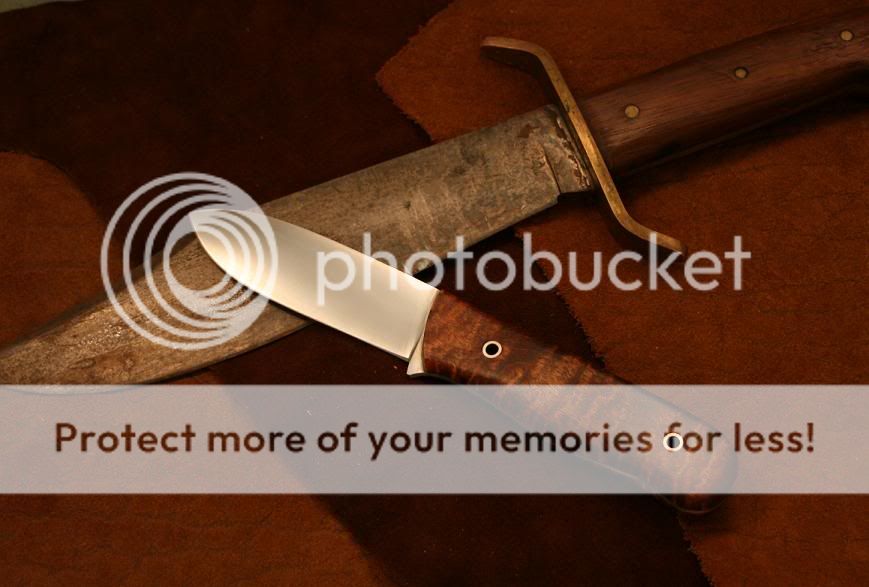
The picture makes it look a lot nicer than it is
I don't think there's much in the way of higher priced knives in this field, though I have seen a few nice damascus pieces. Partly because it's such a simple design without a lot of room to embelish, partly because those people who want them want them to use. Also, the preference in these strongly lean towards a scandi grind, which is very un-dramatic and utilitarian, no matter how you dress it up:foot:

Walter, I have had several different bushcraft styled blades, both production and custom, and didn't have any as nice as that one. Email inbound.



- Joined
- Dec 5, 2005
- Messages
- 28,880
there are some great links in this thread, and some excellent photos.
The tangential debate as to definitions is also very interesting.
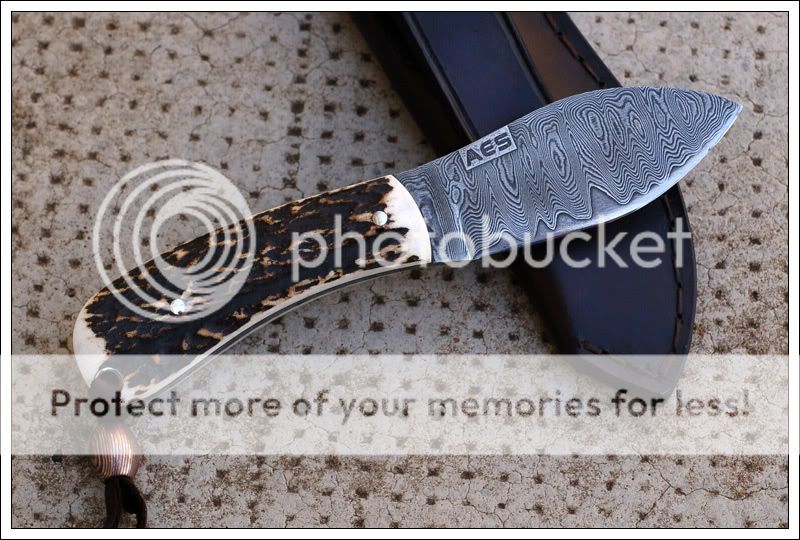
I always looks for the Art in a knife, and this one has that going on. Obviously, the Raymond Richard knife pictured, like all his knives, have the Art in them.

- Joined
- Jun 29, 2005
- Messages
- 16,379
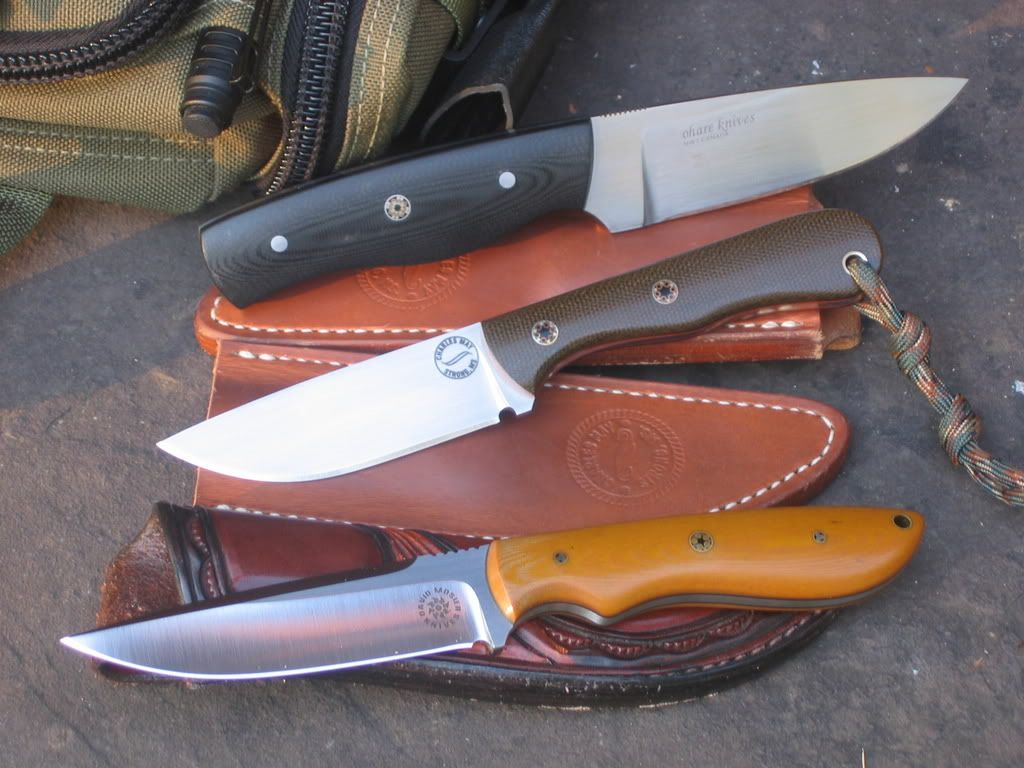
The top knife makes for a good custom bushcraft. River knife by Sean O'hare.
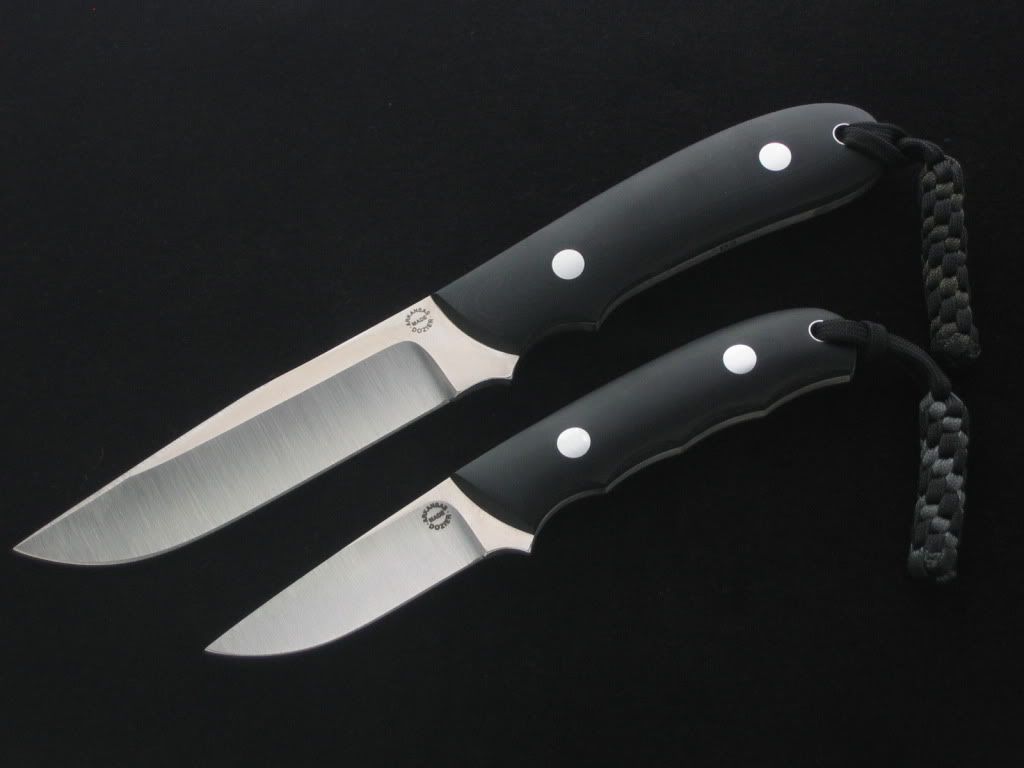
Just got this Dozier ks-3 at Blade and feel it would be good CS bushcraft if wanting one over 4".
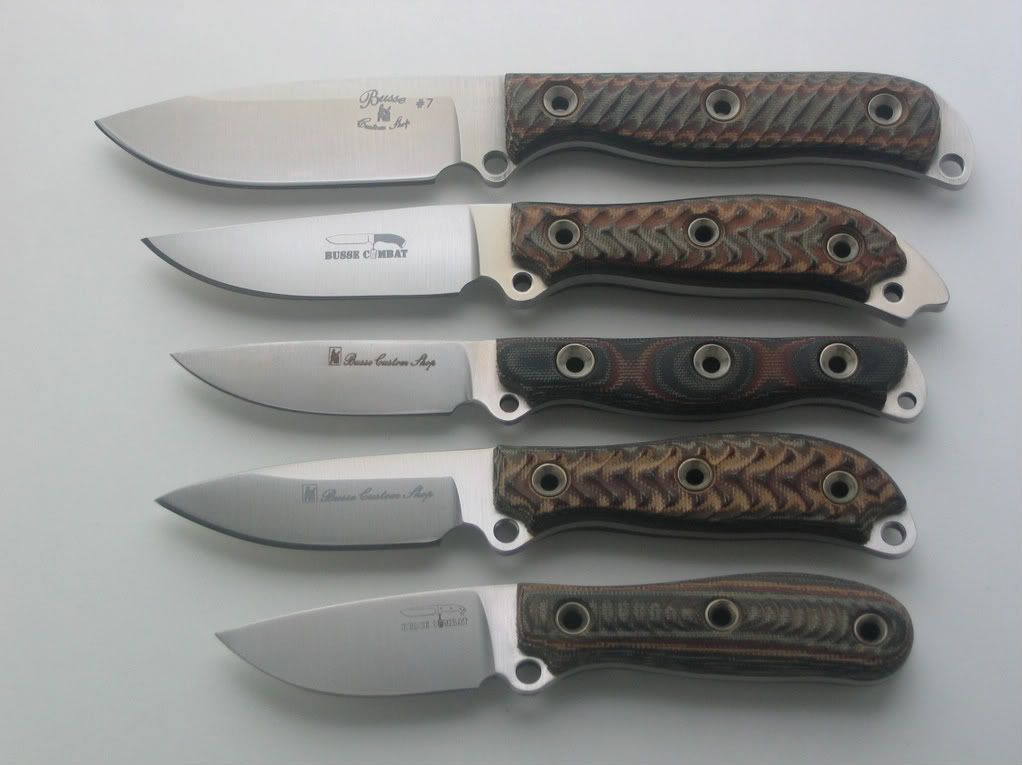
The Busse Custom Shop ABA(top knife) would be another great one over 4"
The Busse CS cultie(3rd knife up from bottom) makes a great one in the 3.5" range. I carry a CS Black canvas Cultie in the woods more than any other.
Just got this Dozier ks-3 at Blade and feel it would be good CS bushcraft if wanting one over 4".
The Busse Custom Shop ABA(top knife) would be another great one over 4"
The Busse CS cultie(3rd knife up from bottom) makes a great one in the 3.5" range. I carry a CS Black canvas Cultie in the woods more than any other.
Last edited:

- Joined
- Feb 15, 2002
- Messages
- 1,705
This is one of Tai Goo's 'bush' blades. It meets or approximates most of the criteria below, even though it doesn't resemble the others in this thread. Is it a "real bush knife"? If not, then what is it?

Randal Made Knives offers a Bushmaster model in its current catalog:

B ) Model 19 "Bushmaster"
4 1/2" and 5" blades of 1/4" stock.
Top cutting edge sharpened approximately 2-1/2".
4-1/4"-5/8" leather handle.
Brass hilt. Duralumin butt cap. Designed by a professional woodsman for all-around camp and big game hunting purposes. Top of blade in front of hilt notched for thumb placement. The heavy-duty top cutting edge is especially suited for purposes that would dull the regular edge. An excellent big game skinning knife.
(Wt. 8-9 oz.) Price: $340
IMO this one doesn't resemble that described by the criteria above and I can accept that (when compared to Tai's bush blade) this one is something other than a bush blade per se.
General Purpose Bush Knife
Blade as long as the width of the palm
Blade tip close to center line of the handle
Back of handle and back of blade should be on the same line
Back of blade should not be thinned or sharpened (able to baton/firesteel)
Good carbon steel 2-2.5 mm thick (3/32) and 2-2.5 centimeters wide (about 1)
Steel soft enough for a shaving edge without frequent sharpening using common tools
Blade should be full tang
Handle should be durable, water resistant and if necessary can be shaped to users hand
Pommel should be strong to protect handle when knife is driven tip first into wood
Curvature of the cutting edge should extend full length of the blade
Point should be sharp enough to penetrate deep into wood
Knife handle should be about as long as the width of your palm
Cross-section of the handle should be oval instead of round or rectangular
A guard on a bush knife is in the way
No breaking when driven 4 cm (1.5) into a tree at right angle to grain and stood on**
Paraphrased from:
Kochanski, M. L. (1987). Bush Craft Outdoor Skills and Wilderness Survival. Canada: Lone Pine Publishing
**This is always a point of contention so don't dwell on it. Ironically the next line is First Aid for Knife Cuts
Randal Made Knives offers a Bushmaster model in its current catalog:
B ) Model 19 "Bushmaster"
4 1/2" and 5" blades of 1/4" stock.
Top cutting edge sharpened approximately 2-1/2".
4-1/4"-5/8" leather handle.
Brass hilt. Duralumin butt cap. Designed by a professional woodsman for all-around camp and big game hunting purposes. Top of blade in front of hilt notched for thumb placement. The heavy-duty top cutting edge is especially suited for purposes that would dull the regular edge. An excellent big game skinning knife.
(Wt. 8-9 oz.) Price: $340
IMO this one doesn't resemble that described by the criteria above and I can accept that (when compared to Tai's bush blade) this one is something other than a bush blade per se.
- Joined
- Dec 5, 2005
- Messages
- 28,880
alright, Buddy, now we're getting somewhere!
Just imagine a bushcraft knife made by someone like David Broadwell for example. If he had a pragmatic collector commission a knife made for bushcraft above all other uses, do you think it would look like any other knife made for those purposes?
I think we often have our blinders on and simply follow the herd when it comes to these things, (definitions, preferences, styles, fashion, etc) but really we are only limited by our imaginations- and more importantly, whether we use our imaginations or not.
Just imagine a bushcraft knife made by someone like David Broadwell for example. If he had a pragmatic collector commission a knife made for bushcraft above all other uses, do you think it would look like any other knife made for those purposes?
I think we often have our blinders on and simply follow the herd when it comes to these things, (definitions, preferences, styles, fashion, etc) but really we are only limited by our imaginations- and more importantly, whether we use our imaginations or not.
- Joined
- Feb 14, 2007
- Messages
- 1,531
This is one of Tai Goo's 'bush' blades. It meets or approximates most of the criteria below, even though it doesn't resemble the others in this thread. Is it a "real bush knife"? If not, then what is it?
Randal Made Knives offers a Bushmaster
"Bush" knife? Absolutely. Bushcraft? Kind of, but kind of a "Nesmuk" or "skinner" also.
Tai Goo's mix of function and artistry always blows me away. Not to detract from Gill Hibben in any way, but the moment I first saw the latest "Rambo" knife Tai Goo came to mind.
Looking at his knife I would question if the swedge is sharpened and how comfortable the handle wrap would be after carving wood all day for a few days.
Agreed, the Randall knife just doesn't fit into the "carving first" feeling I have about "bushcraft" knives. The closest Randall would offer is probably the fisherman 10-3 (?) or maybe Fireman.
The challenge is that the style is task specific much like a fillet knife. Many knives can do the job just not quite as well. I've been thinking that integral designs may provide some cool potential.
I hope we get to see a David Broadwell along with others get a commission so we can see what they come up with.