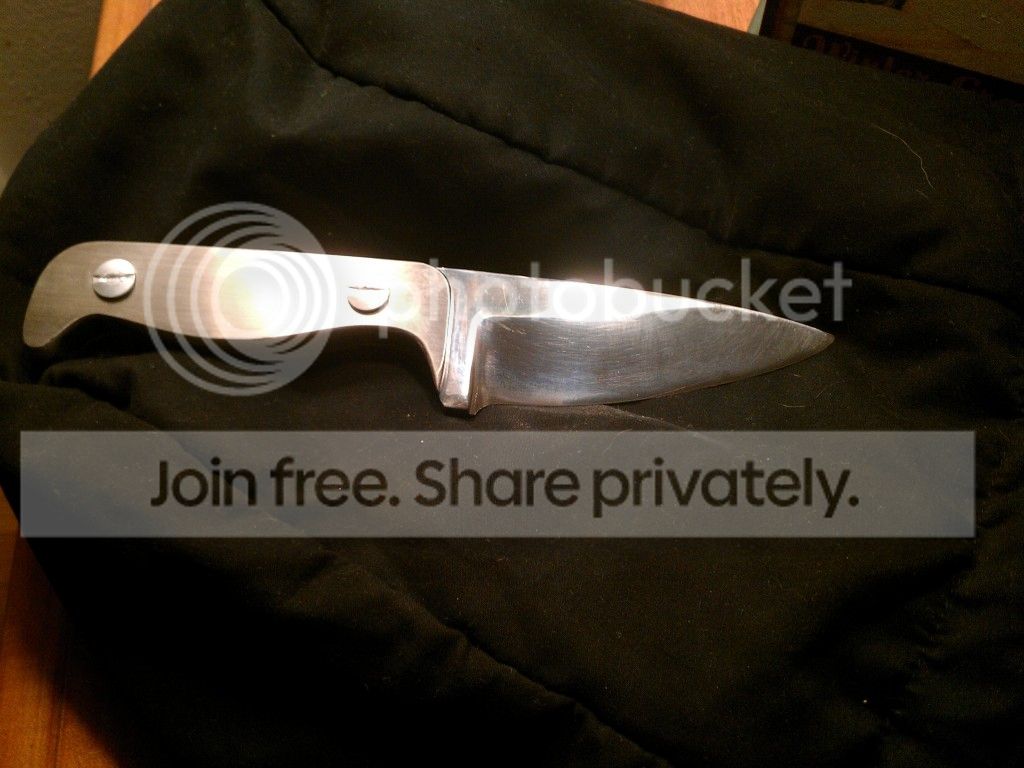
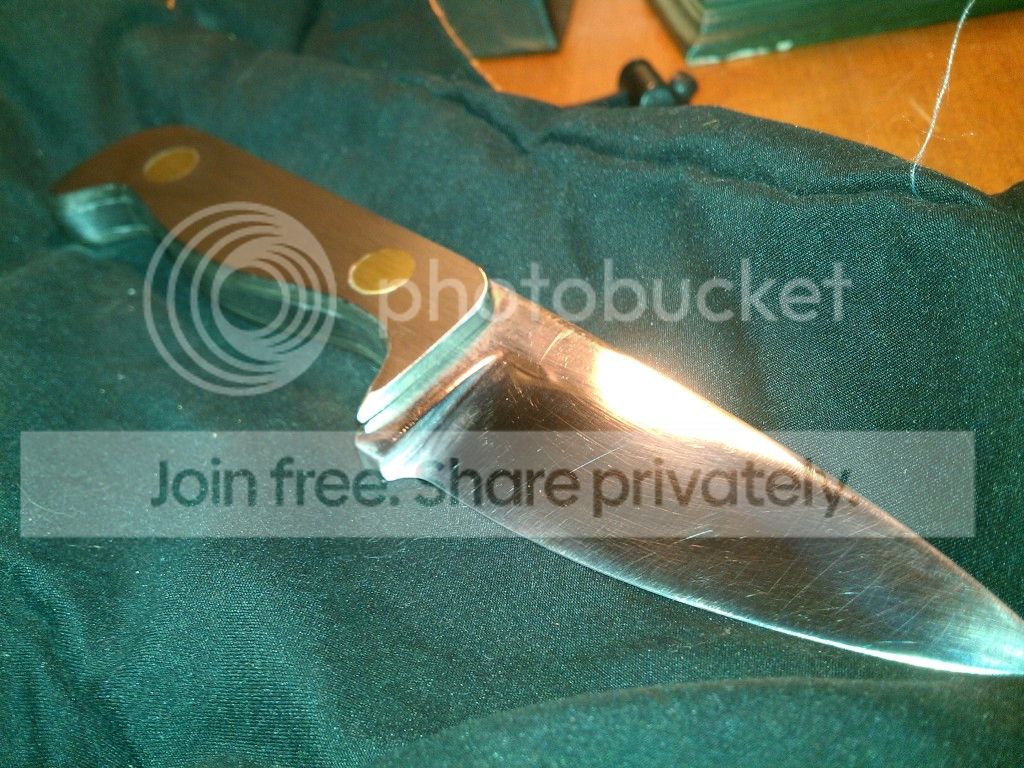
cut my finger already! lol... WIP (first knife, pic heavy!)

Status
Not open for further replies.
Joined
Nov 26, 2012
Messages
121
so... i asked a question about some steel i was given and while it's not the best choice for a long life knife blade, the fever was too much and i dove in head first anyways... seeing as how it's my first i may beat on it a little bit and then just set it aside as a momento anyways...

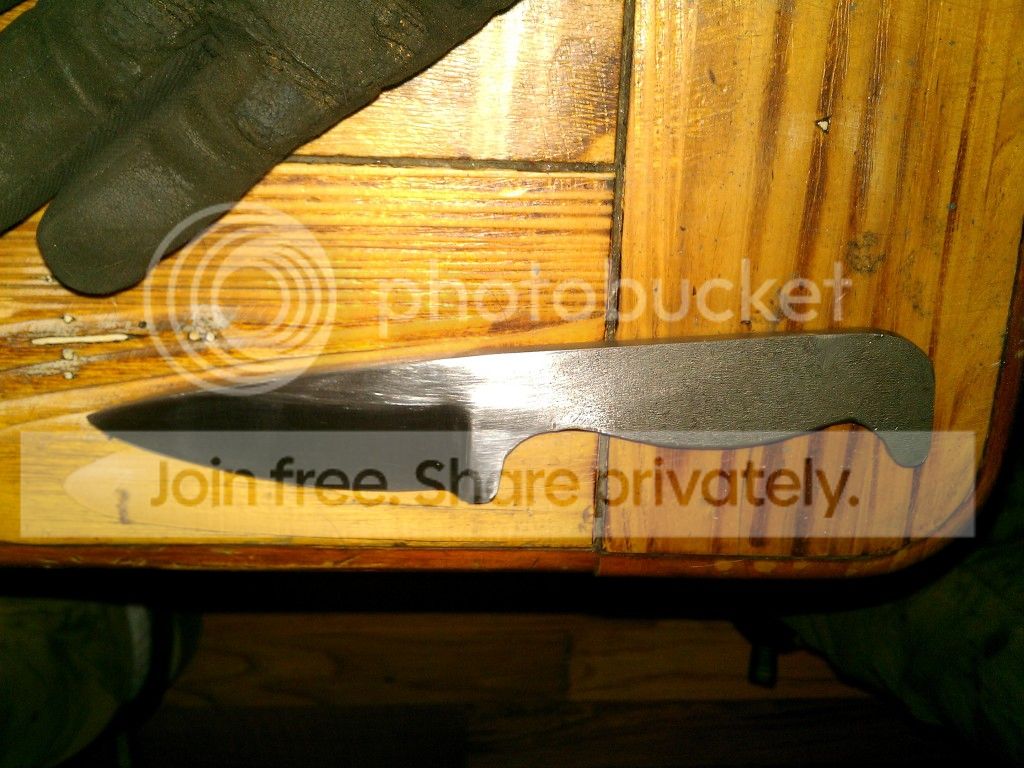
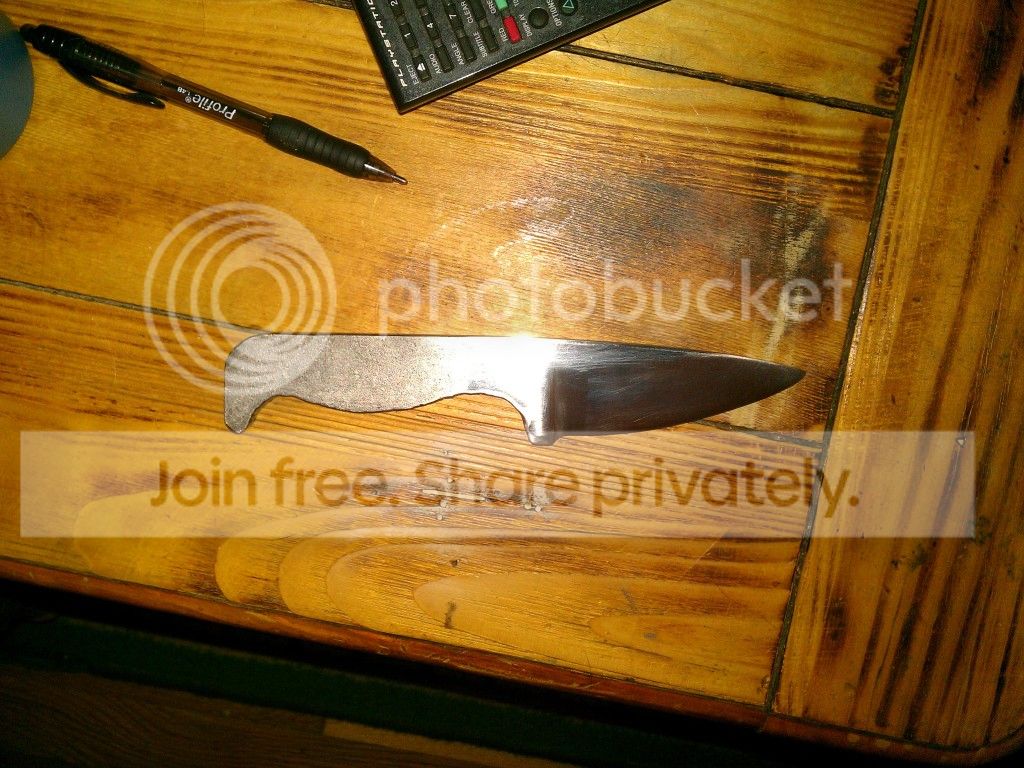
so i started it at work on a thursday... i only had a piece 1.5" x 8" so i just sketched out the shape on the steel itself to fit the size i had...
then i took our port-a-band and sawed out the blade and torched the handle contours...
IMAG0198.jpg


then i used the bench grinder to remove the slag and refine the overall outline of the blade...
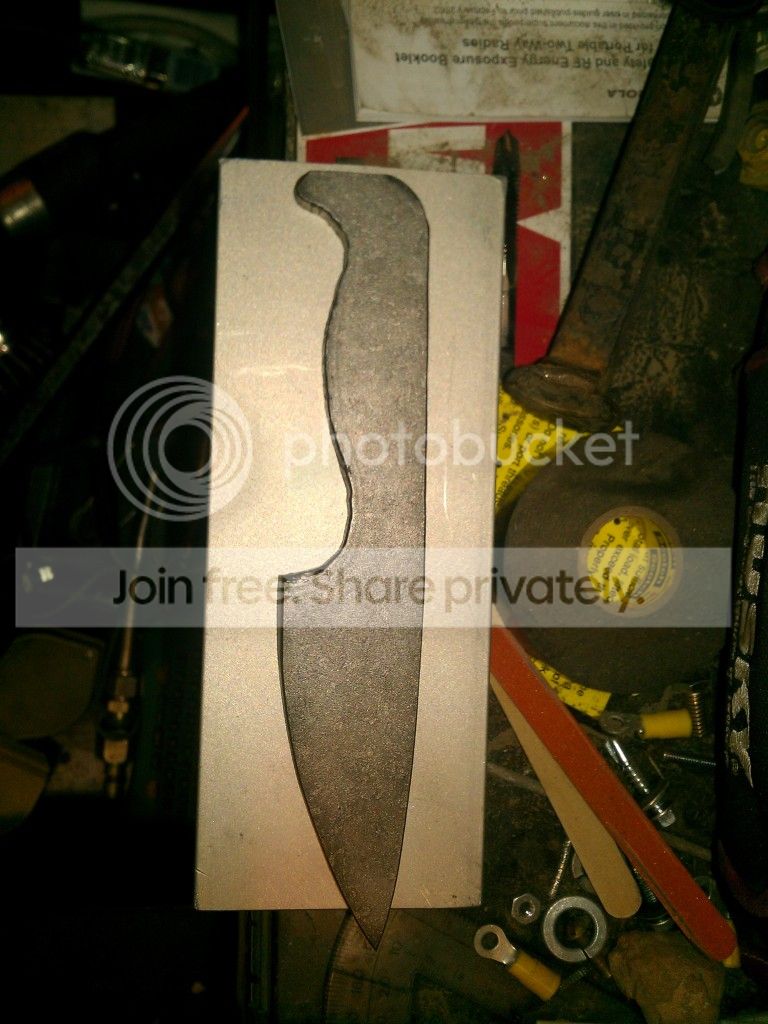
IMAG0199.jpg


after i got home, i sketched out the grind of the blade i wanted (turned out a little blurry for some reason)
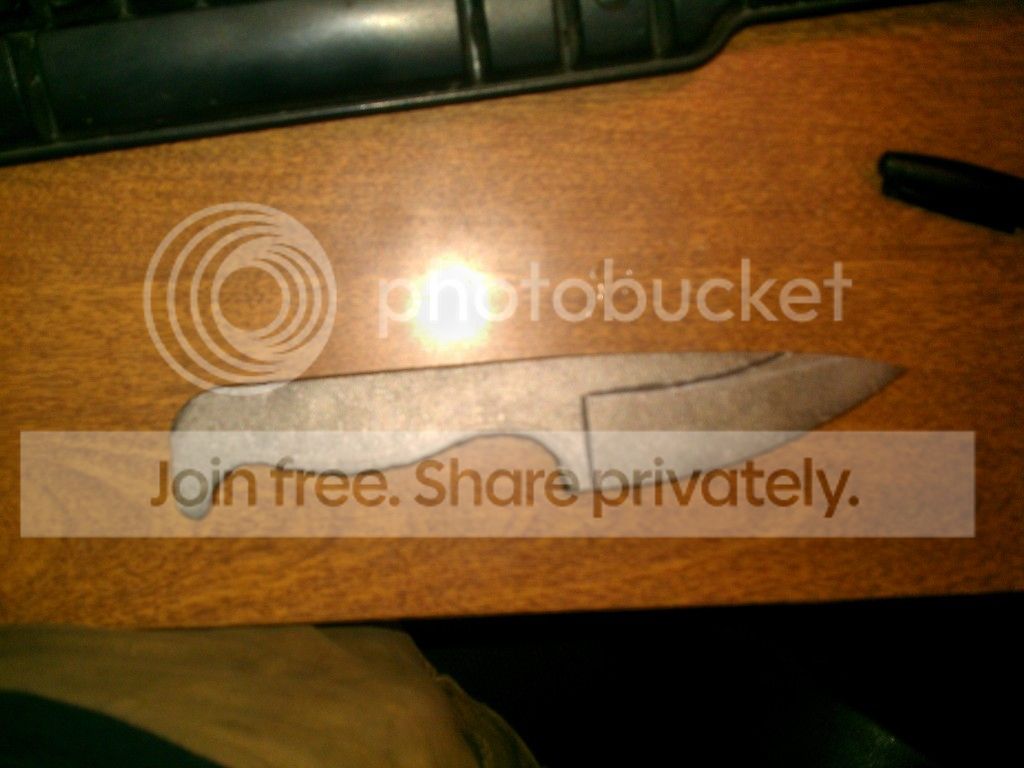
IMAG0200.jpg


then i clamped it to my work bench and took a flap wheel to it with the grinder to rough out the shape... dipped it in water quite regularly to keep the temp under control...
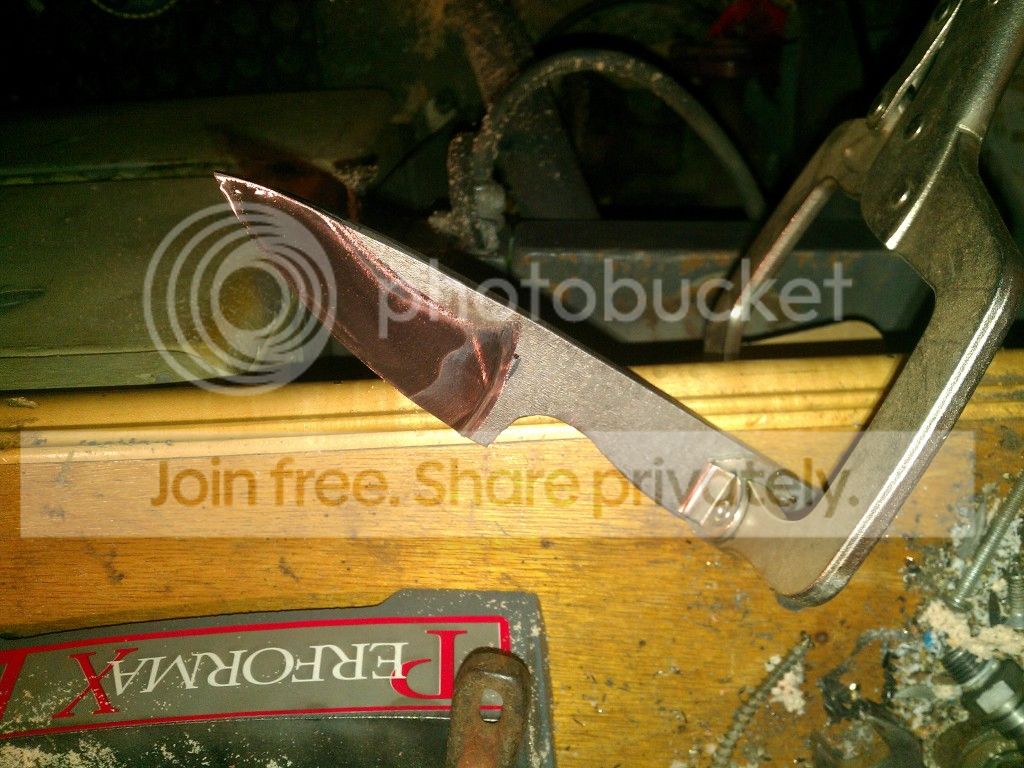
IMAG0201.jpg


then i did some file work to clean up the grind and smooth things out
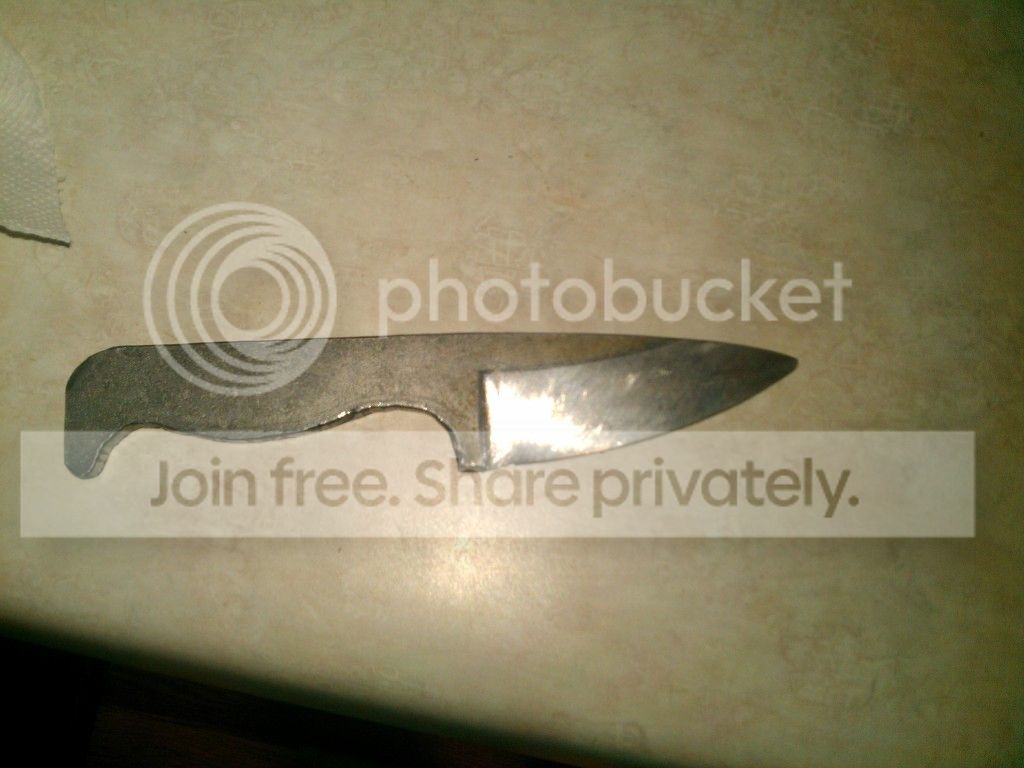
IMAG0202.jpg


then i went to bed... lol...

on friday after work i finished up the file work and got the grind looking like i wanted it to then started sanding with some 80 grit sandpaper to clean up some file marks...
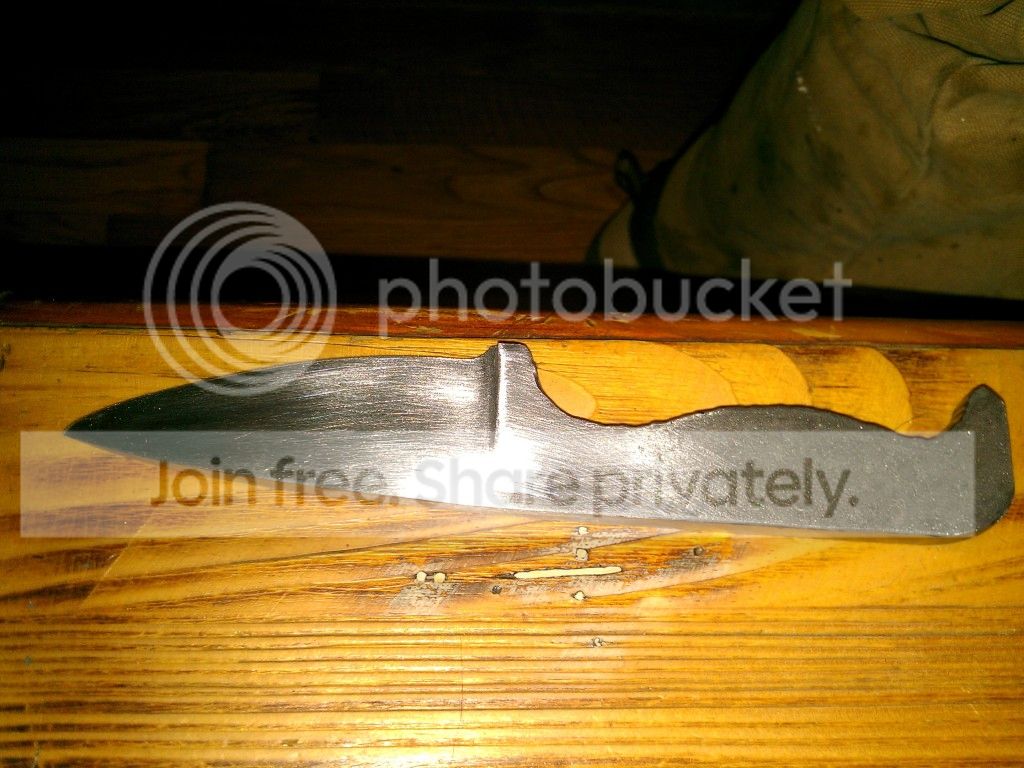
IMAG0204.jpg


up to 180 grit
IMAG0205.jpg


400 grit
IMAG0207.jpg


this is where i cut my finger... edge isn't really sharp... but it's sharp enough obviously... i was sanding on it and the blade slipped and i cut right through the sandpaper and into the tip of my finger... a little super glue and i'm back in business... just can't use my index finger to keep pressure on the sandpaper for a couple days... oh well... now it's spilled my blood... so it's got to be mine! lol...

up to 1000 grit
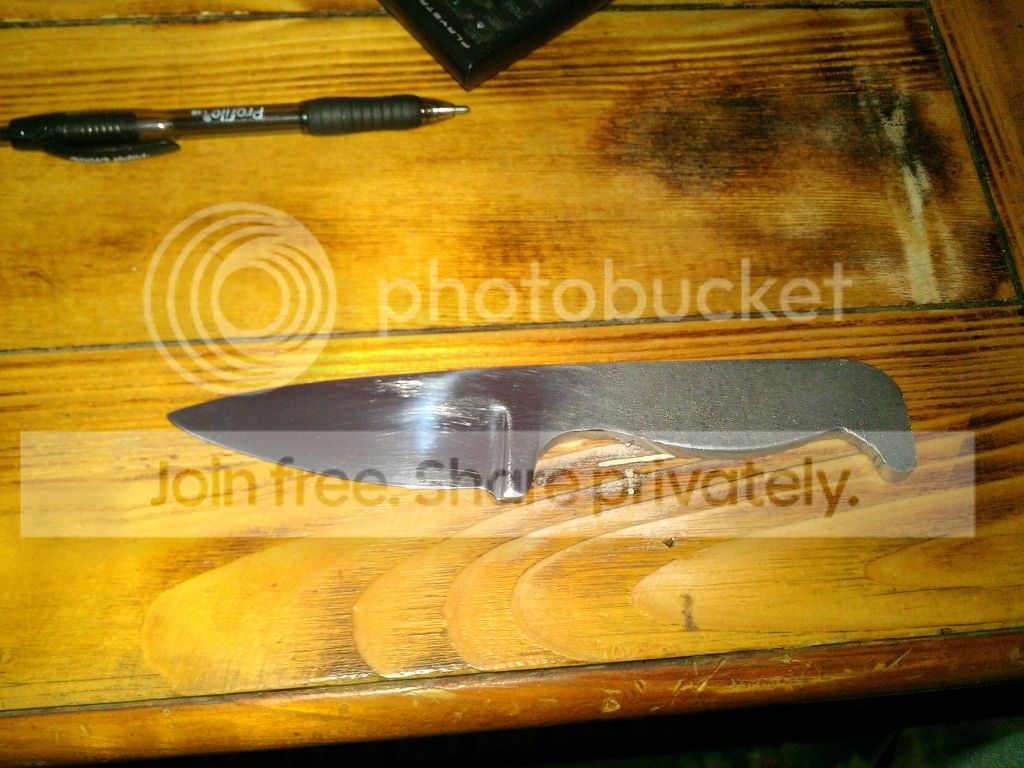
IMAG0209.jpg

then i went to bed...

a little buffing in the morning to get it clean and shiny... (let my hand stay in the shot to show how shiny! lol...)
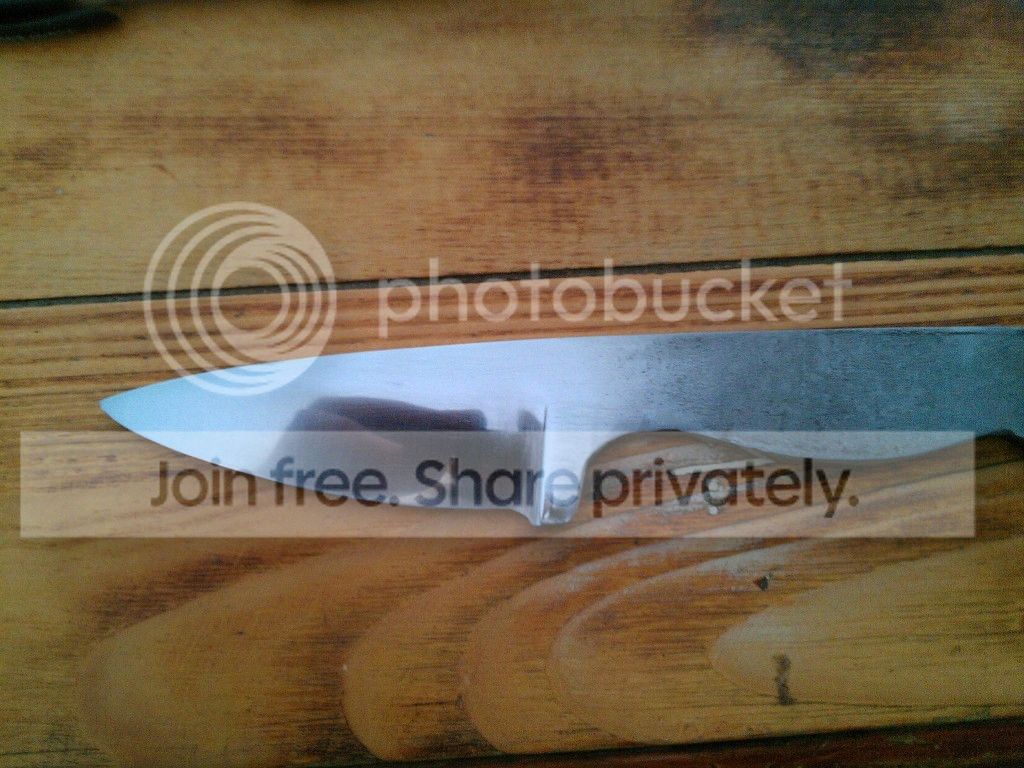
IMAG0211.jpg


this isn't final buffing... i still need to make scales and grind the tang ( i think that's the right term) so i'm going to tape the blade as it is now, and work on the scales... i want to use some of my 304 stainless to make the scales and contour it... i figure i'll epoxy and bolt the scales to the blade and finish polishing it all... it'll be a bit heavy... but i like it so far... learned alot
 
Last edited:
not done yet... and it's just stock removal... this stuff isn't really heat treatable... so i didn't anneal it... according to the steel information i can temper it... and i'll probably do that just before i actually affix the scales
 
not done yet... and it's just stock removal... this stuff isn't really heat treatable... so i didn't anneal it... according to the steel information i can temper it... and i'll probably do that just before i actually affix the scales
Have you read the stickies? It sounds as if you're just a mite confused about heat treating. I do stock removal and after 120 or 240 grit I do my hardening. You say it is not heat treatable and then say that it is temperable? I'm sorry if I sound rude or abrasive, that is not my intention.
 
this stuff is called creusabro it's been heat treated from the factory and i didn't anneal the metal to make it more workable... it's not a high carbon steel... i can't do a heat treat on it... it's a water quenched steel that work hardens... so heating it up enough to do a heat treat will actually make it softer... however... i can do a 400 degree temper to the final blade to relieve any internal stress on the metal making it less likely to be brittle... then a final sharpening with a ceramic rod will work harden the edge a bit more and make for a decent knife blade... it's not a high end blade... no 1084, 1095, tool steel, or stainless here... and yes... i read the stickies... the only one's still showing unread are the new post in the shop safety thread, and the vote now for kith or whatever that one is... i either had to wait to put an order in for some steel from aldo (which i'm still going to do) or use this steel which a friend of mine gave me (he uses it for making his knives) he's had good luck with it and as i said... even though it's not a great steel for knife making it'll do for a first knife... even if i just put a whole bunch of work into it and and show it off a bit then close it up in a drawer as a momento... the first knife i built completely by hand... i will be making more knives... and while i might be a mite bit confused as to some things... the only way i'm really going to learn them is to do it and make the mistakes... i've asked alot of questions already, read alot of posts (including the stickies) have been working with steel in general for a living for the last 10 years... i've already learned some things from this one... and i'm bound to learn more as i finish it... thanks for your comments though... if i had been doing it wrong i'm glad someone would have stopped to notice it... lol... besides... when i do my next blade (out of 1084) i had figured on asking when is the best time to do my heat treat just be sure i wasn't confused after reading all these threads... so now i know... lol...
 
someone correct me if i'm wrong... by all means... please... but as i understand it, if i order steel from aldo (njsteelbaron) then it comes annealed... so it has to be heat treated regaurdless after it's been worked... but this steel has never been annealed... it still has the factory heat treat... i know i didn't get it hot enough to remove any of that... and i don't have a spec to heat it to and quench it for heat treating anyways... i've got all the spec's of the steel... though i do have tempering spec's... the specific properties of the metal cause it to work harden... so even if i were to do a heat treat and return it to it's original form then it would actually be softer than if i work it and leave it... i was very careful when grinding and filing... and to be honest it took alot longer to form the blade than i expected... neither action seemed to make much of an impact on the steel... i actually went and borrowed a really nice file from a friend (gunsmith) because mine weren't doing much for removing material... we have a burnell machine at work.. so i want to take it in and test the hardness once it's done anyways... should leave one little dimple i believe... but i'll know how hard the blade is...
 
Just my thought but if you can cut it with a portaband,it ain't hard enough to hold a good edge,also if you can file it the same goes.Once you harden 1084 you can't file or cut it with a bandsaw.
Any way you learned alot so it was not time wasted and you did a nice job for your first.
Stan
 
thank you... in original form it's supposed to be a 49-52 hardness i believe.. work hardening can take it to 57 if i remember right... my printout is at work... so i'm quoting that from memory... i don't expect it to be a high end knife... i mainly wanted it as an experiment and to learn... learn about the grinding and beveling stuff... and i did learn quite a few things... so i'm happy with it... but i definately want my next one to be much better... thanks for your input again... i do appreciate it...
 
It is around Rc50 as it comes, and can surface harden to Rc54 by plastic deformation to increase toughness. That does not make for a good knife.......But you already heard this.
 
I have never understood why people will throw so much time and effort into a project based on inferior materials. When I decide to spend a weekend (or a week or month) of my time on something, I want the results to be worth the effort. That's just me, though.
 
time i've got... i knew going into it that it won't be a top of the line knife... may not ever get used for anything... but it's something that i can set aside and say "there it is... my first knife" won't ever make another knife out of this material... but for what it is (not a top of the line knife but an excercise in form/ability) i'm happy with it... this way when i get my 1084 in, and possibly a belt sander, then i know what i can and cannot do and know if i should dive into the knives i really want to make... i'm happy with it.. it's only been 3 days working on it... and i still have a bit of a ways to go... and on top of it i learned a few things along the way... so it wasn't a fruitless effort... had i bought a piece of cheap steel and gone about it, then i understand the idea that it would be a waste... but it was free... the guy i got the steel from builds blades out of it (still trying to figure that one out... lol) so i wanted to build one, just to show him that i wasn't throwing away something he gave me, and make him hesitant to help me out in the future... it was worth it...
 
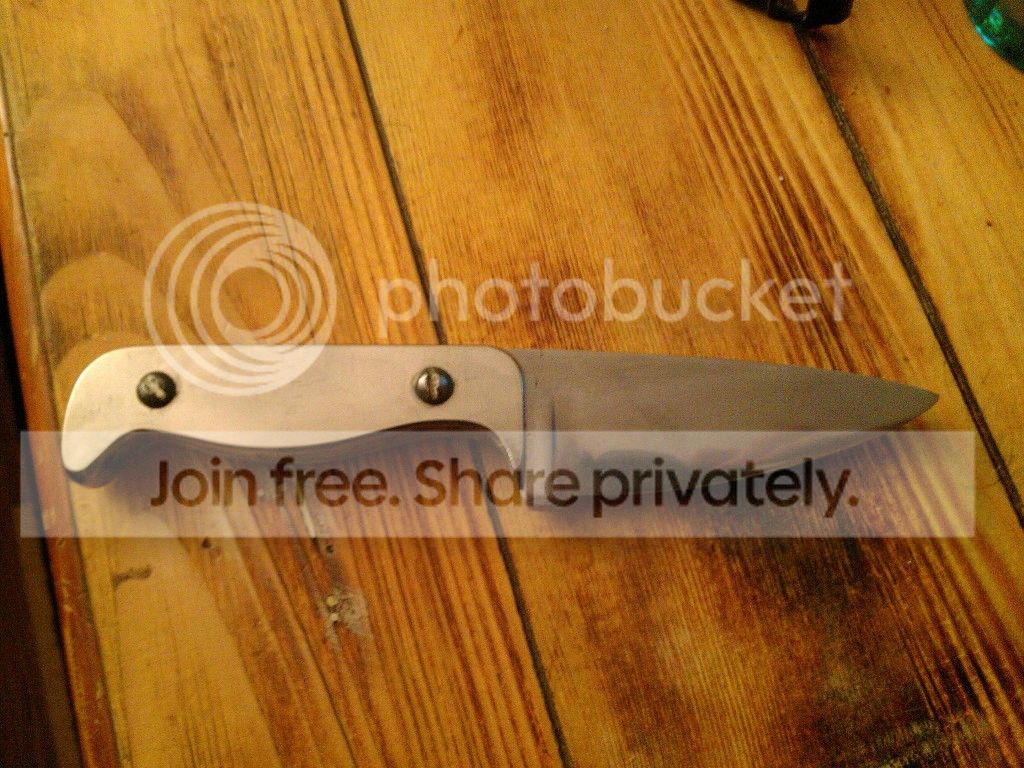
fitted some scales to it today... 304 stainless in 10 gauge
IMAG0214-1.jpg


just want a real nice clean knife... so i'll either polish these to a near mirror finish or sand them to a brushed finish... might even just media blast them and leave them that way... i want to tap the tang and use tapered head screws to anchor the scales and epoxy them in place...
 
couldn't do the inset taper head screws... hole was drilled to big to begin with... learned something for next time i guess... lol..
used these screw/sleeve bolts... not sure their real name... my dad always called them sex bolts...
IMAG0217.jpg


might order some pins and do pins in place of the bolts... never done pins before... so it'll be something new... decided on a brushed finish for the scales...
IMAG0215-1.jpg


bought sandpaper up to 1000 grit... and it might just be the softer material that didn't let me polish it really really nice... but no matter what i did i always had little tiny scratches left over... even after an hour or two of buffing... i have all 4 grains of polishing compound... and i used all four to progressively work up in clarity... but they never quite went away... we'll see how it goes when i get some 1084 and build another knife... hopefully i can sink some money into supplies after the first of the year and get some better results...
 
Last edited:
bought sandpaper up to 1000 grit... and it might just be the softer material that didn't let me polish it really really nice... but no matter what i did i always had little tiny scratches left over... even after an hour or two of buffing... i have all 4 grains of polishing compound... and i used all four to progressively work up in clarity... but they never quite went away... we'll see how it goes when i get some 1084 and build another knife... hopefully i can sink some money into supplies after the first of the year and get some better results...
Did you alternate the direction of your strokes, making sure to remove all the scratches from the previous grit?
 
If you counterbore the scales for the bolt heads, you can recess them flush. If done just the right depth, you can grind the slot part off ( after tightening them) and have a Corby bolt look.

They are called sex bolts because there is a male bolt and a female bolt to each set.
There are also lots of other names for them like Chicago screw, Barrel bolt, Post and Screw .
 
Did you alternate the direction of your strokes, making sure to remove all the scratches from the previous grit?
Yes... In each grit I would sand lengthwise, then across the blade until the first sanding marks were completely gone... Then with the next grit until the previous marks were gone... I buffed it once and wasn't happy, so I went back to 1000 grit just to see if it would turn out a little better... And I still had super fine scratches left over... Though I can still see a clear reflection in the blade... I'll have to just do better next time...
 
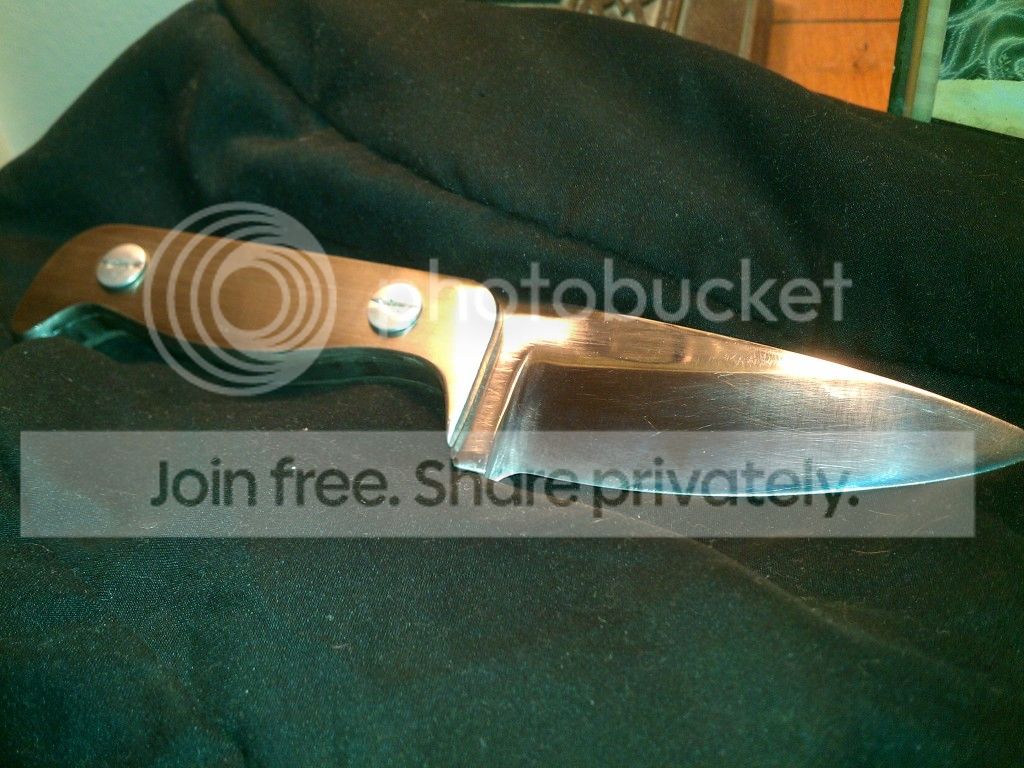
took your suggestion bladesmith... the counterboreing didn't turn out as clean as i had hoped but the sanding down of the bolts worked great...

IMAG0222.jpg
 
so... to complete my thread...
on another WIP someone suggested that i mark a center line down the edge of the blade section before i start grinding to try to keep my bevels straight and even... this worked great... not something i ever would have thought about... i also planned my bevel with the thought that if i messed up the bevel edge on the thick side of the blade then i could take the grind the entire width of the blade... so i tried for the more complicated grind with a provision to save the look of the blade if i couldn't complete it the way i wanted... i found that clamping it to the bench flat and cross hatching the grind part of the blade with a sharpie let me see what i was grinding fairly easily... seemed to work great as a way to do a rough grind and just remove a fairly large amount of material quickly... after i got the lines i was looking for i took a file to the length of the blade with it held flat in my vise... i left the handle section rough so that the marks left by the vise biting into the top and bottom of the handle would eventually be ground away... but this let the knife sit horizontal while i filed it to a cleaner edge... then i flipped it over and did the other side... i kept doing this over and over watching my center line to try to keep the bevel even on both sides of the blade... throughout this i kept dipping the blade in water to keep it cool... after filing it i ran the flap wheel down the blade once again with the blade clamped to the bench to remove the file marks... then i went to the sandpaper... i spent 5-6 hours sanding on it that first night starting at 80 grit and working my way up to 1000 grit... i took the blade in and used a carbide bit on a die grinder to smooth out the inside curves of the handle and the flap wheel to the back edge of the blade down the length of the handle... since this seemed to work quite well i didn't bother asking if there was a better way to do it... with the tools i had access to at the time it seemed the most effecient way of getting the result i was looking for... the fittment of the scales was done much the same way i used superglue on the smooth surfaces because i knew that it would create a temporary hold but could be popped loose fairly easily... i superglued the scales in place and drilled them immediately... the drilling before shaping was suggested on another thread so i just went with it... it worked quite well... after i bolted the rough scales in place i was able to grind them down further to match the tang of the knife and they formed to fit quickly and easily... the rest is detailed quite well in the above posts and suggestions... if anywhere this process could have been done better, or even just differently, please feel free to point it out... i'm hoping to make another out of either 1084 or 1095 in the coming weeks... so everything i learn here will be used there... any suggestions are welcome... including which version of the high carbon steel to use for a better, future, version... thanks again...

P.S. i know the pictures don't really do it justice... it isn't up to the level that many of you craftsmen are at... but i am quite happy with the way it looks... i can only go up from here... but i am very interested in learning the subtleties of the craft... i know there's alot more to it than many of you make it seem...
 
As a noob my opinion probably isn't worth 2 cents but I like the overall shape and I think in the end the next knife you make could be a very useful tool. IMHO I would put a little more belly in the blade and bevel the edges of the handle for comfort. I've never done this so I may just get lambasted for my trouble but maybe put a scribe line a little ways in from the edge of the handle profile all the way around then file at 45 degrees until you hit that line. After that you could round it off with sandpaper.

Also, and maybe this just works for me but it was a suggestion from someone with a lot more experience, I would leave a little more steel around the profile of the edge. Leaving a little more in this area will give you some room to fine tune the bevel to get it where you want it. It's fairly easy to bring the edge up to where you want it once the bevel is established but rather impossible to bring it back down. Once you've done a bunch and creating a bevel is second nature I doubt you would need this step but for me it helps.

Oh, don't forget to use a slow cure epoxy when you do it for real and drill and chamfer tang holes to allow the epoxy to grip both sides. Some divots on the inside of the handle would help this too.

Last thing, as it has already been said, even if you think all the lines were out from the previous sanding I can't believe that was the case. There is absolutely no point in moving to the next finer grit until you are positve all the scratches are out (unless they don't bother you). Maybe you need better lighting and some form of magnification. And make sure you decontaminate the area of all the little left over particles before you move on in grits.

I get the feeling lately that I should keep my noob opinions to myself but I am only trying to help.
 
Last edited:
Status
Not open for further replies.
Back
Top