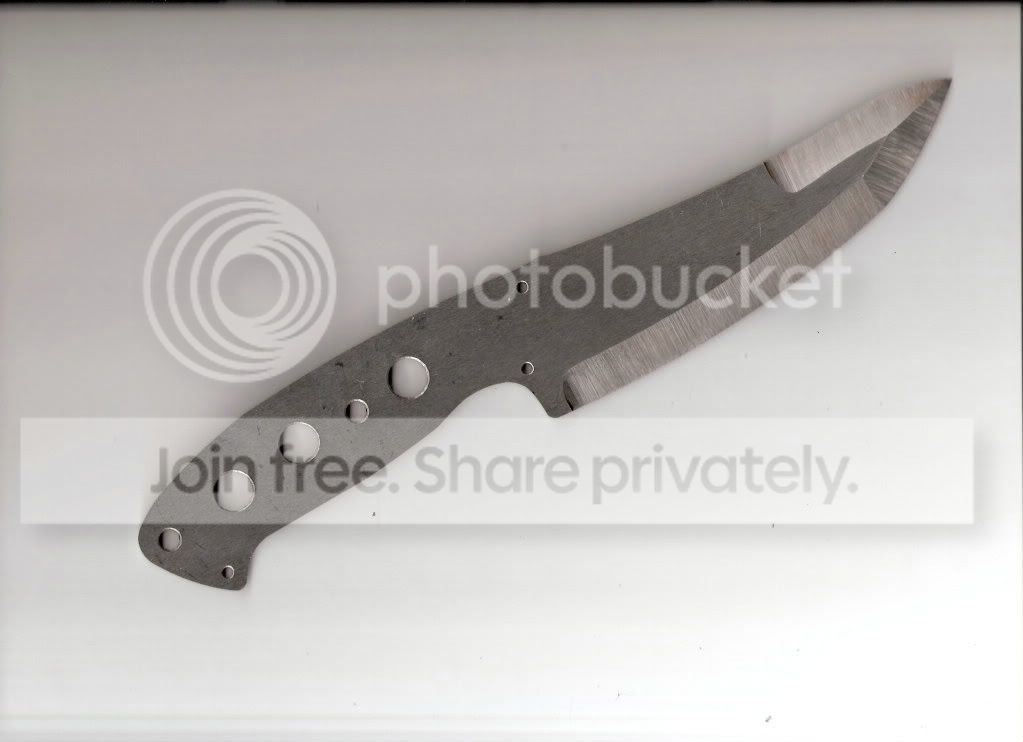
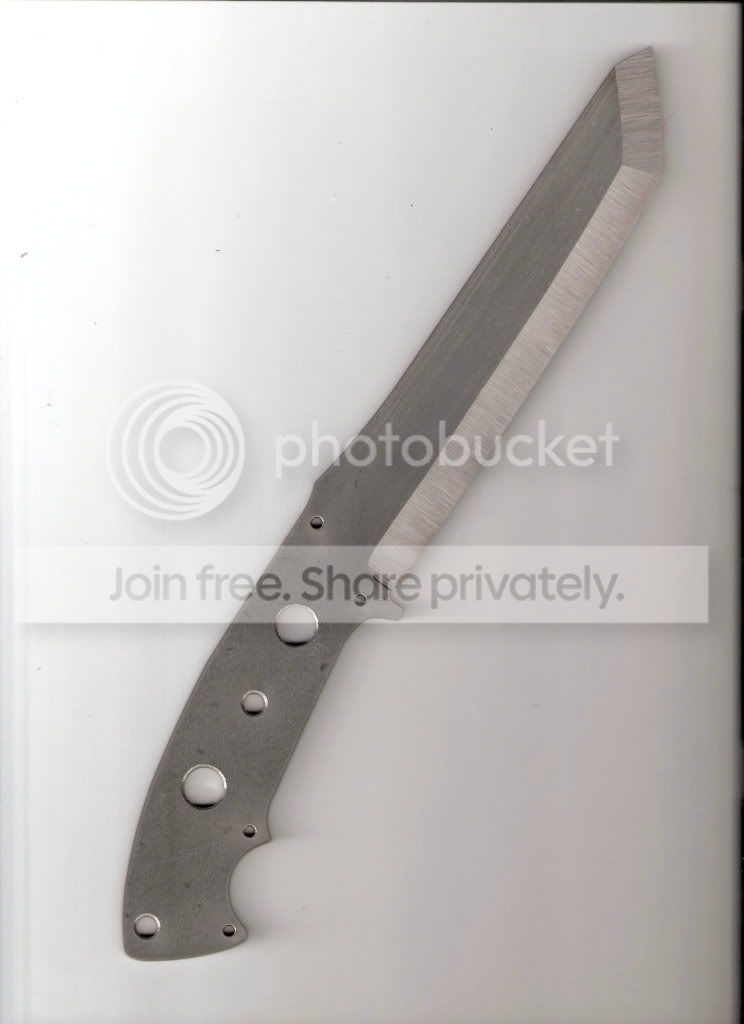
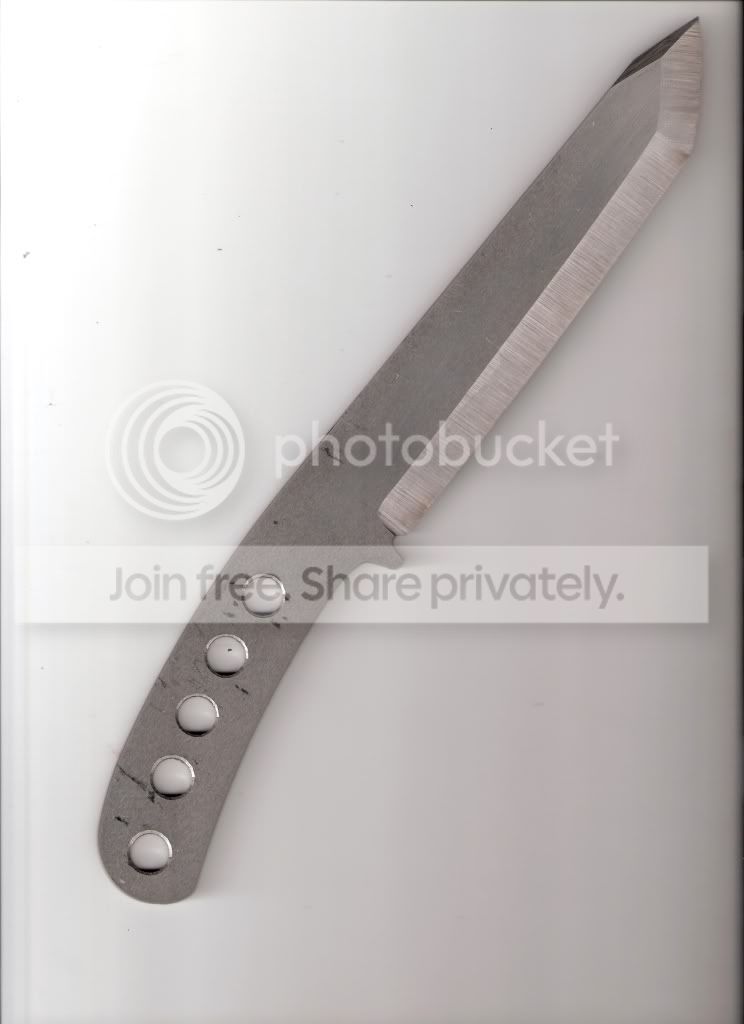
dancin a jig cuz of my jig!

Joined
Apr 29, 2008
Messages
125
well after the cussing and band aids and not having fun, as in this thread here,http://www.bladeforums.com/forums/showthread.php?t=578272
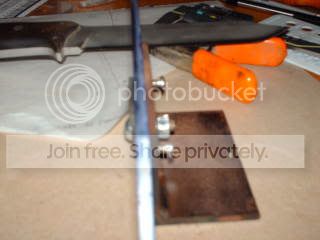
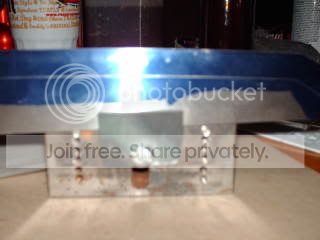
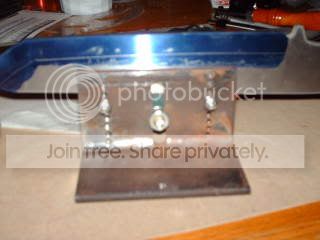
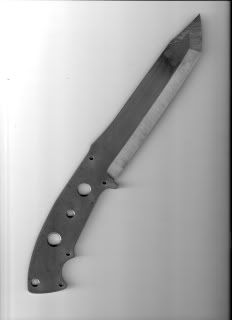
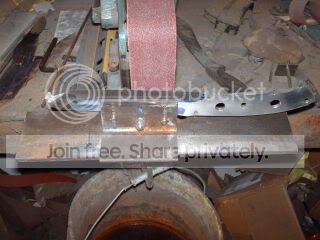
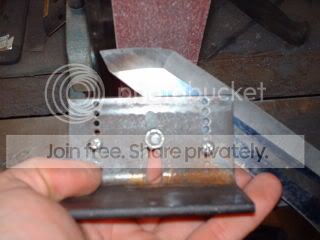
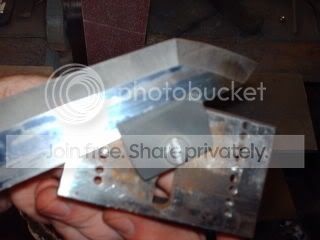
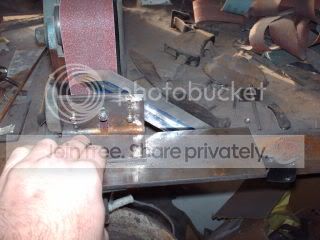
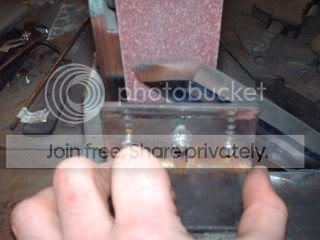
I made me a jig.
i know, it does feel like cheating but it is so much easier now.
knifestuff023.jpg

knifestuff021.jpg

knifestuff022.jpg

scan0001-1.jpg

scan0002.jpg

scan0001.jpg

kubikagiri.jpg

it's fun once again.:)
 
These are very nice grinds, good job. I'd say if you are happy with it keep cheating then :D
 
I always get a chuckle out of the folks that call it cheating and say stuff like, "you're not a real maker unless you grind free-hand."

I ground free-hand for about 7 years. I spent a few days with Mike Vagnino back when I was about 24 and learned to grind off a long tool rest. It was actually harder for me for about two years, but it's how I grind now. It's how Tim Hancock grinds.

So those of you reading this thinking jigs or anything but freehand makes a guy less of a maker... Are you a better maker than Tim Hancock????

I can still grind free-hand and do for some blade profiles... but for 95% I grind on a 30" tool rest. All it does is take the wobble out of your "X-travel" ;)

If that's cheating, then I suppose anybody who uses a drill press is cheating over somebody who drills with a hand drill, right? lmao....

I guess my rant is over, I just see a lot of the "not a real knifemaker if" type of comments regarding this stuff and decided to post my thoughts on it. :)

Wait, I just remembered I use a disc grinder in between belt grits on the grinders and do that free hand... so maybe I'm halfwayz a real maker! :p
 
If you didn't make your own steel... make your grinder, cut and block out and dry the wood.. if you well you get the point. :D

I'm not here to tell people how to make knives, I'll leave that to the Guild, ABS and customers.
 
Just to clarify, I personally don't care HOW a guy/gal comes up with a finished knife so long as it's well made, has nice lines, and will do WHAT IT'S MADE TO DO. :)

I think the goal for most folks is to enjoy making a knife, and hopefully make the best one they can. IF you don't enjoy doing it free-hand, but do enjoy the craft using a jig... then I say use a jig.

If you come to a design that HAS to be ground free-hand, then you'd better know how I suppose ;)

I am an extremely particular person when it comes to what I make with my hands. I surface grind the ricasso of my knives, and then EVERYTHING is referenced/indexed off of the ricasso.

When a person picks up one of my knives:

I want them to be able to sight down the blade and see the tip perfectly centered with the thickness of the blade.

I want the blade flats....well, FLAT, no ripples.

I want them to see perfectly matched plunge cuts... not just the radius in front, but I want them symmetrical from top to bottom (there's a lot that can go wrong in a plunge from the choil to the spine).

I want the edge to be perfectly centered from choil to tip.

I want the tapers to be perfectly even.

I want the clip grind to be perfectly even and symmetrical.


I can get as close as my hands allow doing all that free-hand, but I can do it with less headache and faster by doing it off my tool rest. (please note I said "close" as you can approach perfection, but you can't actually get there. :) ).

You can f-up plunge cuts with 600X paper while you're hand sanding... so just think how badly you can f it up with a 60X belt :D
 
RobertJ, how do you angle your jig? Do you angle your table or shim the jig? I picked up some angle iron to make one of these after seeing something similar on BB, and was considering the best way to set angle. I was thinking about tapping the non blade holding side and using set screws on a flat table.

Nick, I'm probably just being stupid, but I can't get a picture in my mind of what a 30" toolrest looks like. Got a pic, or could point me to a link?

Thanks
 
I don't use a jug because I find it more simple not to. I agree with the theory that it doesn't matter how you get it done as long as you get it done. The only downside to using jigs for me is when the jig doesn't work in a certain situation and you end up grinding it free-hand. In this situation, I imagine it would be nice to have some skill at free-hand so that you have the ability to do it when the need arises. I still do my plunges with a file because my grinder runs at mach 10 and getting the plunges even at a high speed with a high grit is really difficult for me. Rather than mess the blade up that far along, I just attach the file guide and final cut the plunges that way. Essentially, I grind the main grind just short of where I want the final plunges to be. Then file cut the remainder of the main grind with a file. This works out great for full flats or full convex plunge lines.
 
I agree with you Nick. The result is what counts, not whether you used a jig or not. Personally I've been free handing because I think that it's better training for me at this stage. Frustrating though...
 
Thanks for the words of encouragement fellas. Im self taught through books and trial and error really. freehand hollow grinding is no prob but i just cant get the flatgrind to bend to my will. And all the books ive read have shown makers grinding free hand so i figured if its what they do its what ill do. till now anyway:cool:
That jig took about two knives to get used to before i was getting those nice clean lines. U have to sweep and caress the belt lightly in one fluid motion from plunge to tip in order to keep the grind looking nice.
thanks for the kind words gixxer. If you cant make it all out i'll take more pics for ya.:thumbup:
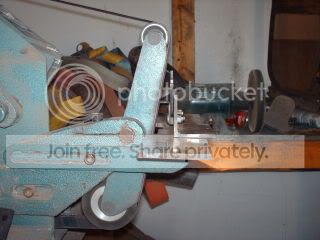
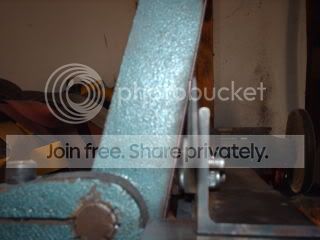
kiahs, im running a squarewheel grinder with a modded work rest. the jig stays flat on the workrest and i angle the flat platten to the desired angle.
I can stage the set up if you guys would like to see more.
 
I made one this morning, only difference is I used c clamps to hold the blade to the angle alum, measured, drilled, and tapped a couple 4-40 holes strategically to what looked good for the different widths of stock I use. I was able to clean up one blade, and grind flats on one other in about an hour.

I am still grinding on a 4x36, so I adjusted the angle of the whole platen, took about 1min. I used layout dye to check the angle after a change. Was pretty effortless for the most part. Awesome thing is once you get the angle set you do not have to touch it even after switching sides or belts. The c clamps make nice handles to hold onto while grinding, and also when dunking the blade in water. Oh, the alum kinda acts as a heat sink (think quench plates...) so I could grind a bit longer before water residue from the dunk would evaporate off from heat.

What really SUCKED was the top wheel on the grinder was squealing something fierce, so I took it apart to relube the shaft. Figures I have no split ring pliers. So, after spending TWENTY DOLLARS for a pair at Lowe's I got the machine back together. The pliers are nice, but I really did not want to spend that much. OTOH they are pretty high speed low drag for a pair of pliers...
 
I wouldn't call that cheating I'd call that injuneity!!!!!
I would love to see some pics of your set up at the grinder with this guide, in other words how is the guide working against the grinder.
I have been kicking around an idea in my head for a similar guide and if it works as good as I think it might. Well let's just say it will make the process childs play.
My problem is I havent figured out how the guide is going to mount / lay to the grinder.
Are you using your guide free hand against the ginder or is there an attachement?
Inquiring minds need to know!:)
 
Garrett, you are right in that this jig is limited in its use. if i wanted to grind all the way to the spine this jig wont be able to help considering it clamps the flats of the knife. Once one side is ground and you go to flip it to do the other side there is nothing for it to clamp ahold of to keep it square.
Kostoglotov, you will be in for a surprise i think. It's nothing fancy, in fact its crude, ugly and almost stone age:D but it works!:thumbup:
gixxer, I used Cclamps before i put in the middle clamp. I found they were an encumbrance and just got in the way of things.
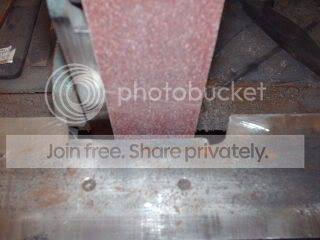
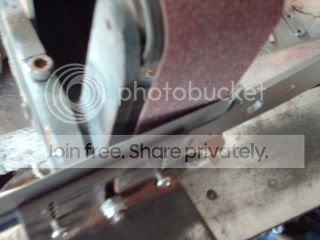
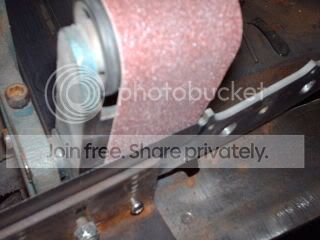
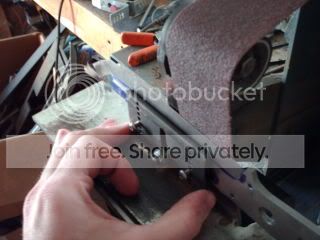
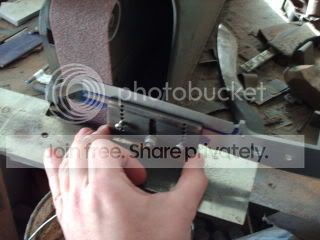
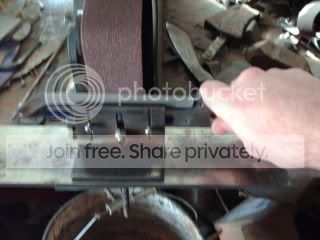
Dixieblade57. heres the set up.

Modified work rest and jig.
knifestuff153.jpg


Pic showing angle of flat platen
knifestuff155.jpg


Allready ground bevel up against angled platen.
knifestuff154.jpg
 
Modded work rest
knifestuff162.jpg


Angle at which i start my grind to make sure the plunge area stays even with the rest of the grind.
knifestuff157.jpg


as soon as you touch the belt bring the knife in line with the belt and start drawing the jig to the point of the knife on the belt.
knifestuff156.jpg

knifestuff158.jpg

knifestuff159.jpg


its hard to show since i have to hold the camera but put these photoes together to see how i have my hand placement.
knifestuff161.jpg
 
Setting up to grind the tip.
knifestuff163.jpg

knifestuff164.jpg


move the workrest out enough to allow clearance of the knife between the platen and rest.
knifestuff167.jpg


if it's a curved tip just rock the jig back and forthto follow the curve.(if that makes sense.)
knifestuff165.jpg

knifestuff166.jpg
 
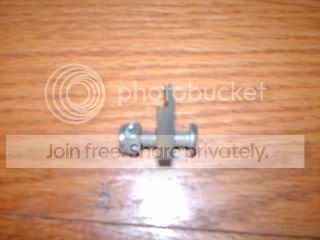
Pic of clamp. its just a scrap of G-10 I ground a lip onto help hold the blade with a hole drilled through to allow for a bolt.
knifestuff168.jpg


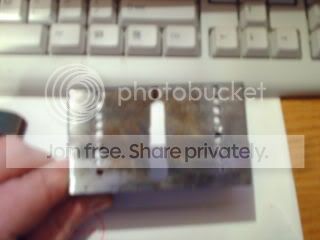
pic showing the super super crude slot cut down the center.:D
knifestuff169.jpg


It's cave man simple but very effective.
 
Back
Top