?? Designing Garden Tool

Joined
Sep 23, 2016
Messages
29
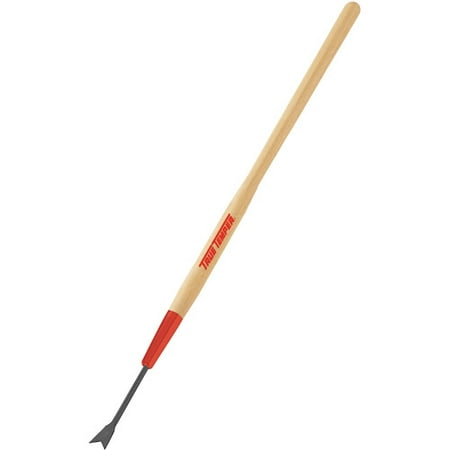
Hi! I'm a new member here. I am working on a design for a special garden tool that will feature a blade attached a long hardwood handle with ferrule of this kind...

https://www.househandle.com/products-2.html#hoes_chuck_and_bored

I'm a metalworking newbie and I have a few general real basic questions to start. The blade is a 2-dimensional shape cut from probably 3/16" steel and with a short sharpened edge. I have access to a CNC plasma cutting machine for prototyping. I hope to find a good quote for laser cutting the part and I intend to grind the blade angle and heat temper myself. I will also apply blackening.

These examples are close to the kind of aesthetic I hope to achieve...

https://www.etsy.com/shop/AshfieldTools/items

Can anybody recommend good steel flat stock for a garden tool like this? I also wonder about the blade shank and attachment to the handle(??). I would prefer to design the shank as a continuation of the blade 2D profile, but I could also weld a piece of thicker rod as the shank. This tool will be for pretty light use, but I wonder how susceptible it will be to bending during use with a thin steel shank. I've looked around, but can't find much information on attaching hoes, rakes and similar tools to wood handles.

Thanks for considering this. I will come up with more questions as I continue working on the project.
 
Last edited:
With hoes and rakes they usually firmly seat the tang, then drill and rivet through both the ferrule and the tang. Your steel can be something like 1045-1075 and do very well.
 
Beat me to the punch with the right answer and terminology.
A sleeve to go around the handle
Keep your work flat and unwelded for ease of construction
Slot the handle
Fit the tool
The sleeve (ferrule) goes around and bolts through it to hold it all together.


Or you could be way less anal and buy a ferrule cheaply.;)


71132-76ea0e00d3ceac0e884f1d5f5f7c929d.jpg
 
Thanks very much! This gives me a good starting starting point. Thanks also for the correct terminology. The tang is the part that goes inside of the handle.

I hope that I can make the whole blade including tang as a single 2D part. It will extend only about 4" beyond the end of handle, so maybe the 3/16" stock will be rigid enough.

The manufactured hardwood handles that I found have the steel ferrule already attached.
 
I hope to cut out a couple of shapes with the CNC plasma cutter.

Will this material be ok for prototyping?...

http://www.menards.com/main/tools-hardware/household-hardware/stock-metal/weldable-steel-flat-3-16-x-2-x-3-ft/p-1444432415017.htm

That material probably won't hold a very good edge, but maybe it will be easy to sharpen and good enough as I work on the design. What do you think?

I found a garden tool handle with a steel ferrule and bored with a 3/8" round hole several inches deep. I wonder about securing the flat, 3/16" thick tang in there(?). One idea that came to mind was to cut a pair of thinner steel strips to fill the space on either side of the tang very snug. I could additionally secure with rivets, although if there are three pieces of steel inside the holes will need to line up precisely.
 
Last edited:
I hope to cut out a couple of shapes with the CNC plasma cutter.

Will this material be ok for prototyping?...

http://www.menards.com/main/tools-hardware/household-hardware/stock-metal/weldable-steel-flat-3-16-x-2-x-3-ft/p-1444432415017.htm

That material probably won't hold a very good edge, but maybe it will be easy to sharpen and good enough as I work on the design. What do you think?

I found a garden tool handle with a steel ferrule and bored with a 3/8" round hole several inches deep. I wonder about securing the flat, 3/16" thick tang in there(?). One idea that came to mind was to cut a pair of thinner steel strips to fill the space on either side of the tang very snug. I could additionally secure with rivets, although if there are three pieces of steel inside the holes will need to line up precisely.

Do you have a plasma cutter at home?

You could jam all the steel in there and then drill. A Drill press would help a lot with the drill making a bigger hole in the wood. Heck, drilling last, using epoxy to fill spaces after all the metal is in, securing with nails, a lot of people have rakes and such put together just like that. For a prototype......
 
I'm a member at one of those community workshops and there is a full metal shop there.

Yes I wondered about drilling through the layers of assembled parts, but that is a lot of material. I could put a hole in the tang of the vector shape, then build a simple jig for the drill press to line up with the hole. That way the bit would just pass through that thick piece of steel, but cut the layers of wood and thinner steel.

I saw some cheap garden tools at the hardware store with tangs secured inside the handle in part with epoxy.

Does that low carbon welding steel look alright for prototyping? I want to make something good enough to use so that I can test it out.
 
I got the prototype made and it turned out OK. It works nice.

I need to resolve some more details. The 3/16" stock seems to be heavy enough. I secured the tang in the handle with two heavy finish nails and it looks as though the friction is plenty to keep it together. I don't think it needs rivets through the fertile, although I wonder about something that will look more professional than nail heads at the end of the handle. Maybe I could use some kind of thin rectangular stock cut to fill that space.

The plasma cutter made the shape alright, but not very precise, so I need to see about laser cutting.

It was pretty easy to make the cutting edge with the bench grinder. With some practice I can make it look better.

I think this will look good with blackening. Can anybody suggest a method for this?

image.jpeg


image1.jpeg
 
It chops through the plant stem right at the top of the crown, so it does not disturb the soil and encourage more weed germination. It's intended for removing invasive weeds from places like woodlands and prairies.

I would love to hear ideas for blackening or other finish options.
 
The blackening can happen naturally during HT, if it gets an oil quench.
It looks like the power stroke is a push, so it doesn't need much riveting, more a good firm seating. Epoxy may be the most appropriate method of fixation, if needed.
 
The blackening can happen naturally during HT, if it gets an oil quench.
It looks like the power stroke is a push, so it doesn't need much riveting, more a good firm seating. Epoxy may be the most appropriate method of fixation, if needed.

Thanks! I will also have some more specific questions about heat treating on the way.

I think I will use epoxy to fill up the end of the ferrule. Otherwise that space will get jammed with debris during use. I just need to practice getting it in there without making a mess.

The friction seating with finish nails for the tang seems to be plenty strong enough.
 
When using epoxy, a mess is expected. Wear gloves, use masking, work in an area where drips on the floor don't matter.
 
Thanks! I will also have some more specific questions about heat treating on the way.

I think I will use epoxy to fill up the end of the ferrule. Otherwise that space will get jammed with debris during use. I just need to practice getting it in there without making a mess.

The friction seating with finish nails for the tang seems to be plenty strong enough.

Apply the epoxy like cake icing. Mix it up and put it in a Ziploc bag, snip a tiny corner off, and squeeze it into the cracks. For extra precision, tape off any spots you want to keep clean.
 
The blackening can happen naturally during HT, if it gets an oil quench.
It looks like the power stroke is a push, so it doesn't need much riveting, more a good firm seating. Epoxy may be the most appropriate method of fixation, if needed.

This. A rivet isn't even really necessary in this context since the force applied to the tool will be pushing it into the handle. Just a large enough tang with a compression fit should suffice. Unfortunately capped ferrules aren't very easily sourced anymore or else that'd be an easy solution for getting dirt up in the handle, but epoxy would certainly do it. I've used a ball pein hammer to dap in end of the ferrule on a few tools of mine and it makes a nice concave quarter dome if you do it right.

Heat treatment will form a dark oxidized finish, and a simple clear lacquer coat over that will be all it needs to protect it against rust until it's put to work.
 
Back
Top