Diamond powder infused blades

Historical swords were a response to a long running arms race. They can’t be taken in isolation and they were much more that a long steel thing with an edge. It doesn’t matter how great your sword material is if your opponent can drive his weapon into you first. Factors like armor, techniques, shields, hand protection, pole arms and range weapons all impacted the form and function, as did the physical size, preference and skills of the user. There are a lot of people making sword like things and few or none of them understand the science behind the tool. Understanding the balance and flexibility required and then finding a way to provide the user with the right tool for the job was a real science.

N2s
Well, I was going to write this up and discovered that someone beat me to it. Thanks NotToSharp.
 
Okay, forces could not have known with any certainty by testing alone, at the time of their given conflicts, whether armament changes would be effective against the unknown factors presented by the opposing forces. I think it's reasonable in hindsight to say with no small amount of confidence whether certain material or other changes to a given weapon would have been an improvement or not, since we can simulate a lot of what we know about what the weapon would face from the historical record, and test against it.
 
I'm trying to understand what Triton Triton means by "we can't know" if a weapon material change is an improvement. The rigors a weapon would encounter during combat can be replicated with extreme precision in the testing that Doc was referring to, which suggests to me that we can know, by that testing, if certain material or other property changes are an improvement or not. Specifically I am not understanding how skill of opponents in actual combat is required to know if the physical properties of the weapon are improved from one version thereof to the next.
I think I understand the disconnect. Obviously materials science has improved, most carbon steels that we have today are far superior in quality to anything available to our sword wielding ancestors. I've read that a decent percentage of available ancient swords available for modern study (admittedly a tiny percentage of the original totals) were mostly iron with a bit of steel tossed in for good measure.

There's a difference between better materials and better swords however. Better materials help. If we make a modern version of an Oakeshott type XI with modern steel AND taking into account similar weight, ba!ance points and edge geometry, amongst other characteristics, we will probably have a great weapon for 12th century mounted combat, far superior to most of what was available at the time. If you make the same sword but monkey with something like say the weight have you made a superior weapon for 12th century mounted combat? I have no idea, but I'm guessing probably not. Is a diamond dusted blade better? Or is it worse? Again, we don't know unless your time machine is working better than mine... And even if it is where are we headed? The 12th century? The 10th? The 15th? The swords were quite different in every era. The later ones were not "better" they were merely built for evolving purposes.

So can we improve the sword with modern materials? Sure, right up until you start impacting the form and function, at that point I submit that we have no idea that our improvement is anything of the sort.

Your mileage may vary.
 
So can we improve the sword with modern materials? Sure, right up until you start impacting the form and function, at that point I submit that we have no idea that our improvement is anything of the sort.

Agreed.
 
I appreciate an interesting discussion about swords with a knowledgeable fella like yourself.
 
I think I understand the disconnect. Obviously materials science has improved, most carbon steels that we have today are far superior in quality to anything available to our sword wielding ancestors. I've read that a decent percentage of available ancient swords available for modern study (admittedly a tiny percentage of the original totals) were mostly iron with a bit of steel tossed in for good measure.

There's a difference between better materials and better swords however. Better materials help. If we make a modern version of an Oakeshott type XI with modern steel AND taking into account similar weight, ba!ance points and edge geometry, amongst other characteristics, we will probably have a great weapon for 12th century mounted combat, far superior to most of what was available at the time. If you make the same sword but monkey with something like say the weight have you made a superior weapon for 12th century mounted combat? I have no idea, but I'm guessing probably not. Is a diamond dusted blade better? Or is it worse? Again, we don't know unless your time machine is working better than mine... And even if it is where are we headed? The 12th century? The 10th? The 15th? The swords were quite different in every era. The later ones were not "better" they were merely built for evolving purposes.

So can we improve the sword with modern materials? Sure, right up until you start impacting the form and function, at that point I submit that we have no idea that our improvement is anything of the sort.

Your mileage may vary.
If you cannot even define a goal , i.e. what constitutes "improvement " , then granted . Obvious, but not meaningful to your original thesis .

This is just a tautology. If something is unknowable then we cannot know it ! 🤪

This has zero relevance to the validity of testing per se . This is a failure of intelligence and accurate prediction of future circumstances . Battlefield or otherwise . 🤷‍♂️
 
I don't see that it is very difficult ,or mysterious , to be able to define possible improvements for any cutting tool , including a sword .

Its job is to cut . Make it cut better . Make it cut tougher stuff .

Make it sturdier , more reliable and long lasting . Make it need little or no sharpening or maintenance .

Make it easier to carry and use . Etc . Seems like a no-brainer to me .
 
Make it out of just the right Jello that the dragon is deathly allergic to.
 
I don't see that it is very difficult ,or mysterious , to be able to define possible improvements for any cutting tool , including a sword .

Its job is to cut . Make it cut better . Make it cut tougher stuff .

Make it sturdier , more reliable and long lasting . Make it need little or no sharpening or maintenance .

Make it easier to carry and use . Etc . Seems like a no-brainer to me .


Whether a weapon is effective or not depends on context. The battleship was the ultimate killing machine until it encountered the airplane. A katana is a beautiful weapon, yet as a primary weapon on a 14th century European battlefield it would have been all but useless against well armored opponents (armor was in ascendancy over the sword); It also would have been severely disadvantaged against the rapier in an unarmored battle (shorter, slower, cut vs thrust).

N2s
 
All I'm getting out of this is my Cold Steel Gladius machete must be better than an actual Roman Gladius.
 
Silicone caulk is pretty far from pure silicon. It’s a silicon and oxygen based polymer like most other polymers are hydrocarbon based. Saying that is like saying Teflon is polymerized graphite. Thats not really how it works.
Me2 has it.

I will quote Kevin Cashen here:
"Everyone is entitled to their own ideas ... but no one is entitled to their own science."
 
All I'm getting out of this is my Cold Steel Gladius machete must be better than an actual Roman Gladius.
Which gladius are you referencing there were several main(z) types. (I couldn't resist the small pun.) 😀 That aside, for cutting brush in the back yard? Absolutely. For armored combat against the Parthians maybe not? Then again Lynn Thompson probably has a video showing him cutting a whole row of lamellar armor in half so maybe you are right after all.
 
If you cannot even define a goal , i.e. what constitutes "improvement " , then granted . Obvious, but not meaningful to your original thesis .

This is just a tautology. If something is unknowable then we cannot know it ! 🤪

This has zero relevance to the validity of testing per se . This is a failure of intelligence and accurate prediction of future circumstances . Battlefield or otherwise . 🤷‍♂️
The goal is definable the mechanism to test our hypothesis doesn't exist anymore.
 
I don't see that it is very difficult ,or mysterious , to be able to define possible improvements for any cutting tool , including a sword .

Its job is to cut . Make it cut better . Make it cut tougher stuff .

Make it sturdier , more reliable and long lasting . Make it need little or no sharpening or maintenance .

Make it easier to carry and use . Etc . Seems like a no-brainer to me .
A great cutting sword (cutting what by the way?) isn't necessarily a great sword for combat. I can sharpen up a crowbar and it will be sturdier than any sword ever made... But would be totally inadequate on a 13th century battlefield. The point we have been trying to make, apparently unsuccessfully, is that there's no test that can adequately substitute for the actual combat application of the weapons in question. Swords evolved with combat conditions armored and armored over centuries, that evolution is no longer possible.
 
This video illustrates how complex swords design actually was. With each user seeking advantage based on very specific conditions and techniques.


N2s
 
There's a folder brand I had never seen before that claims to use diamond bonded to the cutting edge. I meant to save the link but forgot, was at the store.
The little I read looked gimmicky.
 
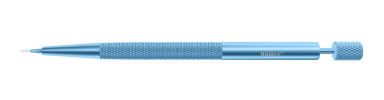
This is a read diamond blade knife. They are used in eye surgery. The 4nm wide by 1mm long edge is very sharp. While it would cut the enemy with easy, it would not hold up to a sword. These cost from $1000 to $2000. Being a diamond and the hardest material on earth, you would think the edge would last forever but they are only good for a couple thousand cuts. Even against something as soft as a cornea, the edge micro-chips on a nanometer scale and becomes duller.

1782382710152.png
 
I thought about this last night and remembered just now about diamond bonded saw blades. They obviously wouldn't make a good sword blade but it did make me curious if you coated the sides of a blade with that stuff what kind of additional gnarly wound damage it would be. Probably the deader than dead type but still, it was just a thought.
 
Back
Top