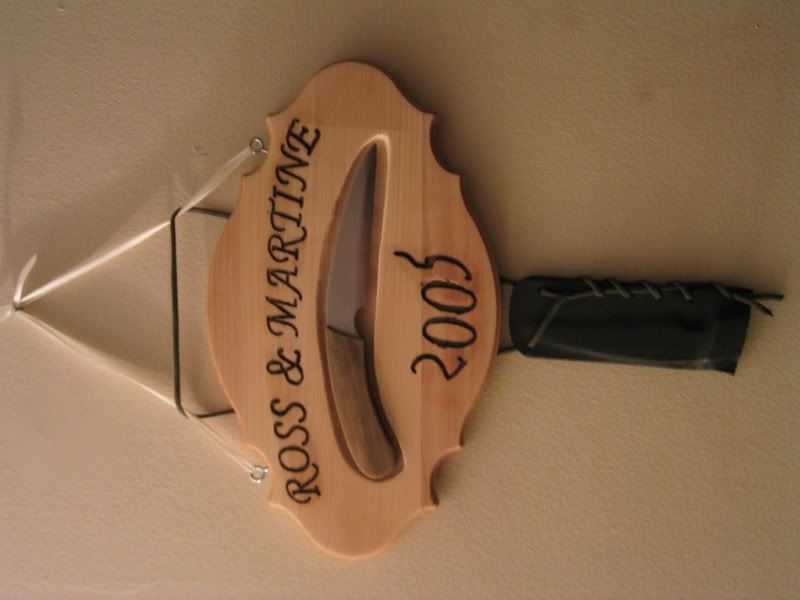
difficult or some what easy?

Did any of you make your own micarta scales?
I am planning on making my own for my first knife i want to be able to say i made it all. It will be mine if you know what i mean.

For what is involved in making them I don't and didn't see it being beneficial. If you can crank them out easily and with great quality then I can see a case for it. But for the amount of time and effort put into making the knife itself I don't see it worth the time, or the potential to waste more time or my hard work only to realize the scales are crap after they're glued on. Then again I don't pump out knives very quick at all also. If I screw up to the point I have to start over it's not like I can get back to where I was at in a couple days or less. Its kinda like how I don't feel compelled to go cut my own wood or burl for the scales. There are people who specialize in that sort of thing that will supply me with something that I can't duplicate and with a lot less time and effort than I need to spend.
 
Last edited:
I'm going to make my own Micarta. I just finished building a press for it. I too would like to be able to at least have some experience building every part of my knives. That is why I also have a stabilization tank and make my own sheaths. I want to be a well rounded maker with varied capabilities. whether or not I choose to specialize at some things and sub out other tasks will work itself out based on my time needs and deftness at specific skills.
 
My first "proper" knife was a 14" blade that looked sort of like a khyber knife, except for the sweeping curve after heat treatment, due to differential hardening, and was made from W1 rod. It remains unfinished in my garage, since it was one made specifically JUST to see if I could successfully do a heat treatment. The first one I actually finished was made later that same year, a 15" W2 steel wakizashi. The only crazy difficult part was heat treatment, I don't own a thermocouple and I kept losing my magnet in the dark.

As for regrets, I spent about 2 - 3 years completely oblivious to anything metallurgical, trial after trial of attempting to get high quality blades using 1018 mild plate and non-hardenable stainless. I was making the same mistake that I notice a lot of new makers are doing; believing that the movie industry would never lie about material science.

I think you're on the right track so far. O1 is a good knife steel (one of my favs) with pretty good edge retention. Be sure to let it soak in the forge for about 5 - 10 minutes depending on the blade thickness, the carbon in O1 takes some time to get in solution. I've never done home made micarta, but I have seen plenty of tutorials on youtube for it.
 
Micarta is cheap, easy and fun to make. I've made a few paper and cloth micarta scales for knifes and pistols. Resin is pretty cheap (I bought a $14 can from an auto parts store) and the material has been free so far. I used cloth from some old ripped pants and the paper was just printer paper from work.
My advice is start small. My best results have been making blocks just big enough for my needs. When I tried to do a big batch the resin started to gel and ruined it. If you're going to do a large block be very careful mixing the resin and hardener and maybe have a friend help out.
I use nonstick foil, a couple of wood blocks that I sanded flat, and a bench vise to press the micarta.
 
I'll play, but i am only about 3 weeks more experience than you. which in knife making equates to not knowing anything.

starting with 1084, as it is easy to HT. however i got over zealous and got .25" thick stuff. and i am filing all the bevels. its a chopper, i tihnk around 14" and looks like a big kitchen knife. but as stated the best advice i can give is

if you are going to do something do it right, or don't do it all.

my WIP is on this first page or two somewhere. i am documenting everything for peace of mind, and because i am not shy about my work and mistakes. might as well put them up for any other new builder out there to look at.

this forum and its members have been an enormous amount of help.
 
My first knife was incredibly crude and wouldn't advise anyone to do what I did.
I recommend a small (Max 7-8 inch OAL), full tang, 1/8" 1080 steel if you're going to do your own heat treatment. If sending it out for heat treatment then find out what type of steel your heat treater of choice treats and use that.
If you feel compelled to mess around making your own handle material jump in and have fun. If it doesn't work out you can use something else.
You will have a thousand little things to figure out. Filing a blade goes real quick at first but as the bevel works up the side of the blade you slow down so much you wonder if you're even removing anything. Keep your file clean and it will cut better.
Good luck and keep us informed of your progress.

- Paul Meske
 
My first was 1/8"O1, red liners and stabilized swordfish bill. Now I wish I would have gone with 3/32", as I like that thin of a steel for most of my uses. Plus more contouring of the handle, but being new and never having worked with swordfish I left the handle a bit blockier than I would now. The most important thing for me is to have fun- I couldn't worry too much about fit and finish in the beginning or I would have worried myself out of a hobby. Do a damn good job, but stop when it's no longer fun and see if the end result is worth your aggravation at this stage. Strive for the best you can do, but be willing to accept less than MasterSmith quality, that way you will get to knife 35, 56, whatever, and then you will be able to see how you are progressing toward making the perfect knife in your eyes. But I'm just an amateur who puts out few knives, so temper my statement with your experience and the advice from others that actually know what they are doing rather than me with an idea!

Here is my first
IMG_0152.jpg


Good luck and have fun!!
 
Thanks for all the ideas guys and pointers i will be applying all to what like i know and see what happens. I always take me time and do stuff right are atleast to the best of my abilities. I belive if you cant do it right then dont do it..

I like the idea of mounting the knife that way. I might have to do that with my first one. Just so i dont lose it or damage it so i can always look back and see how i have progressed of time.
 
Sounds similar to my first knife, except I didn't make my own micarta. O1 steel, black linen micarta scales and stainless steel pins.

I'd recommend using some manufactured micarta, in the spirit of keeping things simple. It will still be your knife.

Welcome to the the forums!

Ric
 
Why not just use wood scales? If you flub one, you're out about 50 cents. You won't feel bad, and you can just make more until you figure out what feels good.

I think handles/scales are the one thing you can get "just right" on your first knife. It's a major part of a first knife, and something you could most likely end up dissatisfied with.

If you don't have anything invested in handle material, you're a LOT more likely to re-do that major part of the knife. You'll probably learn a lot about handle contours, you won't be wasting anything, and your first knife will come out feeling good and looking good because you got to re-do them until you got it right.

It's a lot more important to figure out what feels good, and how to put a handle on your first knife, than it is to use a particular material. Especially a material that you have a lot invested in.

JMHO.
 
I don't have a picture, but for my first knife I used some 1095 and made a small neck knife with a cord wrapped hande, chisel grind, and a kydex sheath. Hard to get any easier than that.

Eventually, I moved on in difficulty: Grinding both sides of the blade, using different handle materials, including bolsters, etc...
 
A old lawnmower blade-which I only tempered. I believe the handle material was red linen micarta. I choose a very simple design to work with-a clip point with no curvature in the blade. I still messed it up because somehow, I managed to make the edge curve in towards the center before lining back up towards the tip. The grinds were also very thick to the point of where you'd probably be better off cutting something with a factory edged ax. I also tried fileworking it, but that unfortunately made the handles very unsightly due to gaps...so I ripped them off.

I've recently reground it and it's now the sharpest (and ugliest) knife I own with the hollowgrinds being very visible. I probably could finish it a bit better and replace the handle but since it's lawnmower blade steel-I don't think I'll bother.

Working with found steel isn't worth the trouble at all IMO and if I could go back and do anything differently, it would be starting with 1080,1084 or something similar, leave out the filework (that'll come later), prepare the steel better for a better fit/finish, etc. My next knife will probably be a remake of that blade-but this time done right.
 
Back
Top