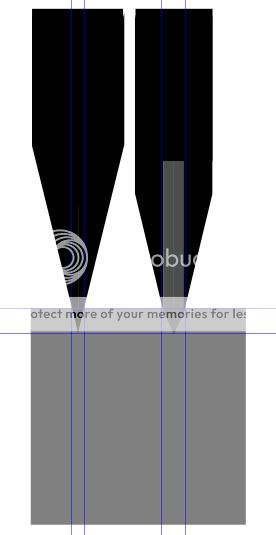
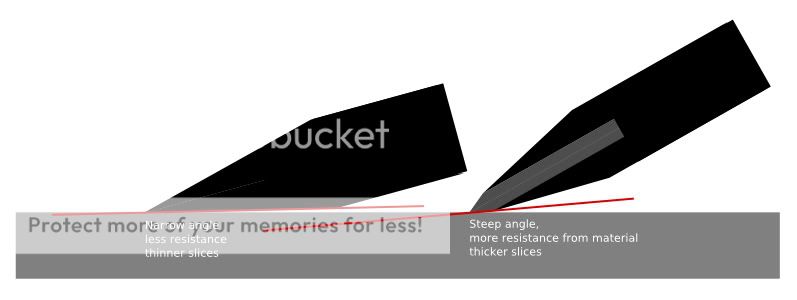
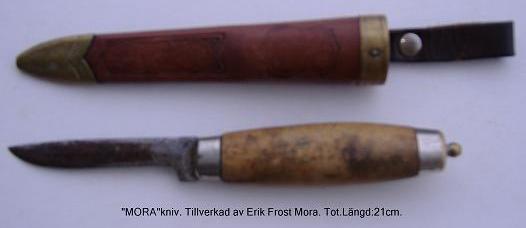
Many scandi ground knives are just very short machetes, with thinner edges for slicing and carving instead of the more robust edges seen on machetes for chopping. Try a full flat ground blade with a 10 degree bevel on it and then compare it to a scandi ground blade. For deep cutting, such as in potatos and carrots, I'd bet the flat ground blade will cut better. For harder cutting, the steel behind the edge could ripple on the full flat blade.
As for ease of sharpening, there is a lot of confusion and several definitions of that term. In terms of holding a consistent angle, yes, scandi grinds are easier. In terms of time to sharpen, the full flat ground blade with a 10 degree edge bevel will take less time, given the same level of dullness and same steel, blade size, etc. The point could be made that it is faster to sharpen the scandi blade because its easier to get a consistent angle and consistency leads to speed. I lean toward the flat ground blade being faster under any circumstance just because of the much smaller amount of metal that would have to be removed.
The main advantage of scandi grinds is the simplicity and cost. Nearly any knife nut who's good at sharpening should be able to get a piece of steel, file an edge on it between 10 and 15 degrees, harden or send it out for hardening, and put handles on it. It may be butt ugly like mine, but its a functional knife in about a day, not counting shipping or epoxy curing time. Try some A2 about 1/16 or 3/32 inch thick and send it out to Texas Knifemakers Supply or Paul Bos for heat treating. The hardest part will be final sharpening after heat treating if any flat is left on the edge before heat treating. That would take a while. A softer temper would make things easier if the loss of edge holding is acceptable. My scandi ground knife is made from M2 ground from a mechanical hacksaw blade. Its a convex edge instead of flat, ground on my Harbor Freight 1 x 30 sander, at about 12 degrees per side. Its the first knife I've ever tried that would cut a folded piece of paper free standing on a table and leave the bottom sitting on the table. Very sharp, 1/16" spine, and still strong enough to dig/cut a hole through a 1 x 6 without damage.
As for ease of sharpening, there is a lot of confusion and several definitions of that term. In terms of holding a consistent angle, yes, scandi grinds are easier. In terms of time to sharpen, the full flat ground blade with a 10 degree edge bevel will take less time, given the same level of dullness and same steel, blade size, etc. The point could be made that it is faster to sharpen the scandi blade because its easier to get a consistent angle and consistency leads to speed. I lean toward the flat ground blade being faster under any circumstance just because of the much smaller amount of metal that would have to be removed.
The main advantage of scandi grinds is the simplicity and cost. Nearly any knife nut who's good at sharpening should be able to get a piece of steel, file an edge on it between 10 and 15 degrees, harden or send it out for hardening, and put handles on it. It may be butt ugly like mine, but its a functional knife in about a day, not counting shipping or epoxy curing time. Try some A2 about 1/16 or 3/32 inch thick and send it out to Texas Knifemakers Supply or Paul Bos for heat treating. The hardest part will be final sharpening after heat treating if any flat is left on the edge before heat treating. That would take a while. A softer temper would make things easier if the loss of edge holding is acceptable. My scandi ground knife is made from M2 ground from a mechanical hacksaw blade. Its a convex edge instead of flat, ground on my Harbor Freight 1 x 30 sander, at about 12 degrees per side. Its the first knife I've ever tried that would cut a folded piece of paper free standing on a table and leave the bottom sitting on the table. Very sharp, 1/16" spine, and still strong enough to dig/cut a hole through a 1 x 6 without damage.

 ) removed the secondary bevel AFTER the contest (so the knife could be a "real Scandi ground knife"? All impurities must be removed. Faith over performance.).