- Joined
- Mar 12, 2010
- Messages
- 975
Hi all,
Here are some pics of my ESEE-4. After my most recent camping trip where it rained very heavily, my 4 started to show some rust in the laser engravings on the blade, as well as at the edge. I also batoned a lot of the coating off, so I decided it was time to strip the rest of it off and force a patina to make it a "true user".
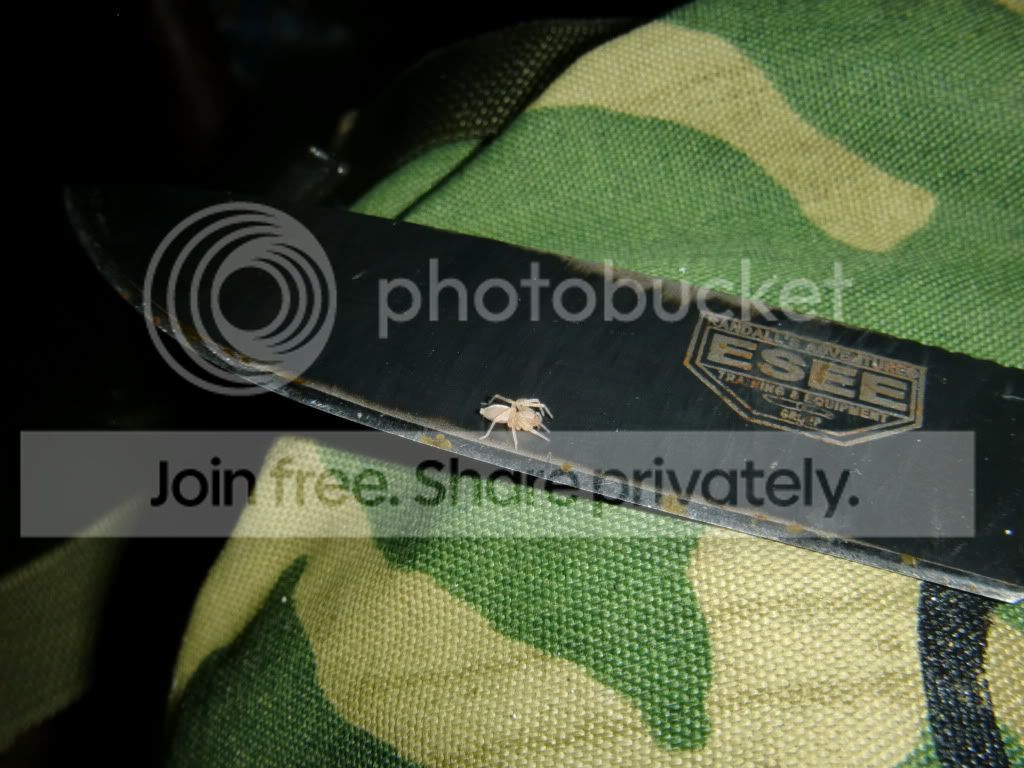
Here is a pic of the rough condition it was in after getting soaked for three days in Wisconsin.
After the trip, I cleaned the blade and handle with soap and hot water, let it dry, and began the take down process. DO NOT take the handles off of your knives unless you possess the proper tools and skills to do so... you can easily damage your screws and spacers.
I stripped the ESEE-4 using Zip Strip Paint and Finish remover. The coating began flaking off almost immediately after I applied it. After about 10 minutes soaking in a layer of the Paint Stripper in tin foil, I began using a spatula to start removing the coating while still in the paint stripper. Some areas came right off, but others were a little more stubborn. After 15 minutes all in all, the coating was completely removed and I had the knife rinsed and clean. This process does seem to dull the knife, but it can be sharpened up in no time afterwards.
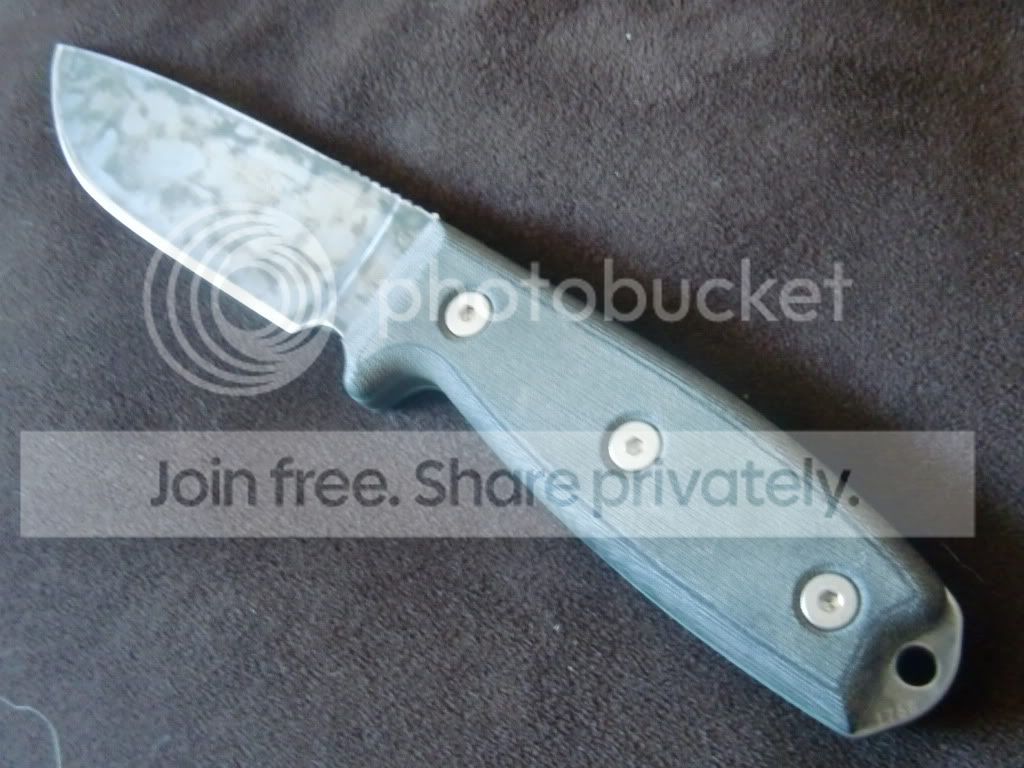
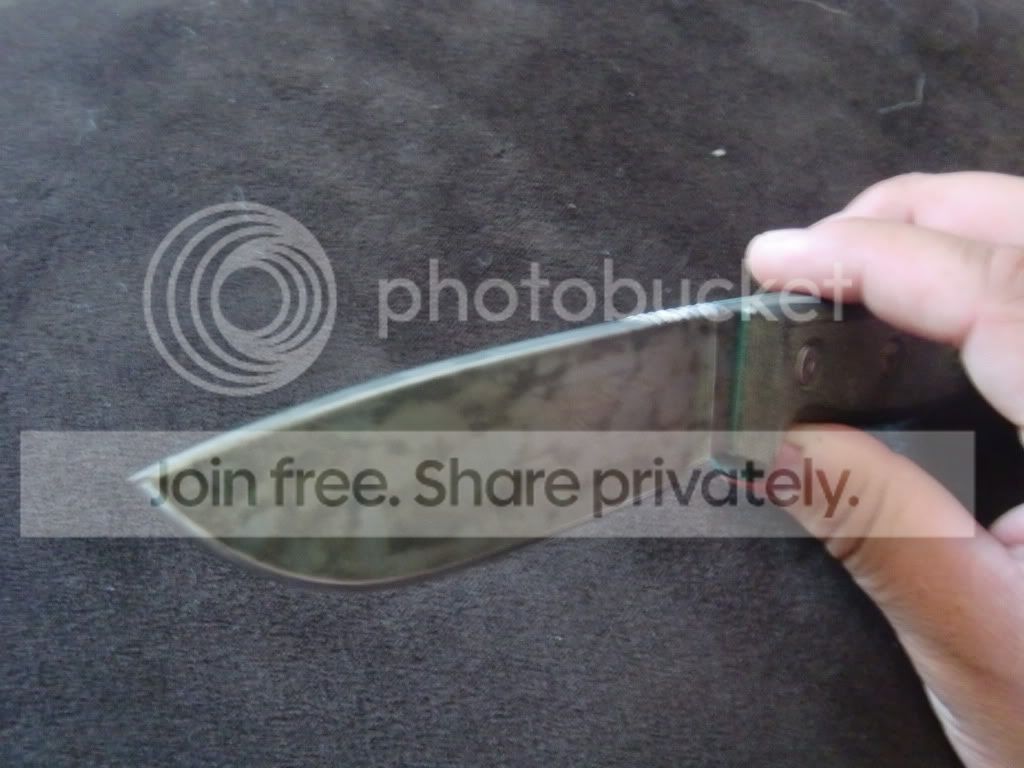
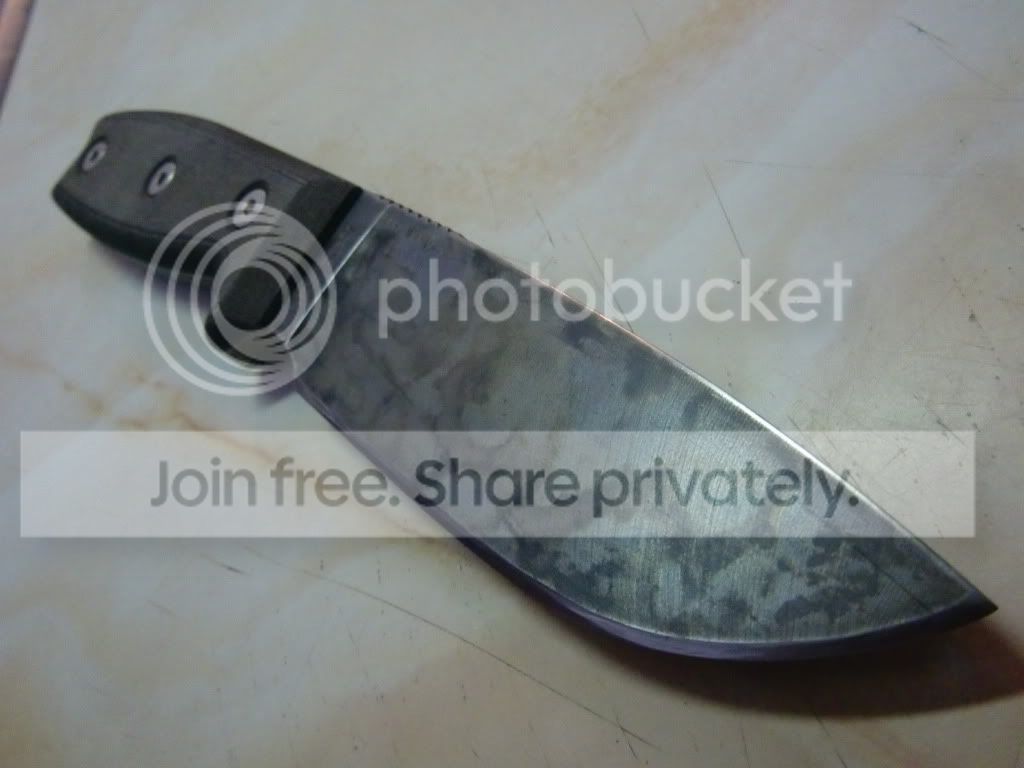
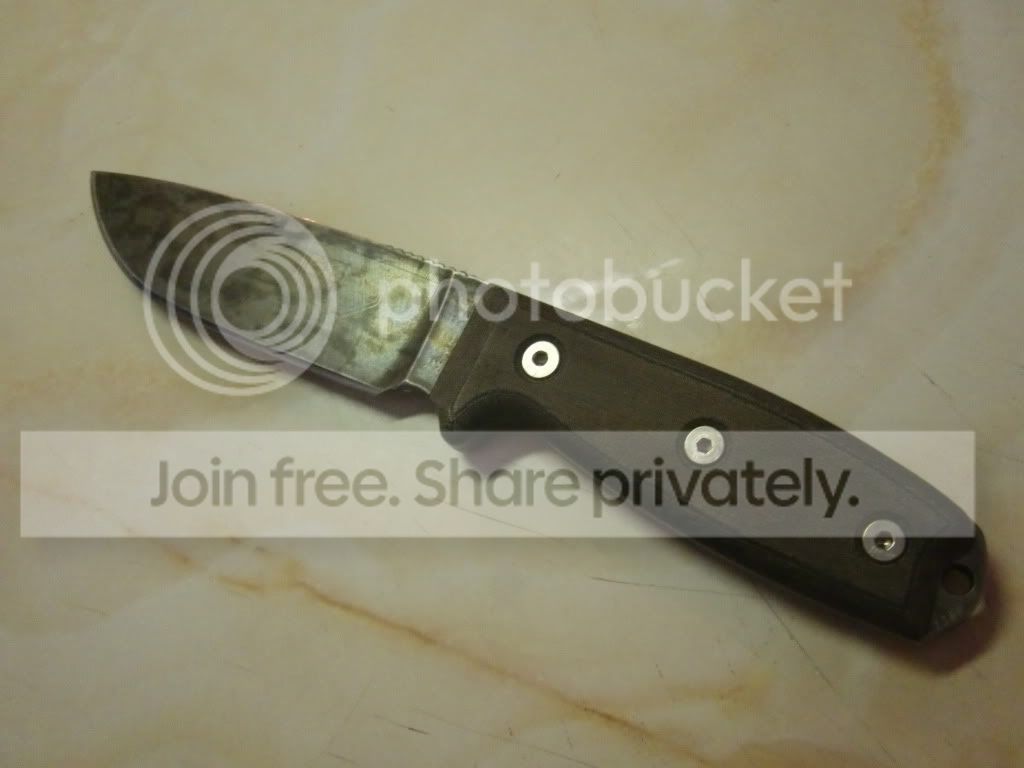
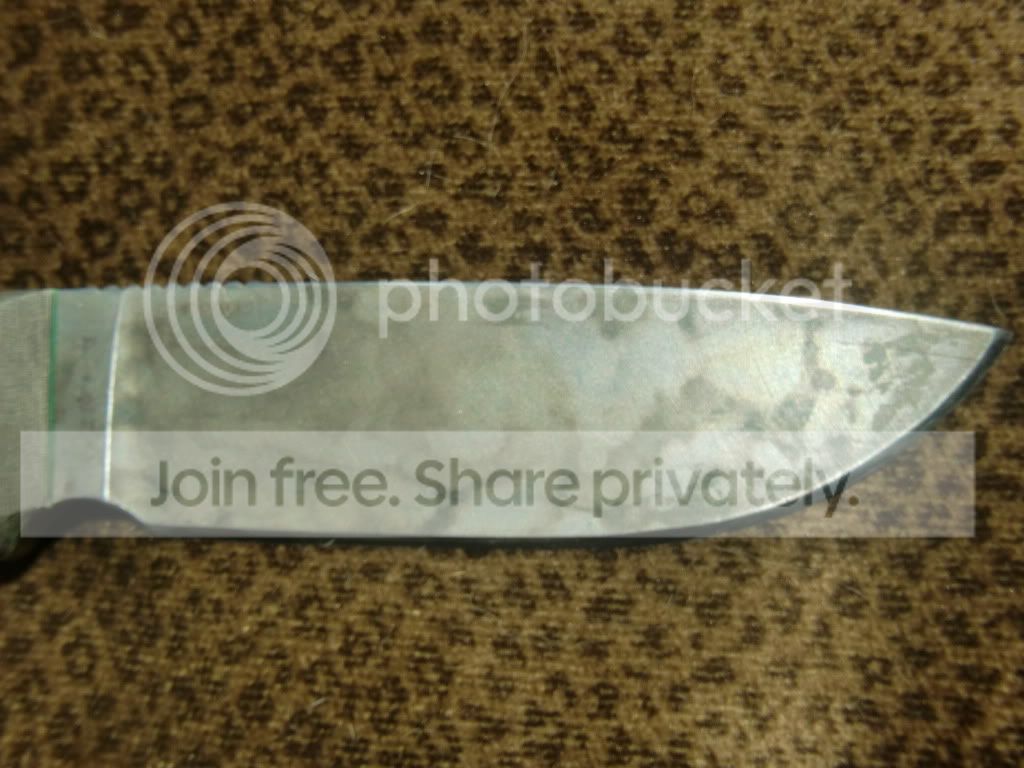
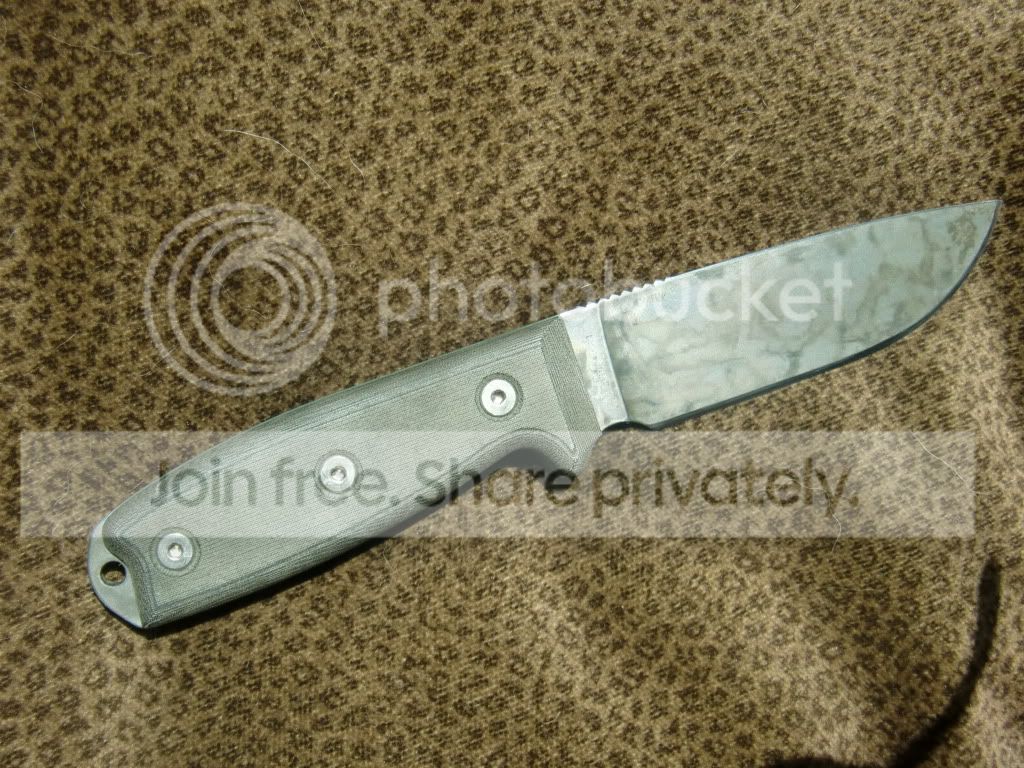
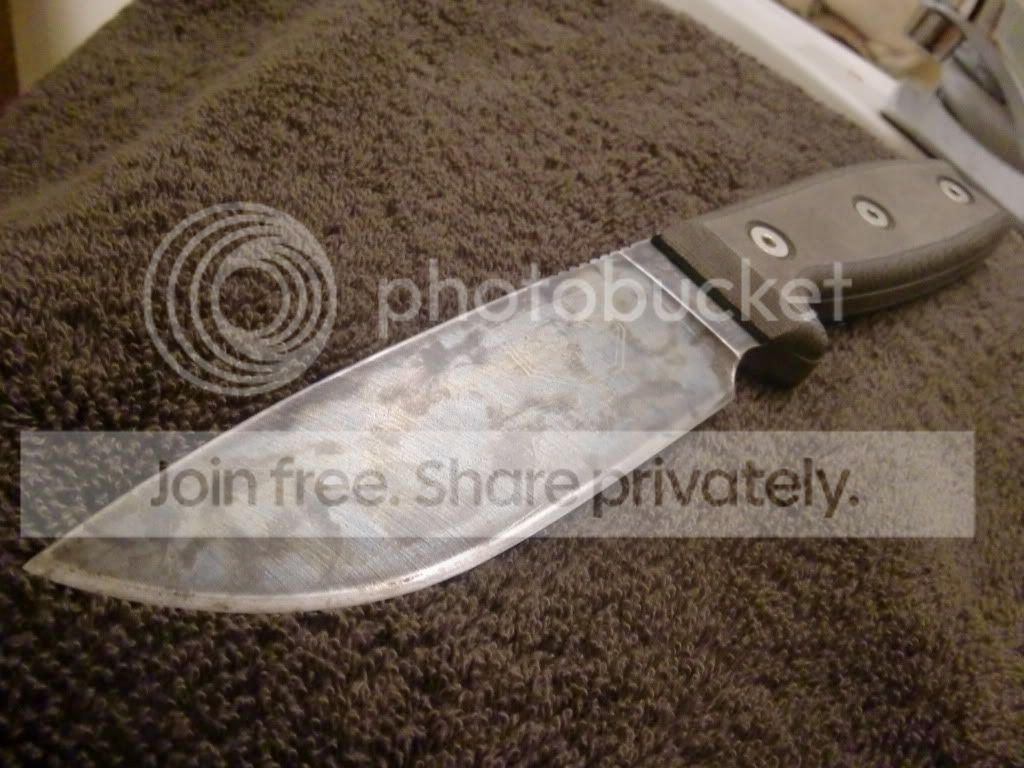
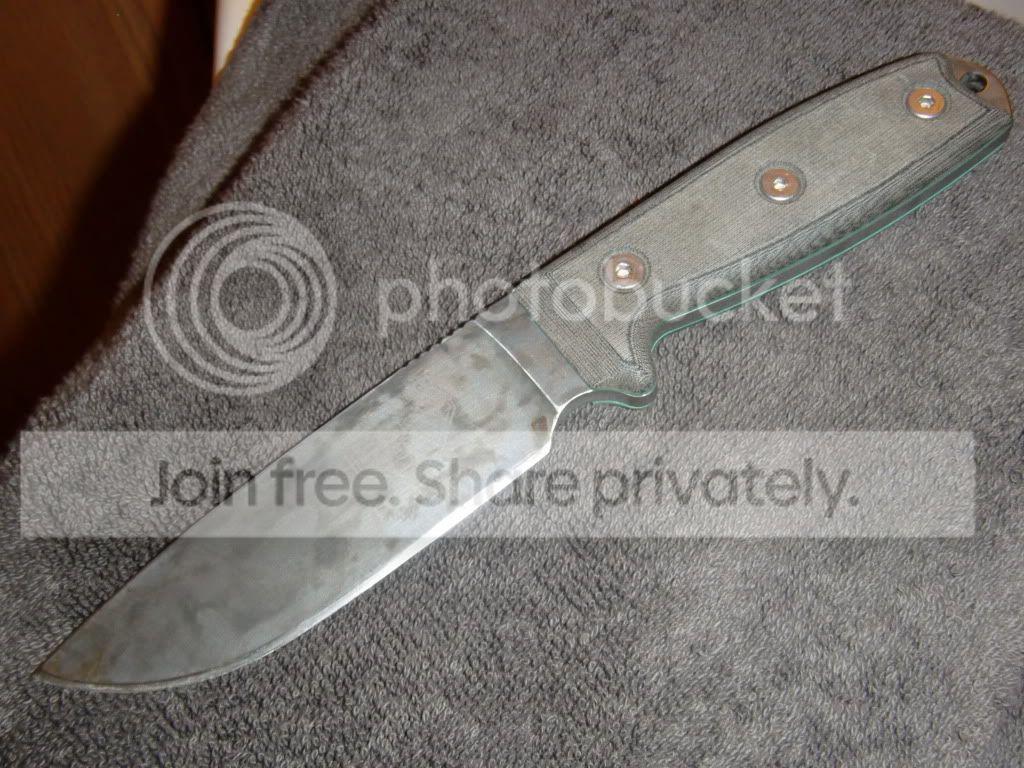
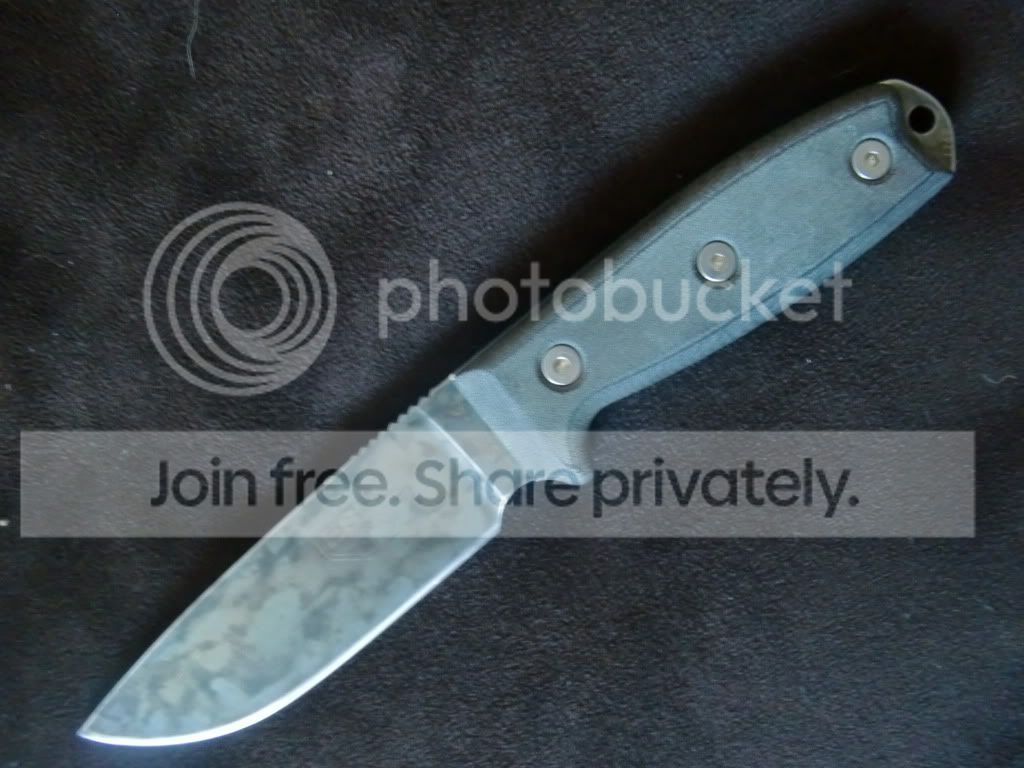
Now it was time to force the patina. For those newbies who aren't familiar with what this is, a patina is essentially oxidization of the metal which causes a dulling in the color. It is essentially a healthy form of rust, but it can protect high carbon steels such as 1095 in it's ability to provide a protective layer of oxidized metal at the surface of the knife which is much more rust resistant than bare metal. You will see what I mean when you look at the pics... I forced the patina with 1 tiny packet of yellow mustard that I borrowed from a local restaurant. 1 packet for the whole knife, that's it. There are many ways to force a patina, but I've had the best luck with mustard. I applied half the packet to each side, spread it around so that all of the metal at least looked moist from the mustard, and then I spackled it a little with my finger to create the pattern. Believe it or not, the areas that have the thinnest layer of mustard produce the darker colors of the patina. Oxygen is your friend when doing this. Use less than you think, and then let it breathe and your patina will form in no time. This part took about an hour, with a majority of that being sit time with the mustard soaking on the blade.
All in all, 90 minutes of work and my ESEE 4 was stripped and had the patina forced and then I had my handle slabs back on and started sharpening it up again. I did opt to change the screws, which you can see in the pics. The original ones were black, but with a bare metal finish on the blade now, I decided to go to my local hardware store and get some plain silver screws.
Have a look!
Here are some pics of my ESEE-4. After my most recent camping trip where it rained very heavily, my 4 started to show some rust in the laser engravings on the blade, as well as at the edge. I also batoned a lot of the coating off, so I decided it was time to strip the rest of it off and force a patina to make it a "true user".
Here is a pic of the rough condition it was in after getting soaked for three days in Wisconsin.
After the trip, I cleaned the blade and handle with soap and hot water, let it dry, and began the take down process. DO NOT take the handles off of your knives unless you possess the proper tools and skills to do so... you can easily damage your screws and spacers.
I stripped the ESEE-4 using Zip Strip Paint and Finish remover. The coating began flaking off almost immediately after I applied it. After about 10 minutes soaking in a layer of the Paint Stripper in tin foil, I began using a spatula to start removing the coating while still in the paint stripper. Some areas came right off, but others were a little more stubborn. After 15 minutes all in all, the coating was completely removed and I had the knife rinsed and clean. This process does seem to dull the knife, but it can be sharpened up in no time afterwards.
Now it was time to force the patina. For those newbies who aren't familiar with what this is, a patina is essentially oxidization of the metal which causes a dulling in the color. It is essentially a healthy form of rust, but it can protect high carbon steels such as 1095 in it's ability to provide a protective layer of oxidized metal at the surface of the knife which is much more rust resistant than bare metal. You will see what I mean when you look at the pics... I forced the patina with 1 tiny packet of yellow mustard that I borrowed from a local restaurant. 1 packet for the whole knife, that's it. There are many ways to force a patina, but I've had the best luck with mustard. I applied half the packet to each side, spread it around so that all of the metal at least looked moist from the mustard, and then I spackled it a little with my finger to create the pattern. Believe it or not, the areas that have the thinnest layer of mustard produce the darker colors of the patina. Oxygen is your friend when doing this. Use less than you think, and then let it breathe and your patina will form in no time. This part took about an hour, with a majority of that being sit time with the mustard soaking on the blade.
All in all, 90 minutes of work and my ESEE 4 was stripped and had the patina forced and then I had my handle slabs back on and started sharpening it up again. I did opt to change the screws, which you can see in the pics. The original ones were black, but with a bare metal finish on the blade now, I decided to go to my local hardware store and get some plain silver screws.
Have a look!

 :thumbup: