FoxholeAtheist
Basic Member
- Joined
- Apr 7, 2003
- Messages
- 2,329
Hoppy gnu year, everyone!
So for christmas my wife and I went out to her grandparent's house, as we usually do. Since they have some actual plant life on their property, and I was there for 5 days, I decided to go out one day and try to light a fire.
The setting: Light wind, 5°F, snow about 10" deep. I was inside a double hedgerow of Caragana, and using wood from same as fuel.
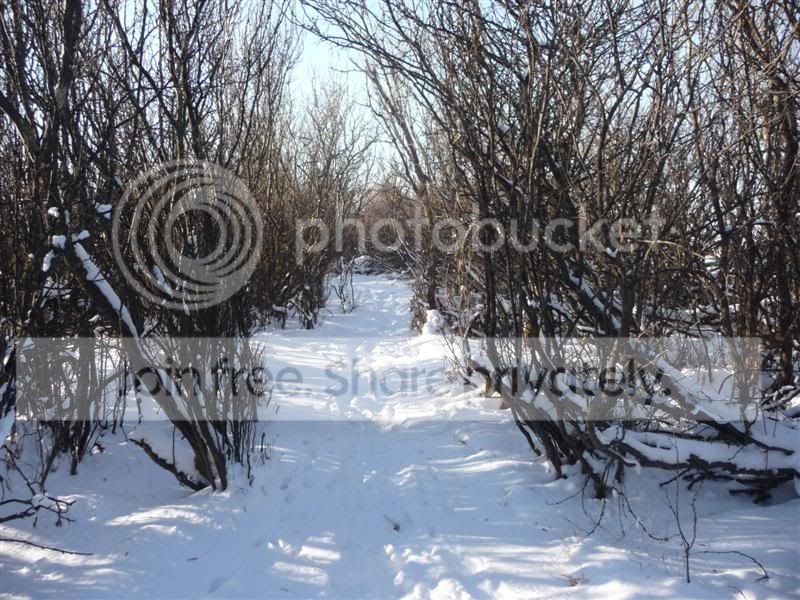
I was dressed in jeans, a t-shirt, leather gloves, winter coat, and boots. This is what I would probably be wearing if I were driving somewhere and not planning on going tromping through the snow.
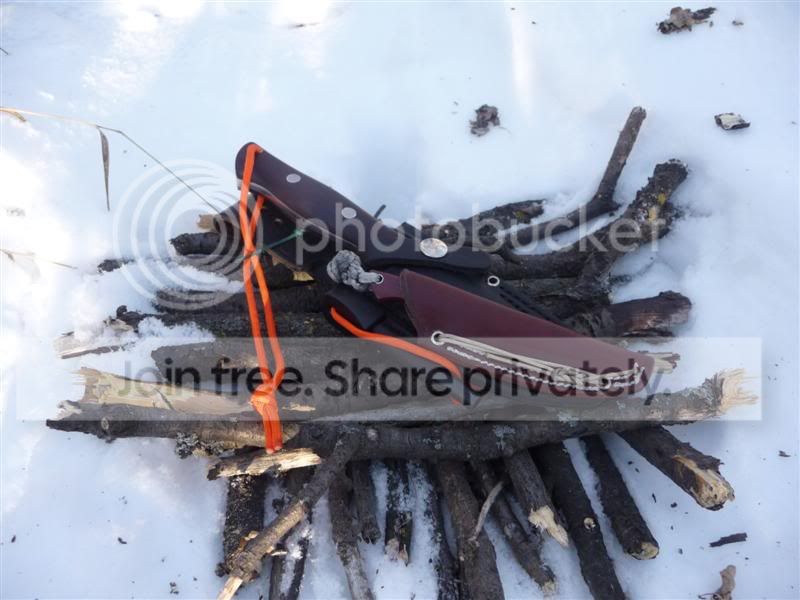
First I built a small platform to keep the fire off the snow, shown here with the knives I was using; BRKT Bravo-1 and Mikro Canadian II.
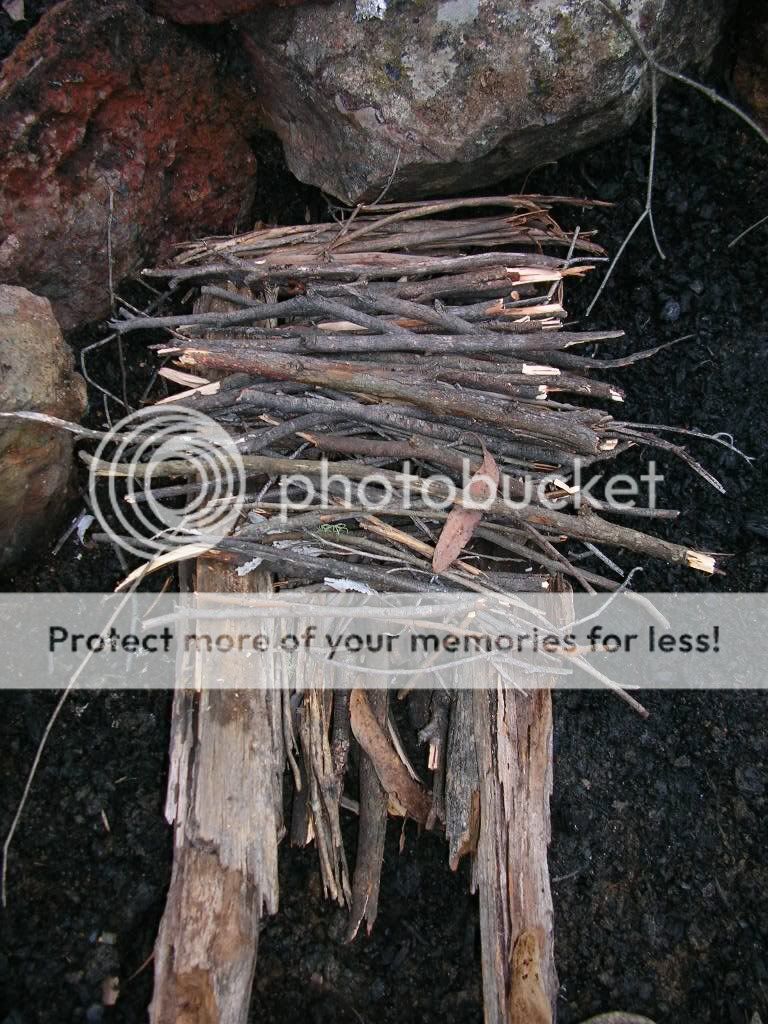
Then I fuzzed up some sticks and made a bit of a tipi:
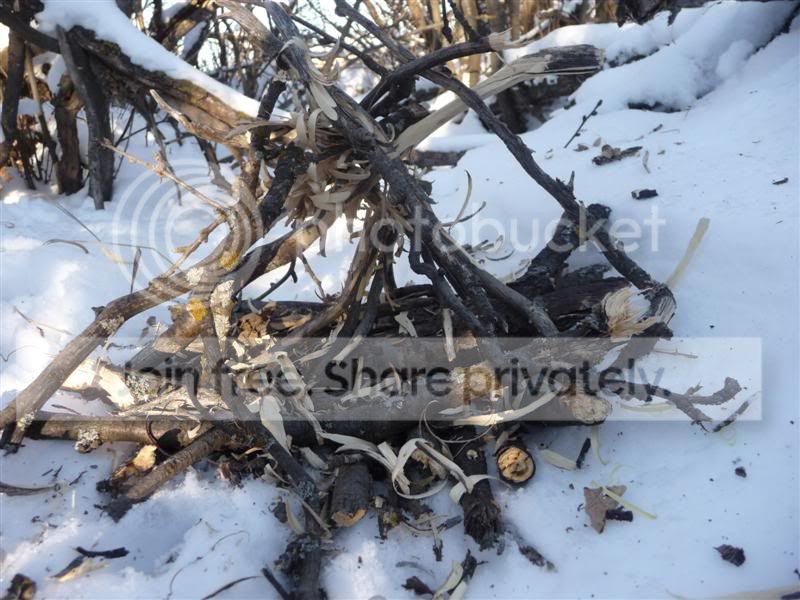
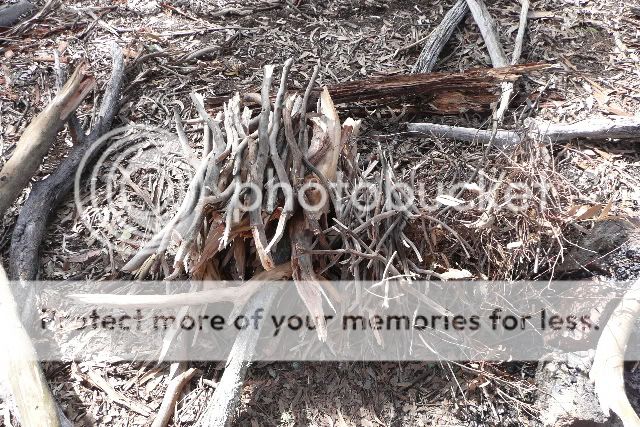
Then gathered some tinder from around the area:
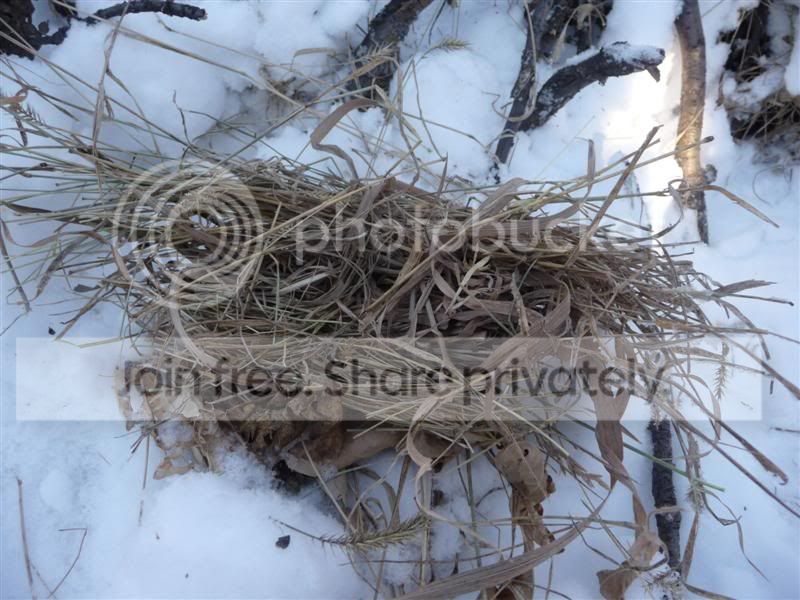
Keeping with the minimalist theme, I tried to light this fire with only the firesteel I carry on my B1 sheath, using the natural tinder. What I found was that it was a LOT harder to do this in these conditions than in the benign conditions I've had success with in the past. I was getting good sparks off the firesteel, and I can't count the times that I would get little flames that would burn themselves out in seconds.... but after trying for an hour, I never got a sustainable flame.
I've given this some thought in the past few days, and I think that the cold contributed to this in more than one way... for one thing, to get anything to burn, you have to raise its temperature enough, and when you're starting from 5°F, you have a longer way to go. In addition to that, although I tried to knock as much off as I could, I think there were probably still tiny ice/snow particles stuck to some of the strands of tinder. This wouldn't help anything burn.
After that hour of frustration, I tried making some shavings off of a piece of fatwood I carry in my bag, again to no avail. I then broke out a firestraw, which lit with a good flame on the first strike. After stuffing the tinder under the little tipi I had made and lighting it, though, the fire still didn't catch; the tinder burnt all the way without lighting any of the sticks for any length of time. By this time I was pretty damn cold, so I packed it in for the day and trudged across the field back to the house.. a luxury I wouldn't have had were this "for real."
Lessons Learned:
Negatives:
Well, the big lesson is that it's a lot harder to get a fire going in the bitter cold than it is on a warm dry day. (I know, pretty obvious.)
I should have gathered more tinder than I had (2x-3x as much? more?), and tried to pick stuff that didn't have snow on it, though that was not easy.
I should have included more smaller sticks in my fire tipi, and probably fuzzed more of the big ones.
Positives:
Although the fatwood didn't succeed, it did work better than the found tinder. If I had scraped more off, it could very well have worked.
Firestraws are DA BOMB, and will always have a place in my firekit. Lit quick, burned well.
The Bravo-1 was much easier to handle with cold, gloved hands than the Mikro-II or PS-II I also tried. The large, contoured handle always felt secure.
Brightly colored lanyards are good things. Why? I intentionally dropped my knife in the snow... Can you see it?
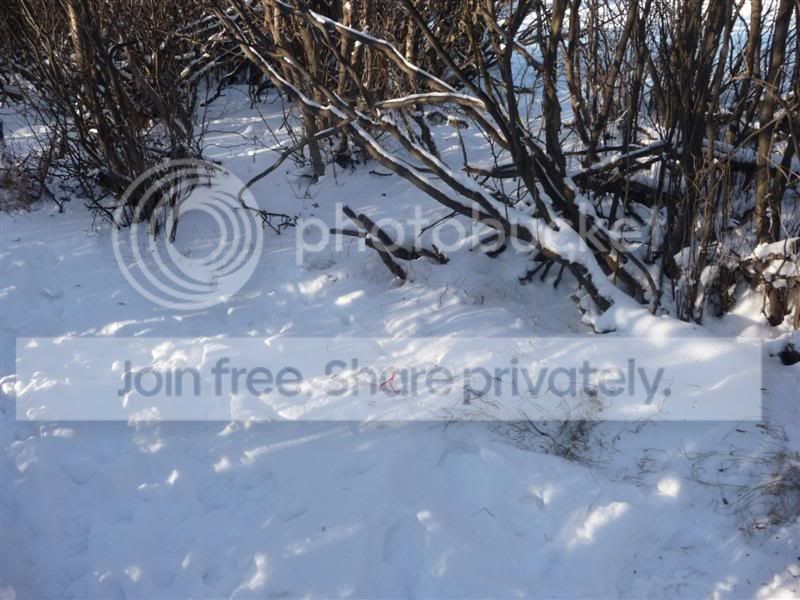
Here's a closeup:
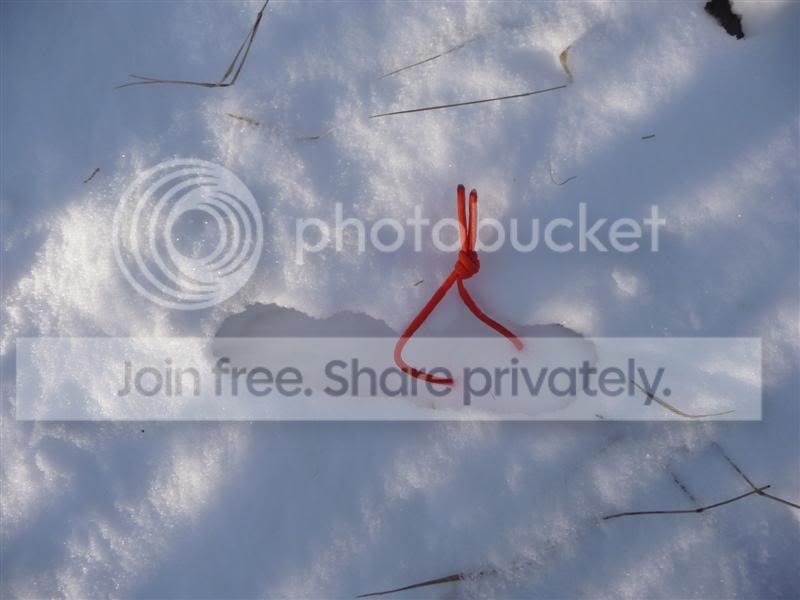
If the snow was more disturbed where I dropped the knife, it would have just disappeared, and I would have had to go digging for it. As you can see, the safety orange paracord stayed on top of the snow, making finding the knife a snap.
So there you have it. If you haven't gone out in less-than-perfect weather to try to build a fire, I highly recommend it. It's an eye-opener. :thumbup:
So for christmas my wife and I went out to her grandparent's house, as we usually do. Since they have some actual plant life on their property, and I was there for 5 days, I decided to go out one day and try to light a fire.
The setting: Light wind, 5°F, snow about 10" deep. I was inside a double hedgerow of Caragana, and using wood from same as fuel.
I was dressed in jeans, a t-shirt, leather gloves, winter coat, and boots. This is what I would probably be wearing if I were driving somewhere and not planning on going tromping through the snow.
First I built a small platform to keep the fire off the snow, shown here with the knives I was using; BRKT Bravo-1 and Mikro Canadian II.
Then I fuzzed up some sticks and made a bit of a tipi:
Then gathered some tinder from around the area:
Keeping with the minimalist theme, I tried to light this fire with only the firesteel I carry on my B1 sheath, using the natural tinder. What I found was that it was a LOT harder to do this in these conditions than in the benign conditions I've had success with in the past. I was getting good sparks off the firesteel, and I can't count the times that I would get little flames that would burn themselves out in seconds.... but after trying for an hour, I never got a sustainable flame.
I've given this some thought in the past few days, and I think that the cold contributed to this in more than one way... for one thing, to get anything to burn, you have to raise its temperature enough, and when you're starting from 5°F, you have a longer way to go. In addition to that, although I tried to knock as much off as I could, I think there were probably still tiny ice/snow particles stuck to some of the strands of tinder. This wouldn't help anything burn.
After that hour of frustration, I tried making some shavings off of a piece of fatwood I carry in my bag, again to no avail. I then broke out a firestraw, which lit with a good flame on the first strike. After stuffing the tinder under the little tipi I had made and lighting it, though, the fire still didn't catch; the tinder burnt all the way without lighting any of the sticks for any length of time. By this time I was pretty damn cold, so I packed it in for the day and trudged across the field back to the house.. a luxury I wouldn't have had were this "for real."
Lessons Learned:
Negatives:
Well, the big lesson is that it's a lot harder to get a fire going in the bitter cold than it is on a warm dry day. (I know, pretty obvious.)
I should have gathered more tinder than I had (2x-3x as much? more?), and tried to pick stuff that didn't have snow on it, though that was not easy.
I should have included more smaller sticks in my fire tipi, and probably fuzzed more of the big ones.
Positives:
Although the fatwood didn't succeed, it did work better than the found tinder. If I had scraped more off, it could very well have worked.
Firestraws are DA BOMB, and will always have a place in my firekit. Lit quick, burned well.
The Bravo-1 was much easier to handle with cold, gloved hands than the Mikro-II or PS-II I also tried. The large, contoured handle always felt secure.
Brightly colored lanyards are good things. Why? I intentionally dropped my knife in the snow... Can you see it?
Here's a closeup:
If the snow was more disturbed where I dropped the knife, it would have just disappeared, and I would have had to go digging for it. As you can see, the safety orange paracord stayed on top of the snow, making finding the knife a snap.
So there you have it. If you haven't gone out in less-than-perfect weather to try to build a fire, I highly recommend it. It's an eye-opener. :thumbup:


 ) is my Mora Clipper.