

- Joined
- Nov 14, 2005
- Messages
- 11,135
I just got back from a staff meeting, where I just taught an inservice on pre-hospital management of burn patients. I was thinking I would pass on some of my lecture on to you guys.
I believe that in a survival situation, it is not to far out to believe that a burn is likely to happen. Whether you are in the desert and it comes from the sun, or are in a natural disaster and it comes from chemical or fire, or maybe even a plane crash or car crash. So you can see that it is something to consider from a survival perspective. It might be you that gets burned, or somebody in your party, or just a stranger in need.
First thing we need to look at is determining the severety(degree), and extent of burn(area). A critical burn is one to the face, hands, feet or genitalia. Or any burn that covers a good majority of the surface.
FIRST DEGREE
The least serious burns are those in which only the outer layer of skin is burned. The skin is usually red, with swelling and pain sometimes present. The outer layer of skin hasn't been burned through.

SECOND DEGREE
When the first layer of skin has been burned through and the second layer of skin (dermis) also is burned, the injury is called a second-degree burn. Blisters develop and the skin takes on an intensely reddened, splotchy appearance. Second-degree burns produce severe pain and swelling.
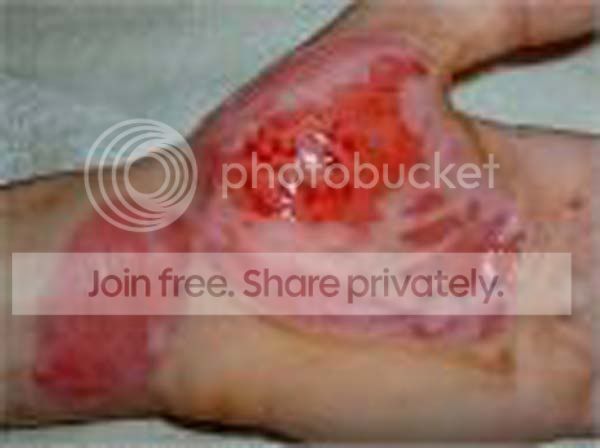
THIRD DEGREE
The most serious burns are painless, involve all layers of the skin and cause permanent tissue damage. Fat, muscle and even bone may be affected. Areas may be charred black or appear dry and white. Difficulty inhaling and exhaling, carbon monoxide poisoning, or other toxic effects may occur if smoke inhalation accompanies the burn.
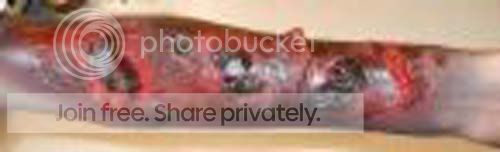
OK. I am not gonna dive into the rule of nines, or serial halving, cause its tricky, and complicated. I will tell you that a palm is roughly 1% of th surface area. So you can use that to get a rough estimation of affected area.:thumbup: If your interested in the rule of nines, or serial halving, Email me, and I will do my best. I really dont think it has much to do wih survival type medicine, if you can recognize the severity and rough size of burn.
Now on to a list of DONTS when it comes to treatment of burns.
DONT
DONT APPLY BUTTER OR OINTMENTS, IT IMPEDES HEALING.
DONT BREAK BLISTERS.
DONT APPLY ICE, IT CAN CAUSE FROSTBITE.
DONT REMOVE BURNT CLOTHING.
DONT IMERSE IN COLD WATER, IT COULD BRING ON SHOCK.
Ok, you might be thinking, well Jake, WTF should I do then?????
Well. I think its important to look at some concerns you need to be thinking about when attacking treatment of a burned pt. The most important thing when understanding burns is avoiding hypothermia, and infection. The rate your body loses fluids makes hypothermia a real threat to your pts survival. The exposed skin makes infection a runner up in danger, and something to take in mind with long term care. We need to keep exposure to a minimum.
Serious Treatment is.....
You need to boil some water if you dont have access to sterile water. Let it cool to luke-warm, soak dressings in it, and wrap or cover affeccted area. This is where it gets kinda high-speed with a trick I lerned. Wrap saran wrap over the soaked dressing. It will provide a barrier to infection, and it will help regulate temp by decreasing the fluid loss. Cool huh?
Next elevate extremity above heart.:thumbup:
---------------------------------------------------
Now for minor burns,including first-degree burns and second-degree burns limited to an area no larger than 3 inches (7.5 centimeters) in diameter, take the following action:
Run cool water over site for 5 minutes. Cooling the burn reduces swelling by conducting heat away from the skin. Don't put ice on the burn.
Sterile bandage, no fluffy cotton. I would treat with wetted down dressings.:thumbup:
Pain controll is something you need to think about too if its available.
Fluid resuscitation is great if you have the means. W/O gettin into the complicated formulas for it, I will say a good number is 500cc over the course of an hour.
As always monitor for pulse, and breathing, and be ready for CPR if need be.
Now, this is only for tx of burns not related to chemical or electrical burns, which there are other things to consider. Wanna learn more????????

And I will say, that I am not a DR, nor do I work in a burn unit. Of course their treatment is more advanced with drug therpy, scrupping the burn etc, but I think this will give all of you a good idea of what to do as first line care of burns.
Sorry if I bored you, and I will be happy to post another post on chemical burns, and electrical burns if you allwant me to add it in.:thumbup:
I believe that in a survival situation, it is not to far out to believe that a burn is likely to happen. Whether you are in the desert and it comes from the sun, or are in a natural disaster and it comes from chemical or fire, or maybe even a plane crash or car crash. So you can see that it is something to consider from a survival perspective. It might be you that gets burned, or somebody in your party, or just a stranger in need.
First thing we need to look at is determining the severety(degree), and extent of burn(area). A critical burn is one to the face, hands, feet or genitalia. Or any burn that covers a good majority of the surface.
FIRST DEGREE
The least serious burns are those in which only the outer layer of skin is burned. The skin is usually red, with swelling and pain sometimes present. The outer layer of skin hasn't been burned through.
SECOND DEGREE
When the first layer of skin has been burned through and the second layer of skin (dermis) also is burned, the injury is called a second-degree burn. Blisters develop and the skin takes on an intensely reddened, splotchy appearance. Second-degree burns produce severe pain and swelling.
THIRD DEGREE
The most serious burns are painless, involve all layers of the skin and cause permanent tissue damage. Fat, muscle and even bone may be affected. Areas may be charred black or appear dry and white. Difficulty inhaling and exhaling, carbon monoxide poisoning, or other toxic effects may occur if smoke inhalation accompanies the burn.
OK. I am not gonna dive into the rule of nines, or serial halving, cause its tricky, and complicated. I will tell you that a palm is roughly 1% of th surface area. So you can use that to get a rough estimation of affected area.:thumbup: If your interested in the rule of nines, or serial halving, Email me, and I will do my best. I really dont think it has much to do wih survival type medicine, if you can recognize the severity and rough size of burn.
Now on to a list of DONTS when it comes to treatment of burns.
DONT
DONT APPLY BUTTER OR OINTMENTS, IT IMPEDES HEALING.
DONT BREAK BLISTERS.
DONT APPLY ICE, IT CAN CAUSE FROSTBITE.
DONT REMOVE BURNT CLOTHING.
DONT IMERSE IN COLD WATER, IT COULD BRING ON SHOCK.
Ok, you might be thinking, well Jake, WTF should I do then?????
Well. I think its important to look at some concerns you need to be thinking about when attacking treatment of a burned pt. The most important thing when understanding burns is avoiding hypothermia, and infection. The rate your body loses fluids makes hypothermia a real threat to your pts survival. The exposed skin makes infection a runner up in danger, and something to take in mind with long term care. We need to keep exposure to a minimum.
Serious Treatment is.....
You need to boil some water if you dont have access to sterile water. Let it cool to luke-warm, soak dressings in it, and wrap or cover affeccted area. This is where it gets kinda high-speed with a trick I lerned. Wrap saran wrap over the soaked dressing. It will provide a barrier to infection, and it will help regulate temp by decreasing the fluid loss. Cool huh?
Next elevate extremity above heart.:thumbup:
---------------------------------------------------
Now for minor burns,including first-degree burns and second-degree burns limited to an area no larger than 3 inches (7.5 centimeters) in diameter, take the following action:
Run cool water over site for 5 minutes. Cooling the burn reduces swelling by conducting heat away from the skin. Don't put ice on the burn.
Sterile bandage, no fluffy cotton. I would treat with wetted down dressings.:thumbup:
Pain controll is something you need to think about too if its available.
Fluid resuscitation is great if you have the means. W/O gettin into the complicated formulas for it, I will say a good number is 500cc over the course of an hour.
As always monitor for pulse, and breathing, and be ready for CPR if need be.
Now, this is only for tx of burns not related to chemical or electrical burns, which there are other things to consider. Wanna learn more????????
And I will say, that I am not a DR, nor do I work in a burn unit. Of course their treatment is more advanced with drug therpy, scrupping the burn etc, but I think this will give all of you a good idea of what to do as first line care of burns.
Sorry if I bored you, and I will be happy to post another post on chemical burns, and electrical burns if you allwant me to add it in.:thumbup:
Last edited:


