
Hi there,
Long ago I found out GreenPete's knife making videos and I got an itch... Sinc then I have been reading as much as I could, lurking here and asking a lot of things (here and in ArmasBlancas spanish cutlery forum).
It took a lot of research and phone calls to get the steel, fire bricks, scrap metal, pipe, etc. I live in a city and finding this things sometimes gets interesting.
I will try to write down this thread like a tutorial so if anyone else feels like making his own knife he won't make the same mistakes I made.
ANNEALING THE STEEL
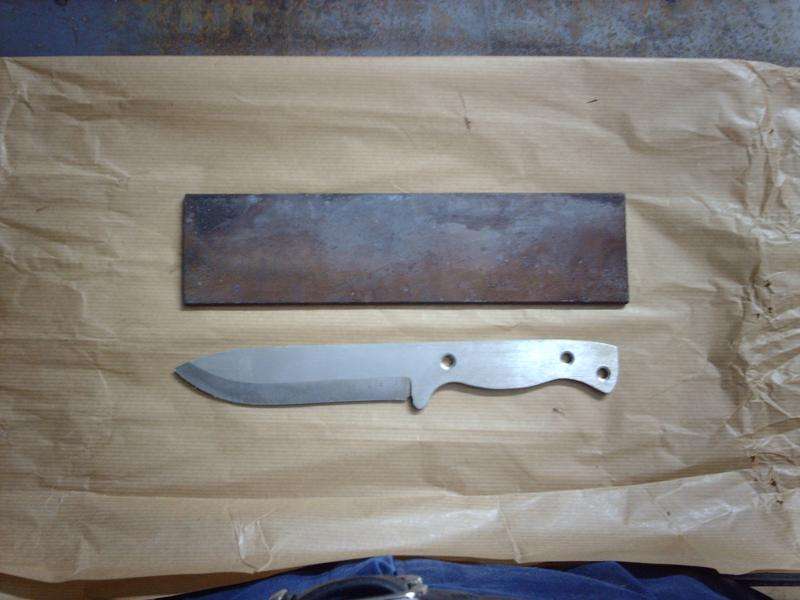
I bought four pieces of 250 x 63 x 5mm steel from leaf springs. The guy I bought them from straightened them for me (more or less) but warned me that they were already heat treated. I had to anneal it.
I built a multiple-duty steel workbench out of sheet metal, square tube and angles (it is like 100kg). I had never before welded anything together so don't come to hard on me... I know the welding is pretty crappy.
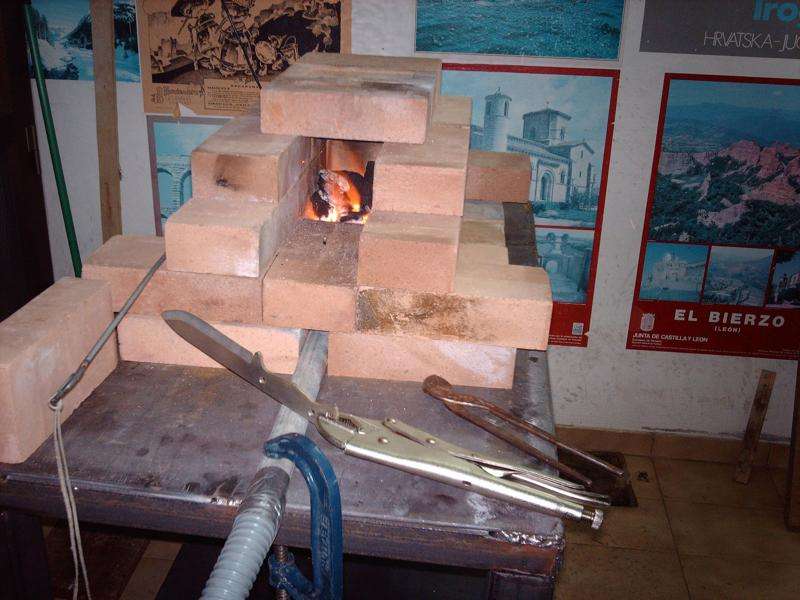
I also got like 65 fire bricks and stacked them to make a forge. I also drilled a like of 4mm holes in a piece of steel pipe and conected it to a hair dryer (yep... my mom found out... I am in big trouble!). That should do the trick.
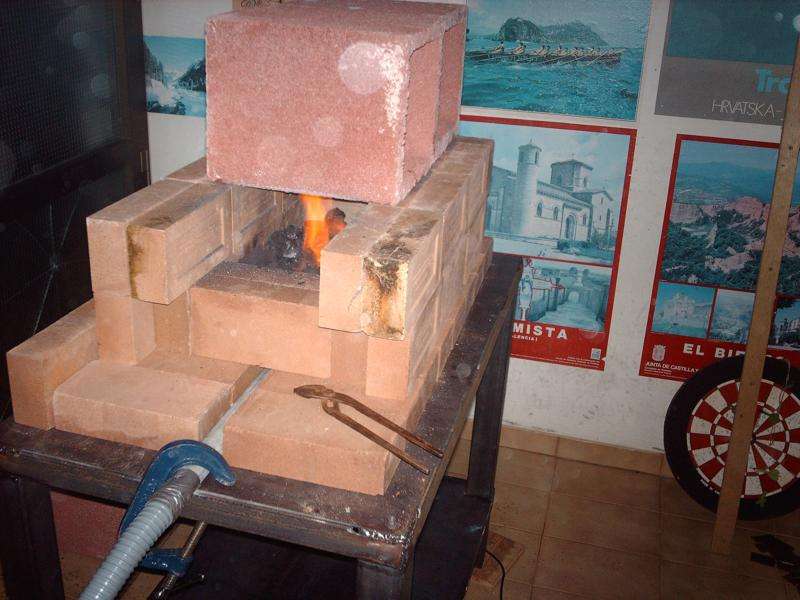
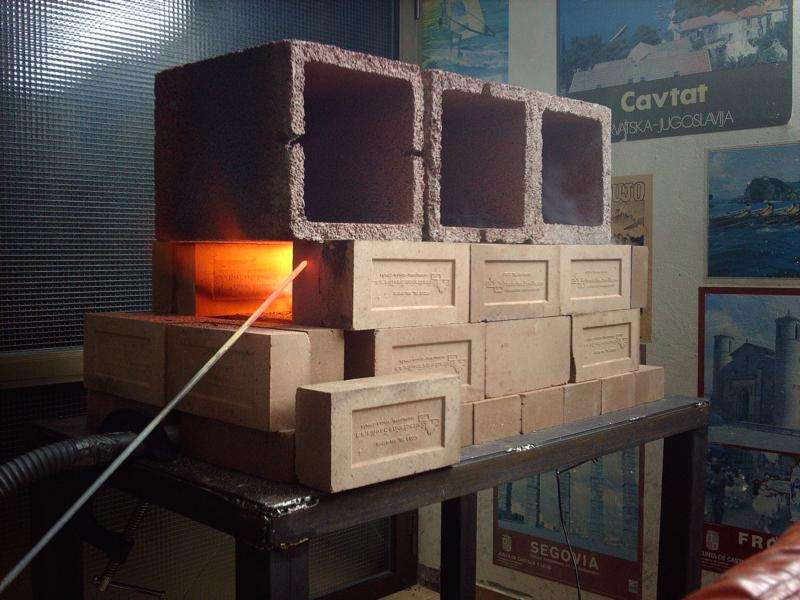
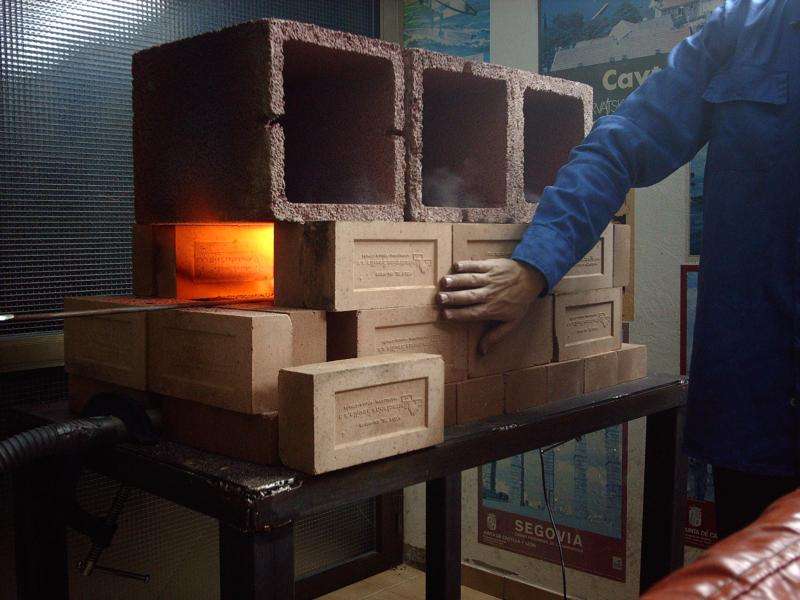
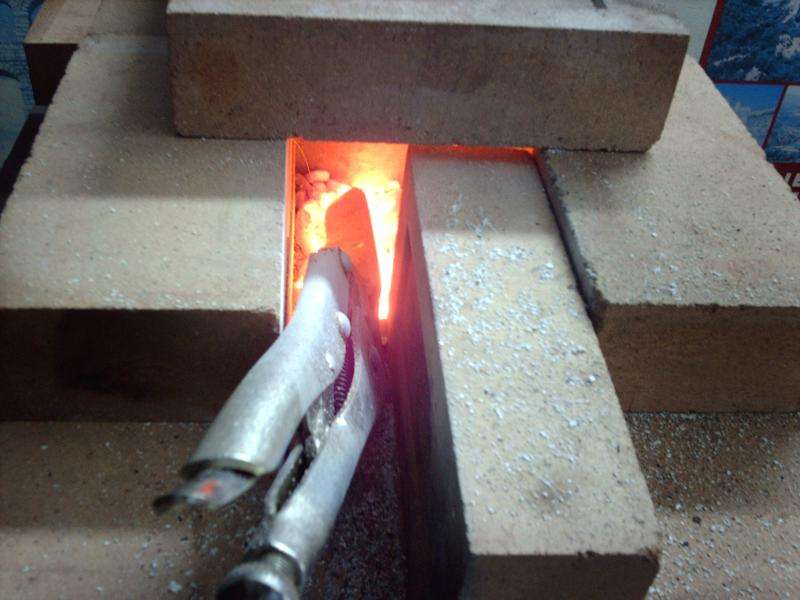
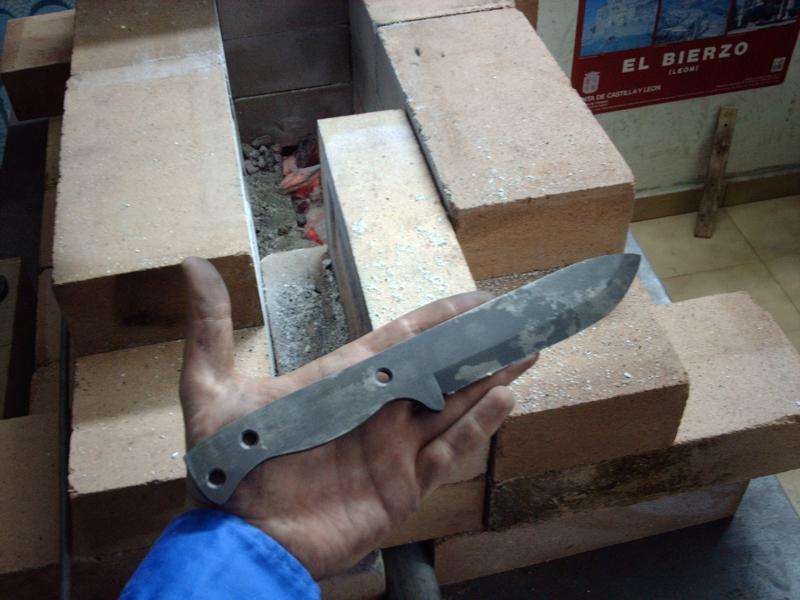
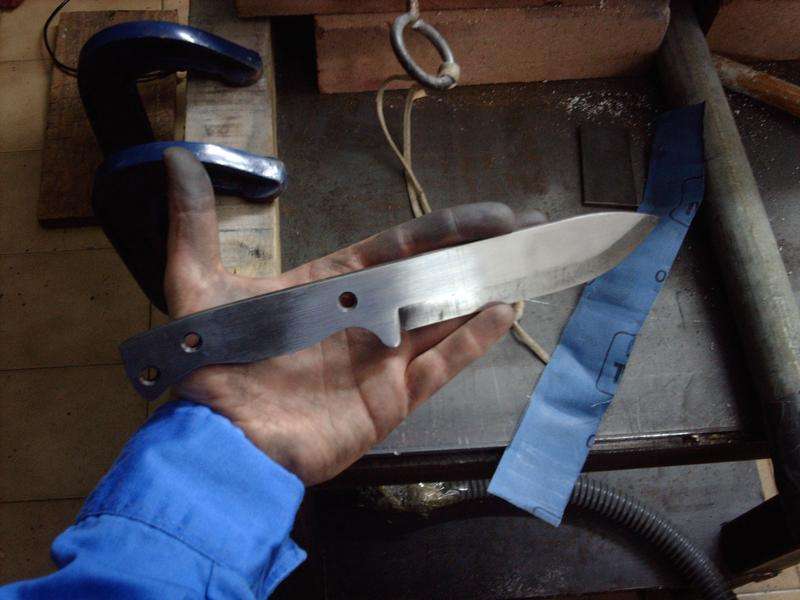
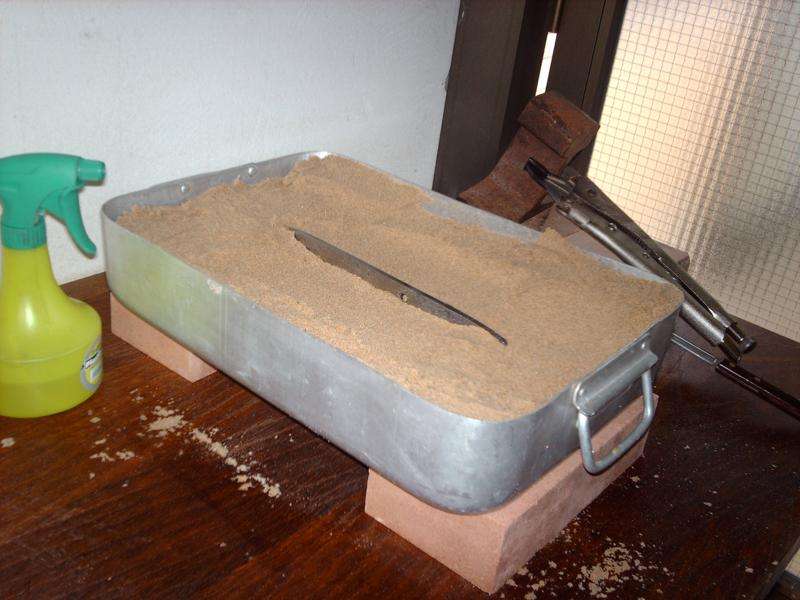
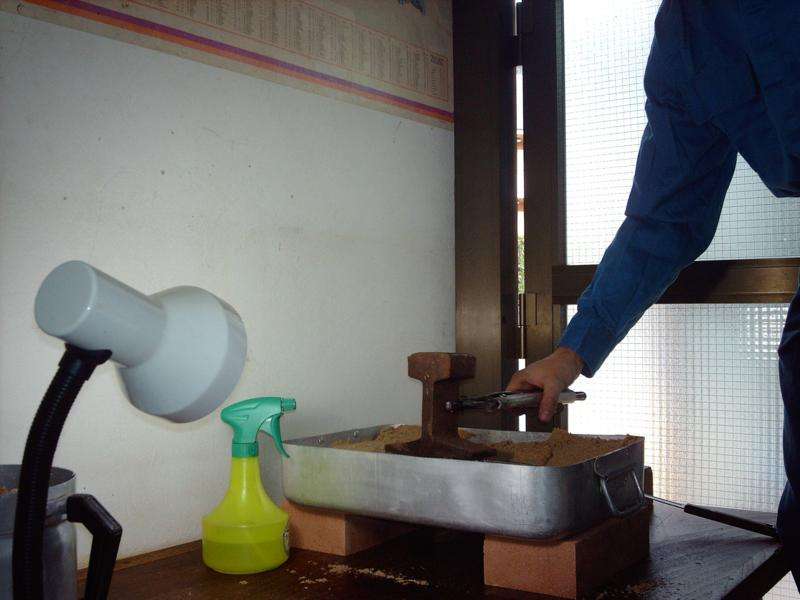
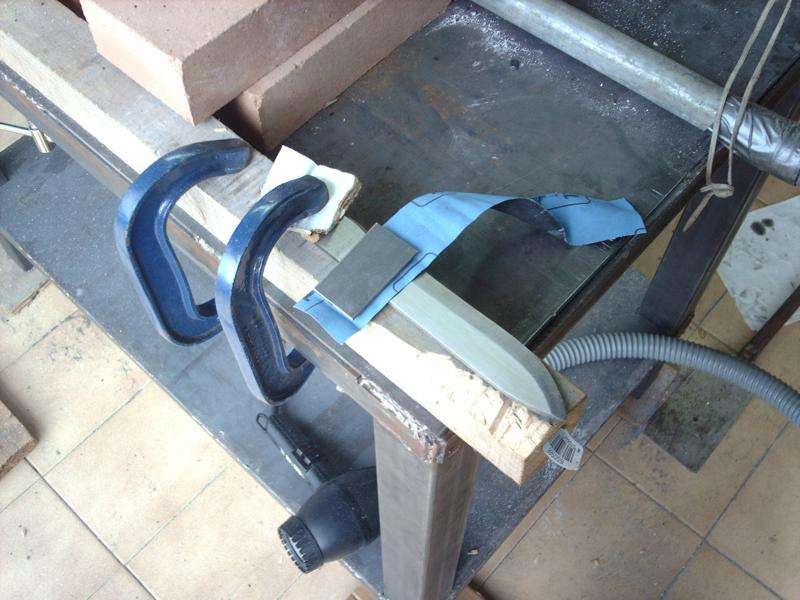
PICTURES 1, 2 and 3: The forge cranking.
That's a spear from a spear gun I had handy 8I have a lot of them because as soon as it bends, then it doesn't shot true any more). I didn't have a center punch so I sharpened it, heated it to red hot and then quenched it in water. Then I cut it off with the angle grinder and there we go! Brand new center punch for $0. As you can see the fire bricks insulate quite a lot.
I dumped like 4kg of charcoal in there, ligthed it with some tablets and switched on the hairdryer. Buried the pieces of steel in there and keep the air going for 30 minutes. Then I put some more fire bricks on the only opening of the forge, switch the hairdryer off and went to bed.
12 hours later I still couldn't touch the bricks without gloves. I had coals still red hot inside. I opened it a little bit and waited for it to cool off by itself.
MAKING HANDLE MATERIAL
While I was waiting for the steel to cool off I made another slab of micarta. I have a lot denim left so once again it was going to be blue denim canvas micarta.
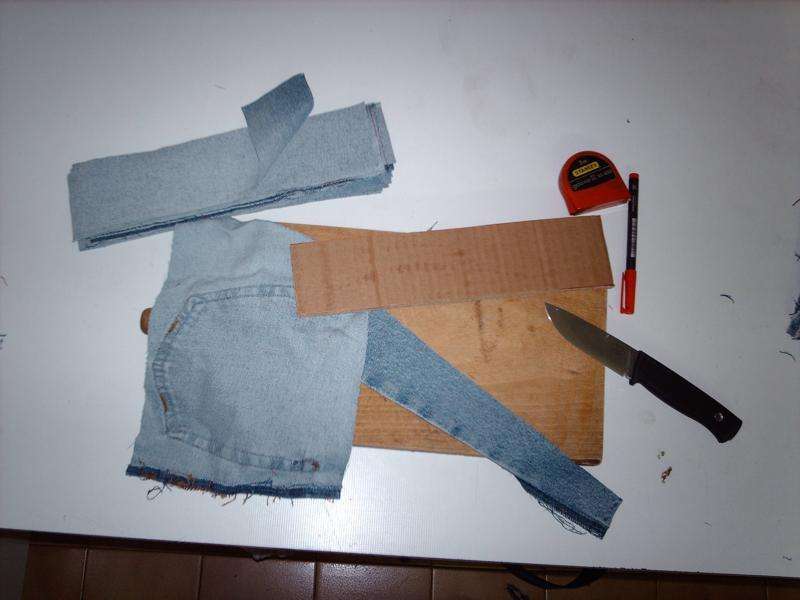
PICTURE 4: Cutting denim strips.
I found out that 14 strips from regular jeans are plenty thick for my purposes. The cleaner the edges, the less you will have to trim after unmolding the slab. My F1 gives me much neater edges than any scissors at home.

PICTURE 5: Get everything set before you mix the resin with the hardener.
Disposable gloves are a must. Protect your workplace, otherwise you will get nasty resin stains everywhere. When you clamp down the slab, resin starts dripping everywhere. Newspaper is cheap, use it at will.
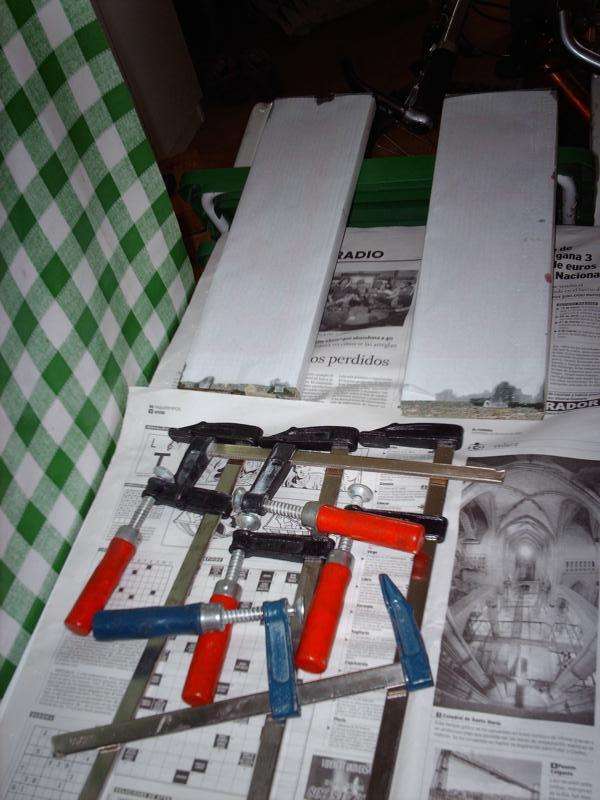
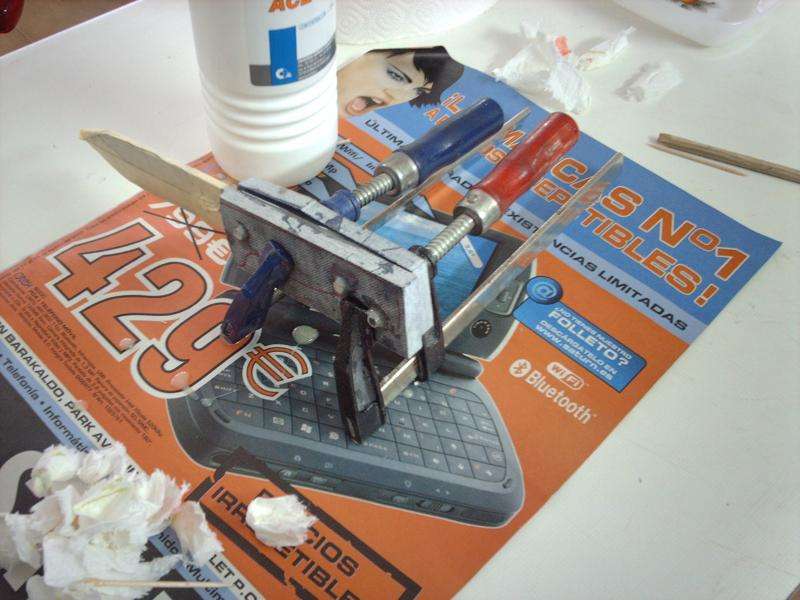
PICTURE 6: Claps and plastic-paper wrapped wood planks.
As long as they are rigid enough you will be fine. The more clamps you use, the better and the more even presure you will exert on the slab.
You already know how to make micarta but just in case I will tell you once again. Cut as many strips as you want from the desired material. From previous experiences I know that no matter what you do, you will always run out off hardener... so I always throw away a little bit of resin to make sure it hardens propertly. Mix the resin and get at it. I use a disposable brush for that instead of just my fingers. Resin, canvas, resin, canvas and so forth. When you are done you can press down with your gloverd fingers on the slab so you drain the exces resin before clamping. When it is all wet it is slippery so trying to clamp it whithout drainning it first can ruin your work. I can do a 14-16 layer micarta slab in less than 10 minutes (from the mixing of the resin to the clamping of the slab). The pot life of this resin is supposed to be 30 minutes, but better safe than sorry.
If you don't need the micarta right away, let it clamped overnight and then fully cure in open air for two days or so. If you are in a hurry you can unmold it and work on it 12 hours later.
SHAPING THE BLADE
I don't have any pictures of the angle grinder work to shape the blade but you can figure it out yourself. Just draw your blade on the leaf spring and chew on it witn the angle grinder and files. If you have a band saw you will probably do it faster.
Once you have that done it is time to cut the bevels. Following some forumites advice I stuck to a scandi grind.
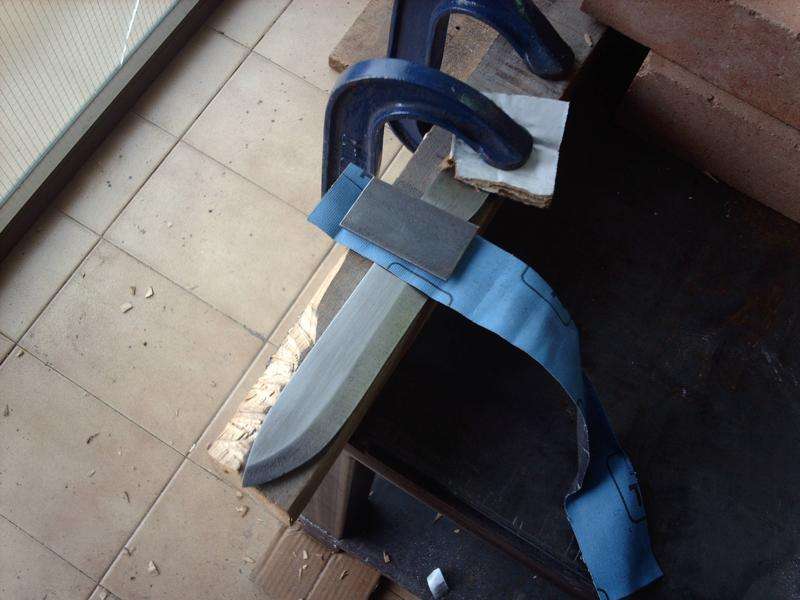
To do so I built a rig for the blade and the file ala GreenPete.
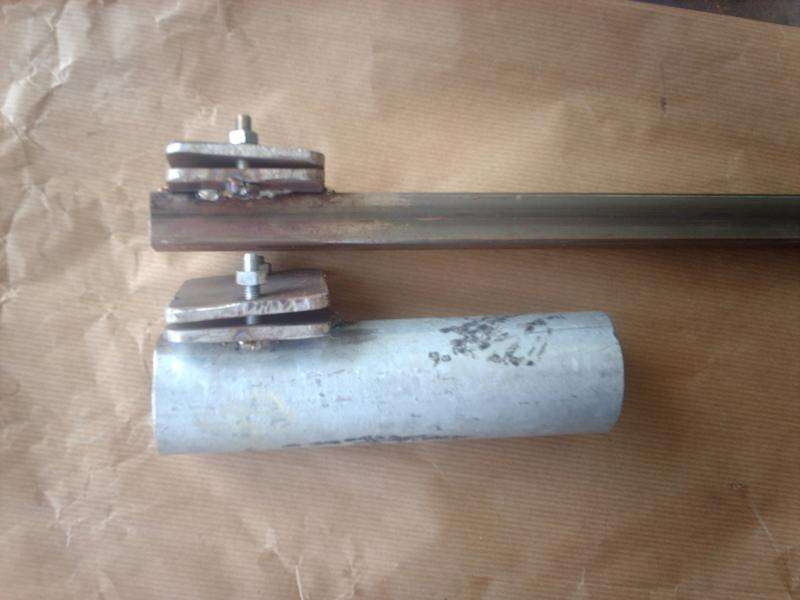
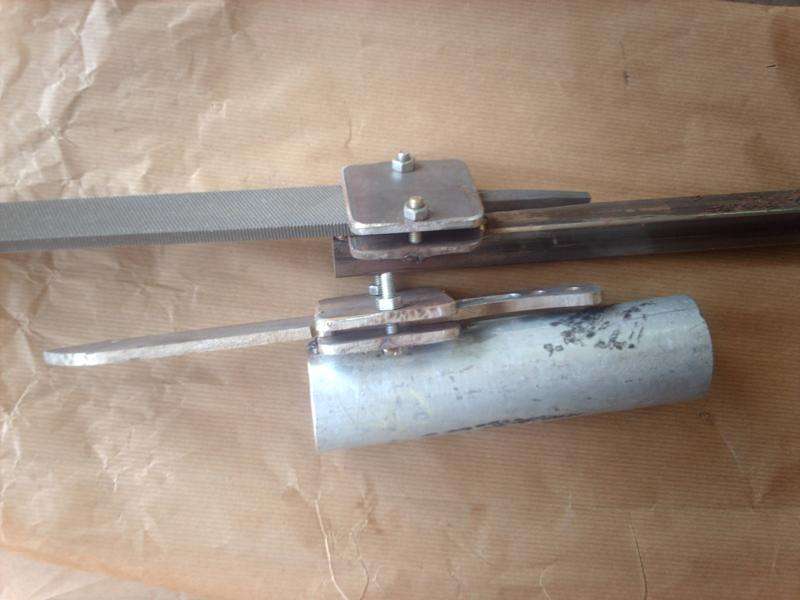

PICTURES 7, 8 AND 9: The rig and the intended use.
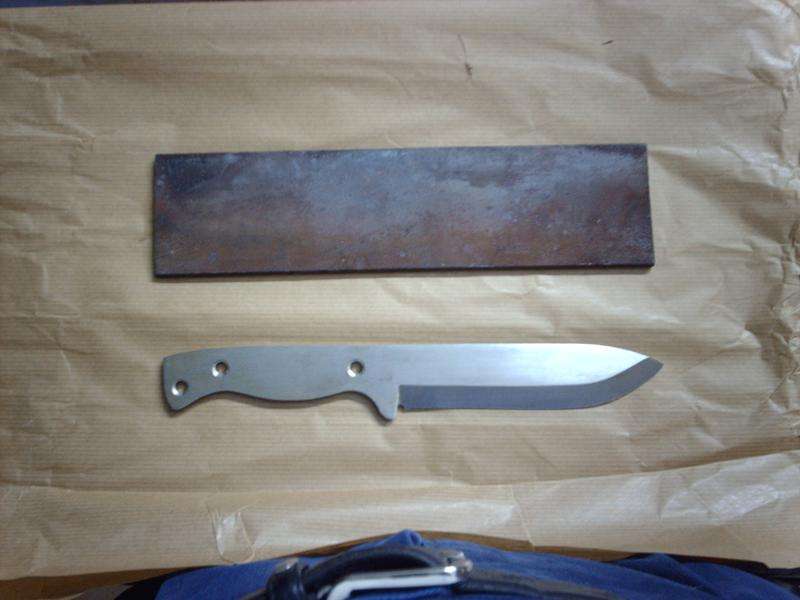
As you can see the picture of the blade there does not correspond to my first knife. I didn't take any pictures of it while doing it so I am using the pictures from another blade (I am working on it right now, full flat bevels already cut... sweet! )
)
The main idea here is to keep an even angle. It is going to get screwed up in the tip but try to minimize it keeping the file square to the blade. You can rough them out with the angle grinder and then use the file... otherwise it is going to take hours. Firs do it with a rough file and then get rid of as many scratches as possible with the fine one. That will make your life easier when you attemp to polish it with sandpaper.
Once you are happy with the bevel on one side... don't take the rig out of the bench vice! Just loosen the screws that attach the blade to the rig and drive it in from the other side. That way you will have both bevels with the very same angle.
Some tutorials say that you should leave the edge like 1mm thick or so to prevent it from burning when doing the heat treat but I guess that's just for anything but scandis. If you do that in a scandi grind knife you will have to spend endless hours trying to wear down the bevels to make a sharp edge.
Keep reading....
Long ago I found out GreenPete's knife making videos and I got an itch... Sinc then I have been reading as much as I could, lurking here and asking a lot of things (here and in ArmasBlancas spanish cutlery forum).
It took a lot of research and phone calls to get the steel, fire bricks, scrap metal, pipe, etc. I live in a city and finding this things sometimes gets interesting.
I will try to write down this thread like a tutorial so if anyone else feels like making his own knife he won't make the same mistakes I made.
ANNEALING THE STEEL
I bought four pieces of 250 x 63 x 5mm steel from leaf springs. The guy I bought them from straightened them for me (more or less) but warned me that they were already heat treated. I had to anneal it.
I built a multiple-duty steel workbench out of sheet metal, square tube and angles (it is like 100kg). I had never before welded anything together so don't come to hard on me... I know the welding is pretty crappy.
I also got like 65 fire bricks and stacked them to make a forge. I also drilled a like of 4mm holes in a piece of steel pipe and conected it to a hair dryer (yep... my mom found out... I am in big trouble!). That should do the trick.
PICTURES 1, 2 and 3: The forge cranking.
That's a spear from a spear gun I had handy 8I have a lot of them because as soon as it bends, then it doesn't shot true any more). I didn't have a center punch so I sharpened it, heated it to red hot and then quenched it in water. Then I cut it off with the angle grinder and there we go! Brand new center punch for $0. As you can see the fire bricks insulate quite a lot.
I dumped like 4kg of charcoal in there, ligthed it with some tablets and switched on the hairdryer. Buried the pieces of steel in there and keep the air going for 30 minutes. Then I put some more fire bricks on the only opening of the forge, switch the hairdryer off and went to bed.
12 hours later I still couldn't touch the bricks without gloves. I had coals still red hot inside. I opened it a little bit and waited for it to cool off by itself.
MAKING HANDLE MATERIAL
While I was waiting for the steel to cool off I made another slab of micarta. I have a lot denim left so once again it was going to be blue denim canvas micarta.
PICTURE 4: Cutting denim strips.
I found out that 14 strips from regular jeans are plenty thick for my purposes. The cleaner the edges, the less you will have to trim after unmolding the slab. My F1 gives me much neater edges than any scissors at home.
PICTURE 5: Get everything set before you mix the resin with the hardener.
Disposable gloves are a must. Protect your workplace, otherwise you will get nasty resin stains everywhere. When you clamp down the slab, resin starts dripping everywhere. Newspaper is cheap, use it at will.
PICTURE 6: Claps and plastic-paper wrapped wood planks.
As long as they are rigid enough you will be fine. The more clamps you use, the better and the more even presure you will exert on the slab.
You already know how to make micarta but just in case I will tell you once again. Cut as many strips as you want from the desired material. From previous experiences I know that no matter what you do, you will always run out off hardener... so I always throw away a little bit of resin to make sure it hardens propertly. Mix the resin and get at it. I use a disposable brush for that instead of just my fingers. Resin, canvas, resin, canvas and so forth. When you are done you can press down with your gloverd fingers on the slab so you drain the exces resin before clamping. When it is all wet it is slippery so trying to clamp it whithout drainning it first can ruin your work. I can do a 14-16 layer micarta slab in less than 10 minutes (from the mixing of the resin to the clamping of the slab). The pot life of this resin is supposed to be 30 minutes, but better safe than sorry.
If you don't need the micarta right away, let it clamped overnight and then fully cure in open air for two days or so. If you are in a hurry you can unmold it and work on it 12 hours later.
SHAPING THE BLADE
I don't have any pictures of the angle grinder work to shape the blade but you can figure it out yourself. Just draw your blade on the leaf spring and chew on it witn the angle grinder and files. If you have a band saw you will probably do it faster.
Once you have that done it is time to cut the bevels. Following some forumites advice I stuck to a scandi grind.
To do so I built a rig for the blade and the file ala GreenPete.
PICTURES 7, 8 AND 9: The rig and the intended use.
As you can see the picture of the blade there does not correspond to my first knife. I didn't take any pictures of it while doing it so I am using the pictures from another blade (I am working on it right now, full flat bevels already cut... sweet!
)The main idea here is to keep an even angle. It is going to get screwed up in the tip but try to minimize it keeping the file square to the blade. You can rough them out with the angle grinder and then use the file... otherwise it is going to take hours. Firs do it with a rough file and then get rid of as many scratches as possible with the fine one. That will make your life easier when you attemp to polish it with sandpaper.
Once you are happy with the bevel on one side... don't take the rig out of the bench vice! Just loosen the screws that attach the blade to the rig and drive it in from the other side. That way you will have both bevels with the very same angle.
Some tutorials say that you should leave the edge like 1mm thick or so to prevent it from burning when doing the heat treat but I guess that's just for anything but scandis. If you do that in a scandi grind knife you will have to spend endless hours trying to wear down the bevels to make a sharp edge.
Keep reading....



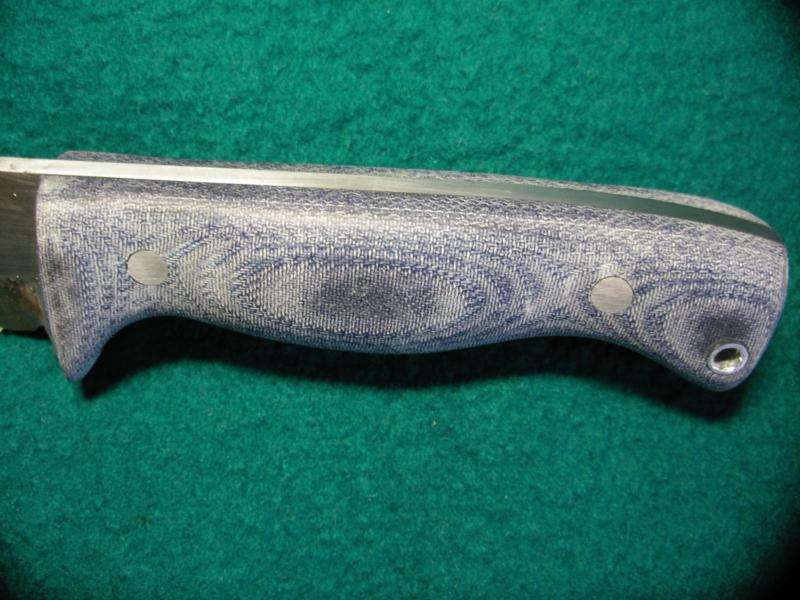
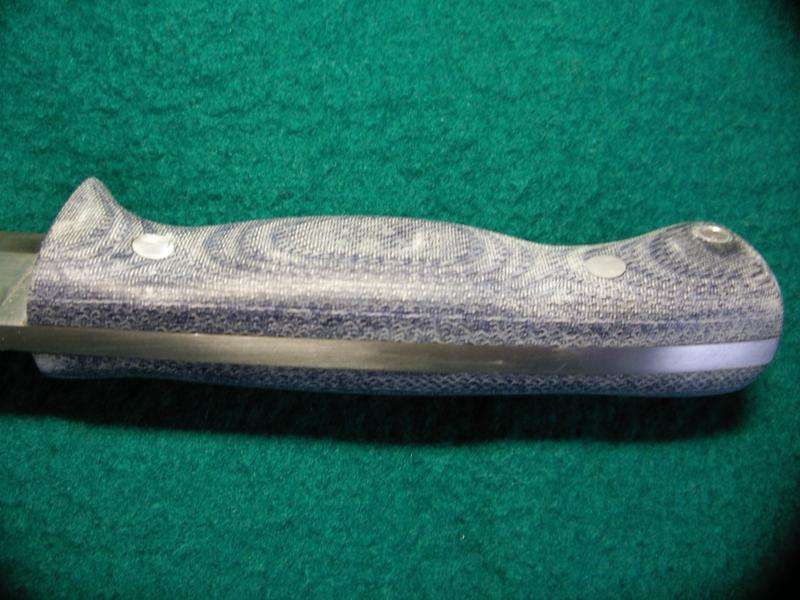


 One of the best things about the knifemaking community (I think) is the openness and cooperation among makers. It's a wonderful thing and helps the craft grow much more than secretiveness would.
