
-
The BladeForums.com 2024 Traditional Knife is available! Price is $250 ea (shipped within CONUS).
Order here: https://www.bladeforums.com/help/2024-traditional/
You are using an out of date browser. It may not display this or other websites correctly.
You should upgrade or use an alternative browser.
You should upgrade or use an alternative browser.
First knife plans
- Thread starter Lt.Col.Vortex
- Start date
Conne, not to derail the thread further, but send an email to Greg/tryypr and ask to see pictures of what can be done with hand tools. Seriously.
Yep, all hand tools..minus the 4" grinder to remove the bulk material. But other than that, files and sand paper ( sanding by hand and on a drill...no belt grinder ) is what I used. I did NOT use anywhere near the right steels for that knife, I just wanted to see what I could do with simple tools.
And thanks Rapt_up, information like that actually helps quite a bit.
OK, just read up on quenching ( yah, should be reading up on other things..but it peaked my interest ). I understood about 90% of the mechanics and about 30% of the technical terms
 . I do have a question though... when you dunk your steel in your quenchant, should you swirl it around for a few seconds then stop swirling? I ask because I think I understand the process but am not 100% sure.
When you dunk a piece of steel that is quenching hot, it goes though the various stages of vapor forming. You swirl the steel around to break up the vapor jacket..right? Then you stop swirling because if the steel continues to cool to fast ( around 500 ish and below I think), it has a potential of cracking or warping. And when you stop moving it around, the residual heat from the steel heats the quenchant up a bit so the steel doesn't cool to fast.
I think I read that right, but I'll re read it again here soon after.
OK, just read up on quenching ( yah, should be reading up on other things..but it peaked my interest ). I understood about 90% of the mechanics and about 30% of the technical terms
When you dunk a piece of steel that is quenching hot, it goes though the various stages of vapor forming. You swirl the steel around to break up the vapor jacket..right? Then you stop swirling because if the steel continues to cool to fast ( around 500 ish and below I think), it has a potential of cracking or warping. And when you stop moving it around, the residual heat from the steel heats the quenchant up a bit so the steel doesn't cool to fast.
I think I read that right, but I'll re read it again here soon after.
You don't want to do any side-to-side motions with the blade. Make either cutting motions or move it up and down like you're stabbing, but keep it submerged in the quenchant. Side-to-side motions will warp the blade in a heartbeat.
Ok, I see how side to side would cause warping. Thanks
Welcome.
FWIW The WW2 Sykes Fairbains fighting knife had a couple of weak spots that maybe you could address in your build. It broke where the tang is attached to the blade, and the tip of the blade often broke also. It is probable that these breaks occurred when using it to pry up a board or open a can of beans or something, and not when used as intended, i.e a silent killer. The Applegate/Fairbain knife was intended to take care of these problems.
Good luck
- Paul Meske
FWIW The WW2 Sykes Fairbains fighting knife had a couple of weak spots that maybe you could address in your build. It broke where the tang is attached to the blade, and the tip of the blade often broke also. It is probable that these breaks occurred when using it to pry up a board or open a can of beans or something, and not when used as intended, i.e a silent killer. The Applegate/Fairbain knife was intended to take care of these problems.
Good luck
- Paul Meske
Wow, I completely forgot about that knife.
I can fix the tang snapping issue just by widening the tang, but the tip breaking I cant really fix. I like this knife because of its slender and long blade. I could make the spine thicker ( more than 1/4" ), but there is a point where its just not practical to do so. Applegate/Fairbairn looks like they fixed the tip snapping issue by widening the whole blade. That and the Sykes blade starts at 15/16' at the blade guard and tapers down to nothing. The Applegate looks to be slightly wider and it dose not have a taper. Yes it may be a better design, but I like the look of the Sykes better. I'll look into making some modifications.
Just looked it up in more detail. The Applegate is 5 5/8" and the Sykes is 6 9/16" blade. New Georgia law states that 6" and above requires a license.....so I have some decision making to do.
I can fix the tang snapping issue just by widening the tang, but the tip breaking I cant really fix. I like this knife because of its slender and long blade. I could make the spine thicker ( more than 1/4" ), but there is a point where its just not practical to do so. Applegate/Fairbairn looks like they fixed the tip snapping issue by widening the whole blade. That and the Sykes blade starts at 15/16' at the blade guard and tapers down to nothing. The Applegate looks to be slightly wider and it dose not have a taper. Yes it may be a better design, but I like the look of the Sykes better. I'll look into making some modifications.
Just looked it up in more detail. The Applegate is 5 5/8" and the Sykes is 6 9/16" blade. New Georgia law states that 6" and above requires a license.....so I have some decision making to do.
Last edited:
As I said, it's my guess that most of the broken knives occurred when they were being abused, i.e. used as a prying bar not a stiletto. It was/is a specialized design for a specialized task. The more things you expect a knife to do the fewer things it's going to do well. IMHO there is nothing intrinsically "wrong" with the design, but there was probably something wrong with the way the knife was used.
- Paul Meske
- Paul Meske
OK, got some pictures for yall. lonepine got me thinking about blade designs, and this is what I've recently scratched onto paper. Which looks better to you guys?
The tapered blade is the original Sykes blade, and the non tapered one is the knew blade design. Should I stick with a 7/8" wide blade, or should I go smaller.or bigger?
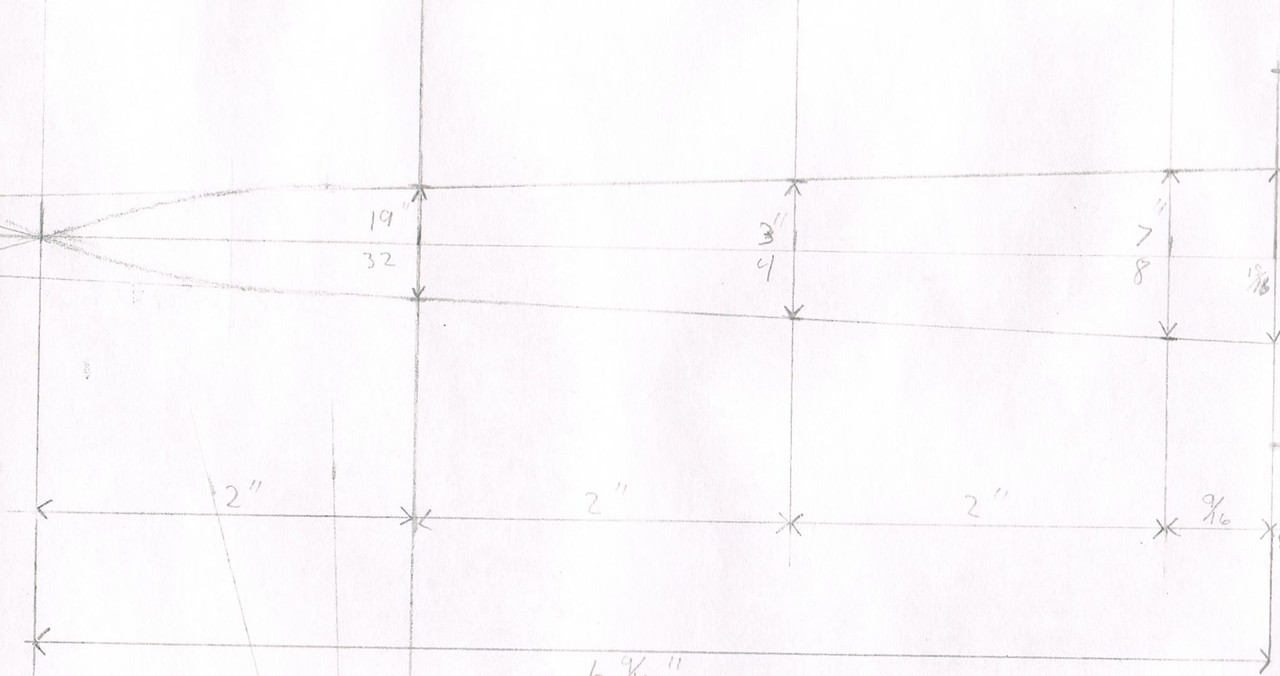
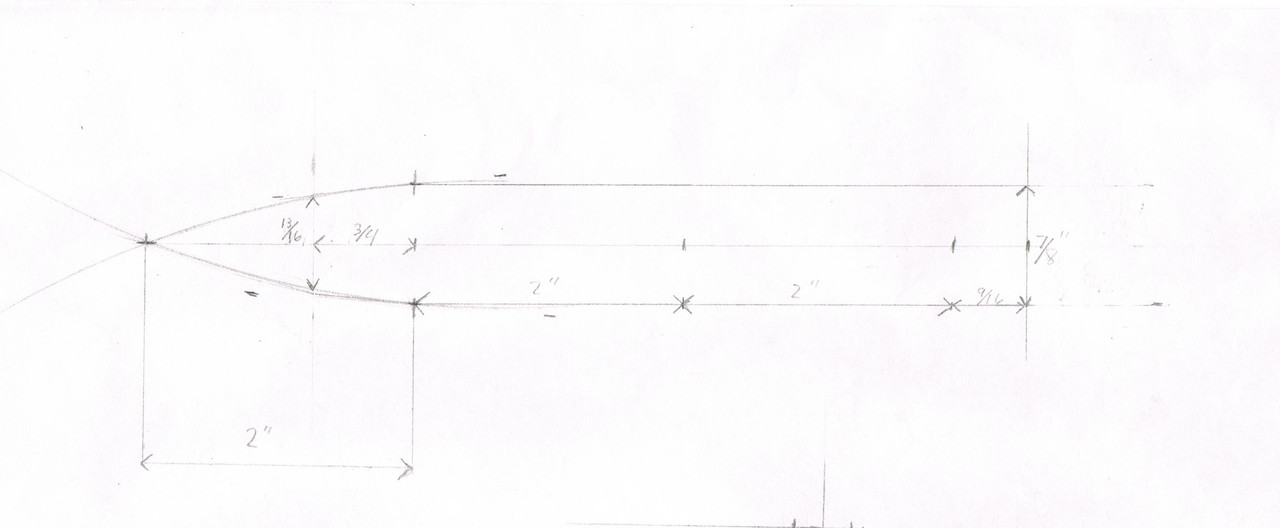
The tapered blade is the original Sykes blade, and the non tapered one is the knew blade design. Should I stick with a 7/8" wide blade, or should I go smaller.or bigger?
Last edited:
OK, got my printer to scan the whole diagram.
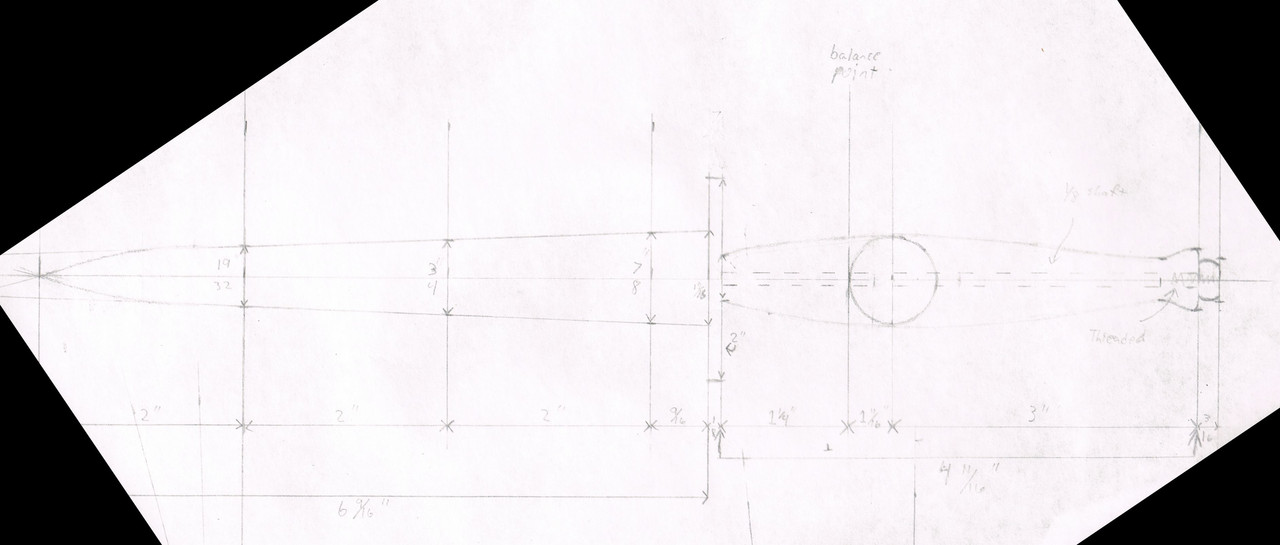
I really don't know much except for an article or two I've read, but it seems to me that a narrower blade will penetrate better (point first) than a wider blade. If I recall correctly, one of the reasons the Sykes/Fairbain was the size and shape it was was to fit between ribs and long enough to reach vital organs.
Personally I like the looks of the Sykes/Fairebain. Strengthen the tang and flatten the handle some.
I just remembered another problem with the Sykes/Fairebain. The handle, especially when made of metal would get slippery when whet, and being round in shape meant you couldn't tell the orientation of the blade if it was dark.
- Paul Meske
Personally I like the looks of the Sykes/Fairebain. Strengthen the tang and flatten the handle some.
I just remembered another problem with the Sykes/Fairebain. The handle, especially when made of metal would get slippery when whet, and being round in shape meant you couldn't tell the orientation of the blade if it was dark.
- Paul Meske