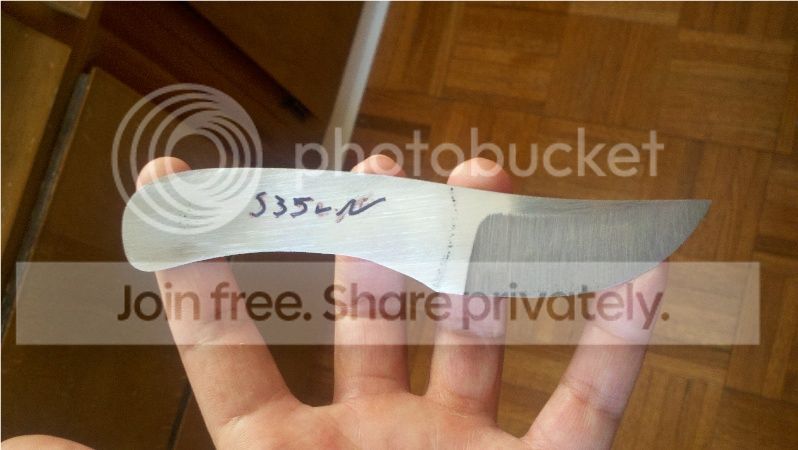
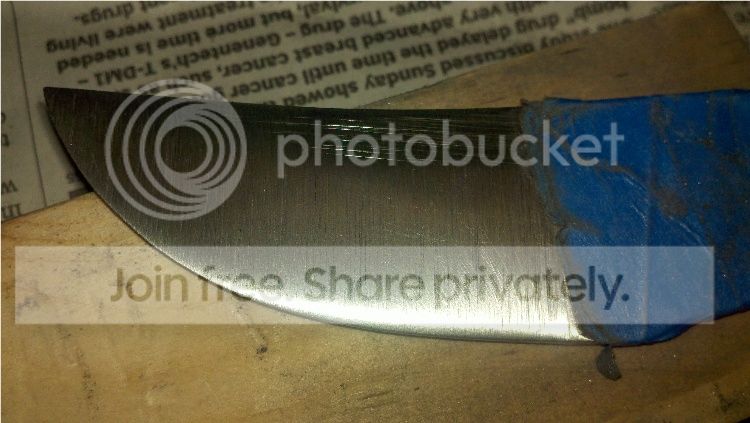
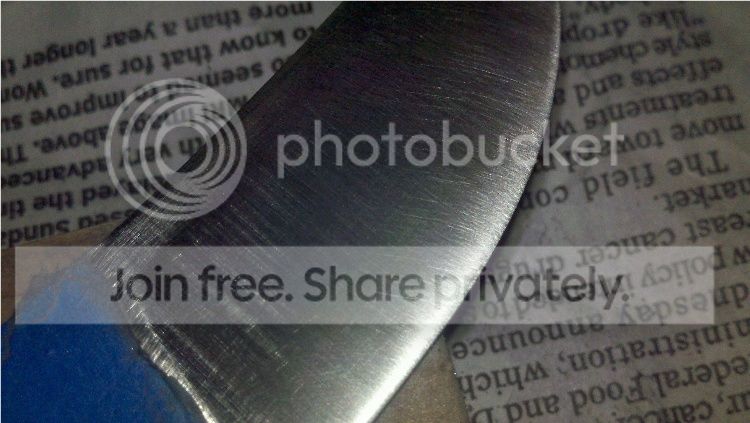
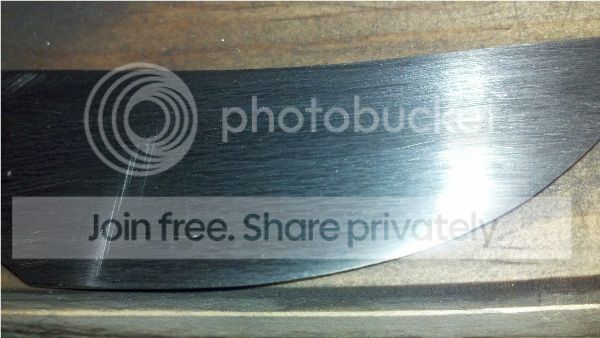
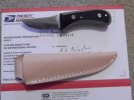
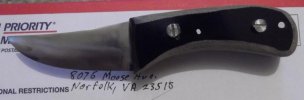
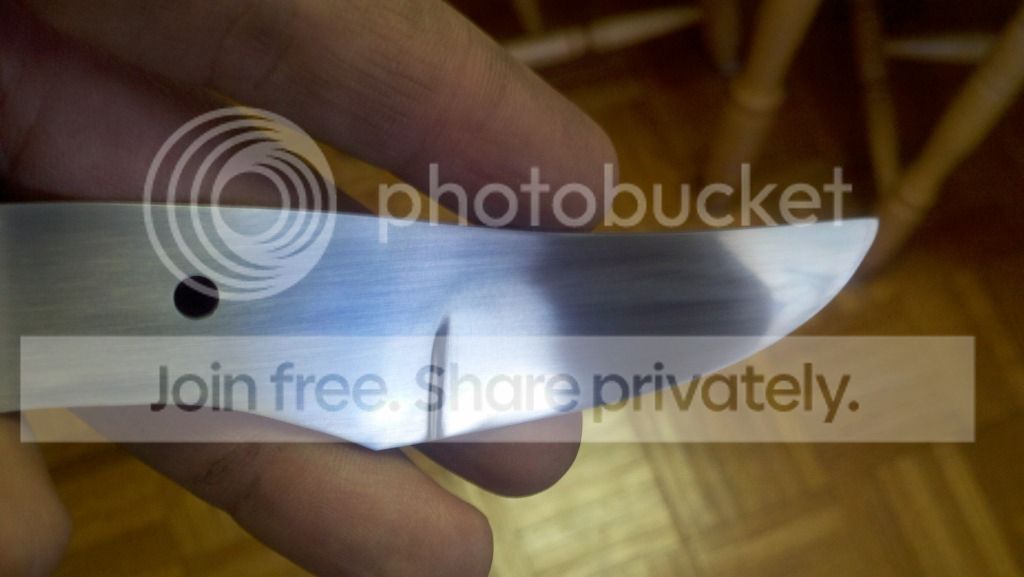
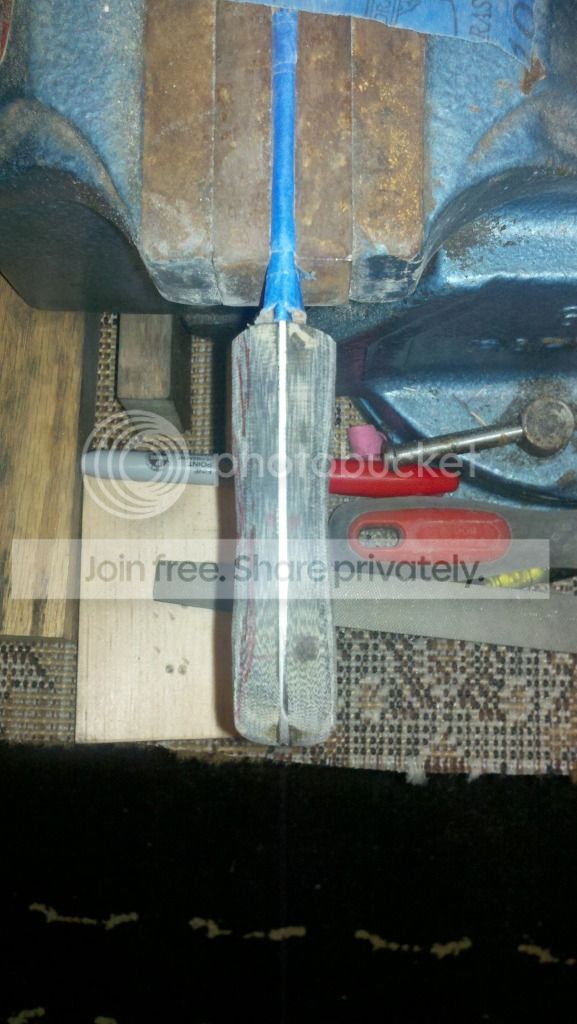
The bevels were started on a 120 grit belt. Use the 220 and sand it down until the biger scratches are gone. Then take the blade to 400 grit and look it over well. Any scratches left will be a bi!@h to get out after HT. IIRC, the blade was .100" thick stock. The distal taper makes it thinner toward the tip. Don't work about it being thin, that is a short blade and a strong steel. Try and avoid getting the edge sharp. If it does, sand it dull with a few strokes of 220 grit paper at 90° to the edge.
Darren is a great guy, and he will do a good job of the HT on S35VN. This steel will make a super sharp and useful knife. As Darren said, this knife will last a long time if cared for. S35VN with cryo at Rc60 will be a great cutter.
In the pack of sandpaper I sent, there are many grits. Normally, you double the grit each change. So 60/120/220/400/800/1500/2500 would be a normal progression. The in between sizes can be used to drop back a bit if there is a small scratch not out. Say a scratch shows up when the 400 grit is smooth, and you don't really want to go back to 220. Use the 280 or 320 grit. Also, when working out a scratch, DO THE WHOLE BEVEL. Don't just work the scratch, or you will make a dip in the bevel. This will show up as a ripple in the blade when it gets sanded higher. At each grit, sand the entire bevel until it is dead flat and all lower grit scratches are gone.
After the bevels are sanded at each grit, Don't forget to sand the tang and ricasso area with that grit. Take extra care to keep them flat.
Hand sanding isn't a fast process. take your time and work in doable length sessions. Take a break when tired or frustrated. Don't expect, or try, for the blade to be sanded and ready for HT in one evening.
Using a lubricant when sanding is a good technique. It can be some motor oil wiped on with a fingertip, a spray of WD-40, or water with some dish soap. Some folks use a spray bottle to spritz the water on the blade. I use a pan of water with a teaspoon of dish soap in it. I dip the block of sandpaper in the pan, drain it for a second, and then sand. Lubrication makes the sanding smoother and speeds things up. When changing to the next finer grit, be sure to clean everything up well. You don't want some stray grit making a scratch in your smooth sanded blade later on. Especially at the lower grits, change the tape on the blade. There is coarse grit stuck to it at the edge. That can come loose later and make you say bad words.