
- Joined
- Mar 1, 2010
- Messages
- 10,844
Maybe...but I'm guessing that the spine thickness was reduced along the reground portion.
Yeh, you're probably right.

The BladeForums.com 2024 Traditional Knife is available! Price is $250 ea (shipped within CONUS).
Order here: https://www.bladeforums.com/help/2024-traditional/
Maybe...but I'm guessing that the spine thickness was reduced along the reground portion.

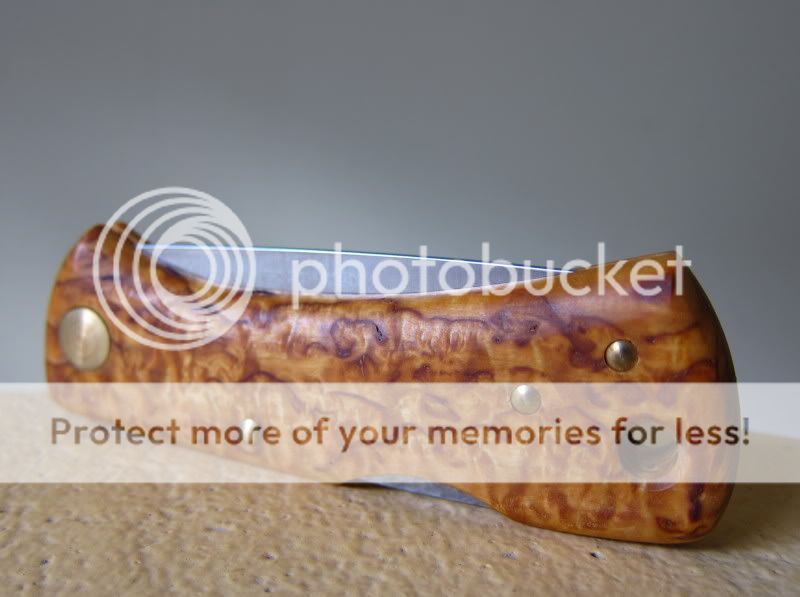
92 Wood is actually the same knife as 82 with one difference - the wood itself. 82 is bubinga, 92Wood may be any kind of exotic wood out there.Do you know if I'd have any luck acquiring it with the wood scales? I've only seen it with the synthetic stuff.

92 Wood is actually the same knife as 82 with one difference - the wood itself. 82 is bubinga, 92Wood may be any kind of exotic wood out there.
http://www.uppsalamaskin.se/Default.aspx#!m=v&l=5996&pg=1&p=18259&r=1559426
http://www.lamnia.fi/items.php?lang=sv&pid=3326
http://www.noze-nuz.com/eka/EKA607718.php
http://www.filofiel.com/tiendaonline/eka-swede-82-p-3134.html
~Paul~

 ).
).
Not all 88 are hollow ground! The older versions were scandi ground. Here is mine.The 88´s blade is very nice & thin yet have a substantial handle




I wouldn't say slicing a tomato is the best test of a knife's slicing ability, I can slice tomato's with my axe. It is a sign that you've got your knife sharp (particularly if the tomato is ripe
The relationship between the depth of the blade, thinness of the edge grind and thickness of the stock is really where the secrets lie I think. As you can see if you grind a Spyderco's edge fine enough it will slice as well as a traditional knife. Don't forget most traditional's don't have a very deep blade so the grind angle can be very similar to a Spydero (think SAK's). I'd suggest that the edge thickness comes down to how brave the maker is feeling, if you put a zero grind on something like ZDP 189 you'd better not slip and hit anything hard or drop the knife! On the other hand I'll push a finely ground traditional made with 1095. The worst that's happened is it's rolled. No problem, 20 minutes sharpening and it's sorted again
It's all about compromise, I'm EDC'ing a SanRenMu 908 at the moment. It's FFG and has 8Cr13Mov, a softer stainless. I've thinned and convexed the edge, now it slices (wood) really well. Worst that happens is it roll's like the 1095 with the added bonus that I can use the knife in typical, wet Welsh weather. The knife cost me $10, I'm happy to experiment
Sam
You bring up a great point here, and I really think it needs some testing on different types of materials.
If two blades have the same starting angles (edge and primary grind), but one blade is wider (having a thicker spine measurement), then how would they compare in "slicing performance?"
I would think that for many types of materials, the thicker spine would not make much of a difference, because most of the wedging pressures would be forced on the starting portion of the wedge (blade), but for other materials, the total thickness of the wedge might come into play more than others. There is also a "drag" factor to consider, aside from "wedging pressure."
We would have to find blades that have the same angles, as well as measure the force needed to slice through the different objects. Apples or potatoes might make better candidates than tomatoes, because they can break apart when they are wedged too harshly. Cheese would also make an interesting test subject, because it seems to magnify the drag factor. To make the test more complete, it would be nice to measure each grind type against itself (hollow, ffg, convex).
Just thinking out loud here...
Absolutely! I have a couple of those scandi ground 88. They really do excel at slicing.The scandi ground version is the one to get if one can find it , Paul !
1234,,,
