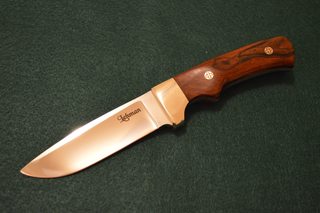
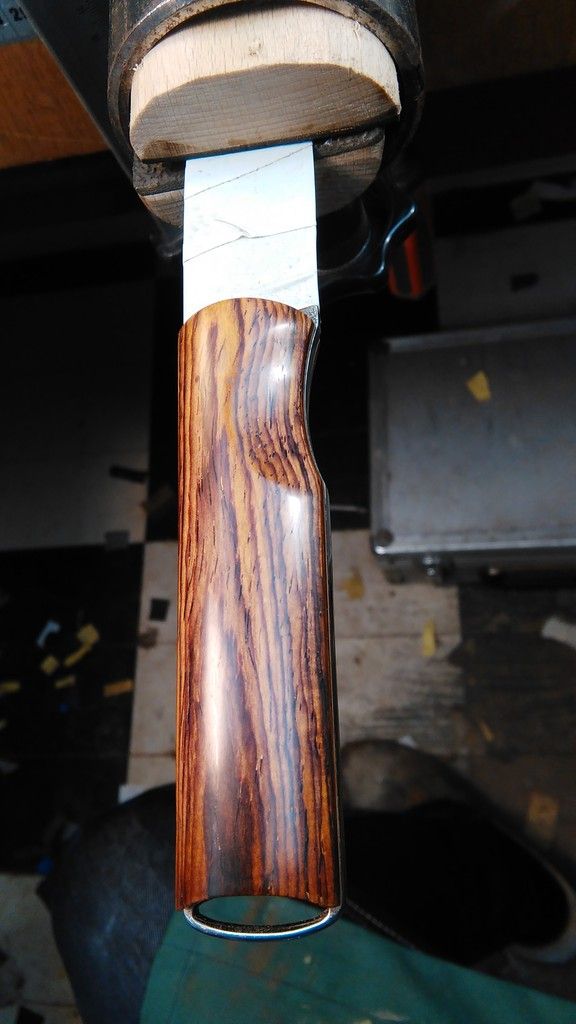
Gray cocobolo scales after sanding

Joined
May 14, 2016
Messages
70
Hey guys, I finished sanding my knife scales today and the knife is all done. I sanded from 50-800 sand paper, then micromesh up to 12000. I didn't apply any finish yet as I have read cocobolo doesn't readily absorb any type of finish easily.

After final sanding I expected the cocobolo to be reddish and then fade with age. During filing and early sanding the wood would remain orange for a few days after then get darker. As the grits got higher the wood started losing color and eventually would be gray after everything. When I rinsed the previous grit off the water would make the wood orange but it would become gray after washing.

Is there any finish that typically works with cocobolo to give it the effect I am describing? Did I do something wrong during sanding? Thanks
 
Throw a light coat of tru-oil on it. You don't need to get all glossy but every wood I've worked so far looked a little crappy until a coat of oil or some kind of finishing paste/wax was put on it. Then they pop. Personally I like the glossy handle finishes but other like satin. There's 1001 ways to get the effect you want. If you don't want to do any of that maybe buffing with a really fine compound would make the handles look better. I also think that sanding to 12000 grit may have been a little much. 800 or 1200 works pretty well and the finishing products have a little more to stick onto without leaving any visible scratch marks to speak of.
 
Would tung or teak oil be okay? That's all I have seen in the stores near me. Should I sand the wood to a lower grit before application?

I was also thinking of using canning wax. Would that do the same thing?
 
It's too fine a finish. You're getting metal dust embedded in/on the surface of the wood.

Hoss
 
What grit should I sand it to?

I've read that micro mesh can polish cocobolo to a glossy finish. How can I avoid getting the metal into the wood?
 
Are you doing this by hand?? And you are washing the wood with water in between the grits?? If that is indeed cocobolo it almost looks overheated along with being loaded with steel dust.

With all the pins in that handle it might be hard to prevent some of the dust. I would recommend a light sanding with 400 grit and go no finer than 2000. But do it by hand and do not wash it in between. Wipe it down with a clean dry cloth. When ready to buff use a cotton rag and paste wax. Clamp the blade and do a shoe shine. You can bring that cocobolo to a bright shine this way.

The if you did this by hand already the water may be reacting with the steel dust and causing the cocbolo to wash out. Try it again but not to the micro grits.
 
Yea I have been wet sanding by hand.

Should I use traditional sand paper instead of micro mesh, or stop around 3200 in the mesh?
 
Do not wet sand the wood. Try traditional sandpaper. Or try the micro mesh dry. I have never seen cocobolo turn gray like that. Colors may get a little muted but not gone. On handles I seldom go above 1500. On a very rare occasion I may go to 3000. I have micro mesh up to 8000 but never use it. I tried it a couple of times and it just did not give me the results I wanted. After 1500 grit it does virtually nothing on wood. At least that can be really discerned by the naked eye.

I am also seeing scratches on the handle and guard in your picture. If you took it to 12000 mesh you should not see these. You seem to be moving up in grit too soon. Make sure you get all the scratches from your previous grit out before going finer. This probably has nothing to do with you gray cocbolo but a good habit to get into.
 
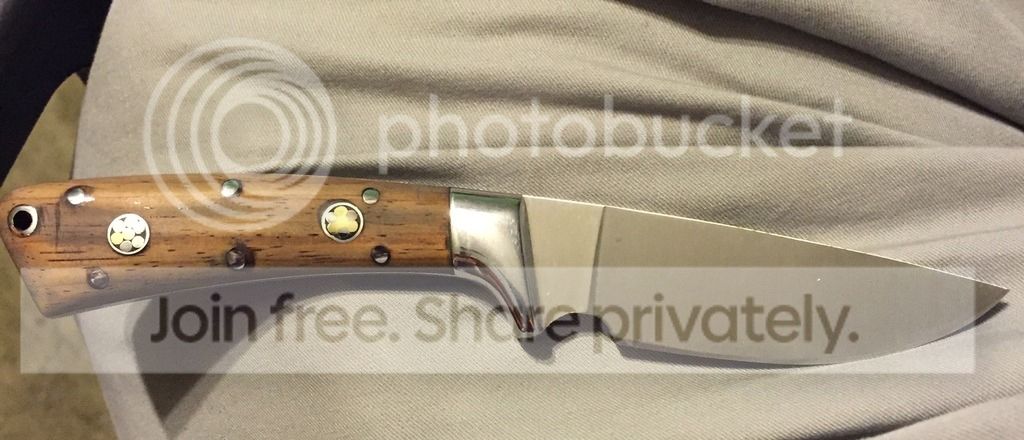
I don't claim to be an expert on wood finishing but I think you sanded it too fine and too long. Here is a Cocobolo scaled knife I made last year that was sanded to 600 grit and buffed with about 700 grit compound. I could probably have sanded it a little finer but it looked good to me so I stopped. Larry

5ZSKajom.jpg
 
I'll give it a shot with dry micromesh. Hopefully I won't have to remove too much material to get past the gray wood.

The scratch marks are left over from filing. They were too deep to get out without changing the whole handle sharp so I decided just to smooth them out as best I could


Here is my second attempt. It seems to be more colorful this time and match the leftover wood from cutoffs. Thanks for the help!
 
I think he is using sapwood...

I had once batch of coco slabs that had a small amount of splotching in that sort of color, but I threw some oil on it and put it in the sun for a few hours and the color changed to an almost neon bright orange red. But that had a much more purple tone.
 
It's possible. The slabs were bright orange when they came. I'm going to oil it tomorrow and maybe I will leave it in the sun as you said
 
I just also finished a cocobolo handle with micromesh up to 12000 (dry)
IMHO it is well worth going the extra mile.
It is so shiny, smooth and mmmmmmm...... look at the depth of the colour.....
IMG_20160524_205638_zps18vvvrfr.jpg
 
Greenberg beat me to it. That may or may not be cocobolo, but it certainly isn't the part of the tree we use for handles. It looked like sap wood to me, also. It will never become like the handle shown in Bart's photo.

Just an FWI, but many attractive woods only are attractive in the dead part of the trunk and roots. The live wood on ebony is white. Cherry and walnut have very blah sapwood. In some handles an little sapwood can be used for contrast, but normally it is to be avoided. It is generally much softer and less stable.
 
Should I email the seller (knifekits.com)? I paid thirteen bucks for it to be good wood from what I thought was a reputable dealer. I'll post a link to the page with the slabs once their website starts working again. I'll also post a picture of the scraps next to the finished handle.
 
Back
Top