I was afraid someone would ask; Mr. Howard's explaining it and my understanding the explanation aren't exactly the same thing!
With the 25 jack, he said he put the knife in a vise and used a slim file(? shim?) to slightly ease the pressure right at the pivot point. Or at least, he did *something* with a slim file that did not include what I would have attempted, which was addressing the tang or the back of the spring directly.
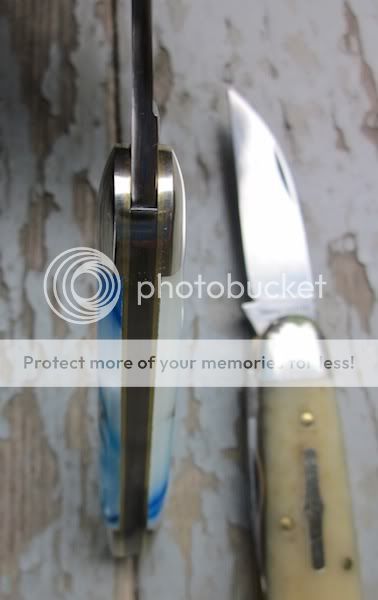
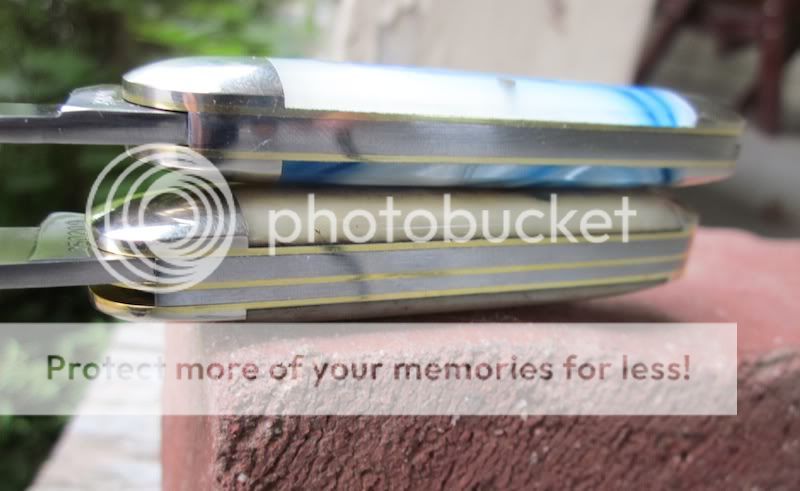
Unlike with the small blade on the Jack, the coping blade on the 26 sits on the same spring as the main blade. And a thick main spring it is (just realized I don't have a direct picture of the offset coping blade on the spring):
He explained that anything he did (to the spring) to ease the small blade would affect the main blade as well, and since its action was right where one would want it to be, he was hesitant to do anything to the knife-- especially since he was able to open both blades seemingly effortlessly!
In addition to oiling and working the joints (the former of which he did for me), he recommended leaving the blades partway open overnight and/or when not in use to keep tension on the spring.
I'd read about that possible measure before in reference to other knives with stiff pulls and wouldn't think it would work, but he thought it might make just enough difference over time that other measures wouldn't be needed.
Even after expressing his hesitation, he was still willing to work at the pivot/spring if I wanted him to. I decided to go with his recommendation instead (what say). So, I'm going to give it time, elbow grease, and partially-open overnights, and see what comes of it.
... Watching him open both blades so easily was both eye-opening and frustrating! It was worth it, though, to see my new knife in its creator's hands, and how expertly he handled it.
~ P.