Grinding..do you use some sort of holding device or angled rest ???

Joined
Oct 18, 2005
Messages
205
Hey guys

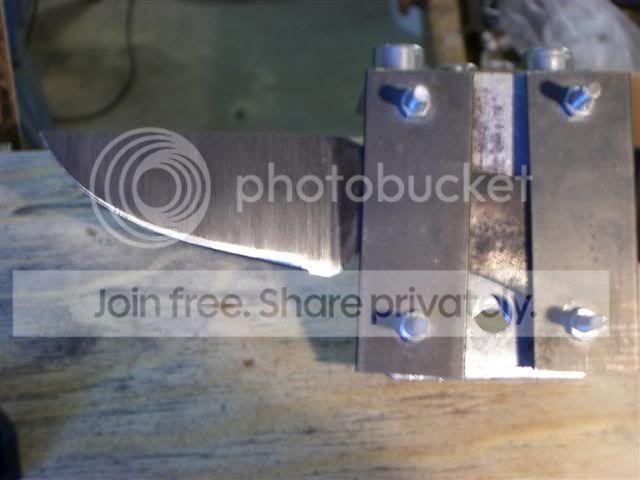
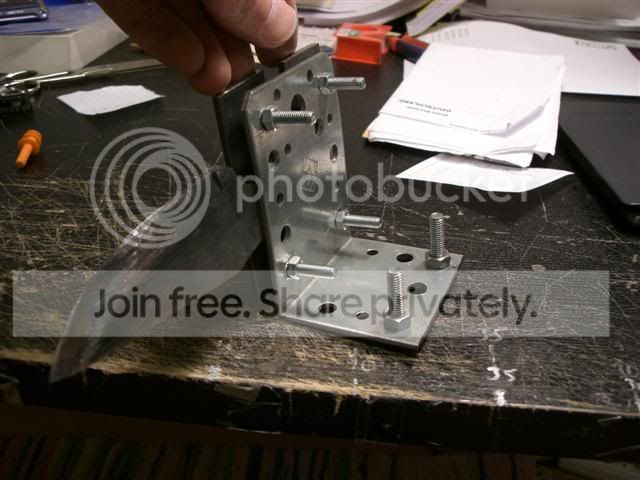
I was wondering if any of you use some sort of holding device like I do
Without it my flatgrinds suck and it takes more time
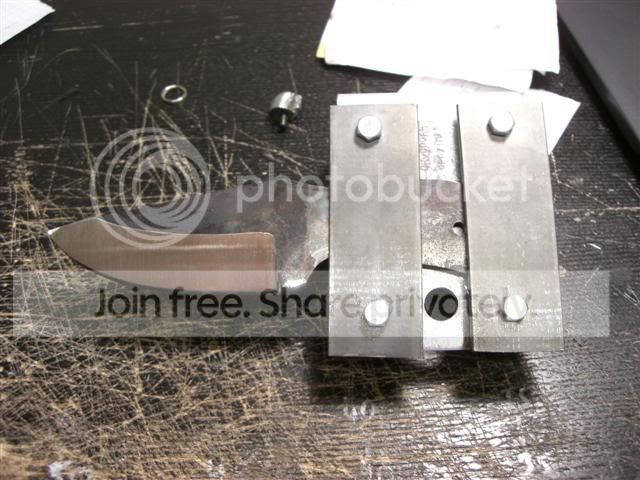
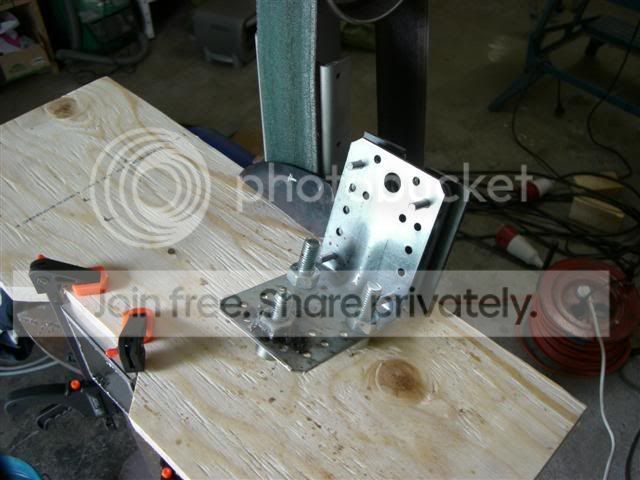
CIMG2939Small.jpg

CIMG2942Small.jpg


SO I would like to know if there are any other devices,angle rests,..out there which are essential? :confused::confused::confused:

Would be great if you could post some pics:thumbup:

Tom Krein talkes about a "angled rest on the flat platten" in one of his tutorials on USN

Does anyone use something like that too ???

PICS would be GREAT!!! :)


thx

Al
 
I don't use any grinding jigs...i feel they limit the grinds possible and are as hard to master as just learning the "right" way. I know some makers sinply vice-grip a blade to a piece of angle iron, then just adjust the angle of the platen on their KMG to whatever bevel they want. The only time I do this is for sharpening.

People are torn on this issue. Some swear by jigs, others swear against them. I think you'll be better off in the long run learning to freehand....helps a TON when you are grinding post-HT and need to feel the heat in the blade to avoid overheating, which is much harder with a jig.
 
Ok My grinding sucks. How did you make your jig? I still will do it free hand as well (a huge thanks to Brett Bennett for showing me how to!!!), but until I get good enough at it I want something like that.

-Mike Sheffield
 
@David

The funny thing is grinding post HT is no problem
I do it freehand and it works pretty good

My problem is when I flat grind pre HT without a jig the grind is uneven and I end up using a file to finish

@kibuddha4

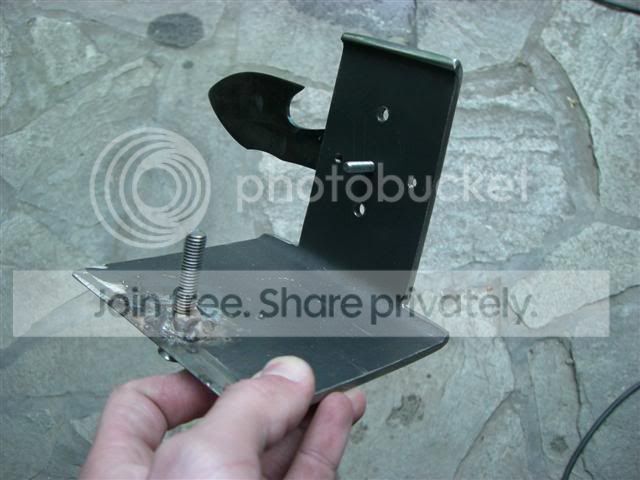
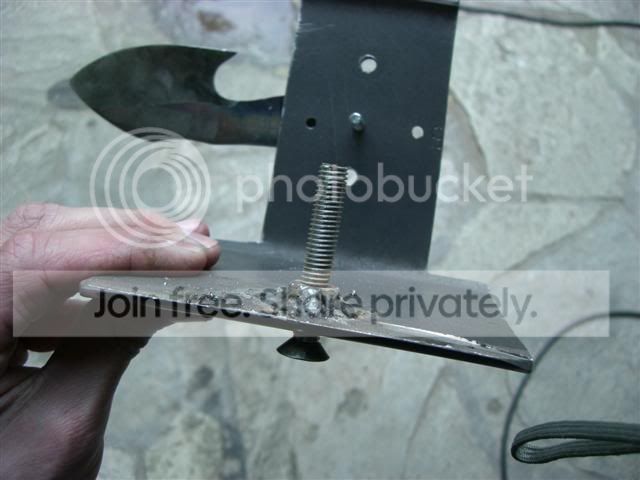
all you need are a few screws, a welding machine,2 angle iron, and a few pieces of flat steel and thread rod

the screw on the bottom is for adjusting the angle

you need to wled the nut to the angle steel


after that I took the second angle steel and cut it in half.
cut 2 pieces of flat steel to length,drilled holes and screwed them together using thread rods

the only thing you have to do now is drill matching holes in the angle iron and insert the thread rods through

CIMG2943Small.jpg

CIMG2940Small.jpg


I already made 3 jigs so don´t get confused.

took some time until it worked the one from post #1 pic 2 is the one I´m talking about

Al
 
Last edited:
I think it's best to learn freehand, it's not too bad and you'll be much better later on for it.

Stand comfortably, very lightly ease the blade to the belt and let it find the flat spot you already made. When you feel it sort of settled into what you've already done, apply pressure. Take your time and look at what you've done after each pass. I kinda lock my elbows to my body and move my body about as much as my arms, it seems more stable for me.

There's a good video on smartflix (great place) that you can rent for $10 on
flat grinding.

http://smartflix.com/store/video/3654/Flat-Grinding-with-Harvey-Dean
 
THANKS

Will give it a shot as soon as I get new belts

Would love to rent the video but I´m from Europe

Guess I have to buy it
 
Last edited:
i tried to set up a jig one time back in the day and could not get what i wanted out of it so i went back to flat free hand
soon i got better and better
there are still some tricky grinds that i have to take more time with but remember this thing knife making is not a race
 
i have freehand ground every knife i have ever made. the only thing i use is a clamp to keep my grind start straight. i also mark lines to go by which help sometimes depending on what i'm grinding. i tried a jig once but found it slowed the process down for me at least.
 
I usually use the standard workrest, and hold the tang in a small pair of vicegrips. One word of warning, you need to continuously readjust the workrest to VERY close to the platten each time you change belts. There are worse things than the blade being pulled between the rest and the platten, but if it happens you may well be redoing a new blade....and hopefully not getting your hand stitched up.
(I do mostly small folders)
 
Also, none of the jigs pictured here support the blade tip or blade. As a result, you will often get uneven grinds. As you grind more, the blade will flex more, causing the grind angle to constantly change unless the stock is so thick or blade so short it doesnt matter. A proper jig would support the blade tip to ensure the grind remains consistent as the blade gets thinner and wants to flex when you push it into the belt.

Wait...why are we making Jigs again? Itll take only a bit more effort to learn to properly grind. Take the mild steel you were going to make a jig from and practice freehanding.
 
Last edited:
I clamp a standard filing jig to the blade to make sure that I set the plunge grinds right, Everything else is done freehand because the jig can get in the way.
 
Keep practicing freehand and one day it will click. When it does you'll say "Ohhhh! Now I get it." It was frustrating at first for me because I was trying too hard not to make any mistakes but now if I do make a mistake it's simple to correct them and I don't have any more of those shrinking blades. I found out slowing down the grinder helps a LOT.
 
I use an angled flat platten to set the initial bevel and "center" the blade. After that it is all done by hand.

Most grinding jigs will limit your ability, sooner or later on some type of knife.

Tom
 
Bruce and Tom are right. :thumbup:


I use an angled tool rest for scandi-grinds....I can do my bushcraft in 1 minute (both sides, all the way to zero edge). So, for that grind...the tool rest is definitely faster.


I also do free-hand flat grinding....and it did get a lot easier for me this year...I had to pay my dues of "200 blades worth" of grinding first. :foot:


There are some makers who make very nice knives and do very little freehand at all. But you need the right equipment to do it. Anything else is pretty much "jerry-rigging-it". *shrug*


Just being honest....sometimes those that use homemade jigs end up freehanding it as well.


There is one time I make an exception for using an angled tool rest....starting the grinds on a big, heavy camp knife...I do as much as I can on the angled tool rest first...(so my arms don't fall off halfway through the grind - not everyone can have forearms like Tom-the-Grind-Monkey-Krein). :p

Dan
 
THANKS a lot!

So freehand is the way to go and I´ll start practicing as soon as steel and new belts have arrived.

And you are right
I could have spent the time thinking about the perfect jig and working on them grinding.

BUT on the other hand I learned how to tap and did some welding so it wasn´t wasted time

Already made 3 knives freehand before I used a jig

So only 197 to go :D
 
buy some CHEAP metal and practice on it :) Don't bother learning on any precision ground flat stock :)
 
I have gotten a good hang at last on the convex grinds freehand. It was actually harder to get the hang of the 2x72 than to learn to do it on the 1x30.

I'm still tinkering with a kig for scandis. Feel like freehanding that is just a losing proposition for me right now.
 
Back
Top