Handle contour input requested

Joined
Sep 16, 2002
Messages
1,577
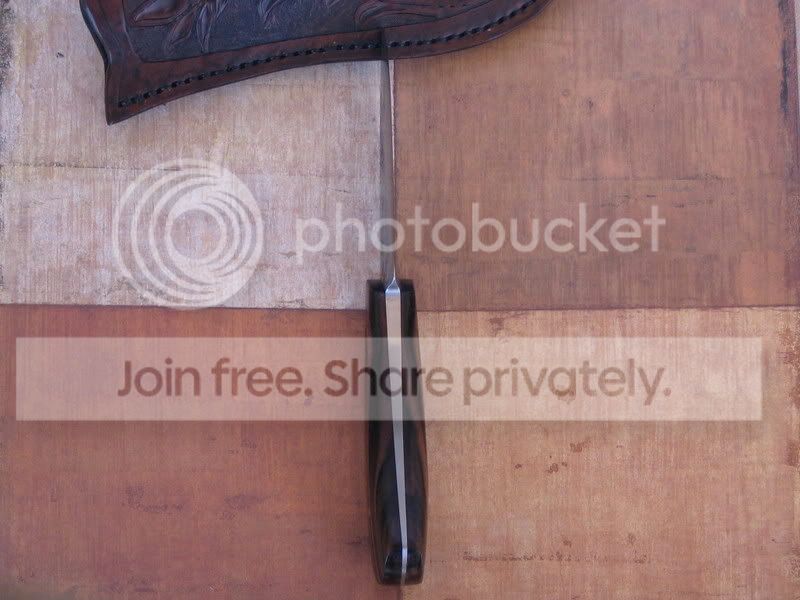
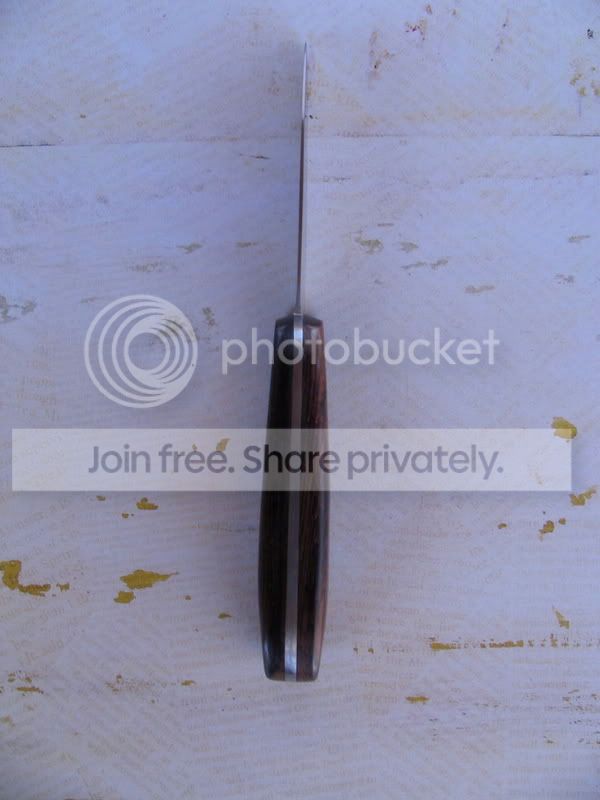
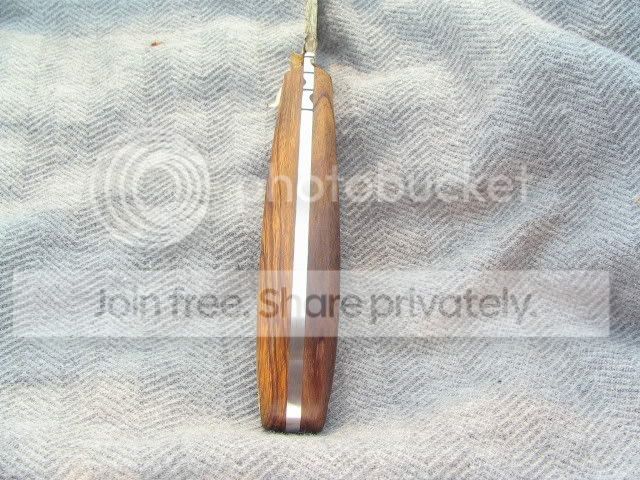
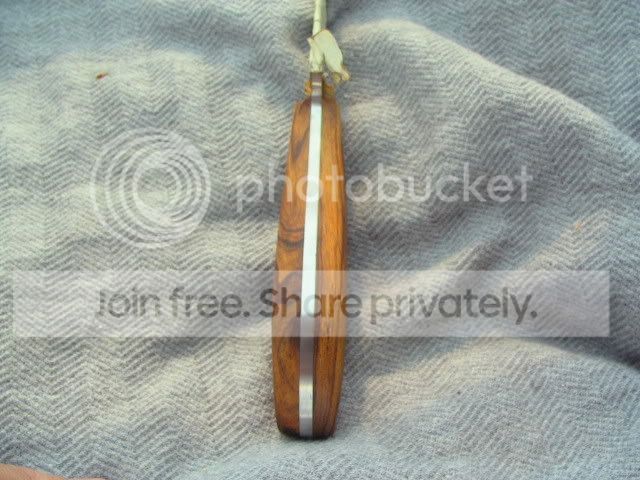
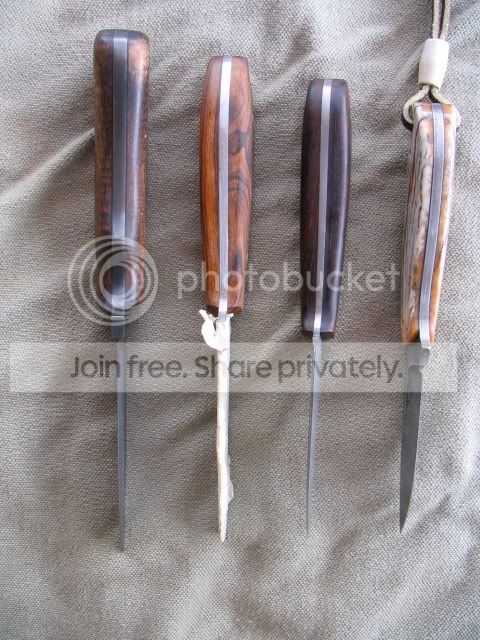
I'm heading towards a 'rut' on how I'm contouring my handles, and I'm not sure if it's a good one or not. My goal is comfort in the hand AND pleasing to the eye. The feel and look pretty good to me, but I lack the years of experience that others here have. I'd like feedback and critique if possible from the more experienced on how these look to some fresh eyes.

The concept in my mind is:

-tapering towards the front starting from about 1/3 or so back

-thicker in the middle...ie, a palm swell

-tapering again towards the back end where the pinky/edge of the hand fall.

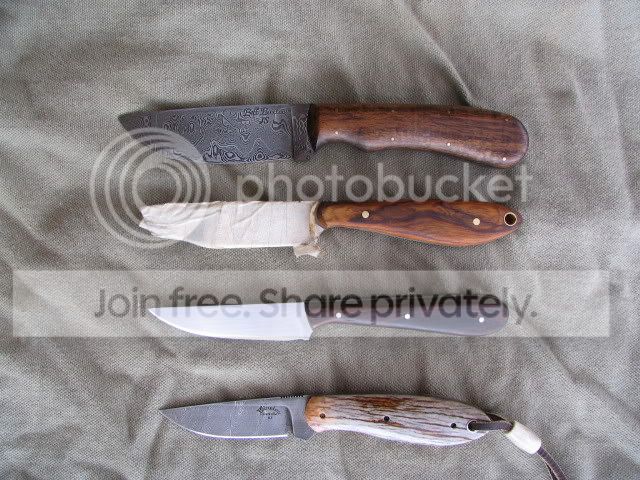
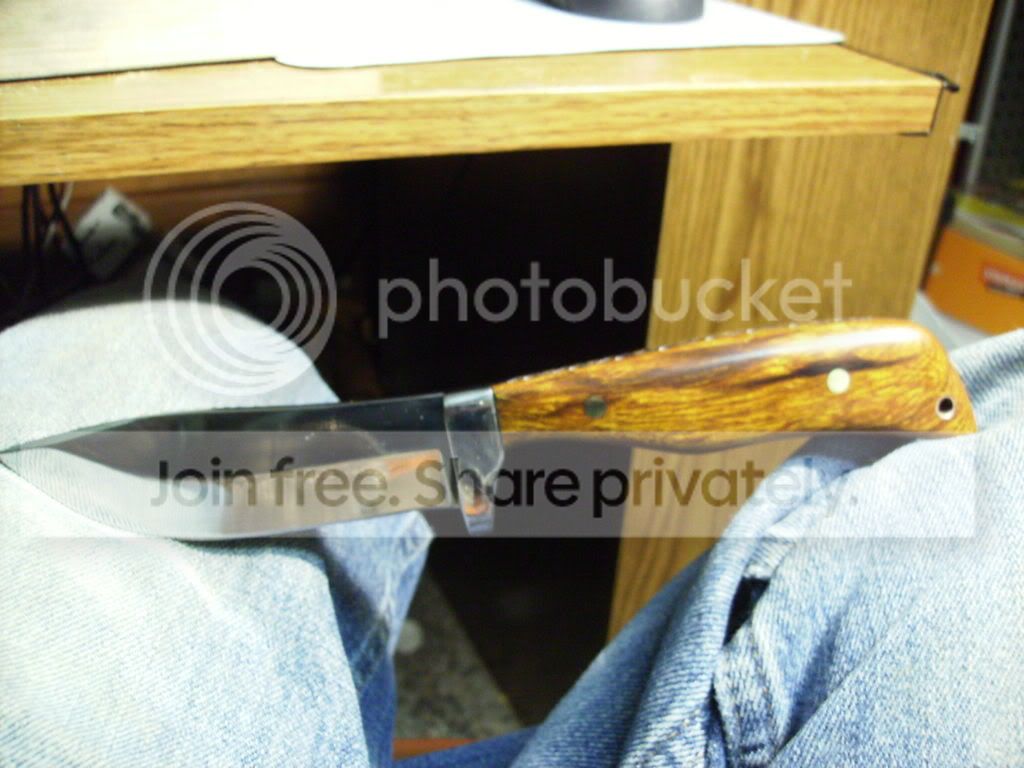
Here are my last 3 knives as examples:

Blade: ~4" Handle ~4"
Intended use: drop point hunter
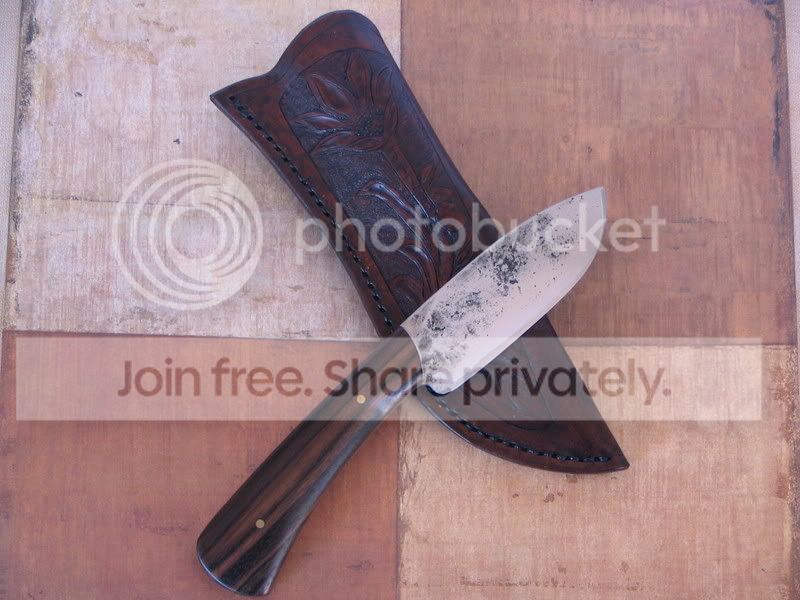
IMG_1313.jpg


IMG_1315.jpg


Blade: 3" Handle: 3 3/4"
Intended use: Bird & Trout
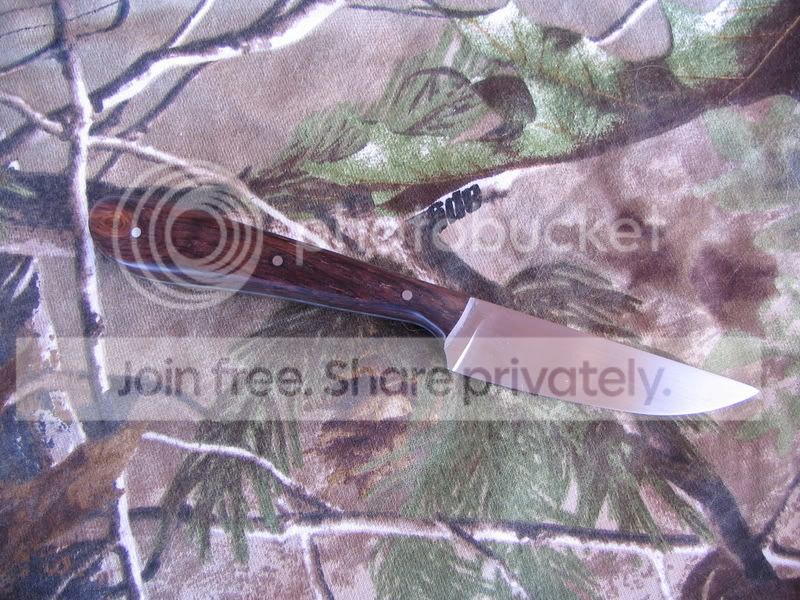
IMG_1395.jpg


IMG_1408.jpg


This one is currently being shaped. I am more or less finished with the shaping, but haven't yet started finish sanding so I could still do some more without any trouble.

Handle: ~3 3/4"+ Blade: ~3 1/4"
Intended use: Bird & Trout
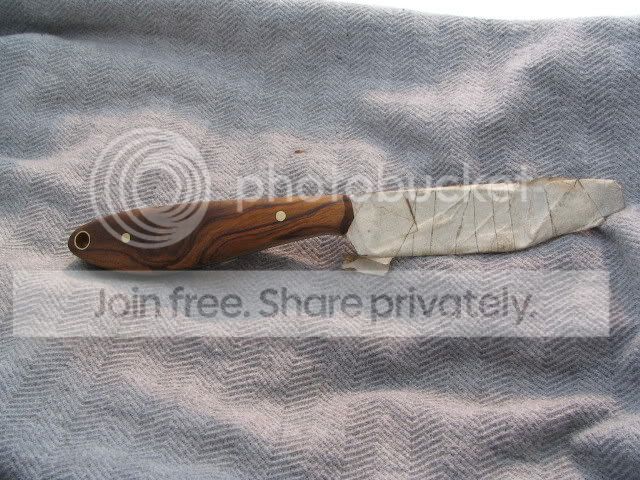
IMG_1647.jpg


IMG_1639.jpg


IMG_1638.jpg


Thanks in advance for any feedback or suggestions!
 
Last edited:
Lots of good ways to skin that particular cat. One thing I look for: the blade end of the handle should always be narrower than the bulk of the butt end, both across the back and from top to bottom. I hate a handle that feels like it wants to fall out of my hand. I like the handle to balance comfortably in hand without really having to hold on to it, if that makes sense.
 
Paul, From what I can see I'd consider your handles still "blocky". I'd thin the plunge end and the butt end. Also to my way of thinking the handle should be thicker at the spine tapering to the edge of the handle. Think of an upside down egg shape or a rounded off inverted pyramid. Take a paint stirrer and put some clay on it like you would a handle. Grab it like you'd normally hold a knife then take a look at the clay.

Another thing to remember is that different uses require different grips, a chopper to my way of thinking chopping knives should thin then expand at the butt to help keep the blade in your hand during chopping and swinging motions. Hunting knives depend on the size and usage, capers/bird and trouts should be very slim, larger hunters should have more swell in the palm and some thickness on the butt because some people will pound on the butt to push through the sternum when dressing game.
 
Thanks for the great input so far! I realize I've left out some important info like side profile shapes, dimensions and intended uses, etc. I will try to edit my original post with more pics and info.

I briefly tried the clay idea, but it just looked like an amorphous blob on the first try and I didn't really get back to it. I will do that exercise again.

I have been consciously trying to avoid the thick, blocky look that seems to be a hallmark of many newbies, but some of these knives are rather small and seem to get lost in my hands the way they are now. I fear any more slimming might not be good, but I have to admit I haven't tried it yet either.

Thanks again!
 
OK, I updated the first post with blade info and side profile shots. The first couple did get an egg shaped profile from spine to edge, however I did forget about that to some degree on the last one.

Thanks again!
 
I think those look pretty comfortable. I agree with Will, they look a little thick to me. And as already said, consider all the different ways a knife is held during use, not just the "standard" grip.

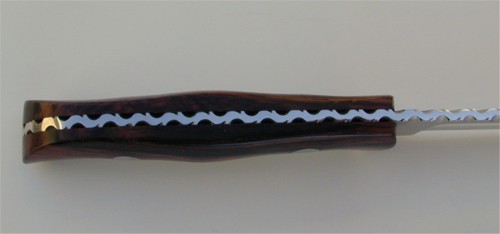
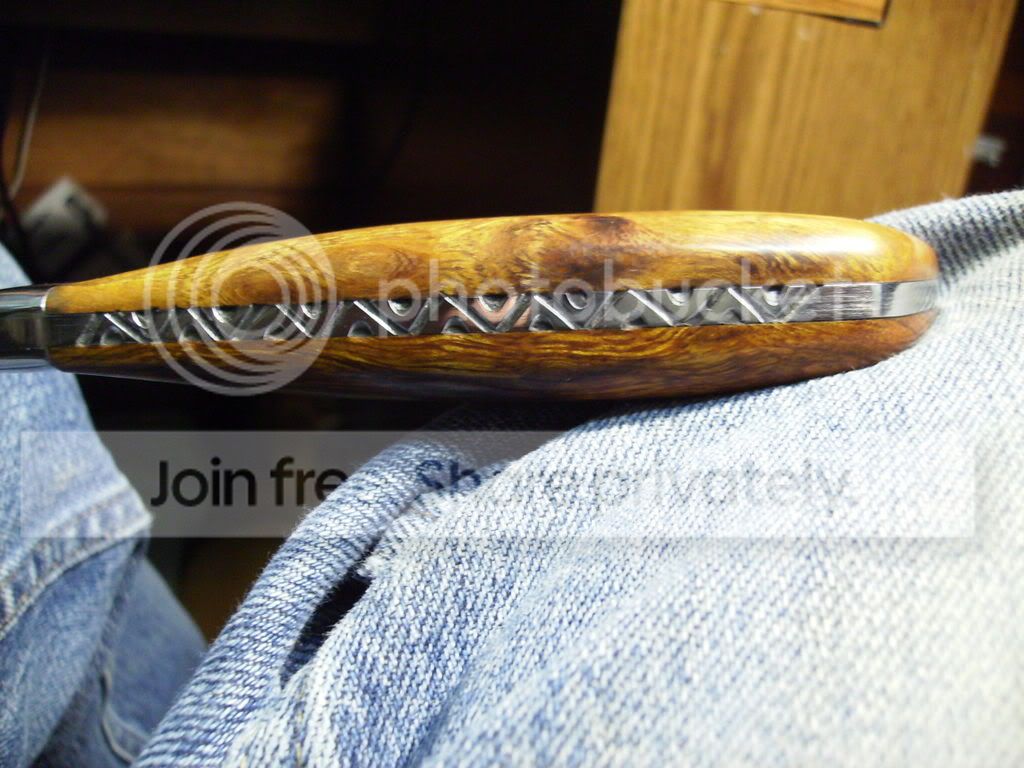
One tweak I'd suggest to your shape that I think you'll like for this kind of knife is to improve the pinch grip. It narrows going toward the blade, but just before it gets there it thickens a hair, so the thinnest part of the handle (on the sides) is half an inch back from the front, rather than the very front. This gives a bit better pinch grip there, and also makes the handle more interesting looking (less blob).

Nice looking fit and finish, BTW.
 
Nice profiles, both blades and handles.

As stated above, the flow of a knife comes from tip to butt; you have it down in the profile, the cross section is just a little thick.

Fred
 
Paul- I wrote out a bunch of crap, but it was hard for me to follow it... and I've seen me do it! ;) :p

I think you're making really good progress! The overall lines are nice and it looks like you're dialing in what you're doing. :thumbup:

For small-ish knives, I think it's okay to just do "egg-shaped" scales. Meaning follow the profile and then round them over without a ton of contour.

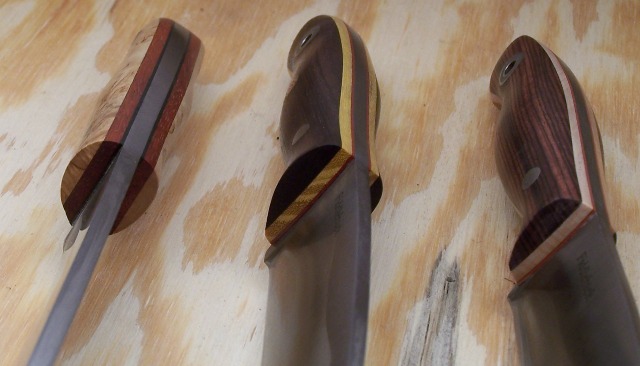
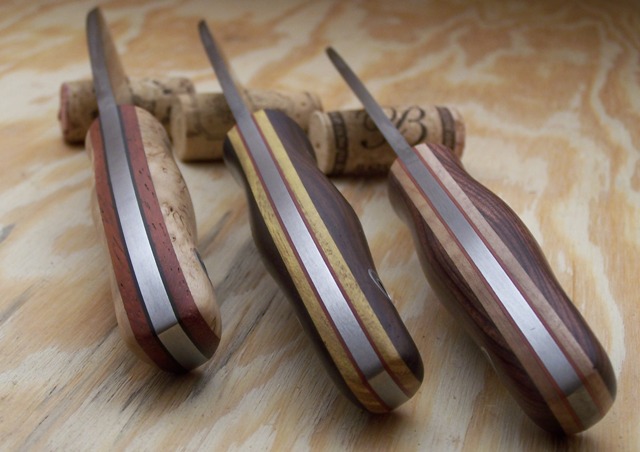
Since you asked about contours though... I deleted my typing and drug these pics out of my fototime account. I think they'll give you enough angles to see how I personally like to shape a handle. :)

standard.jpg


standard.jpg


standard.jpg


standard.jpg


This one obviously was not done as it's rough and not symmetrical yet... but it gives the basice idea of the front view. :)
standard.jpg
 
Nathan, Fred, Richard and Nick,

Thanks for the pics and input; it's greatly appreciated! Nick, those are some beautiful knives, sir!

Just to satisfy my curiosity, I grabbed a couple of my customs in a similar size/style to see how they compared. The top knife is a damascus EDC from Bill Buxton, the bottom knife is a small hunter from David Winston (unfortunately I don't know the model offhand.)

I'm not sure I see dramatic differences...mine seem to be somewhat thicker in the palm swell/middle, and more tapered towards the butt. Maybe the tapering I've done somehow makes them look a little thicker or more blocky???

Anyway, thanks again for the input so far and in advance for any additional advice anyone has to offer; I sincerely appreciate it!

IMG_1660.jpg

IMG_1661.jpg
 
WILL just told me about making my handles egg shaped ,That WILL dont miss much lol . I showed the customer tonight he said yup that just how i wanted it. I completely agree with WILL that handles should be egg shaped. I believe master knife maker nick sad the same thing. I made my first 2 blocky then was corrected and been making then egg shaped ever since. Here is one i finished yesterday.
HPIM0700.jpg
HPIM0699-1.jpg
 
Brett, Jason, and hellgap,

Thanks for the additional input! I will do some more thinning and playing around with this one and see what I can come up with. I sure wish I had some more wheel options besided my Craftsman drive wheel to help with some of this!
 
you do buddy! its called a file. and it will work on wood as well as metal. a good half round file and my lil craftsman 4x36 is what i use too. also learned a new trick from my Dad over the week end, he takes a thick (1/4 - 3/8") square piece of window glass and gives a side of it a quick pass on the fine wheel of the bench grinder then uses it to pull scrape wood it leaves an unbelievably smooth finish I'd say in the 220-320 grit range. It also makes quick profiling of precision fit parts easy

Jason
 
Man, Nick. Those are gorgeous.

I want two things out of a handle. Comfort in multiple grips for extended work, and a shape that allows your mind to index where the knife is in your hand without having to look at it. Will's egg shape from spine to edge is important. These pics show how I contour my Woodsman.


woods18-vi.jpg


woods23-vi.jpg
 
There some great examples of handle contouring and shaping here.. This is a few I'm working on right now.. I really like a rounded sculpted handle that feels like you squoze hot wax into your hand..;)
 

Attachments

  • Allwood1.jpg
    Allwood1.jpg
    89 KB · Views: 50
I'm big on finger choils. Start em' off with a small wheel attachment or a spindle sander (whatever you use). I usually take them 1/3 of the way down to the steel (relative to the overall thickness of the scales).

Oops, let me back up.... I round all my handles on the 4X36 first to get them to the thickness I want them to end up at (roughly). Then I get them to the 220 grit on there....

Ok, back to the 1/3 of the way through.... I just use worn belts and pull them into various strips (this really only works with the softer J-flex belts). I use those strips to round into the choils and I go through the progression of belts till I get to the desired grit...

Here's some of what I generally do...

IMG_7862.JPG


IMG_7882.JPG


IMG_9168.JPG


IMG_9202.JPG
 
You got a hand doncha?

Well, there you go.

Nobody can give you much more than that.

It truns out that since a knife is a hand tool, good handles often follow the same lines and contours.

However, it is best to find your own path here.

Case in point, look at Mr. Moran's big knives.

I think the clay idea is an execllent start. You can buy SCULPEE clay at most Ben Franklin's or other craft shops...it can be baked in the oven to harden it soyou can file and sand it to fit.

Make the handle over large and then when it has cooled you can tweek the shape.

This question is one that prolly everybody has worked on.

So make your 3D clay model and play with it.

And then once you have it figured, get some soft pine and knock it out.

Figure out each step in stock removal it takes to get to your shape, (sawing, rasping,filing, sanding)and what dimensions the handle material needs to be to get there.

Prolly most guys worry they are going to wreck their $30 piece of wood so end up with a fat handle in the beginning. WIth practive and experience you will get smaller with each new knife.

That's why practicing with a cheap medium is simple and wont use up $ that could be spent elsewhere.

Good luck.

Shane


SO best thing for you to do is spend some research time
 
Back
Top