Why there are no axes in CPM-3V:
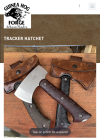
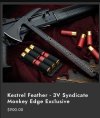
If we will see an axe or hatchet made of CPM-3V (or any other high-carbide tool steel), it will probably be a version cut out of a flat band of steel along with its handle, and not a traditionally forged axe head with an eye for inserting a wooden handle. Thus, you can only hope for a knife shaped as a hatchet

. This is due to the
non-forging nature of high-alloy steels.
Why CPM-3V is not forgeable:
Unlike simple carbon steels (like 1084 or 1045) that are very forgiving under the hammer, CPM-3V is a high-alloy tool steel that requires precise temperature control and a lot of physical effort.
Here is the breakdown of why forging an axe head out of it is a serious undertaking:
1. The Forging Window
CPM-3V has a very narrow temperature range where it is actually "plastic" enough to move.
- Start forging: Around 2100°F (1150°C).
- Stop forging: Once it hits 1700°F (925°C).
- The Risk: If you keep hitting it below 1700°F, you aren't just wasting your breath—you’re likely to cause internal stress fractures or "checks" that will make the axe head fail later.
2. Red Hardness (The "Brick" Factor)
Because it’s designed to stay tough and hard even at high temperatures, it resists being moved by a hammer. Even at a bright orange heat, it feels significantly stiffer than carbon steel. If you are forging an axe head by hand, be prepared for a massive workout. Even with a power hammer or a hydraulic press for 3V, issues will still occur.
3. Air Hardening Hazards
CPM-3V is an
air-hardening steel. This means as it cools in the ambient air, it starts to harden.
- You cannot just toss it on the floor to cool like a piece of mild steel.
- It needs a very slow, controlled cool-down (usually in a vermiculite bucket or a programmed kiln) to prevent it from cracking due to thermal shock.
So, is it a good choice for an axe?
Performance-wise: Absolutely. CPM-3V is legendary for its impact toughness. It’s essentially the "gold standard" for hard-use outdoor tools because it resists chipping better than almost anything else. An axe head made of 3V will hold an edge beautifully and survive abuse that would shatter most other steels.
Manufacturing-wise: It's a headache.Because of the difficulty in forging, many makers prefer
Stock Removal (grinding the shape out of a flat bar) rather than forging. For an axe, this is wasteful and expensive. This is why all 3V axes you might find are either CNC-machined, or forged by very high-end custom smiths with specialized heat-treat ovens (which would multiply the cost by tens, for a steel that is already extremely expensive and will never mass-produce).
Crucial Note: You cannot heat-treat CPM-3V with a torch and a bucket of oil (or quench in water like Gransfors Bruks does with their current carbon steel). It requires a precise, high-temperature soak in a vacuum or foil wrap to prevent decarburization, followed by deep cryogenic treatment and specific tempering cycles to reach its maximum potential.
Conclusion:
Considering that the main usage for an axe is about impacts, why would an axe manufacturer use 3V (with all the above headache and a 1000 times higher production costs), when they can simply choose a steel like L6, 5160, or S7, which are easily forgeable, significantly cheaper, and more shock resistant than 3V?
PS: This is an old thread and I'm sorry for not seeing it few years back. But the question is still relevant, that's why I responded now rather than not at all.