Heat Treated Stainless 440C Hole Saw Shattering. HELP!

Joined
Dec 31, 2014
Messages
14
Hello, I know this isn't exactly knife related, but is very similar. I’m an industrial engineering undergrad who is making my own stainless 440C hole saws from 1 inch OD round bar. Using a lathe, I drilled, reamed, and finally used a boring bar to get the wall thickness to 0.021” (I know, it’s very thin). I then used a mill and a v-cutter to machine the teeth. Next, I heat treatment the hole saw to get a martensitic structure. I heat treated at 1038 degrees Celsius for 30 minutes, removed and air quenched, and finally temper for 1 hour at 230 degrees Celsius.

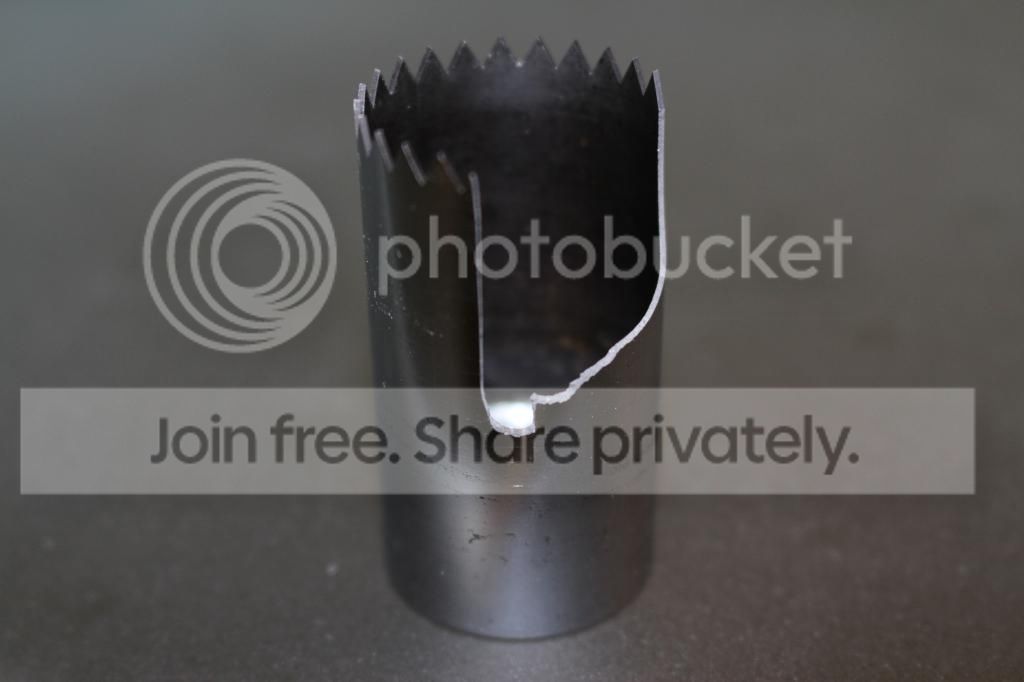
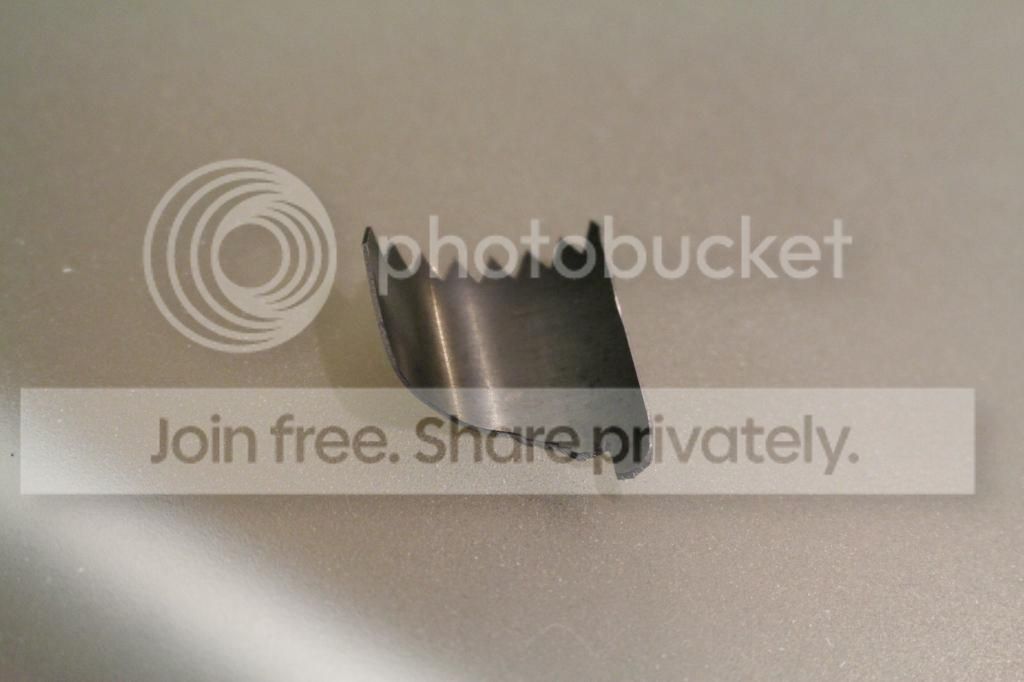
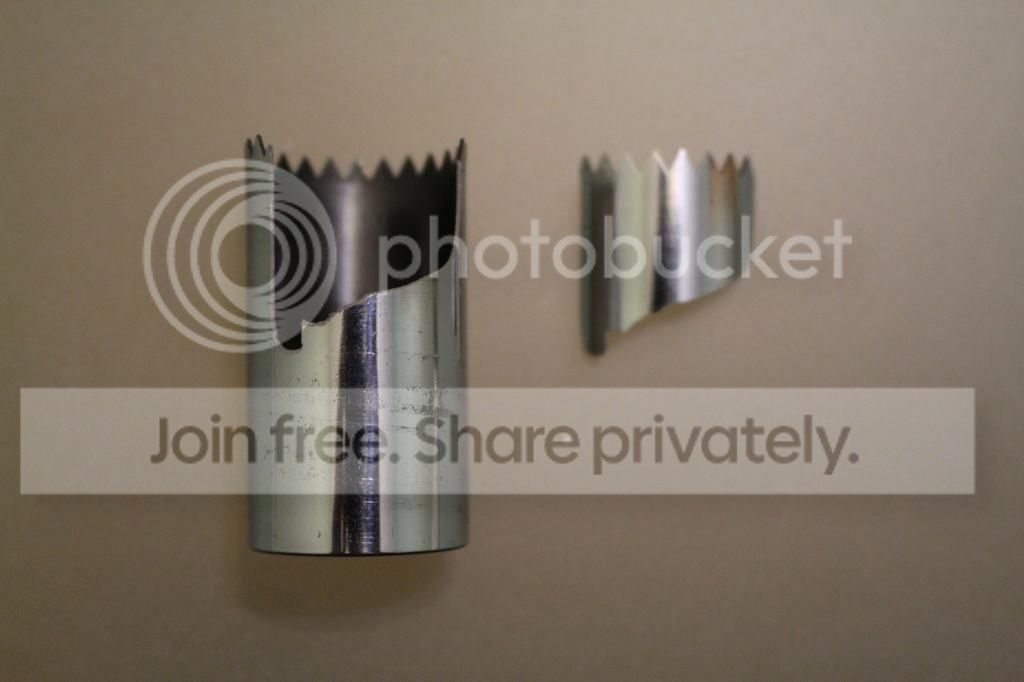
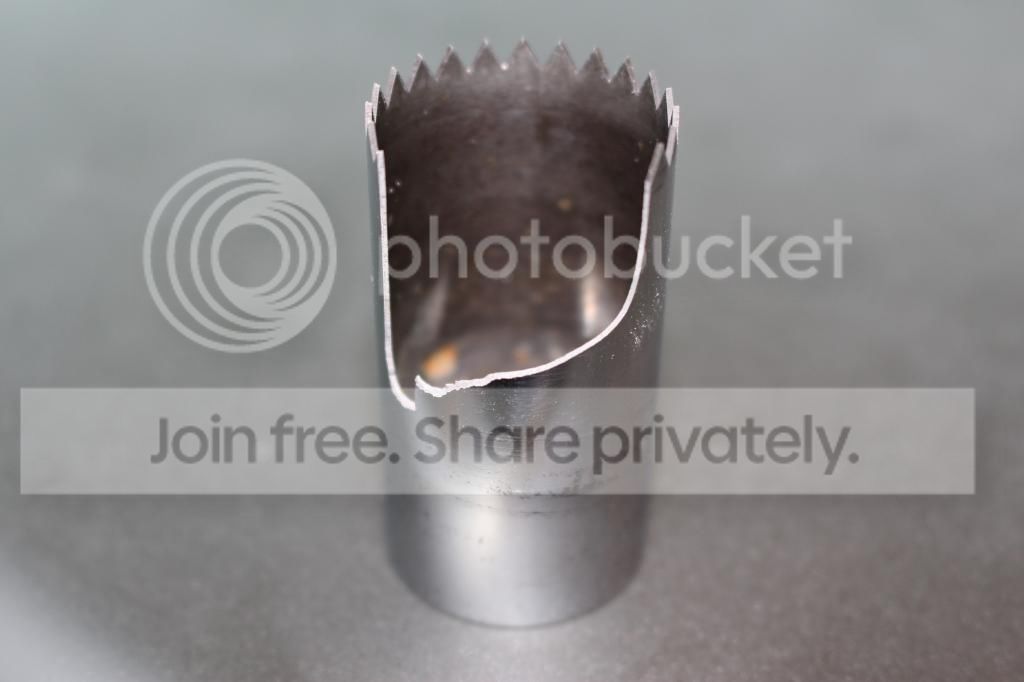
This hole saw was designed to be attached to a T-handle, to manually cut hardwood up to a ¼ inch thick. It cannot rust, and must have high hardness and toughness, which is why I chose 440C. This hole saw worked well for a year. I recently let a friend try it and it broke (see attached pictures). My friend used way more downward force than me when it broke. I feel that my hole saw has way too much hardness (no wear on teeth) but not enough toughness, almost like glass.

Can someone please advise on how to preventing my hole saws from shattering? Many of my engineering professors are baffled. Thank you, and Happy New Years.
IMG_0491_zps9f3169bc.jpg
IMG_0495_zps9afcdbb0.jpg

IMG_0494_zps3285f26c.jpg

IMG_0497_zps0fd846a4.jpg

IMG_0496_zps0e26bf2a.jpg
 
Do you know what the Rockwell C hardness was for that saw? I assume you had it tested after heat treating and tempering. If the hardness was too high then obviously tempering at a higher temperature to lower the Rc hardness would more than likely make a tougher, less brittle saw blade. Are the v-notches at the bottom of each of the teeth radiused to avoid a stress riser? Notice that the fractures on both ends seemed to go through the bottom of the V on both sides.

I am not a metallurgist but I know there are some very knowledgeable ones on this site and I am sure they will respond in time. If you could answer the questions above I am fairly certain it will be of help to them.
 
Welcome to the forum !
Final ID and OD dimensions ? All HT details ? What was the condition of the original bar ? decarb, surface defects .I'd like to have that here to check fracture surface. Was the tool in a drill press ? .021" is thin enough flex that cutter .
Very important is the bottom of the tooth where it broke .
Professors baffled ? I'll straighten them out.
 
Do you know what the Rockwell C hardness was for that saw? I assume you had it tested after heat treating and tempering. If the hardness was too high then obviously tempering at a higher temperature to lower the Rc hardness would more than likely make a tougher, less brittle saw blade. Are the v-notches at the bottom of each of the teeth radiused to avoid a stress riser? Notice that the fractures on both ends seemed to go through the bottom of the V on both sides.

I am not a metallurgist but I know there are some very knowledgeable ones on this site and I am sure they will respond in time. If you could answer the questions above I am fairly certain it will be of help to them.

I tried testing the Rockwell C hardness at my university, but hole saw acted like a spring, and gave a really high number which was defiantly inaccurate. I did not have a flat/solid piece to test with.

I was told to temper at 400 – 500 degrees C, to increase toughness. I’m not sure if this is an accurate temperature for such a thin wall.
I also noticed the break starting at the V-notches. I did not intend to use the v-notches to avoid a stress riser. The 60 degree teeth profiles worked best for my application. I figured that using a V-cutter was the easiest way to machine the teeth. I couldn’t find a 60 degree cutter with a radius (to reduce stress). I may have to customize one.

Should I increase wall thickness, or can I leave it thin? This hole saw cuts faster when it’s thin.

Thank you for the advice.
 
kenshin,
mete IS a metallurgist so if you can answer his questions you will be in good hands.
 
Here you go. These are heat treating recommendation, you'll find 440C in here. 2-3 tempers would have made it much tougher and removed the brittleness. Then if you wanted to add a cryogenic cycle, those recommendation are in there too. But with it being such a thin piece I would have avoided a cryogenic soak. DM
http://ajh-knives.com/metals.html
 
Last edited:
You used it for a year without a problem. Your friend used it and it broke...suggest you no longer loan your tools to a friend.
 
Welcome to the forum !
Final ID and OD dimensions ? All HT details ? What was the condition of the original bar ? decarb, surface defects .I'd like to have that here to check fracture surface. Was the tool in a drill press ? .021" is thin enough flex that cutter .
Very important is the bottom of the tooth where it broke .
Professors baffled ? I'll straighten them out.

I just remeasured with digital calipers. ID = 0.960 inches, OD = 1.000 inches.

These are the exact steps we took for the heat treatment:
1. Preheat oven to 1038 degrees Celsius.
2. Place hole saw in oven and allow temperature to increase to 1038 degrees Celsius again, then leave hole saw in oven for 30 minutes.
3. Remove hole saw from oven and air quench (We just placed it on a counter overnight).
4. Preheat oven to 230 degrees Celsius.
5. Place hole saw back into oven and temper for 1 hour.
6. Remove hole saw after 1 hour.

The original bar is cold rolled, which I bought here;
http://www.onlinemetals.com/merchant.cfm?pid=15233&step=4&showunits=inches&id=1026&top_cat=1

I bought a 1 foot bar, parted it into 6 pieces using an industrial band saw. For each piece I used a center tap on the lathe, used a huge carbide bit on the lathe while simultaneously using and air gun in the hole (it was a nightmare), used a 15/16 reamer, and finally had one of our most experienced machinist used a boring bar to get the 0.02 inch walls (the ID was REALLY smooth).

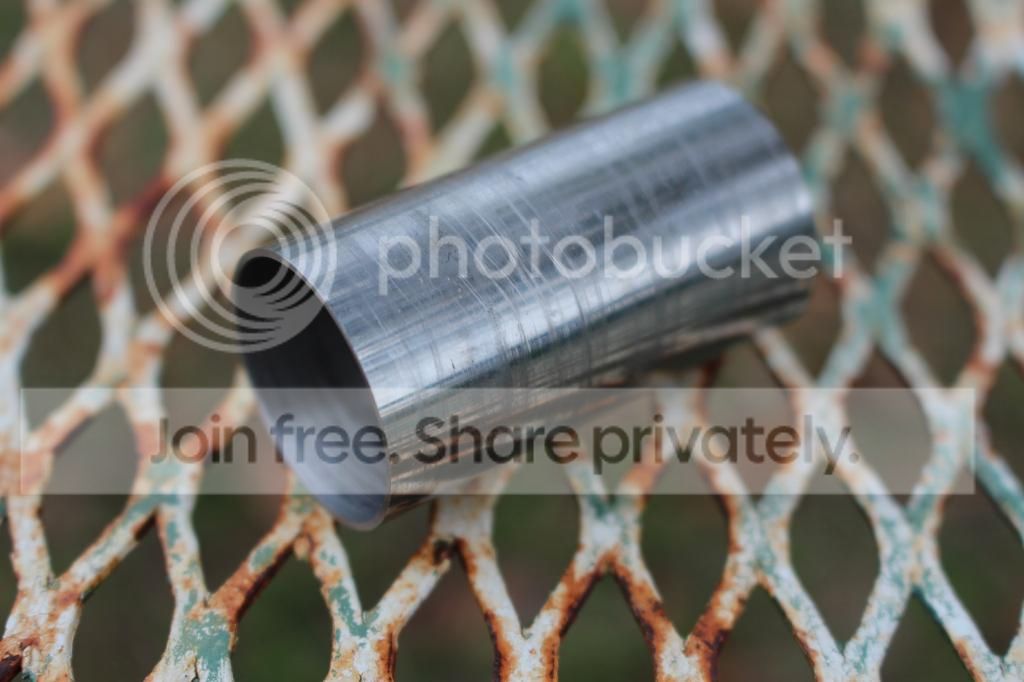
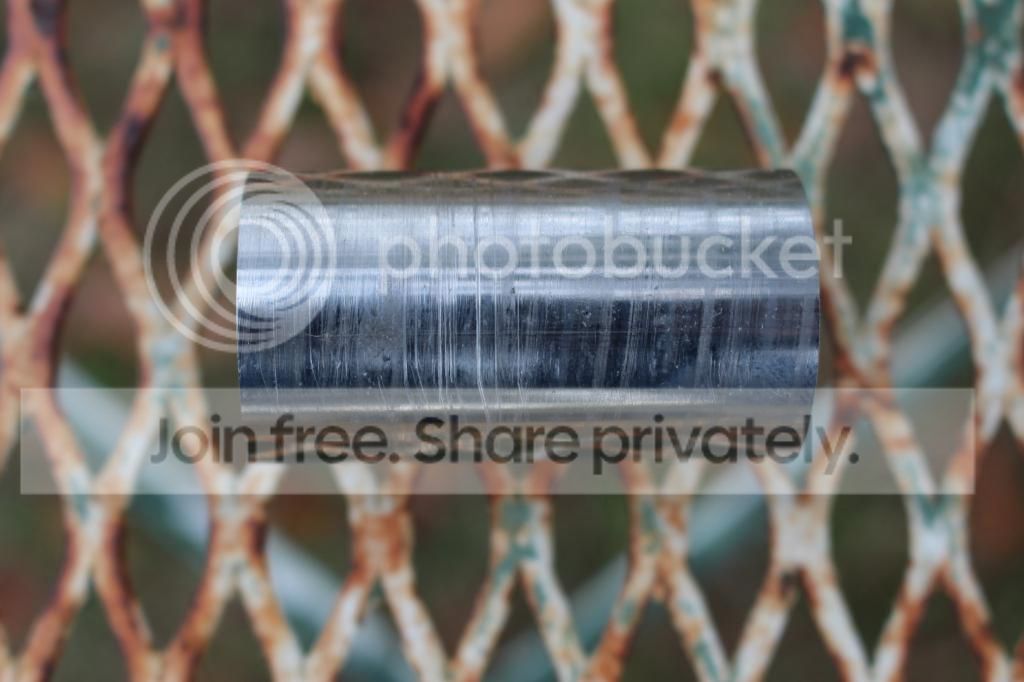
The attached image below is a picture of a part of the bar I used. On one side, there are some OD scratches that I think might have happened while I was boring it in the lathe (slipping in the chuck maybe).

After it oxidized during heat treatment, I wet sanded the hole saw at a low rpm in the lathe. I went from 220, 400, 600, 1000, 2000 wet/dry sandpaper. Lastly I used a buffing wheel with jewelers rouge polishing compound for a shiny finish.

The tool was never in a drill press. It was used with a T-handle which was only hand operated.

What do you mean by flexing the cutter? I used this V-slot cutter from McMasters;
http://www.mcmaster.com/#29755a17/=v9m9hr

Thanks for your help.

IMG_0501_zpsb1ed99dc.jpg

IMG_0498_zps7dcc7b53.jpg
 
Here you go. These are heat treating recommendation, you'll find 440C in here. 2-3 tempers would have made it much tougher and removed the brittleness. Then if you wanted to add a cryogenic cycle, those recommendation are in there too. But with it being such a thin piece I would have avoided a cryogenic soak. DM

Thank you David. Where exactly do I find this information you provided? I don't see an attachment or private message.
 
I think I'd try to replicate the tooth shape of commercial hole saws - a rounded gullet and rake shape

, but with a shallower tooth to try and correct for the super thin wall you have.


Actually I'd just get a commercial hole saw and toolpost grind the inside and outside diameter to what you need.

What have you got against rust, is it some sort of food application ?
If not I'd just use a bluing solution, or nitre blue
 
Quite a few of the band saw blades, recriprocating saw blades and some other types of saws have either differentially temped bodies and cutting teeth or they are bi-metal. I would assume this is done to help prevent failures like yours. I don't know if either the differential tempering or bi-metal body and teeth can be done on your hole saws, but have you considered either one of these two possibilities for your hole saws?
 
I think I'd try to replicate the tooth shape of commercial hole saws - a rounded gullet and rake shape

, but with a shallower tooth to try and correct for the super thin wall you have.


Actually I'd just get a commercial hole saw and toolpost grind the inside and outside diameter to what you need.

What have you got against rust, is it some sort of food application ?
If not I'd just use a bluing solution, or nitre blue


Originally I used hole saws from Home Depot. I carefully used a Dremel to thin the walls from the ID. However, the gullet and rake shape tooth profile were not as effective as my current design. It cuts through hard woods faster. This hole saw is designed for outdoor tropical regions with salty air and the possibility of water contact.

If I increase the amount of teeth on the hole saw, the teeth will be shallower. It currently has 24 teeth, and I wanna go to 36.
 
I guess what I really want to know is, what's the purpose of this thing


Why does does that wall have to be so thin?


Also see HSS, I've yet to see it rust


How about a forstner bit or auger bit ?
 
I guess what I really want to know is, what's the purpose of this thing


Why does does that wall have to be so thin?


Also see HSS, I've yet to see it rust


How about a forstner bit or auger bit ?


This is designed as a hand drill for low income families in tropical regions who do not have electricity. The thin blade cuts through wood faster than others. It must be economically feasible. The forstner bit and auger bit are much more expensive for mass manufacturing. I'll check out HSS tubing for this. Thank you.
 
If you only have to max at quarter inch material, how about making the tool, just long enough to do the job = less twisting stress.


if the purpose the hole, or do you have to keep the washer cut out intact ?

If you need the washers, how about some sort of clicker punch dies ?


If the T handle is how I imagine it to be, I'd ditch it and use a brace style handle.
It's easier to turn and keep straight.


I notice your saw has no teeth set, that makes it hard to clear chips and wet wood will surely bind.


Considering your intended use, I'd try to make it as rugged as possible and thicker


If you don't have to have perfect stainless surfaces for lab / heath / food prep hygine then I woudn't spend any time or money on stainless
If the tool gets used daily, and clean it will be shiny.
Plus as you know, stainless costs more in basic materials and in manufacture.


financially feasible ?
commercially available tools are as feasible as possible.
HSS teeth electrically bonded to carbon steel bodies in strips and wound into circles, powder coated.


unless you just go back further in the past to simple blacksmith made spade drills.
 
!have you co sidered differentially heat treating the hole saw? How about manually grinding between the teeth to eliminate stress risers before you do the heat treat?
 
I do not know why you are trying to reinvent the wheel. If it is a project for school then you have passed. It worked for a year and now has broke. There are many hole saws for sale out there that work well enough for the task at hand. Use your machine talent to make something beautiful like a knife! Making holes in wood is not very interesting in the long run. I do not want to hurt anyone's feelings but making a hole saw is BORING (get it). You obviously have good machine shop skills...get creative and make something new. Just my opinion. I am sorry if I come off as a bitter old ugly grouchy old guy. I am not bitter. Larry
 
The valleys on the teeth should include a generous radius to reduce stresses and surface cracking due to repetitive stress/stain. Surface cracks are notorious for forming in sharp corners and will easily propagate.

Also, don't loan tools to girls. :D

The cutting edges of the teeth should be hard, the body probably should be softer to allow some strain without fracture.

Your professors should be able to figure this out, but they probably want you to do so on your own.

With that said, unless you require stainless steel for the application then other steels are probably better suited.

What are the design requirements?
 
Back
Top