How do you all feel about steel bolsters/liners?

Brian.Evans

Registered Member
Joined
Aug 20, 2011
Messages
3,267
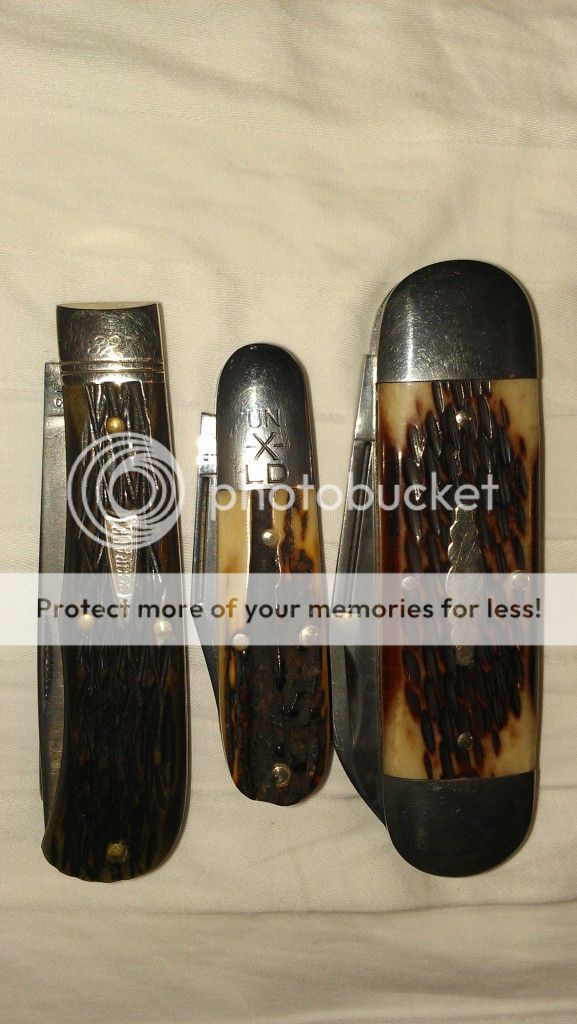
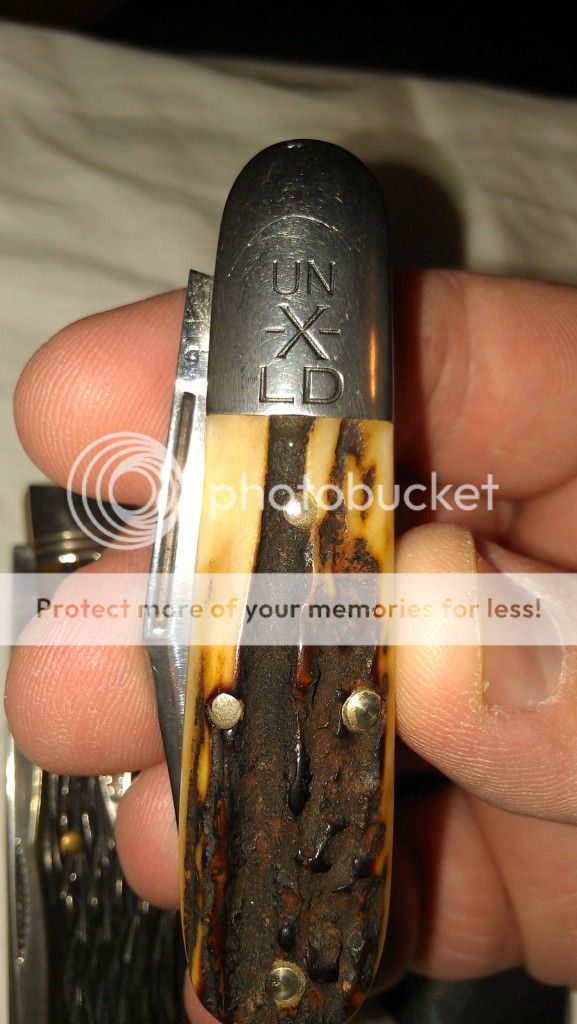
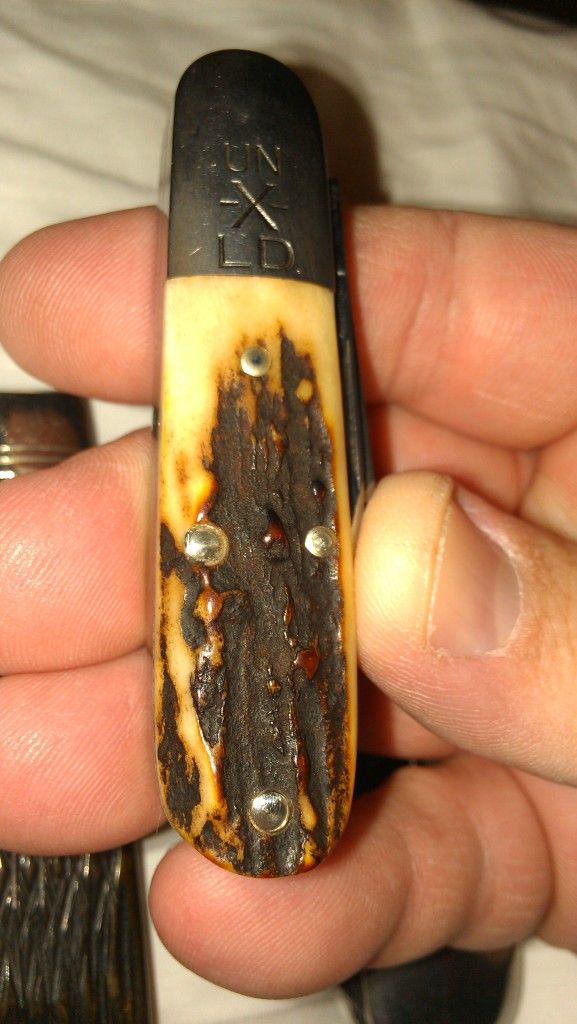
How do you all feel about new production/custom knives having steel bolster and liners, like a lot of the older knives did? I am working on a swell end jack and had thought about using steel liners and bolsters like my old Imperial EO has. I like the patina and scratches they get.

It might just be me though. Weigh in with your opinion!

Ps, I love my Imperial's steel trimmings. Just makes the knife have more character in my opinion.
 
I have a question that you sparked. My grandfather used to tell me, the brass liners was how you USED to tell it was a good knife. Now my grandfather was 86 before he died years back, so he could have been talking about a while ago. I always found it interesting.

My feelings would be that the week point of a slipjoint is usually the pivot and using steel for the boltsers and pins could only strengthen that. But I would like to hear an experienced knifemakers take on it.

I would want stainless liners, bolsters and pins though. Though I always thought all carbon backspring, blade and liners would give a seemless look with a patina.

Kevin
 
Look up mutant discovery Alstair Phillips knife destruction. You really don't need a whole lot of extra strength holding power in the pivot if using g10 or micarta. Natural materials are mostly a different story, I'd assume.

So, brass used to mean a "good knife" huh? That's awesome!

Btw, I want to do stainless all around, but I like brass and it's cheaper to mess up on while learning.
 
I have one of the GEC all steel models, a #73 trapper. It has steel liners, pins and bolsters (maybe the shield too?) . I have noticed that it does not get scratched up as easily and more importantly the pivots seem to stay alot cleaner longer, there is non of the tarnishing that you typically see with brass liners. The all steel #73 has the best and smoothest walk and talk out of all my GECs. I'd love to see more all steel models produced!
 
Thanks for the link. I will check it out. What I meant though was the softer pin and tapering in the bolster being an issue. Letting the knife loosen up after time :)

Haha, idk for sure, but my grandpa told me that's how it USED to be. Meaning not now :)
 
Very nice link Sir! I can see the G10 really is strong stuff. I would love to see pressure put the other way and see how everything holds up. Like when you have to put two hands on a knife and really push into something. I wonder how the pin holds up in that scenario?
 
From my choppers I know how strong G10 is and micarta too. That pin looks larger than most I see in production slipjoints, and it looks like steel.

I have had a number of my nickle silver pivots come loose. Didn't even have to put them in a vice :)
 
What is the reason knickle silver is used? Is it cheap? Why not use 1095 or whatever the steel is so that its all the same hardness?

Forgive my newbie questions, I am just trying to get educated on the subject.

It just seems like a no brainer to me, but I must be missing something?

My vote would got to the steel bolsters/liners Medicevans
 
What is the reason knickle silver is used? Is it cheap? Why not use 1095 or whatever the steel is so that its all the same hardness?

Forgive my newbie questions, I am just trying to get educated on the subject.

It just seems like a no brainer to me, but I must be missing something?

My vote would got to the steel bolsters/liners Medicevans

First, I have a few knives that are all stainless. It was weird at first as in agreeing with Kevin's statement, I was also told that brass liners were exactly what was used on the best knives.

As opposed to all carbon steel. If you had a carbon steel knife in your pocket that wasn't very rust resistant, your knife could crud up with rust and corrosion in the pivot areas and you might not see it. Eventually, (as opposed to brass liners) the rust and corrosion between the blades and the liners will build up and make it difficult to operate and difficult to clean. With brass liners, the surfaces don't corrode together, and they are much easier to clean if dirty.

I had heard (folklore alert....) that nickel silver was used on the better knives for the same reason as the brass liners, with the exception of the bonus fact that it stayed looking nice and without tarnishing and corrosion. So although it looked nice, it also protected the pivot area with a corrosive resistant metal. Now you have a corrosion resistant metal on one side, the nickel bolster, and a corrosion resistant metal on the other side, brass.

Pretty smart guys, eh?

Much better than my 80 - 90 year old KleenKut Barlow. It is steel bladed, steel bolsters, and steel liners. It will rust in the air if I don't keep it oiled. I can't imagine carrying it for a work knife. On the other hand, in its day it was quite cheap and from what I can tell it set a fella back about .35 to .50 cents. I am sure it has been "protected" with anything from lard, 3 in 1, bacon grease and old oil from a boat motor. It was Grandad's, and he told me it rusted shut in his pocket more than once. He switched to CASE in the 40s, and to my knowledge never owned another brand of folder.

I like my all stainless bolster/liner arrangements such as those on my AG Russell knives. They are impervious to wear.

Robert
 
Great info Robert, much appreciated the education :thumbup:

In todays market with todays technology. Why not replace the nickle silver with stainless? It couldnt add that much to the cost of the knife? Maybe wearing out tooling is more of a concern?
 
I have two. The burnt stag barlow with long pull, and the Sunfish with brown bone.

Love them. I don't polish or protect the bolsters, and they are getting a nice grey color to them.

I can't really capture it in the pictures, but it is there.

IMAG0583.jpg


Hard to capture with just my cell phone.

IMAG0588.jpg


I can tell you one thing, if you drop them into a pocket with a D2 folder, the tang on the D2 folder will give them some wicked scratches! (I don't do it on purpose, but occasionally it happens).

IMAG0592.jpg


IMAG0584.jpg


I need to take some of them outside in the sun some time.


They feel really solid. Honestly, they feel more solid than the other GEC I have with the brass liners.

One thing to think about, I feel that the brass liners are less prone to "seizure". Not that I have had these seize up, but steel on steel if you don't take care of them will get pretty hard to open and close (corrode and then you have oxidized/rusted steel on steel, instead of oxidized steel on brass).

This has not happened to mine, of course, but I have one old Ranger that I oil like crazy and work the blades like mad, and it just won't loosen up. The springs seem to be plenty strong, but they just won't work loose. Two of the blades won't snap open or closed, but it seems like it is the steel on steel that is causing it, because both the liners and blades are corroded. I could just be imagining that (but it will continue to discharge rust when you oil it and work it).


I like the all steel GEC enough after near a year that they are on the top of my list. I think I need one of the Indian paintbrush rough neck patterns! All steel, spatula spear, and a pointy clip on the secondary, all on a single spring. Sounds right up my alley (I love the Sunfish pattern I already have!)

I have taken the Sunfish in my pocket for a two day snow campout in the Cascades. It involved sleeping sans tent, and sledding the next day. I have also had it in pocket for some really sweaty events (Ice skating for hours with the body heat, sweat, and cold wet air), etc. No problems with rust on the bolsters.

I do note, that I did not oil inside the liners for near a year. There are some nice rust spots on the inside of the Barlow liners for sure I just rubbed them with some oil and paper. Not too concerned. It took about a year of pocket time for that to happen, and it may have actually have happened from handling it with dripping water on my hands and putting it away in my pocket wet for the rest of the day!

In that regard, they may take a tiny bit more maintenance than the Brass liners.

 
Last edited:
A lot of german traditionals have steels bolsterns and liners.

I like them a lot. They make the knife heavier, for sure. But they don´t take scratches and such things as fast as nickelsilver bolsters. When steel is used at the liners, the whole construction seems to be more ruboust than with brass liners.

All in all - the heavier knife doesn´t bother me after all. I don´t really prefer them to other materials, but I really like them a lot :)
 
I'm beginning to take against brass liners: too much reaction with the other metals, hand sweat and sometimes it bleeds into the bone (verdigris). It's one reason I've never been that keen on brass bolstered knives either, I don't like the odour of it on your hands when doing food prep etc.

It can look nice in contrast, is softer and easier on machinery when making a knife of course.

But, I prefer nickel silver liners (these contrast well with patina backspring) or stainless liners. Iron and steel can be OK but they do weigh in more and require a deal more attention. Given the choice, white metal is preferable to brass.

Thanks, Will
 
I like steel scales* and bolsters. Go for it!
The way I interpret the history of this question is... older knives with all-steel construction were made as hard working tools, while the ones made with brass & nickel silver were aimed at the higher-end market, the folks who could afford the more expensive materials (in the late 1800s/early 1900s, wasn't brass more expensive than steel?). Am I off-base? Maybe. I wasn't alive during that era. But, it seems reasonable, I think.
So yes, steel construction is cool, and I sometimes prefer it to brass.

*using the "real" cutlers' terminology here, instead of internet lingo, as detailed in that thread one time.....
 
Guys, I'm a minimalist. Give me a solid polymer, or man-made, handle any day. A linerless folder can take all you give it as long as it's not given abuse.
Good thread Brian!
Rolf
 
On the liners I don't really care if they are brass, nickel silver or steel, it depends on the combination with scale material etc. But I'm all for steel bolsters. The nickel silver bolsters always get yellowish with use (easily fixed with some polishing, but still) and I prefer the dull grey look of steel.
 
Most of the custom traditional knives (and the Case/Bose collaborations) have stainless steel bolsters and liners. I much prefer the look of stainless steel over the brass.

My grandfather used to tell me, the brass liners was how you USED to tell it was a good knife. Now my grandfather was 86 before he died years back, so he could have been talking about a while ago...

Kevin's grandpa certainly knew knives and obviously did a good job passing that knowledge on. Iron/steel was used on less expensive knives.

Here's some info from BRL on the subject.

Iron / mild steel bolsters were a lower price alternative to nickel silver. Co-existed happily until well after WWII.

Nickel silver was 'invented' circa 1810, although other similar looking white brass alloys were around earlier (much earlier in China). Any knife with n/s bolsters or liners is post 1810. The 1816 Smith's Key identifies the bolsters on some patterns as "white brass" which is what nickel silver is: copper, zinc, nickel, and the odd trace element.

Bolsters made of steel is not a dating clue. But HOW they were made of steel is very much a dating clue.

*

DO NOT clean old knives. If you want clean knives, buy new knives.

BRL...
 
Last edited:
i like the look on the few i have, especially my old 4 line camillus jack, patina, pits etc. i will say that on the others i have including the 2010 BFC Moose they happen to be difficult to open, probably coincidence but ive always wondered was it the steel liners???
Any ways sent you a few emails on another matter
Gene
 
Back
Top