- Joined
- Sep 30, 2005
- Messages
- 657
Thanks are in order first and need to be given to Tom Ferry for developing this techinique, and also to Bill Burke although he doesnt know it, he helped me by explaining it on another forum, and also to Jason Knight whom further helped me wrap my head around the concept.
Although not so-much the ever vogue WIP thread, This is more a how I did it sequence of shots.
For me The ferry flip was a bit confusing to figure out, Wrestling the pre-distortion, cuts and flips etc. After I did it once and it worked, I felt really stupid thinking back talking to Jason he must have thought I was an Idiot. It is alot easier to understand if you just see it.
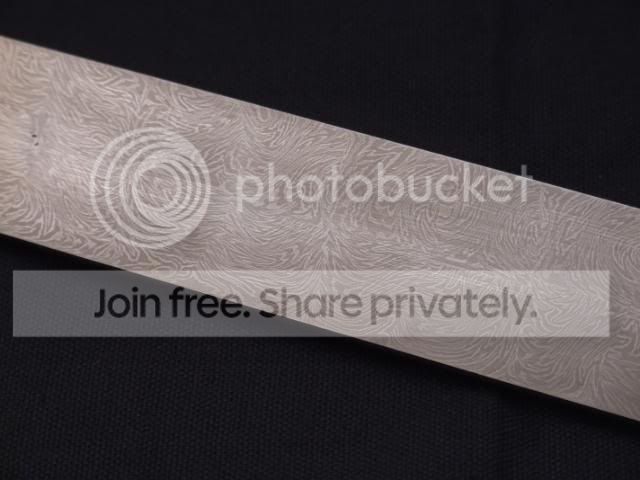
For those who may not know, This is a technique of exposing a mosaic pattern on the ""end" of a billet. Although the accordian technique is great, It does have some drawbacks such as: it distorts the pattern when unfolded, and a great deal of material loss. The benefit is its easy to do. The Ferry flip has one drawback if you'll call it that: It just takes a little more work to get the the end result. However the benefits out-weigh this in that you dont lose any material except what you lose in the cuts and done correcty the pattern is not distorted. After all the work you put into a billet, For me the extra time and work is worth it in the end.
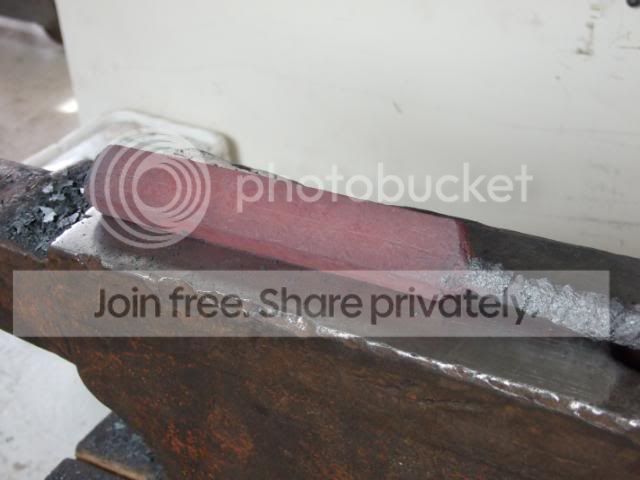
This Picture is the as forged billet. Most of the masaic billets I have done look best when the bar is squared. And this one is no exception. However, a key point to doing this is that the billet need be "pre-distorted". This billet is 1 1/4 x 3/4 by ~8-9". The pre -distortion comes from the 3/4 thickness. Trust me here.
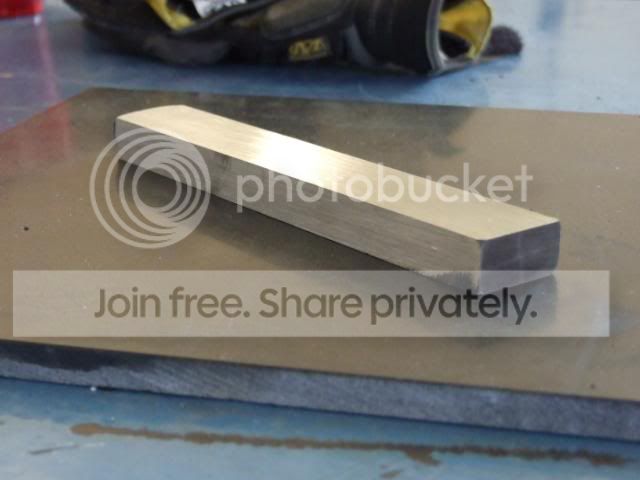
This is a shot of the billet all ground flat and trued up. This is needed because the top and bottom of the bar as you see it are going to need to fit together nice and square after cutting.
In this shot I have stood the bar on its side and cut 3/4 inch slices at a 45Degree angle on down the bar. Make sure to number these cuts so you know the order in which to stack them later. You essentially want to re assemble the bar as it was before it was cut.
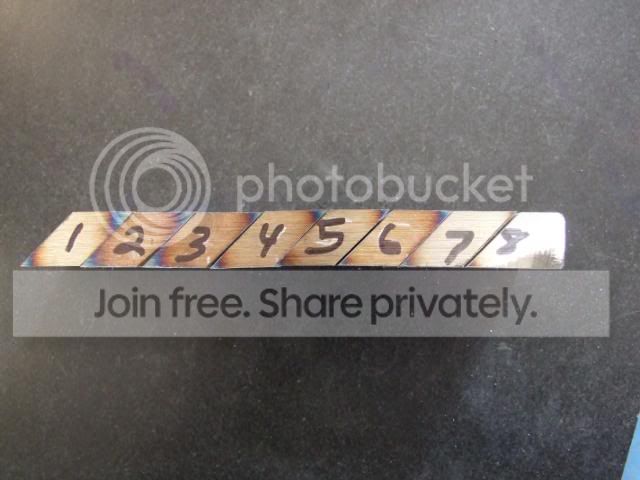
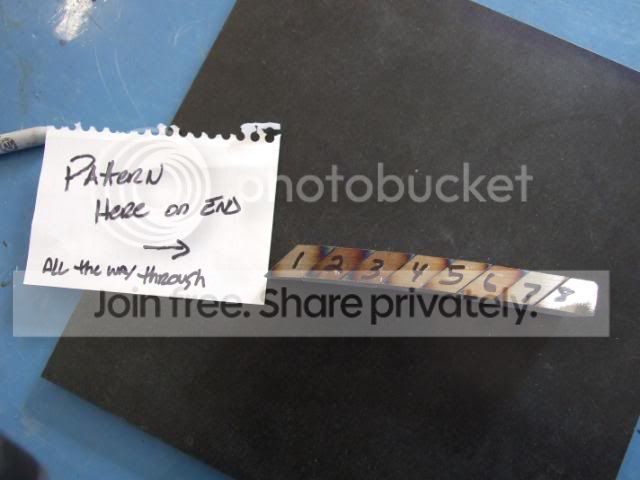
This shot just explains the orientation of the bar/pattern. Pattern is still on the "end" of the bar in front of the#1 all the way through.
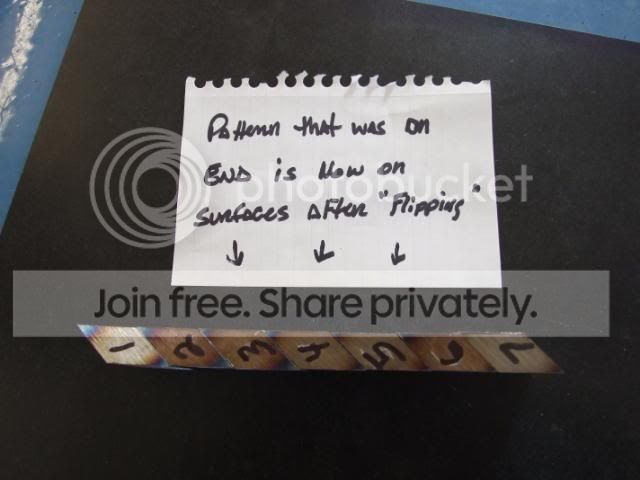
Here Comes the "flip". What is happening here is the pieces ar now turned over so the cut surfaces now become the "face" suface of the billet.
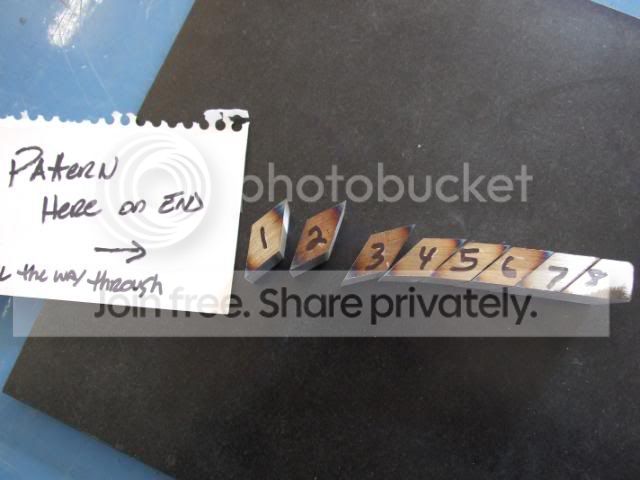
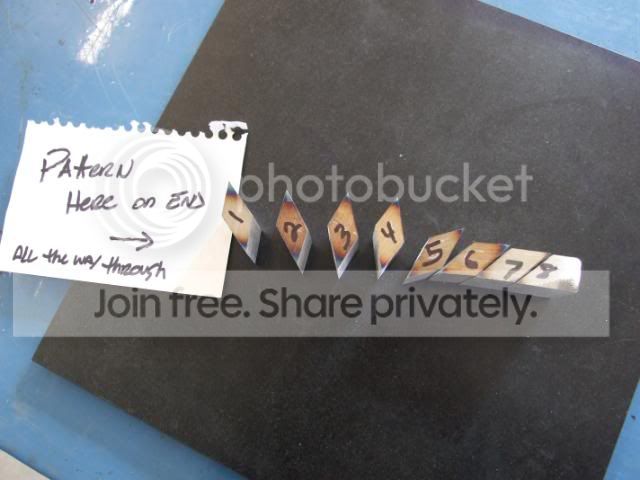
This is why we needed to pre-distort earlier. If I was smart enough to have done a quick etch on these pieces, you would see the pattern on the surface looking just like the pattern on the end, stacked right next to each other on down the bar only squashed a little.
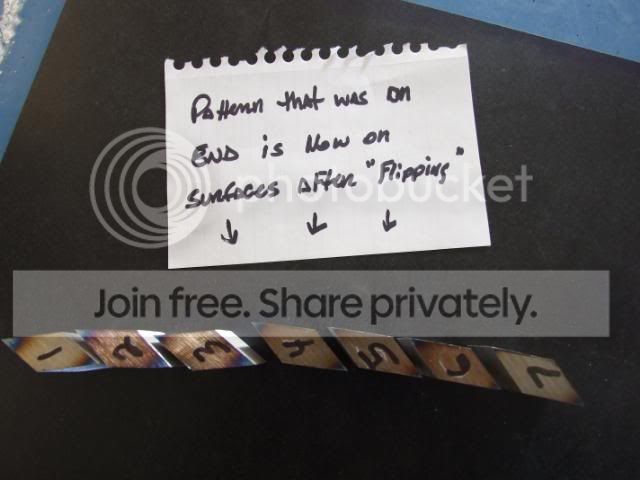
Now the pieces are snugged up and all the seams areTig welded together. This is done so we can dry weld (no flux)this in the forge. After the initial weld toget the pieces stuck together, This will be drawn out to the desired thickness ~ 1/4" . This is what Un-distorts the Pre-distortion. Essentially you stretch out the pieces the opposite direction you squished them (the 3/4 inch Thickness from the initial billet) This is what gave me hell trying to picture in my head. But if you look over the sequence you'll see it.
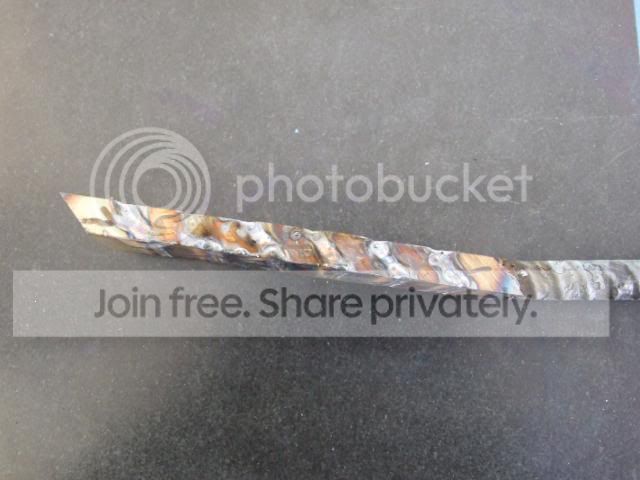
After I draw this down It is ground clean to get out all the Tig weld mess. I find there isnt too much to get out as I dont use a filler rod, You just need to make sure you have good fit-up to do it this way. Some will grind out the weld right afer the initial forge weld, its just another way to ge to the same result. I Hope this makes sense and possibly helps someone. Thanks for looking, Shawn
Although not so-much the ever vogue WIP thread, This is more a how I did it sequence of shots.
For me The ferry flip was a bit confusing to figure out, Wrestling the pre-distortion, cuts and flips etc. After I did it once and it worked, I felt really stupid thinking back talking to Jason he must have thought I was an Idiot. It is alot easier to understand if you just see it.
For those who may not know, This is a technique of exposing a mosaic pattern on the ""end" of a billet. Although the accordian technique is great, It does have some drawbacks such as: it distorts the pattern when unfolded, and a great deal of material loss. The benefit is its easy to do. The Ferry flip has one drawback if you'll call it that: It just takes a little more work to get the the end result. However the benefits out-weigh this in that you dont lose any material except what you lose in the cuts and done correcty the pattern is not distorted. After all the work you put into a billet, For me the extra time and work is worth it in the end.
This Picture is the as forged billet. Most of the masaic billets I have done look best when the bar is squared. And this one is no exception. However, a key point to doing this is that the billet need be "pre-distorted". This billet is 1 1/4 x 3/4 by ~8-9". The pre -distortion comes from the 3/4 thickness. Trust me here.
This is a shot of the billet all ground flat and trued up. This is needed because the top and bottom of the bar as you see it are going to need to fit together nice and square after cutting.
In this shot I have stood the bar on its side and cut 3/4 inch slices at a 45Degree angle on down the bar. Make sure to number these cuts so you know the order in which to stack them later. You essentially want to re assemble the bar as it was before it was cut.
This shot just explains the orientation of the bar/pattern. Pattern is still on the "end" of the bar in front of the#1 all the way through.
Here Comes the "flip". What is happening here is the pieces ar now turned over so the cut surfaces now become the "face" suface of the billet.
This is why we needed to pre-distort earlier. If I was smart enough to have done a quick etch on these pieces, you would see the pattern on the surface looking just like the pattern on the end, stacked right next to each other on down the bar only squashed a little.
Now the pieces are snugged up and all the seams areTig welded together. This is done so we can dry weld (no flux)this in the forge. After the initial weld toget the pieces stuck together, This will be drawn out to the desired thickness ~ 1/4" . This is what Un-distorts the Pre-distortion. Essentially you stretch out the pieces the opposite direction you squished them (the 3/4 inch Thickness from the initial billet) This is what gave me hell trying to picture in my head. But if you look over the sequence you'll see it.
After I draw this down It is ground clean to get out all the Tig weld mess. I find there isnt too much to get out as I dont use a filler rod, You just need to make sure you have good fit-up to do it this way. Some will grind out the weld right afer the initial forge weld, its just another way to ge to the same result. I Hope this makes sense and possibly helps someone. Thanks for looking, Shawn