How Thick Is Thick Enough?

As has been already said, depends on the purpose of the knife. You'd be surprised how much an 1/8" thick knife can do. :) The best thickness for multi-purpose use is 5/32" thick. Large blades for heavy chopping/splitting, 3/16" to 1/4".
Scott
 
As has been already said, depends on the purpose of the knife. You'd be surprised how much an 1/8" thick knife can do. :) The best thickness for multi-purpose use is 5/32" thick. Large blades for heavy chopping/splitting, 3/16" to 1/4".
Scott

Yes Scott, I was very much surprised at what .125" can do - it blew out all my expectations for how it would behave and now I look a some of my thick knives and wonder why I shouldn't have gotten them thinner.

You don't see 5/32" as an option very often but I can understand its merits and would thing this just might be a great thickness for a 6" knife! I bet in that length you really can't tell the difference between 3/16 and 5/32 without a side by side comparison!
 
5/32" is my preferred thickness. I am currently working with something that is 3/32" and am having great results.

The new BRKT HCF knife is in the design phase and the next proto I'm evaluating is .140" thick. It will be plenty thick enough for anything I throw at it. My Fox River is .170" and it is going strong after a couple hard seasons of work. As previously pointed out, thickness is not as important as a good grind.
 
A few knives Scott has made for me are all 5/32" thick. They are ideal! My Big Boar Tusker is 3/16" and it is my favorite big blade. Scott knows grinds like nobody's business and after watching him work, he knows how to turn a piece of steel into a work of art that is highly functional.
 
kgd I made Jeff H his pathfinder in 5/32" I do offer that thickness to but most seem to
go with 1/8" or 3/16".
 
Thanks Kev. I'll be interested in how this "new" one works out. :D For general all around use, I always recommend 5/32" but you can't go wrong with 1/8". It can kick butt.
Scott
 
kdg,
The last several knives I have gotten have been "thin" by comparison.

My Breeden PSKKII (4") has a 3/32" blade and I have beat the snot out of it.

Bryan talked me into 5/32" instead of 3/16" on my 5" Pathfinder and I have beat the snot of of that.

My Muskrat Man Bushcraft (4") is 3/32" and I have not beaten it hard yet but LOVE the snot out of IT for the way it handles and cuts.

I had Bryan build me two 3 1/2" bladed knives from a sketch and they are 3/32" also and they are both great handling and super cutters.

My MLK Short Kephart, Nessy Shorty and (2) Gossman PSKs (PSKs have been beaten hard) are all 1/8" and, again, great handling and super cutters.

All but the Pathfinder and Nessy Shorty have 1" tall blades and have flat, convex or Scandi grinds. Steels are all O1 or 1095.

I have other knives that are thicker but I don't seem to get them out much any more. All the ones mentioned above do just fine with thinner blades (all relatively short except the Pathfinder) but the way the handle and carry has impressed me to no end.
 
Jeff - yeah. Basically I really like the pathfinder in .125". When I pushed my way through that knot in the spruce - I was being mindful that I hit a knot - but then I thought, okay, I'm just going to work it through this - not in two batons or anything, but I'm going to take it nice and easiy - and I did it.

My enthusiasm stems from the fact that this is basically what I wanted in a knife. I've done enough knife work now that I kind of know what is just down right dumb to do with a knife (they ain't screw drivers), but then again I don't get all hesitant and think - ooooh you can't do that with a knife. I want to be able to cautiously wonder into the realm of stupidity (if you get my drift).

I guess it boils down to working those optimums. Scott - your gift is those covexes that you are so gifted at. I think with your geometry you can push thin even thinner and still get that great performance that you do. How far you can push it????
 
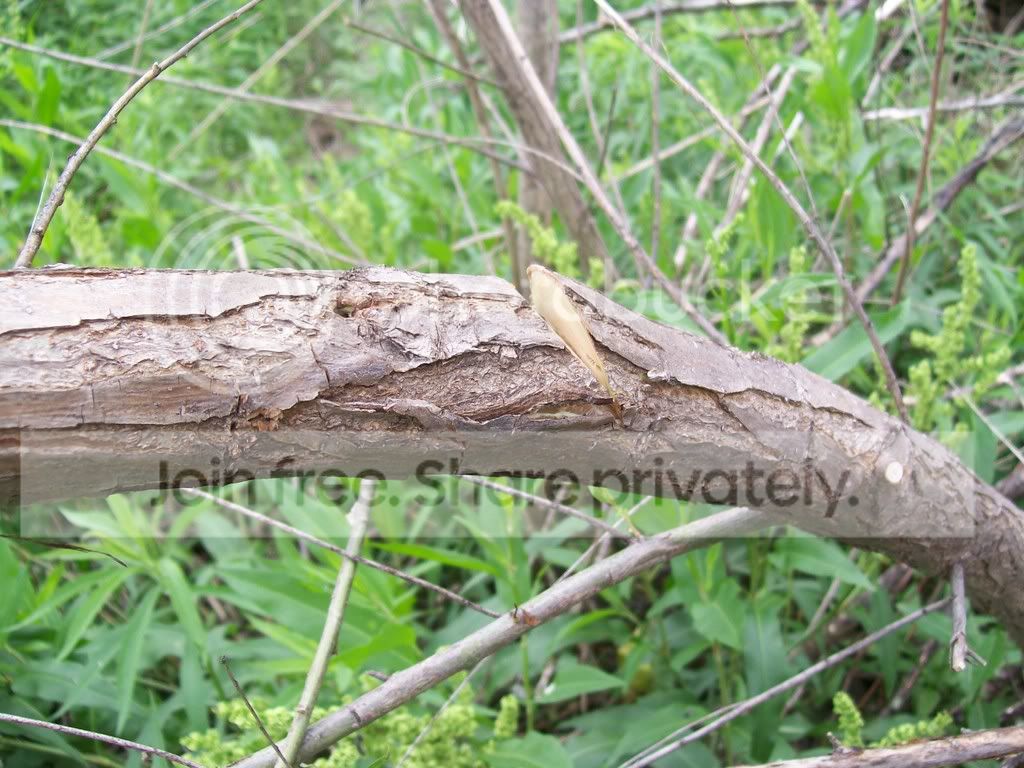
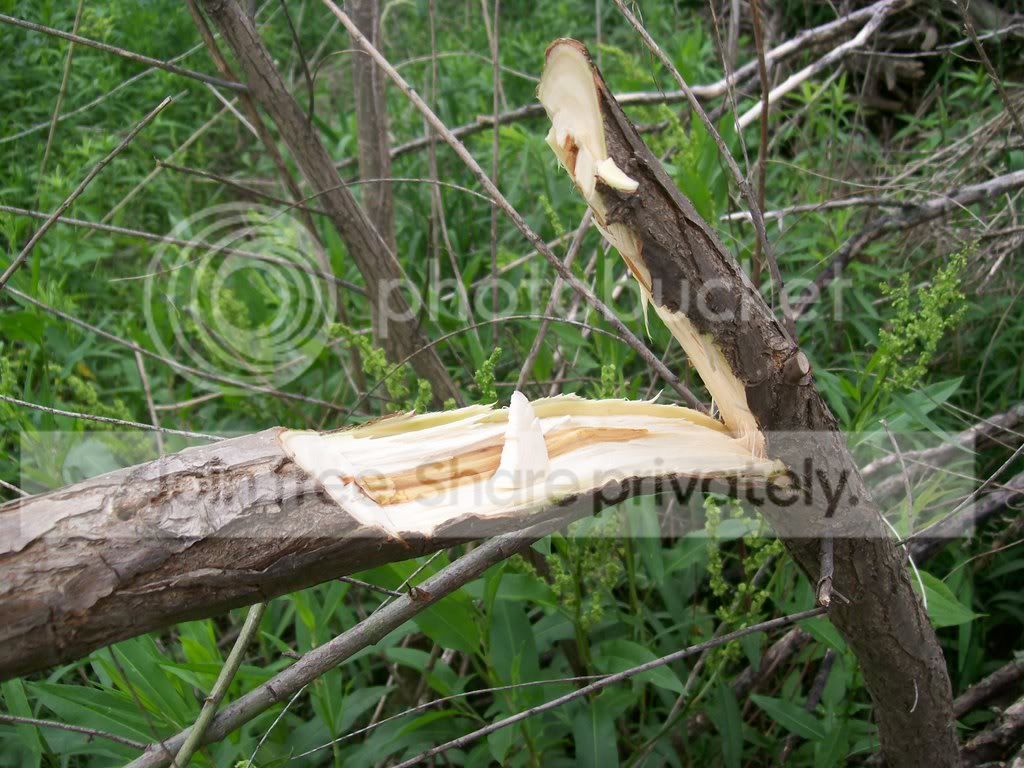
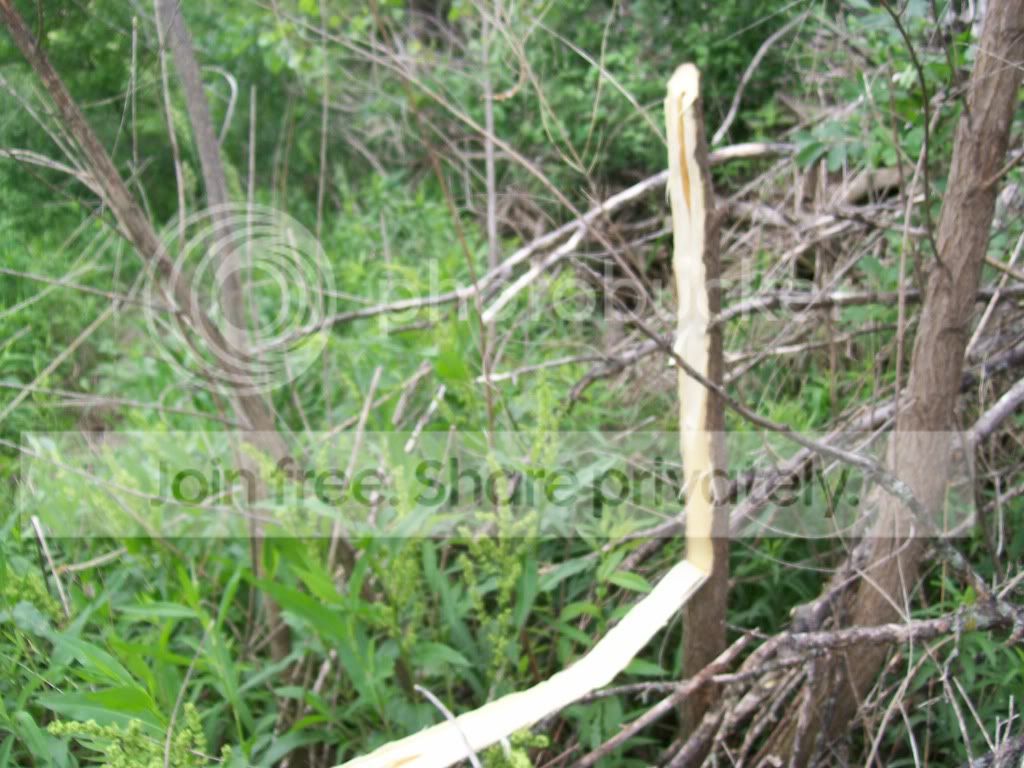
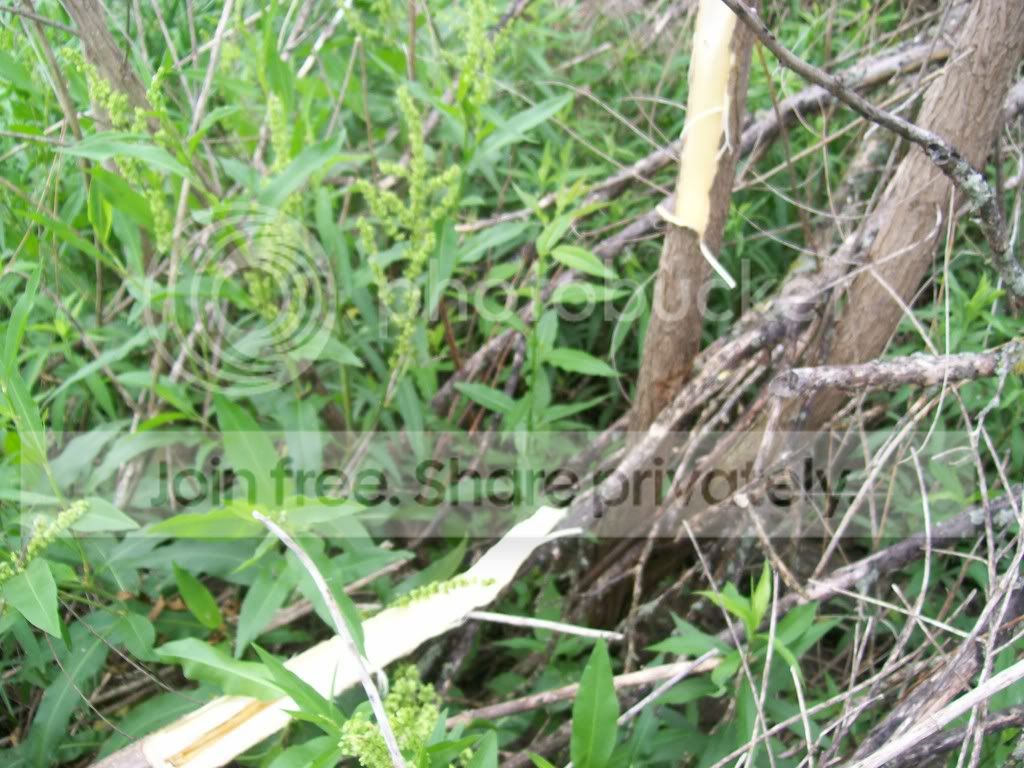
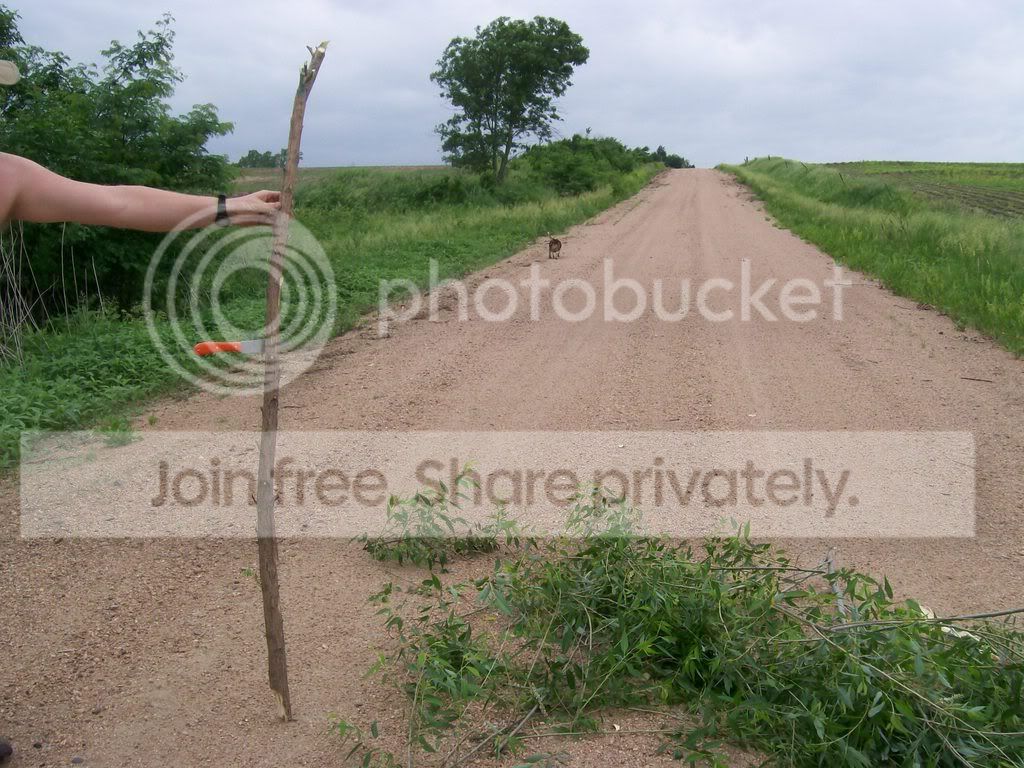
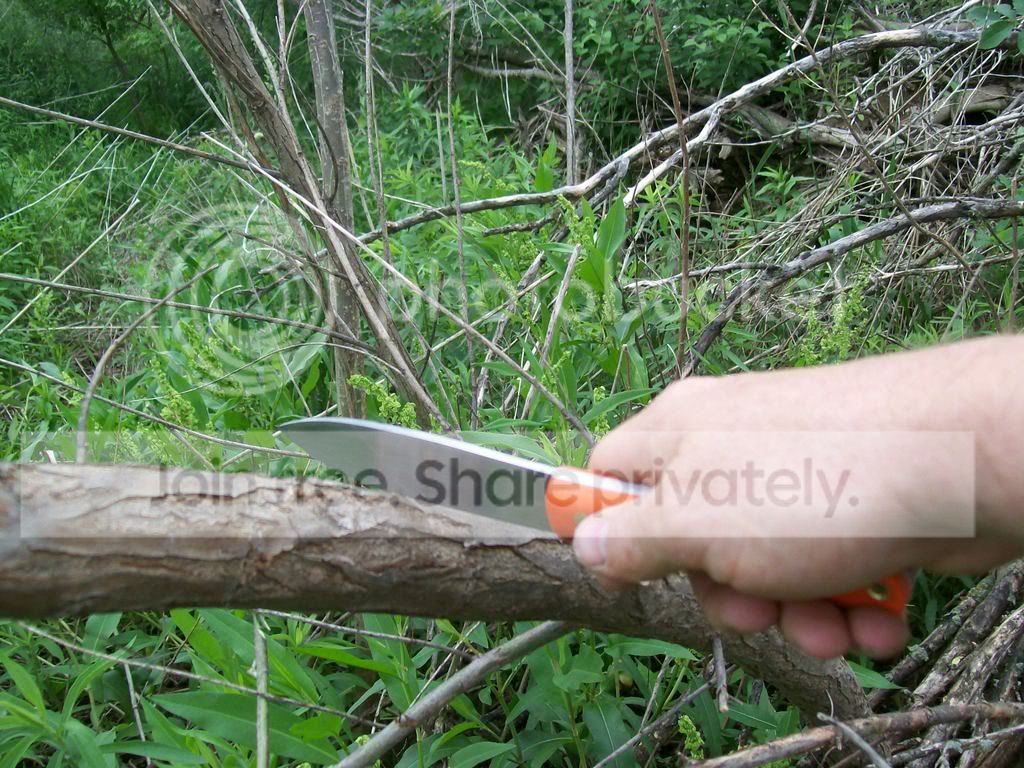
Hi all I took a new 1/8" Pathfinder with a 5" blade length out to do a little cutting today on a
willow tree it took four snap cut chops to cut through it. 3 chops really did
it but the last one cut the strip of bark off that still attached to the
trunk. Here are some pics:D
In the first pic I bent the small tree over and then placed the Pathfinder
where I was going to make the first snap cut.

101_0598.jpg


Then the first snap cut went down into the branch about 3/4" of an
inch or so.

101_0599.jpg


This is the second snap cut.

101_0600.jpg


Then the third snap cut.

101_0601.jpg


And finally the last snap cut.

101_0602.jpg


The next pic is of the branch that I cut and de limed.

101_0605.jpg


One thing about a little longer blade is it makes snap cuts easyer to do.

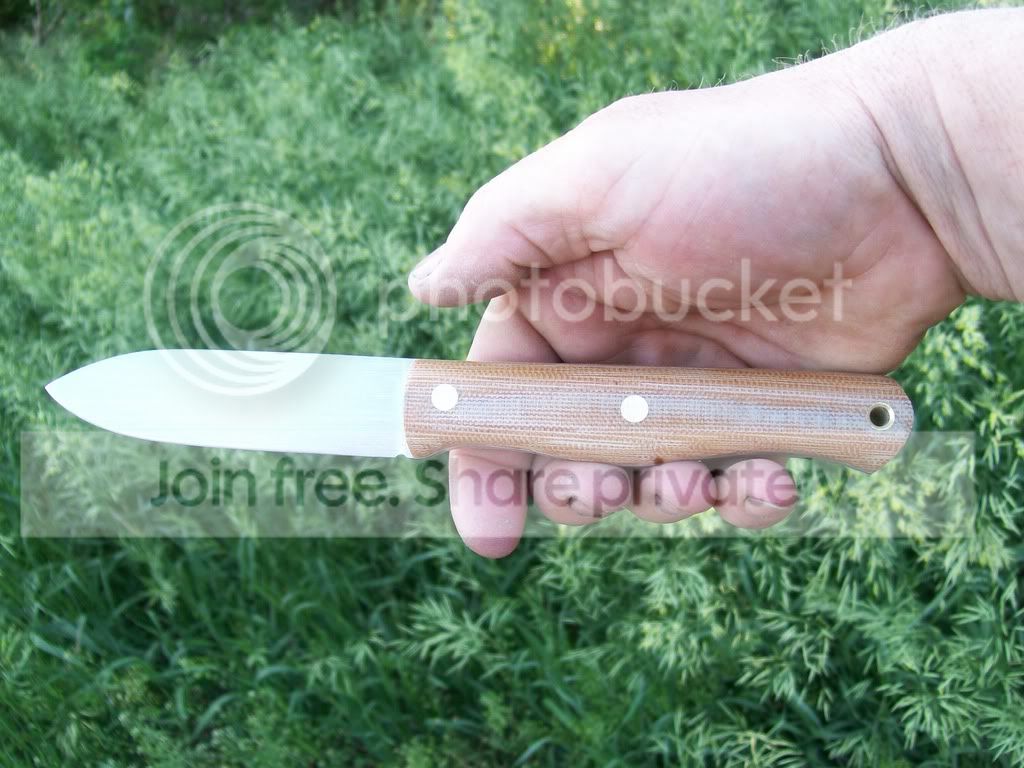
I plan to take my B-day bushcraft type knife I call the Craft here is a pic
of it and see how well this 4" long by 1/8" thick by 1" wide with its 4.5"
long handle does cutting about the same thickness of tree. There were
two willow trees about the same thickness side by side.


101_0583.jpg


I will take some pics of that test to just for fun. Oh and yes I cut down a
live tree for this test Why you might ask. Well I not only make knives
but I cut trees down for part of my living to. The trees that I cut down
are what the land owner wants. I have permission and that is what I am
hired to do. This pic shows my two business.

101_0455.jpg


Chat with you all on Friday and I will post some more pics with the next
knife snap cutting test.

Bryan
 
I always stated that my favourite food prep blade is a #10 Opinel with carbon steel blade. Just for that it beats any of my other blades. I have a few Spydercos and they don't do as well. My Boker Trance comes close with its thin, wide, full flat blade... but the Opinel wins hands down anyway.

I never tried a Mora but I want to! I am sure they are great slicers as well.

Mikel
 
I have a couple knives that are 3/16 thick and i have no earthly use for one any thicker.
 
This discussion will not be complete without some talk of heat treatment and metallurgy.

The hardness of a blade will have a great effect on its toughness.

A blade of any given thickness if hardened to it’s maximum edge holding hardness will break much sooner then the same blade tempered back to a softer hardness.

The steel used also plays an important role, some steels resist twisting or shock loads better then others, but there is always some trade-off of edge holding or corrosion resistance; super-steels strive to be the best of all worlds, and the new particle metals are making alloys that can’t be made by traditional methods, the trade-off there is the high price.

In knife making, as in life, one must strive for balance.

There is no one best thickness for a knife, just like there is no best hardness or steel; the best knife for the task at hand is a knife designed for that task.
 
My Muskrat Man Bushcraft (4") is 3/32" and I have not beaten it hard yet but LOVE the snot out of IT for the way it handles and cuts.


And it is because of you Jeff that my pocket is going to be lighter lol, I ordered a bushcraft from Kaleb:thumbup:
 
101_0583.jpg


I will take some pics of that test to just for fun. Oh and yes I cut down a
live tree for this test Why you might ask. Well I not only make knives
but I cut trees down for part of my living to. The trees that I cut down
are what the land owner wants. I have permission and that is what I am
hired to do. This pic shows my two business.

101_0455.jpg


Chat with you all on Friday and I will post some more pics with the next
knife snap cutting test.

Bryan

Said it before but VERY impressed by what you are coming up with!:thumbup:
 
This discussion will not be complete without some talk of heat treatment and metallurgy.

The hardness of a blade will have a great effect on its toughness.

A blade of any given thickness if hardened to it’s maximum edge holding hardness will break much sooner then the same blade tempered back to a softer hardness.

The steel used also plays an important role, some steels resist twisting or shock loads better then others, but there is always some trade-off of edge holding or corrosion resistance; super-steels strive to be the best of all worlds, and the new particle metals are making alloys that can’t be made by traditional methods, the trade-off there is the high price.

In knife making, as in life, one must strive for balance.

There is no one best thickness for a knife, just like there is no best hardness or steel; the best knife for the task at hand is a knife designed for that task.

I don't disagree with these statements, but I think that the reality is that most of what you are saying is not really taken into consideration in a majority of wilderness knife offerings presented to the community.

With regards to hardness. Occasionally you will see differentially tempered bushcraft knifes with a harder edge at around 61RC but if you just scan the list of specs on knives out there, most knives are rated at 57-59. I don't see a lot of evidence for manufactures tweeking hardness - perhaps with the exception of the machete mentioned earlier.

Again regarding thickness - there is definite evidence that some manufacturers like BRKT, TOPs and a few others offer a variety of thickness options across their models. Custom guys will go further and offer the same model in different thicknesses. Even Busse has very recently gone on to offer thin (in their version thin = 1/8") along with thick in selected models.

However, the above exceptions noted, across the wilderness blades, it seems to me that there really is two main camps. Thin scandi's from Europe (<.1" - .13" thick) and then thick North America models (.187" - .225" thick). Ironically, both camps produce knives that satisfy the same functions.
 
"The thick chisel-edged belt knives, which are generally sold, are of little value in the wilderness. Get your belt knife too thin rather than too thick." "--Calvin Rutstrum (1895-1982) was one of the best-known outdoorsmen of his generation and the author of many books, including The Wilderness Route Finder, North American Canoe Country, Paradise Below Zero, The New Way of the Wilderness, Once Upon a Wilderness."

"Nearly all knives sold for outdoor use have blades that are too thick. One-eighth of an inch across the spine is the maximum thickness permissible for a utility knife, no matter how delicate the edge. Try slicing a tomato with the typical hunting knife and you'll see why! Your favorite kitchen knife would probably be perfect for camp use if it had a bit less length, more backbone, and better steel. In fact, the most popular knives on the frontier were the famous Green River models, which were nothing more than solidly built kitchen knives." "-- Cliff Jacobson, is one of North America's most respected outdoors writers and wilderness guides. He is a professional canoe guide and outfitter, a wilderness canoeing and camping consultant, and the author of more than a dozen top-selling books on camping and canoeing."

Generally speaking, I agree with these authors when selecting an outdoors *belt* knife. Their basic suggestions are a good place to start, IMO. My own personal favorite fixed-blades generally have spines in the 1/16" to 5/32" neighborhood. Small, thick blades (3-1/2" and less) serve no logical purpose in my experience (yes, I have a few). In the 4" range; if the blade is convex-ground (like the Bark River's), I have no problem with the 5/32" blade slicing and dicing to my satisfaction. In my experience, the Fallkniven convex-ground F-1 at 3/16" isn't too bad either, but that is my limit. The F-1 (or the ilk) is still a little short and thick for most of my needs. I don't use many blades over 5" in the outdoors unless participating in living history events. I have a nice collection (some original) of longer historical blades in the 6-1/2" to 10" length, most with thin 1/8" spines that the early frontiersmen and women preferred (sometimes that was all that was available because of economics).

In the ranch butcher shop, we have almost no cutlery over an 1/8" thick. Nothing more is needed to reduce a beef, elk, deer, etc., for packaging. After processing countless animals in the field and in the shop, I see little reason to go beyond the 1/8" blade thickness. Not only is the 1/8" blade easier to work with, it is a breeze to maintain also. When we were working as wilderness canoe and fishing guides in the summer months, none of us or the guides we worked with had anything over 5/32" thick for camping needs (saws handled larger materials). In fact, at that time, one of my favorite camping blades was a thin, razor sharp, 5" custom boning knife. Any knife with a 3/16" blade would have been seen as a short-sword fit for only a military assault. A thin blade can be made super tough: I have a knife with a 5" carbon blade, 1/8" tapered spine, forged by Bethel Forge, that was flexed almost 90-degrees, 10-times both directions in the vise (required a pipe handle), and returned to perfectly straight with no signs of stress whatsoever. A normal person will not break this knife under any use. However, give it to my 4-year-old granddaughter and she might find a way! :)
 
This is a question that we mere users cannot answer. We must ask the professionals, like Mora and Himalayan Imports. :eek:
 
Mtn Hawk - what thickness gives you piece of mind? Why doesn't .125" do it for you and why does .225?
For wilderness use, I wouldn't want less than 3/16" for a blade 4"-5" long, and I wouldn't want more.

This is 50% thicker than .125", so will obviously be much stronger, everything else being equal.

Personally, I think way too much is made over the "thin vs. thick" issue when it comes to cutting. The edge does the cutting, not the spine. If a knife had to cut from edge to spine I could see there would be something to it, but I can't recall any situation where I had to force the whole width of the knife (from edge to spine) through any material, except for batoning, in which case I'd definitely want a thicker knife for the additional strength and mass.

I greatly thinned out the factory edge, which helped immensely with cutting. IIRC, all of the factory edges on my fixed-blade knives have been too thick for me. Maybe this is a factor in the discussion, or should be?

pitdog said it better than I can, in a previous post. I also agree with him about the 1/4" blade.

I agree with ya as well bro, 3/16" seems just the right compromise for an all round do-it-all blade !
Some go on about thinner blades being better slicers, hell does it really matter if your tomato slices aren't wafer thin or your steak is cut into man sized mouthfulls instead of elegant strips ? I can always make my knives sharper but strength and toughness is something the knife either has or it doesn't !!!
In saying that about the 3/16" blades though, if I know I'm going out with some planned prying and splitting in mind then it's still a 1/4" blade that goes with me !!!;)
 
That is true, kitchen duty is the most common scenario where blade cutting is a significant factor. Even skinning is mostly off the edge, although thinner, smaller blades seem more adept that thicker ones do. Filleting fish requires thin, but I always use a real fillet knife for this as to get the job done right requires a lot of flex in the blade which won't want in a general purpose knife.

When I think of bush craft chores, I rarely visualize food prep and usually think about whittling, making stakes and firwood prep, etc.. However, when it gets down to actual knife use in the field, I would have to say that firewood prep and kichen duty are what constitutes the majority of my knife use. I guess for me, having a knife that seems excellently suited to both tasks that I use the knife for a majority of the time seems good. Right now that seems like .125"

Thinning out the edge does help. Do you go to a 30oC angle or thinner as opposed to the 40o so common in most knives? Does this omit some of the advantages of having a thicker knife to begin with regarding durability? Having a thick knife with a chipped out edge might not be such a good survival tool either...
 
Back
Top