
- Joined
- Oct 4, 2011
- Messages
- 1,043
So after the quench, and maybe a tempering cycle to prevent imminent shatter, how do you look for the hamon? Some people grind a bit with 80 grit and they can find it reflecting in the light. Or a quick etch.
I have no idea what I'm doing.
Here was my process:
Here is what my clay looked like:
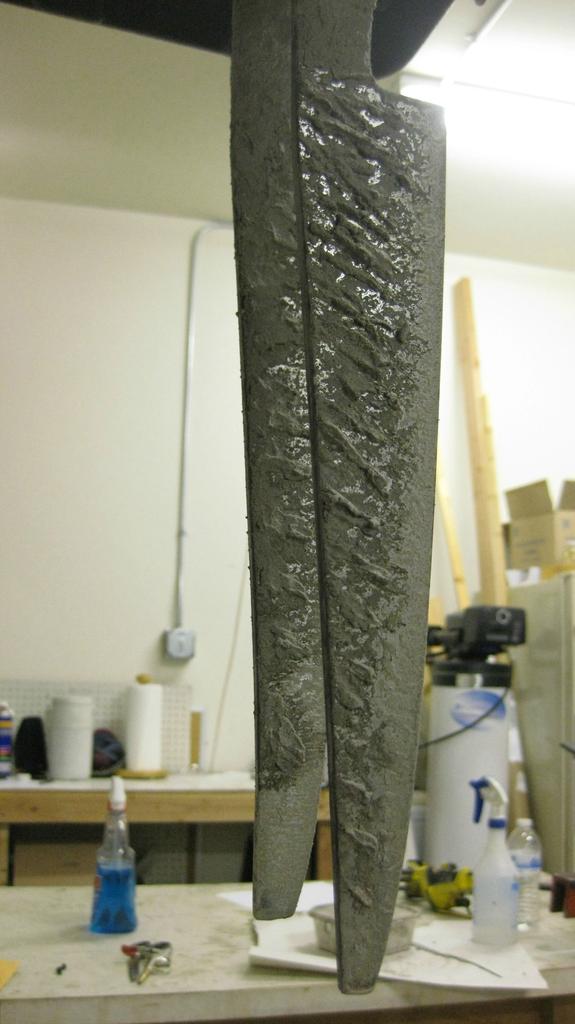
The blades survived the quench without any mishaps. Now, is this the decarb layer? I was grinding on it for a bit, and it seemed fairly thick to be decarb but I'm not a very experienced person on that.


Here is after the quick etches. Looks like they didn't completely harden in a lot of places, but again, I'm new to this.


I have no idea what I'm doing.
Here was my process:
- 0.180" W2 stock (new material from Aldo)
- Full-flat grind to 0.080"
- Thermal Cycle, with 10 minute soaks, at 1600° F, 1500° F, 1400° F
- Thin wash of clay, let dry
- 1/8" Splatter of clay towards the spine, let dry
- Preheat oven to 1450° F
- Put blade in, let temperature equalize, hold for 3 minutes
- Quench in room temperature brine for 5 seconds
- Air cool
- Temper at 400° F for two hours, twice
- Grind at 80 grit to attempt to remove decarb
- 15 second etches in 1:4 ferric chloride
- ????
Here is what my clay looked like:
The blades survived the quench without any mishaps. Now, is this the decarb layer? I was grinding on it for a bit, and it seemed fairly thick to be decarb but I'm not a very experienced person on that.
Here is after the quick etches. Looks like they didn't completely harden in a lot of places, but again, I'm new to this.


