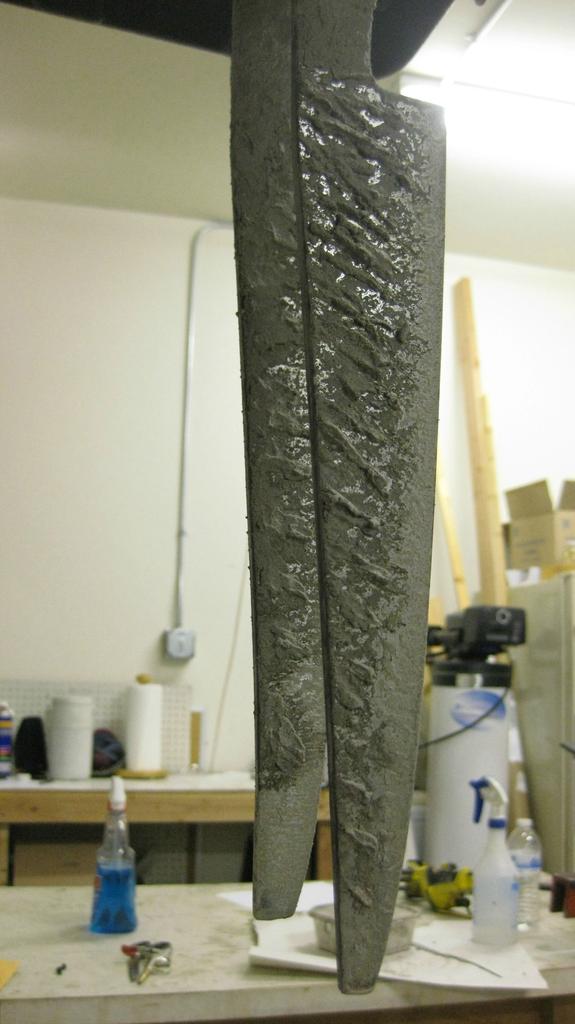
I don't know how to look for the hamon

Don do you do thermal cycling, and prevent scale/decarb?

I initially wasn't planning on doing much W2, hence why I didn't buy P50, but I might have gotten hooked. Maybe it's time to start thinking of the investment...
Don, I do 3 normalizing cycles right after forging, before any grinding. All that time in & out of the oven can cause a lot of decarb. As thick as your blades are, they should be fine, but you got some grinding to do. :)
 
Don, I don't know what heat source you use for the cycling- is it a forge? If so, it looks like you might tinker with your air/propane balance and go for a richer mix- I coach a lot of people on basic forge welding, and that's the most common thing, too much air in the mix.
You're probably using an oven, though, in which case.....what they said :)
 
Don, I do 3 normalizing cycles right after forging, before any grinding. All that time in & out of the oven can cause a lot of decarb. As thick as your blades are, they should be fine, but you got some grinding to do. :)

I see, that makes sense. Maybe I'll start doing the cycles before grinding... :)

Don, I don't know what heat source you use for the cycling- is it a forge? If so, it looks like you might tinker with your air/propane balance and go for a richer mix- I coach a lot of people on basic forge welding, and that's the most common thing, too much air in the mix.
You're probably using an oven, though, in which case.....what they said :)

Yep, I'm using an oven.

Here's one that I'm keeping for myself (there's some small circular cracks on the blade face). Looks like there's a decent hamon in there. It's been ground to 80 grit and dipped quickly into the ferric.

m1BGPmR.jpg


After the decarb I could totally see the hamon activity! It was faint but it was there :)
 
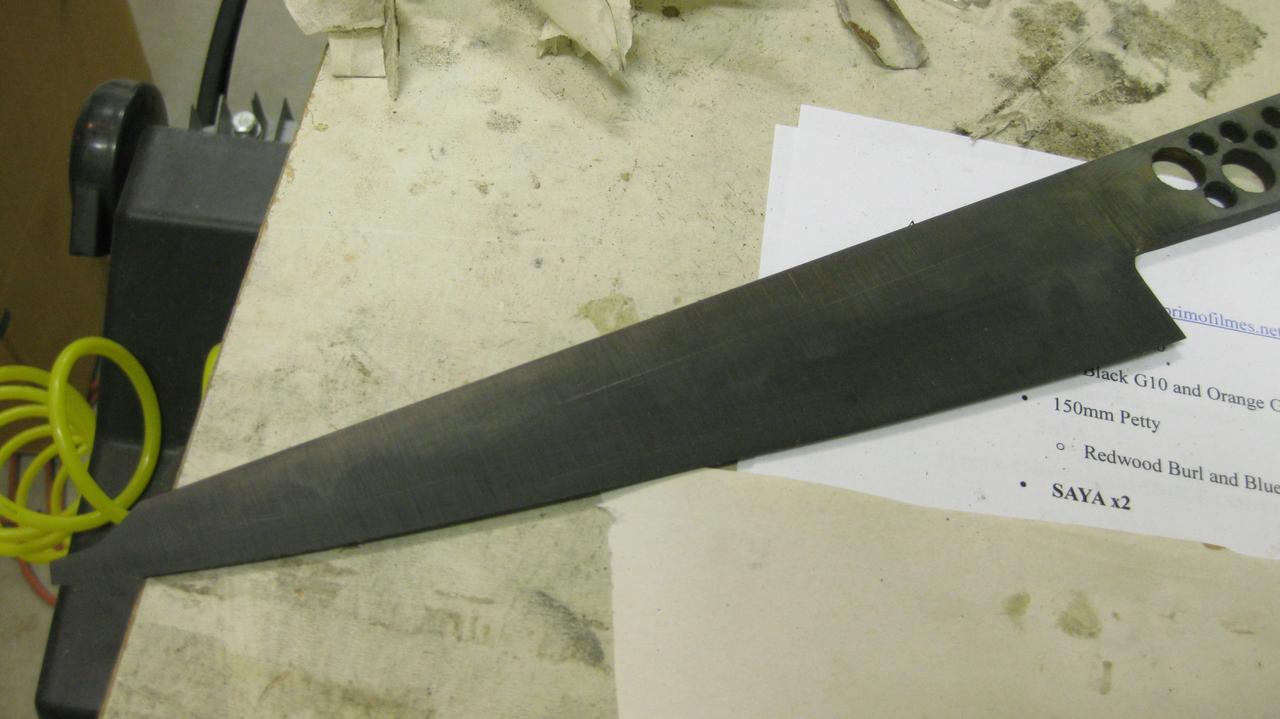
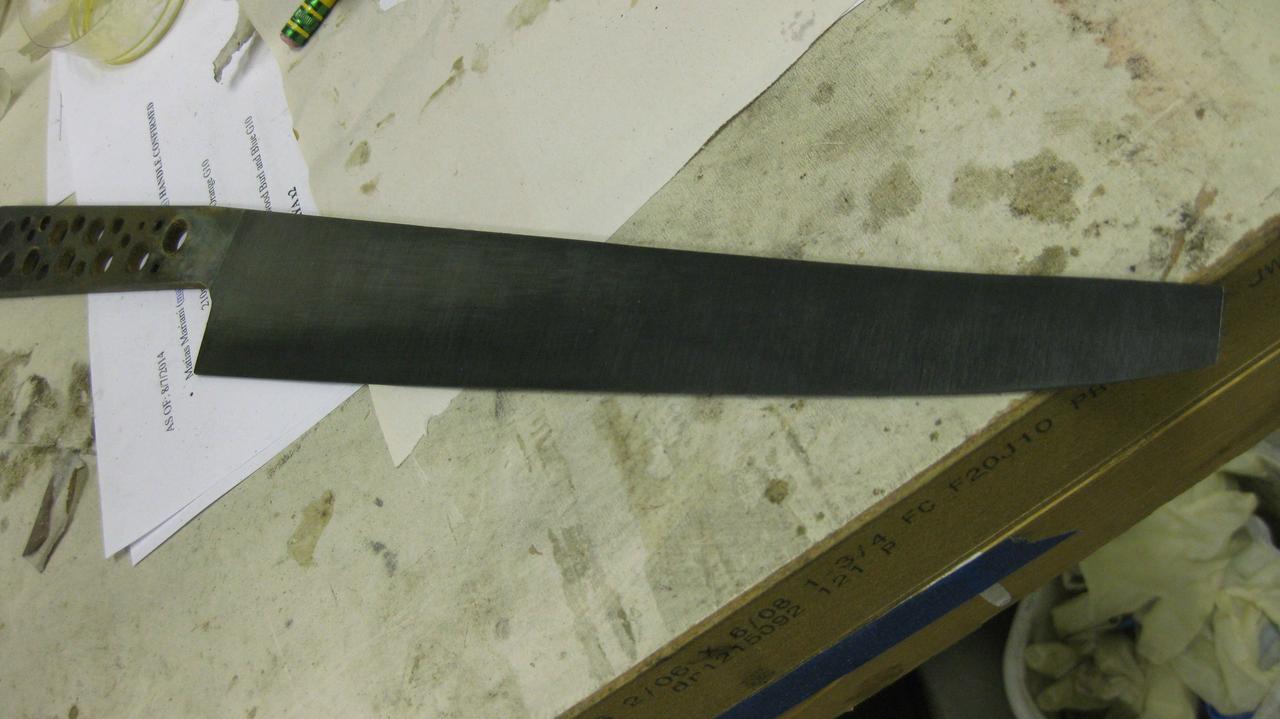
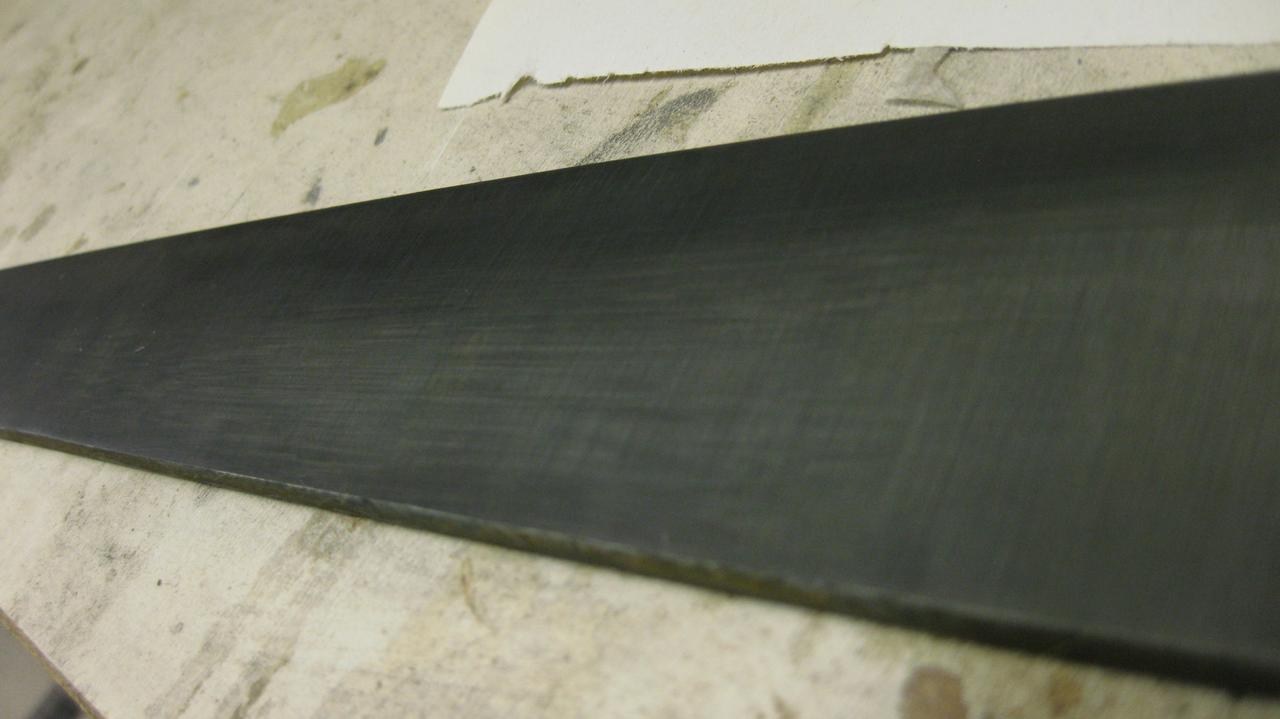
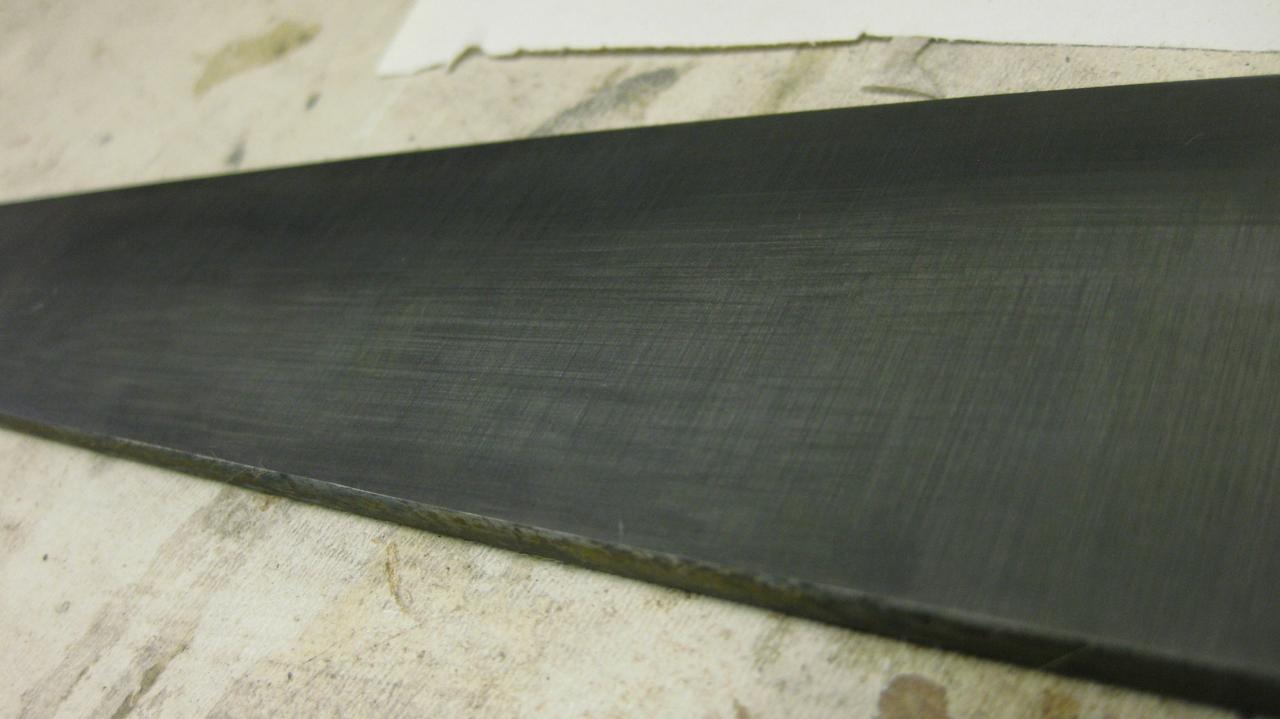
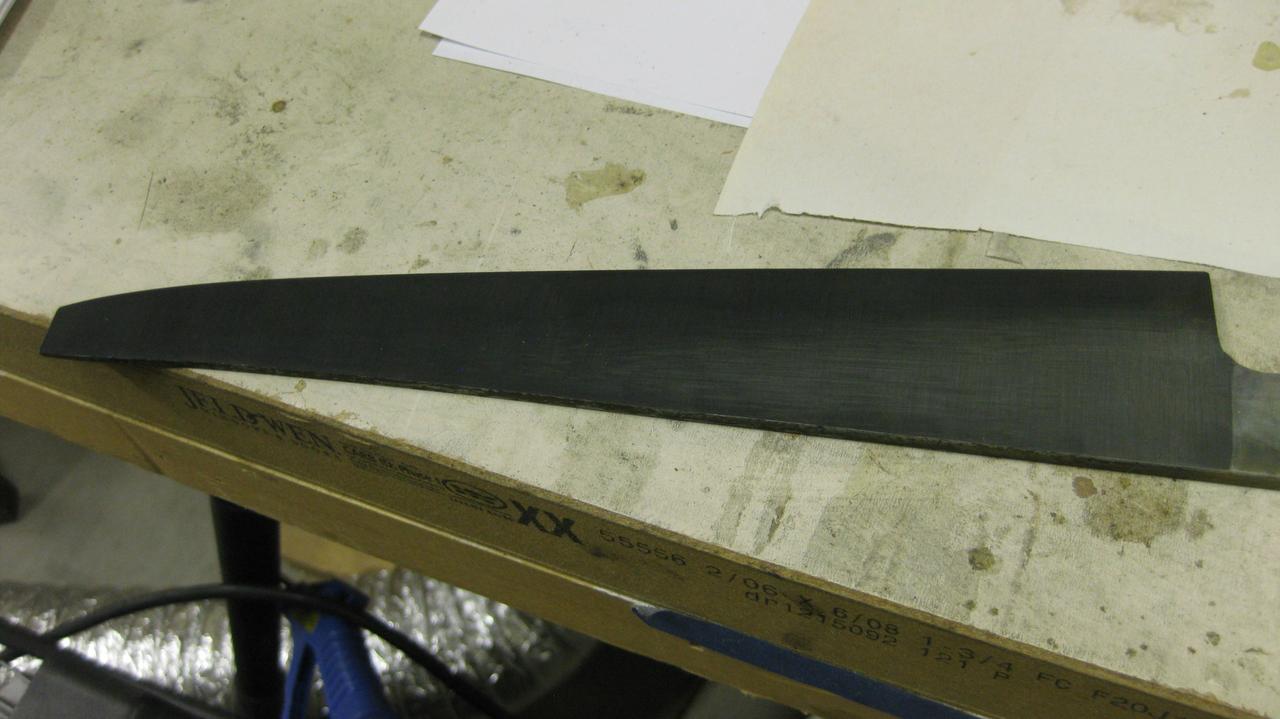
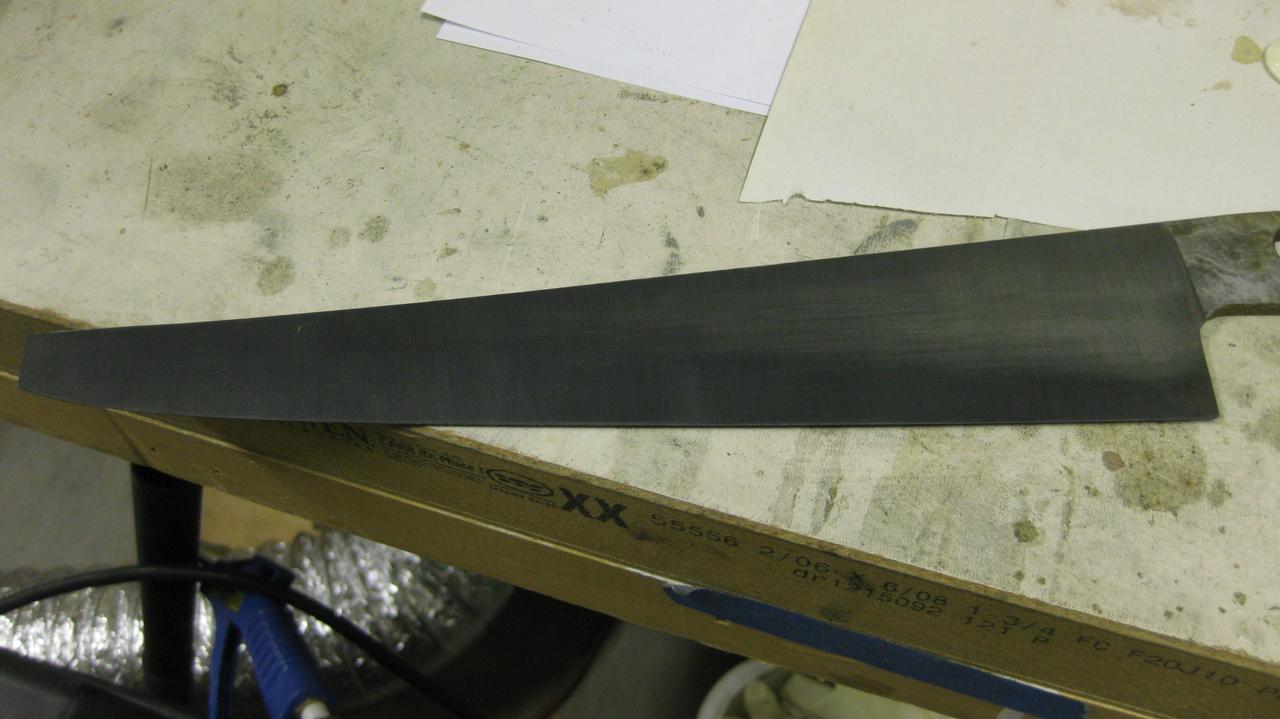
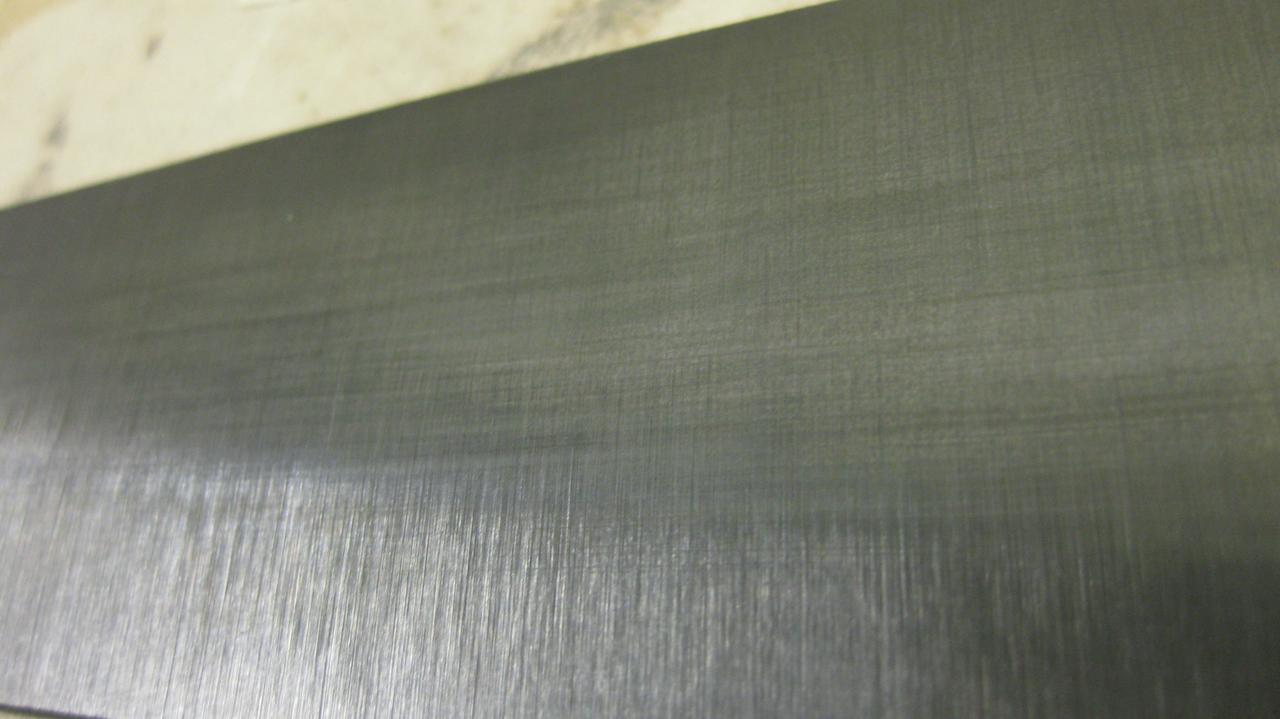
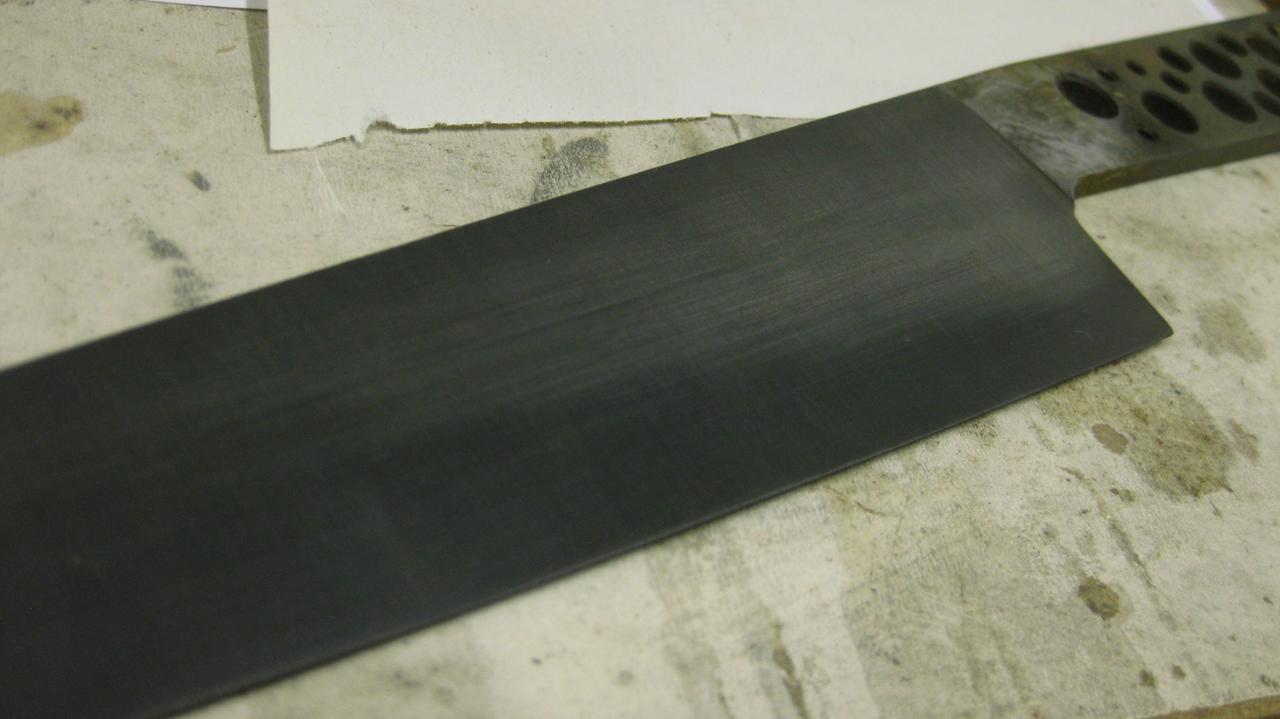
I ground through the one you guys suggested. What's going on here? This is the clayed, brine quenched W2 blade that has been tempered and ground. I did the quick dip in ferric and I'm seeing a general differential harden, but what's up with the streak-like appearance? Those aren't smear marks or anything; I'm seeing them when grinding too. The blade is perfectly hard where it's darker in color.

jKZOKPn.jpg

y7d1fhL.jpg

mvnYdK1.jpg

fAWZZQ8.jpg

6VaKVrD.jpg

5lS1GfA.jpg

CQXvCpj.jpg


It's the one in the rear here to see the clay pattern:

h9YyNRg.jpg


EDIT: I've basically decided to grind and finish all the knives that came from this bar and see what I get. I don't think I have the streak-like look on the one earlier, but we'll see later when it's at a higher polish.
 
Last edited:
Don, I see two possibilities, the first being alloy banding, which is less likely. The second being distortion on the steel from earlier grinding. The courser grits distort the steel as they grind, and the etch brings those distortions out. Using fresh belts below 220g, grind past the distorted steel, and then polish at 220 or above, and the lines will likely be gone. You have to grind deeper than the original grind marks to remove the distortions in the steel.
 
If that's true, then it doesn't look like I have much exciting hamon activity - just one big blob haha :o

I guess we'll find out!
 
The finer you sand, the finer the detail will be. This is a challenge with kitchen knives, as we worry about food release. Milder acids bring out the finer detail too, more so than ferric chloride.
 
Back
Top