In which Waynorth takes a D.I.P!

waynorth

Dealer / Materials Provider
Joined
Nov 19, 2005
Messages
33,366
All That Glitters!!

Please put on some sunglasses before you proceed!!

Don't say I didn't warn you!!

Since I lack the skills to make knives, and at 66 years, with a touch of arthritis, and other sins I must pay for:eek:, I was wondering how I could do something in the Creative Cutlery department, to express my appreciation for these wonderful little machines.

So I got my hands on a slightly flawed knife which is already designed and assembled into a fine working tool.
The flaw barely counts, because it has nothing to do with the function.

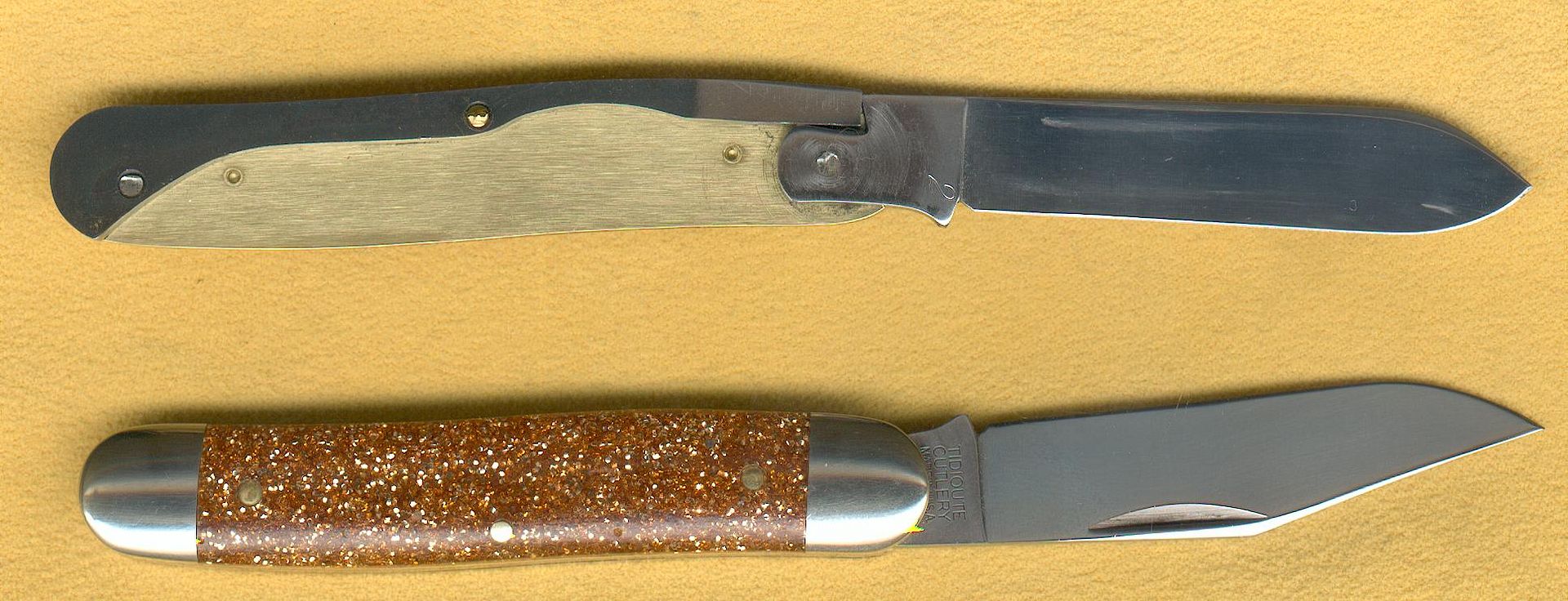
Shield your eyes!!
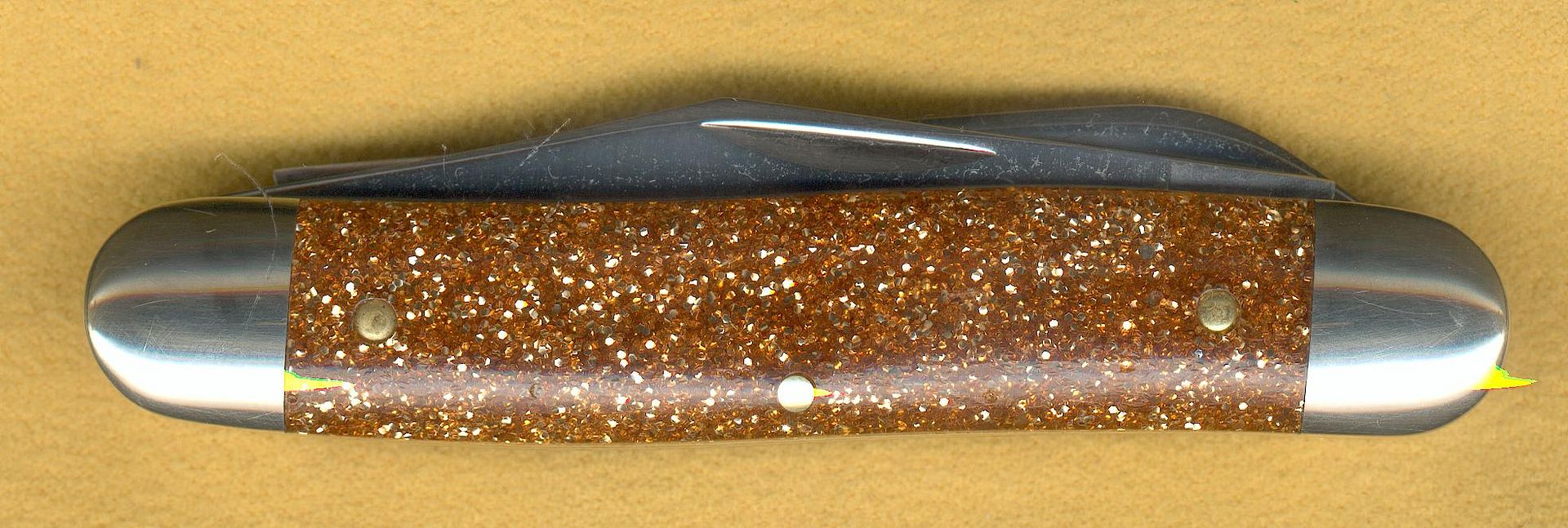
DIP.jpg


I have it on good authority the handles are made from the skin of a 1969 high output Ford Mustang that had an unfortunate mishap!:D

Nice choice of blades, and I like this pattern quite a bit.
In fact I want to see what makes it tick!
So for your ogling please I am going to do a DIP!
An accomplished knifemaker can do a WIP; but my skills only extend to a DIP.

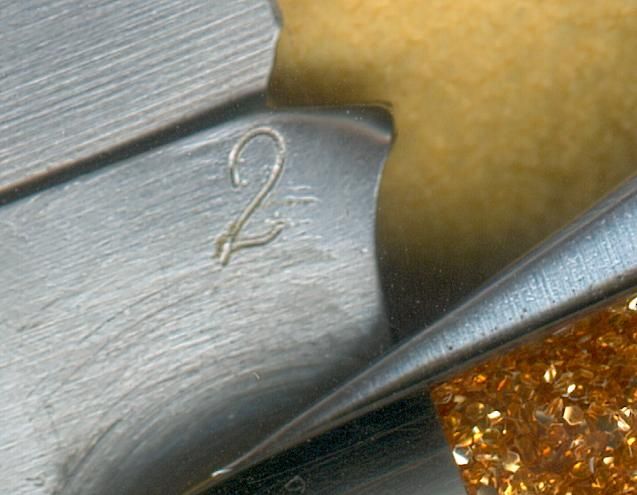
You will note that there is an elegant little "2" stamped above the kick on the spear blade:
DIPsecond.jpg

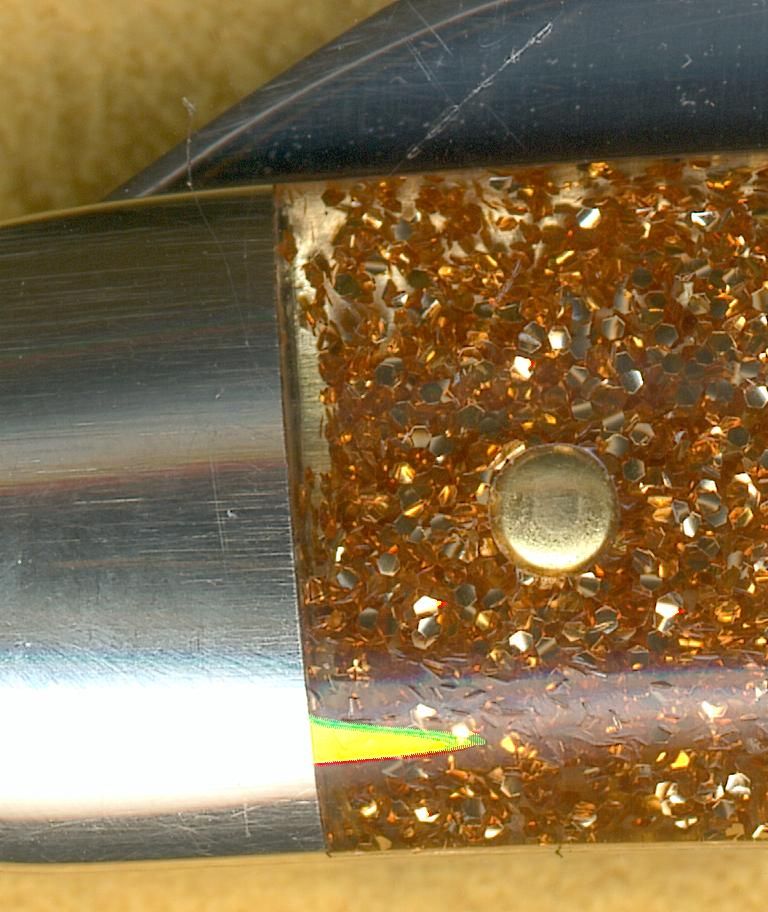
This denotes a factory second. It seems the Mustang Hide was a bit moth-eaten, so it could not be put on the market to represent GECs finest. See close-up below.
DIPflaw.jpg


Watch this space!! In the very near future, you are going to see a DECONSTRUCTION IN PROGRESS!!:eek:

:D
 
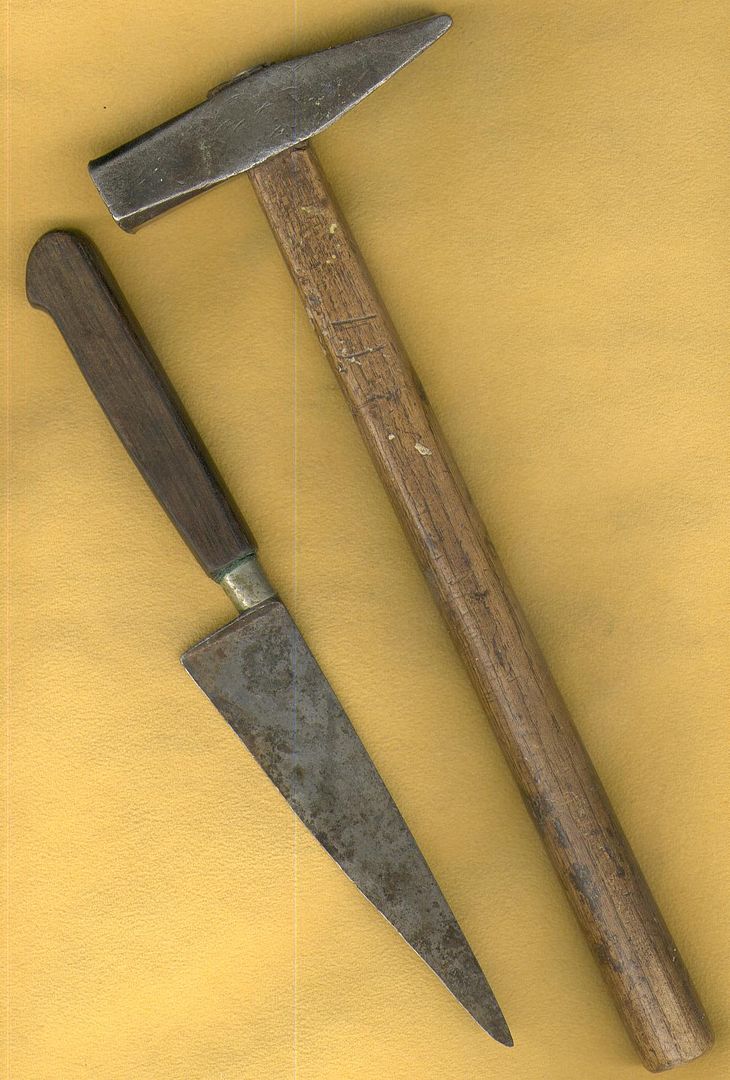
The tools of the trade!
None but the best! A fine cutler's hammer, and a venerable old remnant kitchen knife, of good quality carbon steel.
Not shown is a six inch piece of high grade 2x4, left over from building a bench in my workshop!;)
DIPtools.jpg

Here is where a scanner just doesn't cut it! (pun intended:D)
I'll have to describe how I got to the next step;
You open the blades of the knife, and sit it on its back on the 2x4.
If you feel uncomfortable hitting something with your hand over the upturned blades, cover the edges with a couple layers of duct tape - might save you some stitches.
No, I don't speak from experience:p!
I prefer to start the DIP tool (knife) between the main blade and center liner. Tap briskly! Watch that the tool is going straight! Bing goes the pivot pin!!
Turn the knife end for end and cut through the other pivot pin, in the same "space" alongside the center liner. Bing!!
Now continue the tool through the main spring pin, and Voile!
The knife is in two, with its innards on display!
Elapsed time - 2 minutes!!:D

DIPfirst.jpg


Look at those beautiful rivets! Observe the slight relieving of the spring, so it works smoothly.

I've wondered if the round part of the tang contacted the spring, along with the run-up, when the blade was open - the knifemaker's secrets revealed!!
What else do you see??
 
Last edited:
This is already an entertaining thread!:thumbup: :D

Are you planning on re-hafting it Charlie? If so I am looking forward to the final product!

I am curious about the difference in color on the spring. Hard to tell from the scan, did they thin the width of the spring slightly to ease rise and fall or is that a difference in temper?

Ken
 
Last edited:
Well, that's one way to increase the size of your knife collection - take one knife and turn it into two smaller ones LOL
 
This is already an entertaining thread!:thumbup: :D

Are you planning on re-hafting it Charlie? If so I am looking forward to the final product!

I am curious about the difference in color on the spring. Hard to tell from the scan, did they thin the width of the spring slightly to ease rise and fall or is that a difference in temper?

Ken
Looks like they just did a quick sanding to ease the rise and fall, Ken.
I am going to re-haft it. But for now, I am going to study it, and see if I can pick up on the subtleties of the process.
I always liked to take things apart when I was a kid; I left a trail of alarm clock parts, and hot rodded wagons behind me.
Nothing has changed!:rolleyes:

I am hoping some of you can pick up some info from the process. I'll report again tomorrow!
 
Is Charlie starting a knife guts thread ? Maybe call it knife roadkill.....
Explodedview.jpg


Kidding aside, good thread, will be waiting and watching....300/ch

EDIT - Contract made Buck 303 stockman with end ground off half way thru bolster pin showing Schrades key-hole pin design.
 
Last edited:
I'm anxious to see where this goes. :) I will say though, in select patterns the gold is growing on me for reasons I don't entirely understand and can't fully explain.
 
Charlie, Another great Thread!! Can't wait to see
what scales you put on there!! Thanks for doing
this!! Looks like fun!!:D


Jason
 
Excellent thread Charlie!! Is that pivot pin brass? If you need some N/S pins for the bolsters, let me know;)

300, looks like that Old Timer lost a fight with a band saw :eek:

Eric
 
I've gotta be honest, I've never thought of using that "method" to disassemble a knife. Learn something everyday!

Chuck
 
Excellent thread Charlie!! Is that pivot pin brass? If you need some N/S pins for the bolsters, let me know;)

300, looks like that Old Timer lost a fight with a band saw :eek:

Eric

300B, that is Classy Roadkill you've got there!:D

Eric, I could use a few pins/nails!

Chuck, far and away the best method for deconstructing a production folder with soft pins. If you drill out the pins, you risk distorting the bores.
I haven't tried steel pins yet, but as long as the pins are not hardened, I don't see why it wouldn't work with a good "tool" (old, thin knife).
 
I'll send 'em right out Charlie, got several different sizes, I'll send a bunch of each. You'll want to go by the hole in the liner for proper size since the blade hole is likely oversized and the bolster hole is countersunk and likely stretched a bit. I'll send a couple of long steel pins too, you can use them to hold the liner assembly together once you have new handles on them to ease the pre-finishing chores. If you need a tutorial, let me know, I've been getting LOTS of practice!

Eric
 
Thanks Eric! I'll email you!

I am not ready to complete the DIP yet. I have been observing the halves of this knife, and it is like having one of those see-through demonstration pieces!

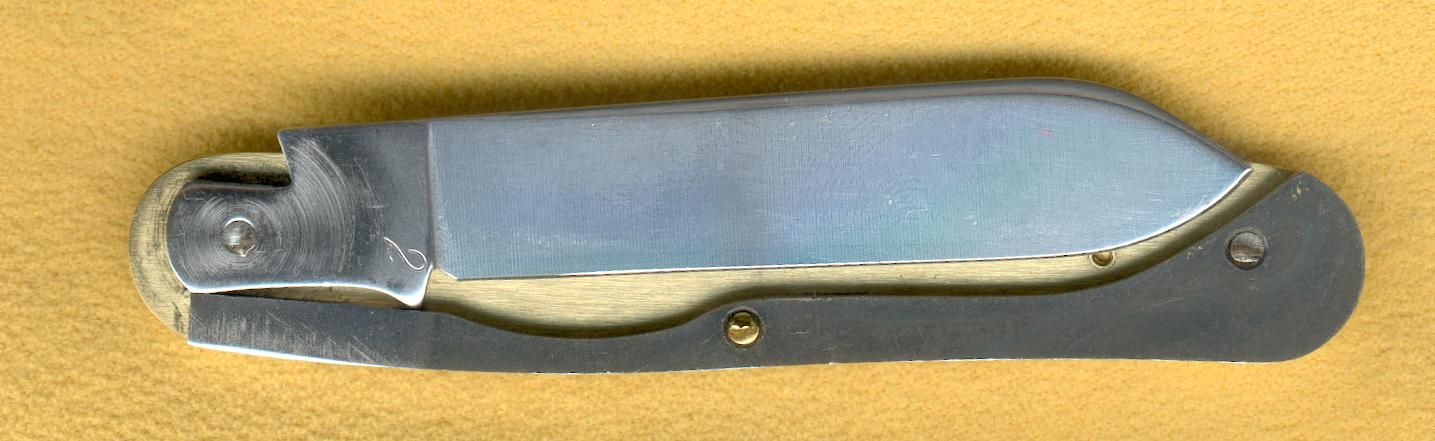
It is a delicate balance of fitting that makes these darn things work so nicely. If you look at this "closed" picture, you can see that the blade rests against the spring end, and stays nicely clear of the rear part of the spring. If it strikes the spring, it would, of course, dull itself instantly.
Two points on the blade touch the spring; the cam end of the tang, and the kick. I have filed the kick of an old, worn blade, to get the point down/back into the knife. Most of you know what I mean - sometimes an old blade wears to where the point becomes visible, and catches on everything.
DIPspearfit.jpg

Now I see why the spring "drops" when you do that. If you remove any material from the kick, it allows the spring to drop closer to the blade, as well as rotating the blade into the knife.
So in constructing a new knife, all these little points have to be dead on, or something won't fit right!
You gotta hand it to these guys. It's right up there with watchmaking and the like.
This knife, a mini-moose, (here's where Blues makes a comment or two :D) is like making two simple one-blade knives, side by side. The task gets more complicated when 3, 4 or 5 blades get specified!
The goin' gets tough!
 
Last edited:
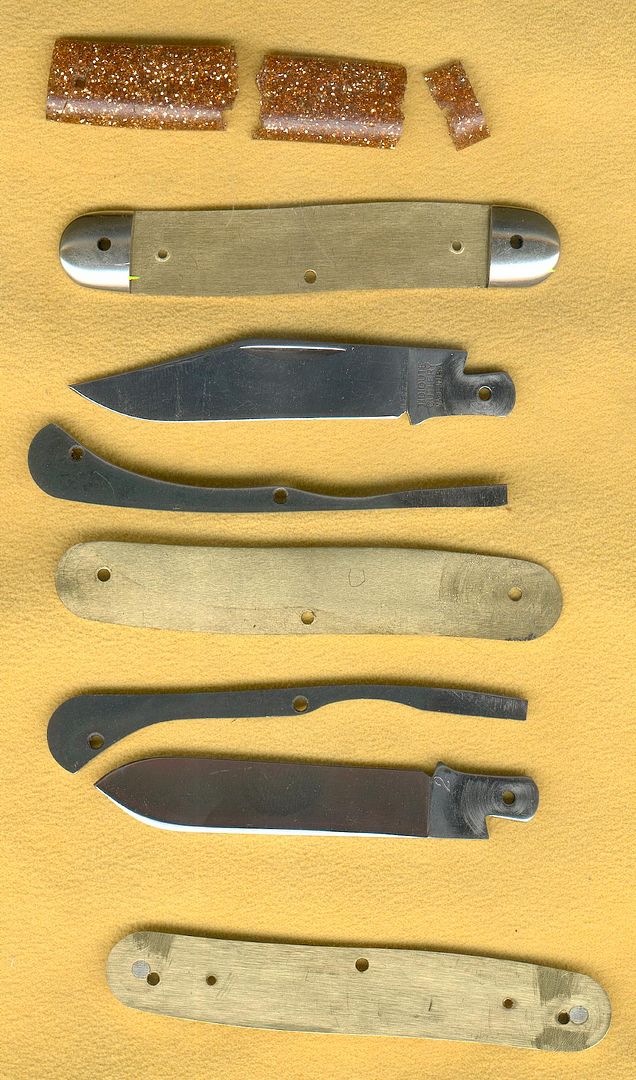
Exploded view!!

DIPexplodedview.jpg


Done DIPping, it is time to think about the next steps;
choosing handles? customizing? Twin Cam V8?:D

Suggestions please!!

Bullwinkle must live again!:thumbup:
 
Very interesting Charlie. Some ebony or rosewood scales wood look great IMO. Looking forward to seeing the final result.
 
Back
Top