
-
The BladeForums.com 2024 Traditional Knife is available! Price is $250 ea (shipped within CONUS).
Order here: https://www.bladeforums.com/help/2024-traditional/ -
America has reached 250 years, and I am grateful to be here, in the best country in the world. Thank every one of you who helps make this country a better place, those who have gone before and risked it all, and those who've paid the ultimate price to make the United States what we are today.
Happy Birthday America! Let Freedom Ring for all time!
You are using an out of date browser. It may not display this or other websites correctly.
You should upgrade or use an alternative browser.
You should upgrade or use an alternative browser.
Ivory ...........when nothing else will do
- Thread starter Boggs
- Start date

- Joined
- May 7, 2011
- Messages
- 3,426
NORTHWOODS ENGLISH JACKS IVORY and EXTERIOR MAMMOTH IVORY

VAN REENEN IVORY

You are making it very easy to hate you...
 Love these two! (not that I despise the others...)
I always loved ivory on small objects, and especially knives. I do consider it my favourite handle material, and your pics are an excellent evidence of the reason why. Thanks for the thread.
Fausto


- Joined
- Nov 12, 2011
- Messages
- 2,305
Fantastic knives Jim, I'd say you have some of the nicest ivory I've ever seen.
I have one,a Scagel Dogwood and I've noticed when I carry it that it has a different "feel", hard to explain I guess. Nearly everyone I've shown it to thinks it's just white plastic. Only one person looked very closely and gave me a funny look and guessed ivory.
I have one,a Scagel Dogwood and I've noticed when I carry it that it has a different "feel", hard to explain I guess. Nearly everyone I've shown it to thinks it's just white plastic. Only one person looked very closely and gave me a funny look and guessed ivory.


- Joined
- Sep 19, 2008
- Messages
- 502
What a great collection Boggs. Ivory has always fascinated me. Any knife looks better with ivory on it. Some day I'll make or have some made from the tusk I have.


- Joined
- Feb 27, 2007
- Messages
- 1,962
Just so I don't bore anyone...a condensed version of what Ivory is...
Ivory tusks and teeth consist of an inner pulp cavity surrounded by dentine. Dentine is a combination of mineralized connective tissues and collagen proteins. An external bony layer called cementum, commonly called bark or rind, covers the dentine. Most tusks and teeth have an additional external enamel layer covering the cementum, but young elephants and walruses only have enamel on the very tips of their tusks. Their enamel is quickly worn away and it is not replaced. Dentine is the main component in ivory and it is this layer that is utilized for carvings, inlays, etc.
Ivory forms in layers upon layers like placing a cone on top of a cone.
Over time these layers form a pattern of concentric growth rings similar to growth rings in trees. If you make a cross-section in ivory you will see these lines, called "Lines of Owen."
Ivory tusks and teeth consist of an inner pulp cavity surrounded by dentine. Dentine is a combination of mineralized connective tissues and collagen proteins. An external bony layer called cementum, commonly called bark or rind, covers the dentine. Most tusks and teeth have an additional external enamel layer covering the cementum, but young elephants and walruses only have enamel on the very tips of their tusks. Their enamel is quickly worn away and it is not replaced. Dentine is the main component in ivory and it is this layer that is utilized for carvings, inlays, etc.
Ivory forms in layers upon layers like placing a cone on top of a cone.
Over time these layers form a pattern of concentric growth rings similar to growth rings in trees. If you make a cross-section in ivory you will see these lines, called "Lines of Owen."

- Joined
- Feb 1, 2012
- Messages
- 11,784
When I was small, a family friend had an old set of ivory dominoes that she let us play with (carefully).
As far as I know, that's the only time I've ever handled the genuine article. I can still recall the feel of the bones; each piece was cool, smooth, and weighted just so in a way that even today's always-improving materials cannot replicate. Almost the best part was the sound the dominoes made when shuffled or stacked, clear and clean.
The tactile pleasure of playing with those dominoes haunts me to this day.
~~~//~~~
Beautiful knives!
Oh, dear.
~ P.
As far as I know, that's the only time I've ever handled the genuine article. I can still recall the feel of the bones; each piece was cool, smooth, and weighted just so in a way that even today's always-improving materials cannot replicate. Almost the best part was the sound the dominoes made when shuffled or stacked, clear and clean.
The tactile pleasure of playing with those dominoes haunts me to this day.
~~~//~~~
Beautiful knives!
Oh, dear.
~ P.


- Joined
- Dec 19, 2006
- Messages
- 8,210
That's an impressive collection of some very uncommon knives!

- Joined
- Aug 18, 2008
- Messages
- 2,516
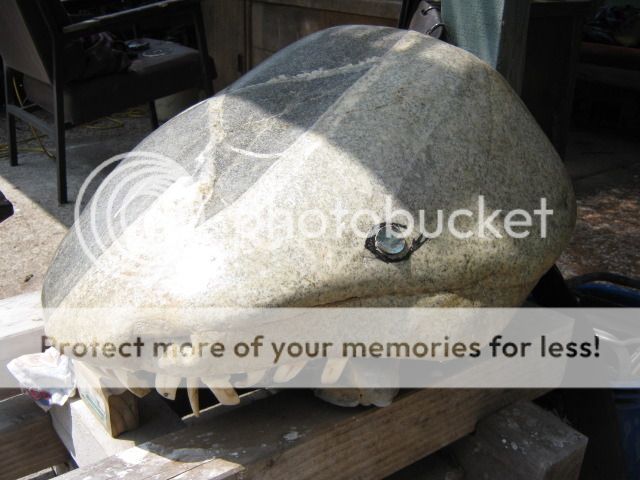
Beautiful knives and a stunning handle material by any means...I have always been told that pig tusks were ivory,in fact,pig hunting is often called (chasing ivory)...i have handled both and they are a very similar substance to my inexperienced eyes.....my sharkheads got a jaw full of them.........FES


meako
Gold Member
- Joined
- Sep 4, 2006
- Messages
- 10,299
Just so I don't bore anyone...a condensed version of what Ivory is...
Ivory tusks and teeth consist of an inner pulp cavity surrounded by dentine. Dentine is a combination of mineralized connective tissues and collagen proteins. An external bony layer called cementum, commonly called bark or rind, covers the dentine. Most tusks and teeth have an additional external enamel layer covering the cementum, but young elephants and walruses only have enamel on the very tips of their tusks. Their enamel is quickly worn away and it is not replaced. Dentine is the main component in ivory and it is this layer that is utilized for carvings, inlays, etc.
Ivory forms in layers upon layers like placing a cone on top of a cone.
Over time these layers form a pattern of concentric growth rings similar to growth rings in trees. If you make a cross-section in ivory you will see these lines, called "Lines of Owen."
Ivory and teeth are always... getting bored?!

Sorta Shark is that fes?

- Joined
- Jan 17, 2011
- Messages
- 15,193
Boggs...thanks for the lesson and showing these exceptionally beautiful knives. What is the age of that Robeson? Just a stunning batch in that picture.
- Joined
- Feb 27, 2007
- Messages
- 1,962
Gevonovich.......
I'm not quite sure of the date,though being Queen Cutlery owned and knowing that similar congress knives were made for Schatt&Morgan each year from 2004-2008 that had signature bolsters..somewhere during this time frame would be my guess
I'm not quite sure of the date,though being Queen Cutlery owned and knowing that similar congress knives were made for Schatt&Morgan each year from 2004-2008 that had signature bolsters..somewhere during this time frame would be my guess