http://www.2020eyesite.com/
........
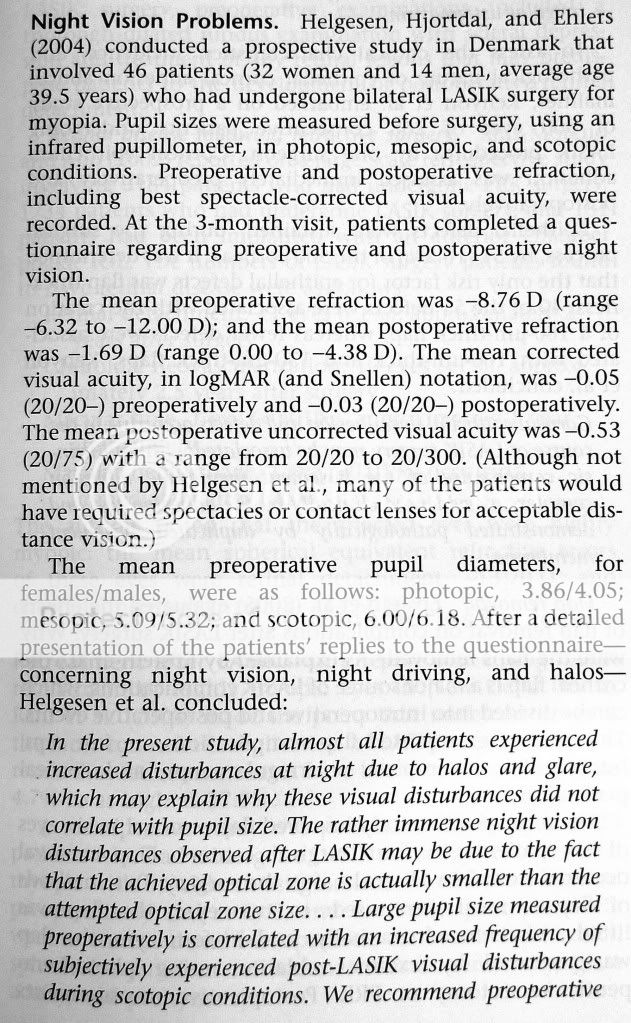
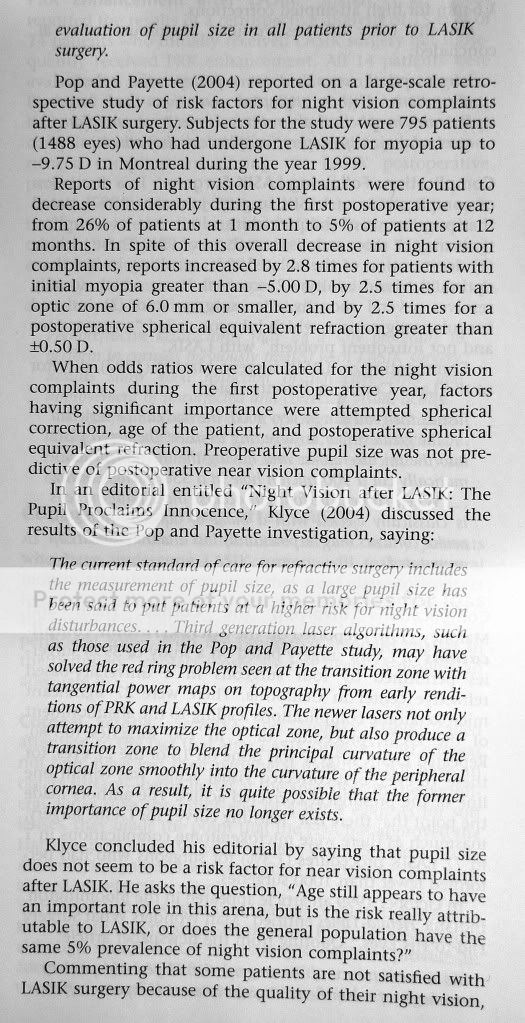
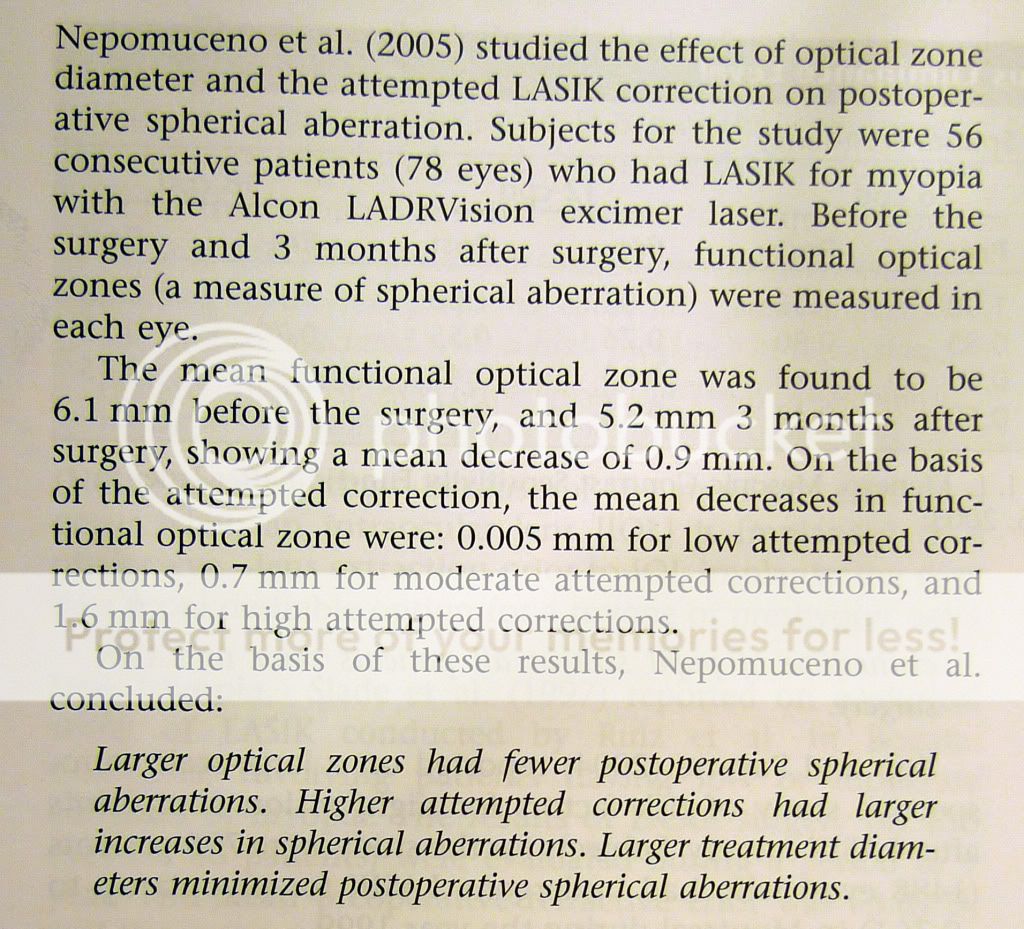
The core issue I have post surgery that I did not have pre-surgery is light smearing and ghost images. This is caused by the LASIK surgery area being smaller then the pupil during full dilation. They dilate your eyes, measure them, and then work the entire corneal area above the pupil. If they fail to reach the edges, you will essentially see your old perscription out of the edge that wasn't worked on, you see a smearing of light or a ghost image. For me this isn't normally a do-or-die issue, but it can get kind of bad when every single source of light on the road is ghost imaged up and down making it appear 3x as long as it should be (this only happens when it's dark and my eyes are dry). I still have 20/20 with my mild glasses rx, but it it can get pretty annoying when it's raining, it's gusty, and there are a lot of semi's about kicking up mist clouds.
And eye dryness. Because the nerves that connect the surface of the cornea to the rest of the eye are severed during the procedure your body can no longer tell whether your eyes are dry or not. As a result your body doesn't really know when to produce tears to keep your eyes moist. Mine get bad late at night, but it's not so bad that I'm unhappy with having gotten the surgery. I can drive without glasses now, that is very, very important to me.
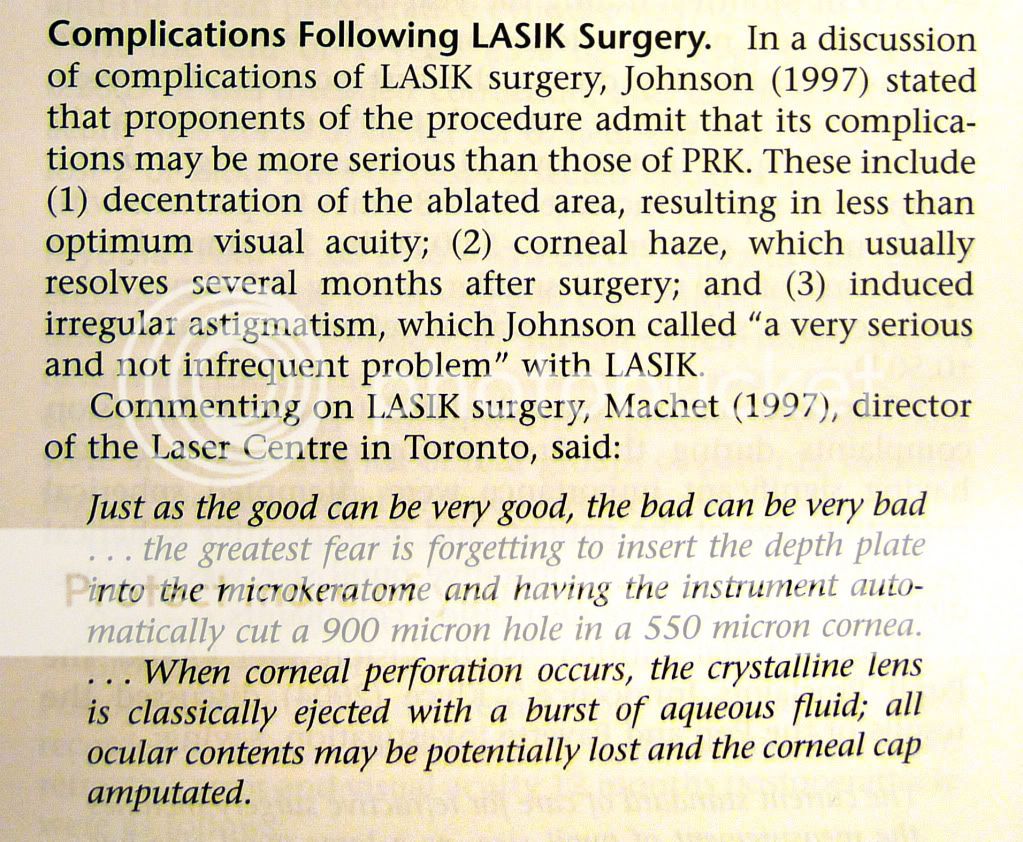
A lot of the horror stories you'll hear about LASIK patients going essentailly blind after the procedure comes from doctors performing the surgery on patients who are not good candidates or not doing it correctly (like using too small of a surgery area so that when their pupils dilate they have a large amount of the pre-surgery cornea in their feild of vision). If you go to a reputable long standing doctor and do A LOT of research both into the procedure, the particular lasers and programs used to guide them, and patient stories from the doctor your researching (both good and bad stories) you have a very high chance of having an excellent experience.