Leather Sheath Failure

DavidZ

Gold Member
Joined
Oct 30, 2004
Messages
4,327
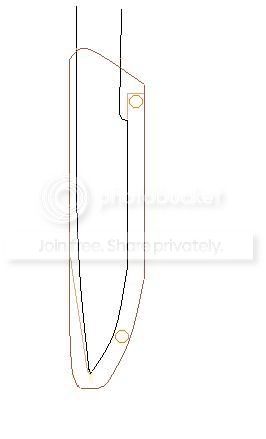
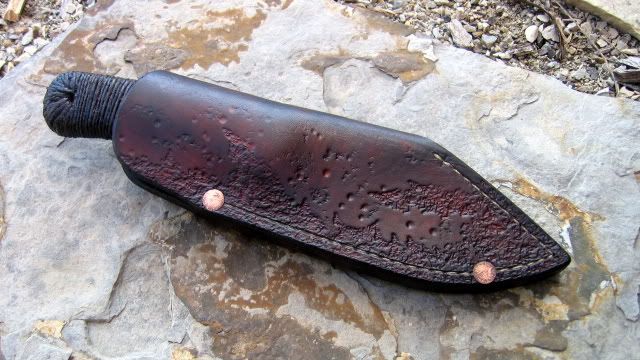
Was I ever surprised! :eek: I was putting my new sweet custom hunter in it's sheath for a short hike this morning, and ouch! :eek: I felt the blade slice my finger. :( The blade sliced between the welt and the outside of the sheath. I was not pushing hard at all. Here are some pics of it through the sheath. No, none of the cut. I got it all taped up.

IMG_0190-1.jpg


IMG_0191-1.jpg


IMG_0192-1.jpg


IMG_0193.jpg


IMG_0194-1.jpg


Anyone got any ideas? I did look it over, and the sheath is not glued at all, just sewed. Also, there is no stop where the guard would hit or cam in like others I have used.
I really like the knife and sheath, but this sure taught me a lesson.
 
There is a lot more to a well-made leather sheath than meets the eye. A positive forward-stop is one feature that is almost never mentioned, but deserves some attention, as you just found out. With some styles this feature is accomplished by the basic design. With pouch-type sheaths that cover part of the grip, it sometimes has to be a deliberate addition to the design of the sheath, and possibly the knife as well.
 
IMHO a properly molded sheath to align the blade edge with the welt and provide a stopping point around the guard-handle area would have prevented this.Every sheath I make is also glued so well that stitching becomes cosmetic.
 
As stated above and as stated in your own opening post...no glue,no stop.
I'd be more than happy to make you a new sheath (properly done and free of charge) if you want to send me the knife. Is there a belt loop? Want it carved?
Dean
My e-mail address on my web http://lapinelarts.com
 
A molded sheath would have helped, but the welt should always be cemented as well for the very reason you just discovered. I'm not so sure a positive stop would have prevented this particular failure as it looks like the tip caught the welt seam well before the knife was fully secured.

--Nathan
 
A molded sheath would have helped, but the welt should always be cemented as well for the very reason you just discovered. I'm not so sure a positive stop would have prevented this particular failure as it looks like the tip caught the welt seam well before the knife was fully secured.

--Nathan

You have a point, the tip did not come through the very end as if it were simply inserted too far, it caught and pierced the welt before going all the way in. Looking at the shape of the sheath compared to what I can see of the knife, I think there is a basic design issue going on here.
At any rate, I am not convinced that simply glueing the welt in would have prevented this. Even if the welt were glued in securely, the tip of the knife (assuming it is fairly sharp) could have pretty easily cut through the leather instead of just pushing between the seam.
 
You can fix it easily by making a knife blade exactly the size if the real blade out of wood, about the thickness of a tongue blade. Insert it in the sheath and the blade will drop in and the handle - bolster will ride on the wood.

Some antique sheaths were made that way.

You are correct, glue would not have made much difference.
 
I make my sheaths with a little extra room at the bottom and a bit wider welt near the bottom, glue and double stitch. Even then I never wrap my hand around the sheath so that my fingers are out of the way just in case all the other things fail. I also try to make them so that the knife will only go in so far with some heavy wet forming and the top of the welt.
 
One of the reasons why I use strategically placed rivets on my bush sheaths. Sometimes it's the sheath, sometimes it's the user... either way... it's something I try to "over-compensate" for. There are fine sheaths out there without rivets and some of the best makers say they are unnecessary.... call me paranoid... my descisions are backed by personal experience.

There should never be enough play to allow the tip to dig in. A form fitting sheath guides the knife into place. I use rivets to box the blade in, between the spine and the cutting edge. It has to cut through the rivet to expose the blade.

rivetpoints-1.jpg

IMG_0082-1.jpg
 
I think glue would certainly have helped. With proper barge cement, the welt and outer sheath become like a solid piece of leather. Without glue this slicing is an almost certainty if the knife is sharp. Without the glue, and particularly with a fold over sheath, there will be two channels inside as the sides pull away from the welt. The edge is certain to find one of those and slice the stitching.

If the design of the knife is such that there is nothing on the handle or guard to stop the knife from going too far then you can put a little JB Weld at the tip.
That's a trick I learned from Paul Long so you know it's a good idea. :)
 
extremely poor design of the sheath. That sheath should have been wet-molded to the shape of the knife, the sheath if properly made would have kept the blade away from the stitching, there is no molding in that sheath. Glue in the welt seam would have helped, but the major culprit is that the sheath is just a generic fold and welt that was never properly fitted to the knife

-Page
 
As stated above and as stated in your own opening post...no glue,no stop.
I'd be more than happy to make you a new sheath (properly done and free of charge) if you want to send me the knife. Is there a belt loop? Want it carved?
Dean
My e-mail address on my web http://lapinelarts.com

WOW - :eek: That is a very generous offer. I saw your website - you are incredible artist. I will send you an email. :)
 
You can fix it easily by making a knife blade exactly the size if the real blade out of wood, about the thickness of a tongue blade. Insert it in the sheath and the blade will drop in and the handle - bolster will ride on the wood.

Some antique sheaths were made that way.

You are correct, glue would not have made much difference.

Ed - Thanks for this idea, but I am not sure that I completely understand it. Would I use real thin - like popsicle stick thin - wood? Would I need to glue it to one side to hold it in place?
Thanks,
Dave.
 
extremely poor design of the sheath. That sheath should have been wet-molded to the shape of the knife, the sheath if properly made would have kept the blade away from the stitching, there is no molding in that sheath. Glue in the welt seam would have helped, but the major culprit is that the sheath is just a generic fold and welt that was never properly fitted to the knife

-Page

It seems we all agree about the gluing! What type of glue should be used? Should the wet molding be done before or after the gluing? It feels as though the sheath has a oil finish on it - can it still be wet molded?

Thanks all
Dave
 
Dave: That would be the right thickness, the best ones I have seen fit the scabbard tight enough that no glue was used. The best one I have seen was on a Michael Price marked knife that was probably made by his father. The knife in the scabbard was obviously carried in a pocket or pouch.

Yes you can mold oil tanned leather, I use leather new, soak it up well then to to work with my hands, let it sit and repeat if necessary. I would do this after making the wood shim, make the shim a little oversize so that it fits into the scabbard tight.

Like has been mentioned that sheath is ultimately simple and could have been made with greater care.
 
Some makers have gone to using a Kydex liner inside the leather sheaths. A little thinner than popsicle sticks, and moldable to the blade.
 
Listen to Stuart... he's been taking ques from legendary sheath maker Paul Long... And the leather work he's putting out is ABSOLUTELY TOP NOTCH!!!:thumbup:
 
Back
Top