Leather Sheath Failure

Dave: That would be the right thickness, the best ones I have seen fit the scabbard tight enough that no glue was used. The best one I have seen was on a Michael Price marked knife that was probably made by his father. The knife in the scabbard was obviously carried in a pocket or pouch.

Yes you can mold oil tanned leather, I use leather new, soak it up well then to to work with my hands, let it sit and repeat if necessary. I would do this after making the wood shim, make the shim a little oversize so that it fits into the scabbard tight.

Like has been mentioned that sheath is ultimately simple and could have been made with greater care.

Thanks Ed - Now I get it!!
 
Some makers have gone to using a Kydex liner inside the leather sheaths. A little thinner than popsicle sticks, and moldable to the blade.

Great idea - and kydex does not hold water or dampness! :)
 
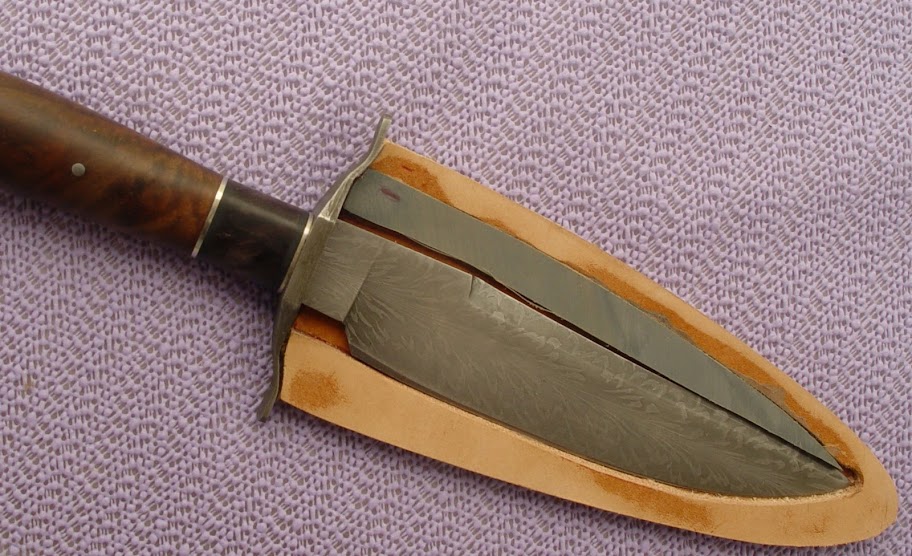
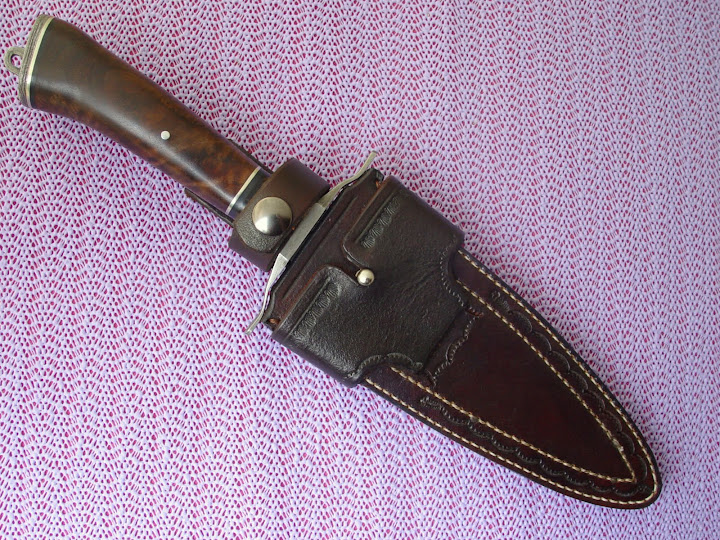
Had the same problem with this Jerry Hossom knife - the curve along the spine doens't look like much but it was enough to "kick" the blade forward the way your's did - solution: the correct style sheath which is also well molded for both retention and safety. And sometimes a bit of experimentation is necessary to get it right - pouch sheaths are generally the most widely adaptable but are not a solution for all situations - do it right and generally there is no need to use a liner. The only thing "worse" to make a sheath for is a big trailing edge or a Kukri.........

sheath-sumner-003.jpg


sheath-sumner-002.jpg


sheath-sumner-001.jpg


And nope not looking for an order got way too many as is..........
Post was done for info so hope this helps.....
 
It looks like the stitching was spaced to wide and it appears lose.

This fighter had such a sharp "false edge" it required an insert of pvc that was stitched in, making for two rows of stitching down the face.

There are advantages to a thick welt stiffness and durability are two of them.

DSC00693.JPG
DSC00697.JPG
 
Back
Top