
Makeshift Anvil, File Questions

Joined
Apr 29, 2014
Messages
45
Hey guys,

I'm nearing the point of starting my first knife. Got my propane forge finished and running smoothly, and have 48" of 15N20 coming from Aldo probably around next week. I have my space set up, and have most of the basic tools in order.

What I'm still stuck on is a good anvil solution. A real one is impossible to find here and prohibitively expensive, but I've got some ideas! I'm a strength coach, so I've got a bunch of equipment laying around:
45B7kcol.jpg


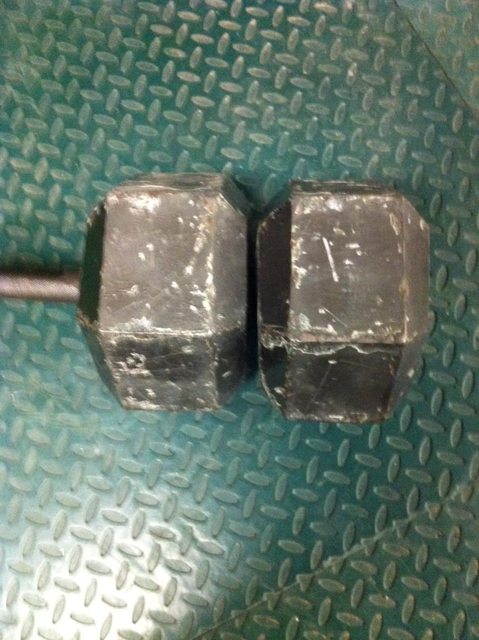
These are broken 100 lbs dumbells. Each one of those weighs 50 lbs, but I'm pretty sure they're cast iron. Also, its hard to see but they're slightly rounded at the ends, not flat. I have up to 3 of those that I could probably plane down and stack on top of each other.
ND6X4DGl.jpg


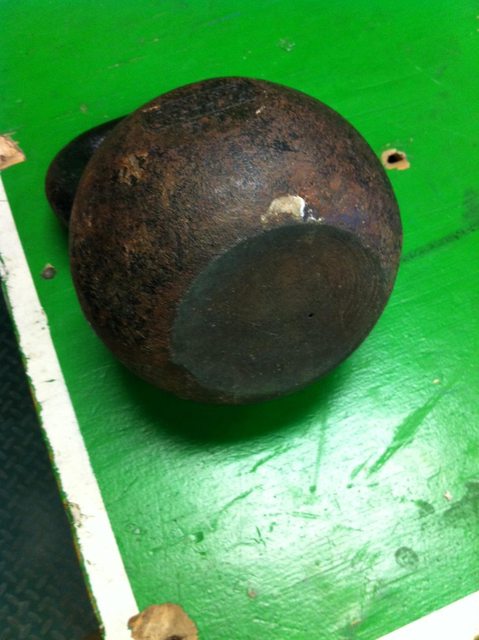
This is a 50 lbs kettlebell with a very flat bottom surface, but I'm pretty sure it's also cast iron.

I've also got this:
314PavZ-sXL.jpg


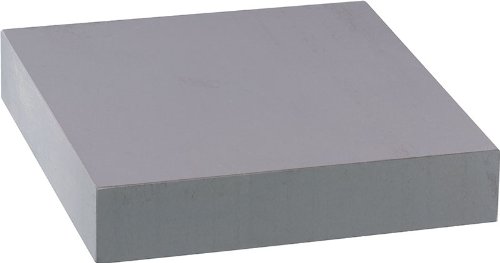
Which is just a 4"x4"x3/4" block of hardened carbon steel, don't know what kind.

My plan is to put either the stack of dumbbell ends or the kettlebell into a bucket of concrete and have a buddy weld the steel block to the top, then somehow secure the whole deal to a tree stump or a table.

Any thoughts on that?

The other big need right now is files. I've read that Nicholson is a good choice and I'd like to pick up a few. I've read that I need at least a 10" mill bastard and a 10" second cut file, but apart from that I know nothing of files.

Edit: I'm changing my file question to: can someone recommend me a few quality files for work on kitchen knives out of 0.095" stock?

A) is this a good choice for the mill bastard, and B) should I be suspicious that it's so cheap?

http://www.amazon.com/dp/B000W0ENAQ/ref=biss_dp_t_asn

Or should I just go for this 5 piece Nicholson set?

http://www.amazon.com/Nicholson-Pie...=1400675492&sr=1-2&keywords=mill+bastard+file


Thanks in advance; this forum has been amazingly helpful so far and I appreciate the help.
 
Last edited:
I use files pretty much exclusively. Your first link shows a Nicholson file that is single cut only. I recommend double cut for rapid material removal. As a matter of fact, I HIGHLY recommend, if you want Nicholson, their "Magicut" line of files. 10" is minimum. 12" is good. I use a 14" Pferd chipbreaker...which is about the most aggressive file on the planet, and for rapid metal removal there is not a better file out there. Expensive...but well worth it. I also use a Simonds "multikut" file in 10"...very similar to Nicholson's "magicut". And then I have a Simonds smooth cut 10" file. The thing with Nicholson files...I don't think they are made in the USA any longer. Either Mexico or Brazil...I think it is. Mexico files are decent. Brazil (if that's right) are hit and miss. Simonds are made in Honduras and they are all great files. Pferd, coming from Germany, is top of the line. If you go with Nicholson, make sure they're made in USA. You can go on ebay and search Nicholson NOS files (new old stock) to find USA made files at a good price.
 
Hmm... I'm planning on only attempting kitchen knives and the stock I'm starting with is 15N20 @ 0.095". I'm not knowledgeable enough to know what "aggressiveness" I need to work with that stock. I guess that's something I'd need to know before I go buy a bunch of files.

I think the biggest I'd ever plan on making is maybe a 12" blade, and they'd always be on the thin side as I've read kitchen knives should generally be.

If I do buy Nicholson I'll try to make sure they're the Mexican ones, and I'll look into Simonds. I saw you recommend that Pferd in another thread but it's out of my price range for a file at the moment.

Thanks for the reply.
 
Last edited:
I think the best makeshift anvil I have seen is a 4x4x24 steel bar in a bucket of cement, the guy also stuck 3-3/8 eye hooks into the side of the bucket before he poured the cement and used 3/8 hook turnbuckles to secure the whole deal to the stump

I would be a little concerned about the hardened steel as the alvil, depending on hard it is it could be on the chippy side, and when you chip a piece of steel the chip comes flying off at a zillion miles per hour and WILL embed itself into your skin or eye or whatever
 
I think the best makeshift anvil I have seen is a 4x4x24 steel bar in a bucket of cement, the guy also stuck 3-3/8 eye hooks into the side of the bucket before he poured the cement and used 3/8 hook turnbuckles to secure the whole deal to the stump

I would be a little concerned about the hardened steel as the alvil, depending on hard it is it could be on the chippy side, and when you chip a piece of steel the chip comes flying off at a zillion miles per hour and WILL embed itself into your skin or eye or whatever

I was worried about that too, but it's advertised as a jeweler's block for light hammering so I'm hoping it will hold up. It would probably be better than using the bottom surface of the kettlebell, right? Maybe I can anneal at home successfully?

I've seen those sea anvils made out of solid bar but even at scrap prices it's expensive, not to mention hard to find. The DB and the KB I have for free, and it's hard to pass up 50-150 lbs of free dense metal to use. The eye hook/turnbuckle idea is great though, that's a huge tip, thank you.
 
If your 4x4 was made specifically for hammering you should be good to go, I dont see anything good coming from using the cast as the anvil face

This was my solution for a makeshift anvil I found these bean shaped 1 inch pieces at the local scrap yard, I feel like they are 4140 or something similar, they are much harder than mild steel and not as hard as my hammers, as it sits it is just shy of 400lb and only cost $80 add in a couple hours of welding and bobs your uncle

IMG_1368.jpg
 
Last edited:
As far as aggressive.....the Pferd chipbreaker is the king. I know it's hard to qualify "aggressive". I would say the Pferd chipbreaker is at least twice as fast as a double cut bastard file. The shavings that come off are huge. You mentioned making a kitchen knife from 095 stock. I might consider heat treating that dude first...then grinding the bevels. But if you're using files...I assume you don't have a grinder...so continue with your plan of shaping the bevels then heat treat. I like using files myself....so I learned as much as I could about them when I started. Most people are not familiar with the Pferd chipbreaker....and it is a beast of a file. It saves so much time and energy...even over a 14" bastard double cut file. I thought the Pferd wouldn't last quite very long using it on annealed steel, as the teeth are HUGE and sharp. Not the case. That file just cuts and cuts. I'm not a Pferd salesmen....although it sounds like it! You can't go wrong with your Nicholson files, tho. Just remember the USA made files are the ones to get. Make sure you get a double cut bastard for your rapid metal removal. And remember, with any given file cut (bastard, smooth, fine), the longer the file is, the farther the teeth are spaced apart, making it more aggressive. In other words, a 14" bastard is coarser than a 10" bastard. The longer files having fewer lines/teeth per inch. There is a file called a long angle mill file.....and I've heard that they work well when using the draw file method...as their teeth are on a different angle....making a faster cut.
 
That's my concern though...would something that aggressive be too much for what I'm working with? I'm a complete beginner; I don't want to take a few swipes with a file and realize i've gouged a quarter inch out of the edge or something. I'm sure I'll find 100 other ways to wreck my first attempt without doing that. Pferd sounds good enough that I could probably just skip making knives and cut all my food with that though.

You're right though that this is a grinder-free operation, so good files I feel are going to be crucial. I just want to get two or three quality files that match my projects (only kitchen knives, at least for now).

I did not know about the difference in coarseness at different lengths, thanks for letting me know. I'll look into long angle mill files.

John, that looks like an awesome set up. Sinking a stump in a concrete base like that hadn't occurred to me, I may steal that idea.
 
Hey I'm new to knife making and I was wondering if anyone could help give me some pointers. I want to make a tomahawk that looks like a winkler one(cause I can't pay for a real one). I'm thinking of trying to make it like I saw I guy on YouTube make it(his username is trollskyy). Anything you guys tell me will help.
Thanks
Ps I wouldn't have posted this here bit I don't know how to start my own new thread
 
The 15n20 you ordered comes pre hardened at Rc42 IIRC. You will need to anneal it before working it. Its an excellent choice for a kitchen knife though :thumbup:. Hopefully someone with more experience with files and thin knives will chip in as to how to do this. Another option is to use abrasives on firm sanding blocks instead of files. Use good abrasives, such as redline rhynowet, or possibly stones to profile a thin blade. Is a craftsman 2x42 out of the budget? Kitchen knives are a lot harder than they look to do right.
 
The 15n20 you ordered comes pre hardened at Rc42 IIRC. You will need to anneal it before working it. Its an excellent choice for a kitchen knife though :thumbup:. Hopefully someone with more experience with files and thin knives will chip in as to how to do this. Another option is to use abrasives on firm sanding blocks instead of files. Use good abrasives, such as redline rhynowet, or possibly stones to profile a thin blade. Is a craftsman 2x42 out of the budget? Kitchen knives are a lot harder than they look to do right.

Really? That's something I haven't seen anywhere, so if that's the case you probably just saved me a lot of headaches. Thank you. Can anyone confirm this? It's Aldo's 15N20, http://newjerseysteelbaron.com/shop/15n20/

So you're thinking maybe with something that thin I might just skip the files and use other abrasives? That would be great if possible. I've seen amazing kitchen knives by Don Nguyen, Michael Rader, etc. on here so I'm hoping one of those kitchen knife guys might chime in at some point. I've done a lot of reading, but kitchen knife forging info is surprisingly hard to find.

I've read kitchen knives are basically a dumb starter project. I'll probably try a 210mm santoku or maybe a smaller utility knife first. I am fully at peace with my first few attempts being garbage.
 
This information came directly from Aldo, as I ruined a few drill bits trying to drill tang holes on the exact same steel! We had a discussion on this several months back.

http://www.bladeforums.com/forums/s...g-holes-in-Aldo-s-15N20?highlight=aldos+15n20

I do more kitchen knives than other knives now, but I'm still quite the novice compared to the guys you mentioned. The 15n20 is way more resilient than it looks on paper with its composition. You can push it to Rc62 and the added toughness of the high nickel content keeps the edge resilient. It benefits from a soak in heat treat, but will be OK without it. Aldo's 15N20 has Chromium on the lower end of the industry standard which makes it more forgiving. I find it has equivalent performance to O1. O1 has slightly better edge retention, 15N20 has slightly better toughness, comparing two identical blades side by side for a few months. I don't use anything else on my really thin blades now, 1/16" or less.

My suggestion is go with the paring knife first, then the utility, then the chefs knife. You will probably spring for a grinder mid point on the second knife :).

While I am thinking about it, when you quench, initially use oil, then while still hot (4 seconds in or so)clamp it between two pieces of aluminum. This will minimize warping. If there is any residual warping to correct during temper, 1h isn't long enough. Somewhere between 1.5 and 2h is needed. I just use 2h now rather tha trying, and having to re-temper.
 
Last edited:
This information came directly from Aldo, as I ruined a few drill bits trying to drill tang holes on the exact same steel! We had a discussion on this several months back.

http://www.bladeforums.com/forums/s...g-holes-in-Aldo-s-15N20?highlight=aldos+15n20

I do more kitchen knives than other knives now, but I'm still quite the novice compared to the guys you mentioned. The 15n20 is way more resilient than it looks on paper with its composition. You can push it to Rc62 and the added toughness of the high nickel content keeps the edge resilient. It benefits from a soak in heat treat, but will be OK without it. Aldo's 14N20 has Chromium on the lower end of the industry standard which makes it more forgiving.

My suggestion is go with the paring knife first, then the utility, then the chefs knife. You will probably spring for a grinder mid point on the second knife :).

I read through that thread and found this: "Our 1/16 and 1/8 is rolled and annealed for us". I'm thinking that my 0.095 stock should be annealed in that case and should be good to go?

Very good to know about the hardness it will take, I was planning on going lower than that based off of what I'd read. Was planning on heat treating very much like 1084 as that's what I've read would work, but again there's not a lot of into on making a monosteel knife out of 15N20.

Maybe if I get one decent knife out, the wife will surprise me with a grinder for my birthday haha.
 
The .095" and .070" is the hard stuff. The 0.05" and 0.125" is the soft stuff. The 0.125" stock will develop a nice hamon. I use 1475-1485 to austentize. Others recommend 1500. Figure out what works in your shop. I added a bit more info to my previous post as well. Tempering at 325f gets me about Rc62. 350 is about Rc61, and 375 is about Rc60. I have a tester, and this steel comes out consistent. I haven't needed to go any higher than that, as none of the knives chip even at Rc60. Its good stuff! I did a lot of trial and error, but Aldo assured me it would take Rc62, and he was right.
 
The .095" and .070" is the hard stuff. The 0.05" and 0.125" is the soft stuff. The 0.125" stock will develop a nice hamon. I use 1475-1485 to austentize. Others recommend 1500. Figure out what works in your shop. I added a bit more info to my previous post as well. Tempering at 325f gets me about Rc62. 350 is about Rc61, and 375 is about Rc60. I have a tester, and this steel comes out consistent. I haven't needed to go any higher than that, as none of the knives chip even at Rc60. Its good stuff! I did a lot of trial and error, but Aldo assured me it would take Rc62, and he was right.

Regret is beginning to creep in. I was thinking 15N20 wouldn't be much different to handle than 1084, but now I think I was wrong. I don't have a thermocouple set up, so I don't think I would be able to control a 2 hour soak, etc.

I'm planning on forging these blades, not stock removal...would me just getting them up to working temps solve the hardness problem right there? I'm starting to worry that stock that thin will be difficult to not deform terribly.

I do want to ask about what you mentioned before - do you/could you shape your knives with just abrasives? I'd love to go that route if you think it's feasible.
 
I'd personally avoid both of those choices as a makeshift anvil; they're likely cast iron rather than steel...


Best bang for the buck? = Craigslist Search Forklift Forks... Chances are you'll find a pair or a single fork for less than $.50 a pound.... cut them right at the bend and weld them together.... you now have a 4140 post anvil that will easily have the sweet spot of an anvil double it's weight... have the forks in a vertical orientation rather than stacked like a sammich... better energy transfer....

an example of someone with too much time and too many forks... lol

photo10.jpg
 
I'd personally avoid both of those choices as a makeshift anvil; they're likely cast iron rather than steel...


Best bang for the buck? = Craigslist Search Forklift Forks... Chances are you'll find a pair or a single fork for less than $.50 a pound.... cut them right at the bend and weld them together.... you now have a 4140 post anvil that will easily have the sweet spot of an anvil double it's weight... have the forks in a vertical orientation rather than stacked like a sammich... better energy transfer....

an example of someone with too much time and too many forks... lol

photo10.jpg

Would cast iron still be a problem even with that steel block face welded to them? I'd like to make a good solid post anvil, but free is always better than relatively cheap.
 
Regret is beginning to creep in. I was thinking 15N20 wouldn't be much different to handle than 1084, but now I think I was wrong. I don't have a thermocouple set up, so I don't think I would be able to control a 2 hour soak, etc.

I'm planning on forging these blades, not stock removal...would me just getting them up to working temps solve the hardness problem right there? I'm starting to worry that stock that thin will be difficult to not deform terribly.

I do want to ask about what you mentioned before - do you/could you shape your knives with just abrasives? I'd love to go that route if you think it's feasible.

If you had the annealed steel it isn't that different from 1084. With the steel this thin, there isn't much point in forging. You could use abrasives or diamond files. Glue some good course paper (Start with 36 grit) on a flat block and get to work! It'll be a pain but you'll get there. The 15N20 is a great steel choice, and maybe someone close to you will anneal it for you. I would offer to, buy you could buy a new bar of 1084 for the same amount as the shipping to and from me. I heat treat 15n20 pre grinding, with the profile cut out. It helps prevent warping.
 
Last edited:
Back
Top